Category: Drawing

  • Late Day Hollow

    Late Day Hollow

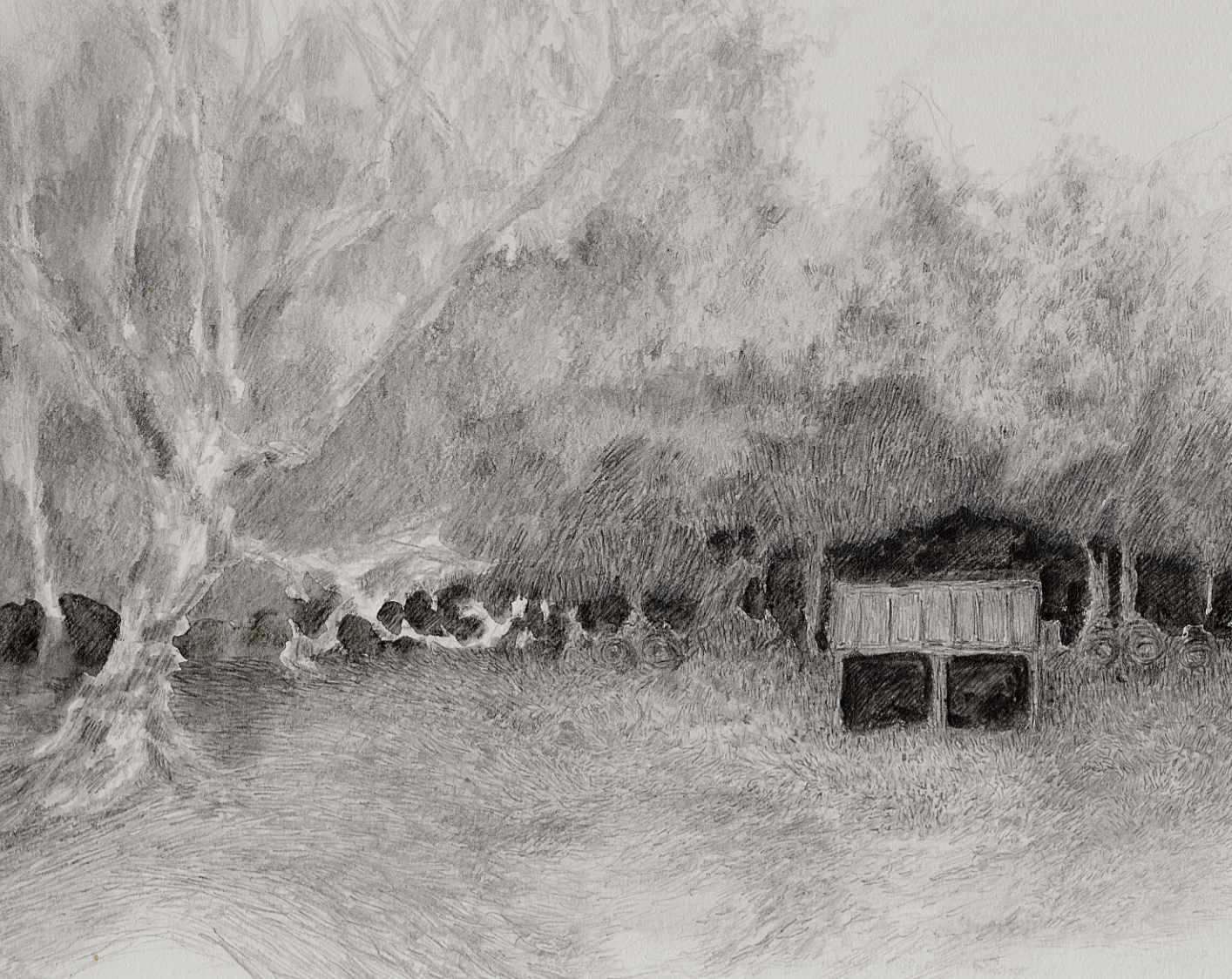
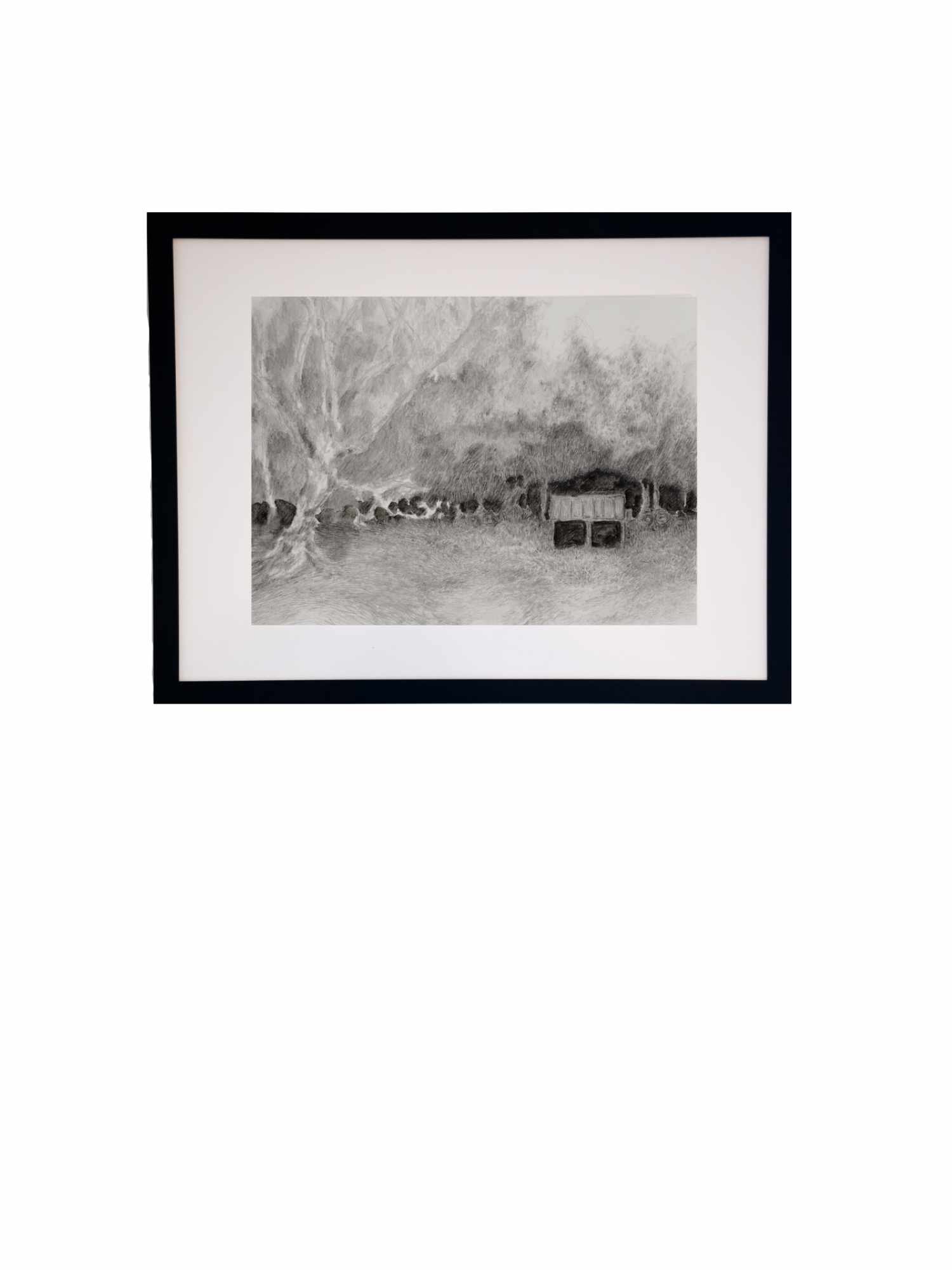
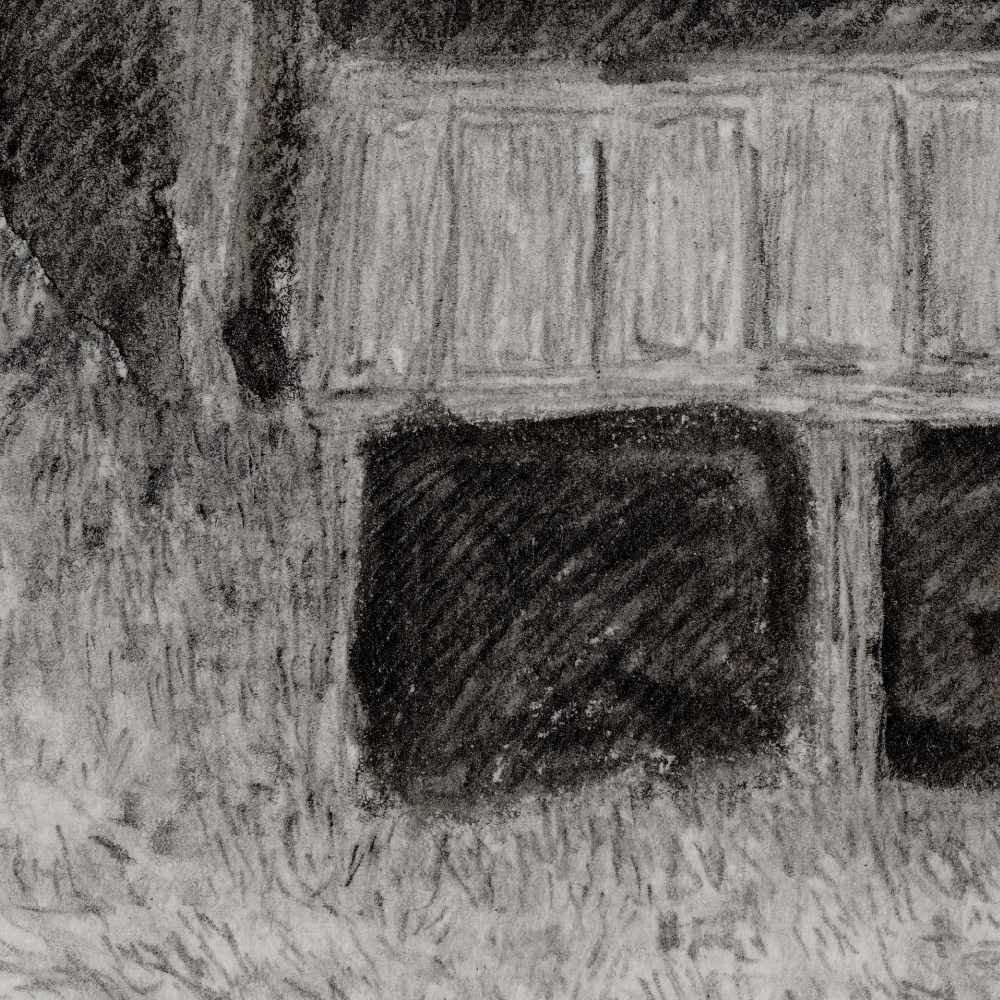
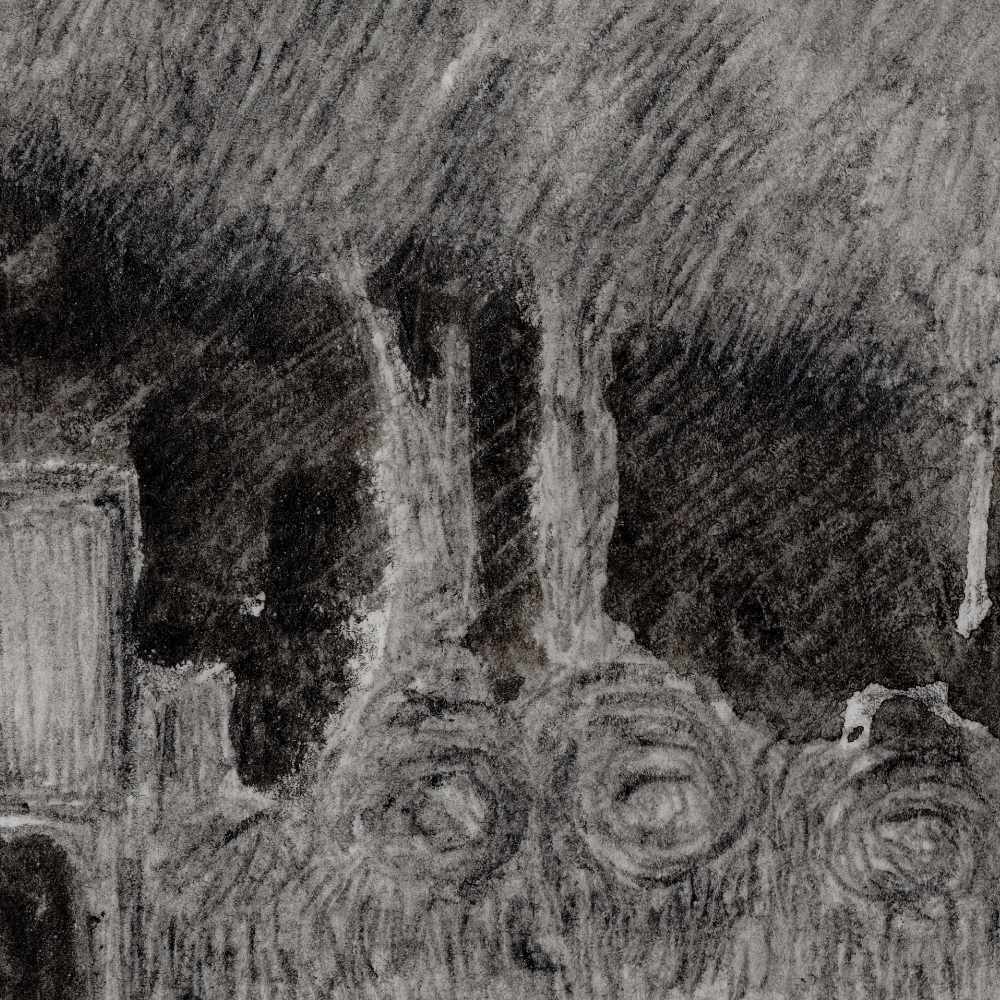
    This graphite piece explores the boundary where rural order gives way to wild overgrowth, leaning into an atmospheric ambiguity where organic forms seem to hum with quiet animism. The scene captures a modest outbuilding resting against a heavy treeline at the edge of day, framed by a pale, twisted tree reaching into an overcast sky.

    Rather than defining every branch and boundary with literal clarity, the drawing relies on soft transitions and directional shading. The dark understory beneath the canopy forms a dense band of shadow that swallows the perimeter. The marks suggest subtle shifts in mass and negative spaceโ€”inviting the eye to question whether the dark pockets between the trunks are merely evening shadows or something watching from within the timber.

    Technically, the piece was completed on Strathmore heavyweight paper using Staedtler graphite pencils. The natural tooth of the sheet softens the lead, allowing the field and canopy to melt into hazy, atmospheric mid-tones. Dense, repeated strokes build velvety black values beneath the eaves and along the forest floor, using contrast to let the pale wood of the building and the ghostly trunk emerge like bone against the gloom.
  • Peer

    Peer

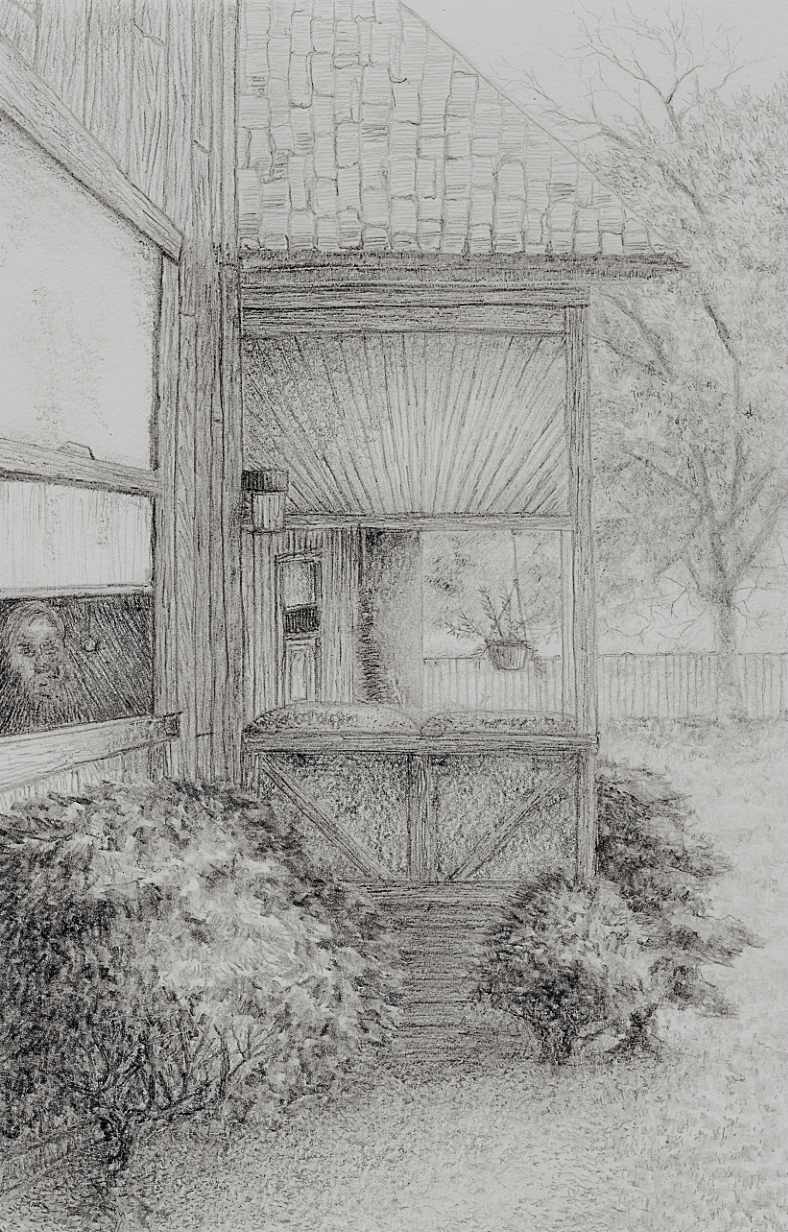
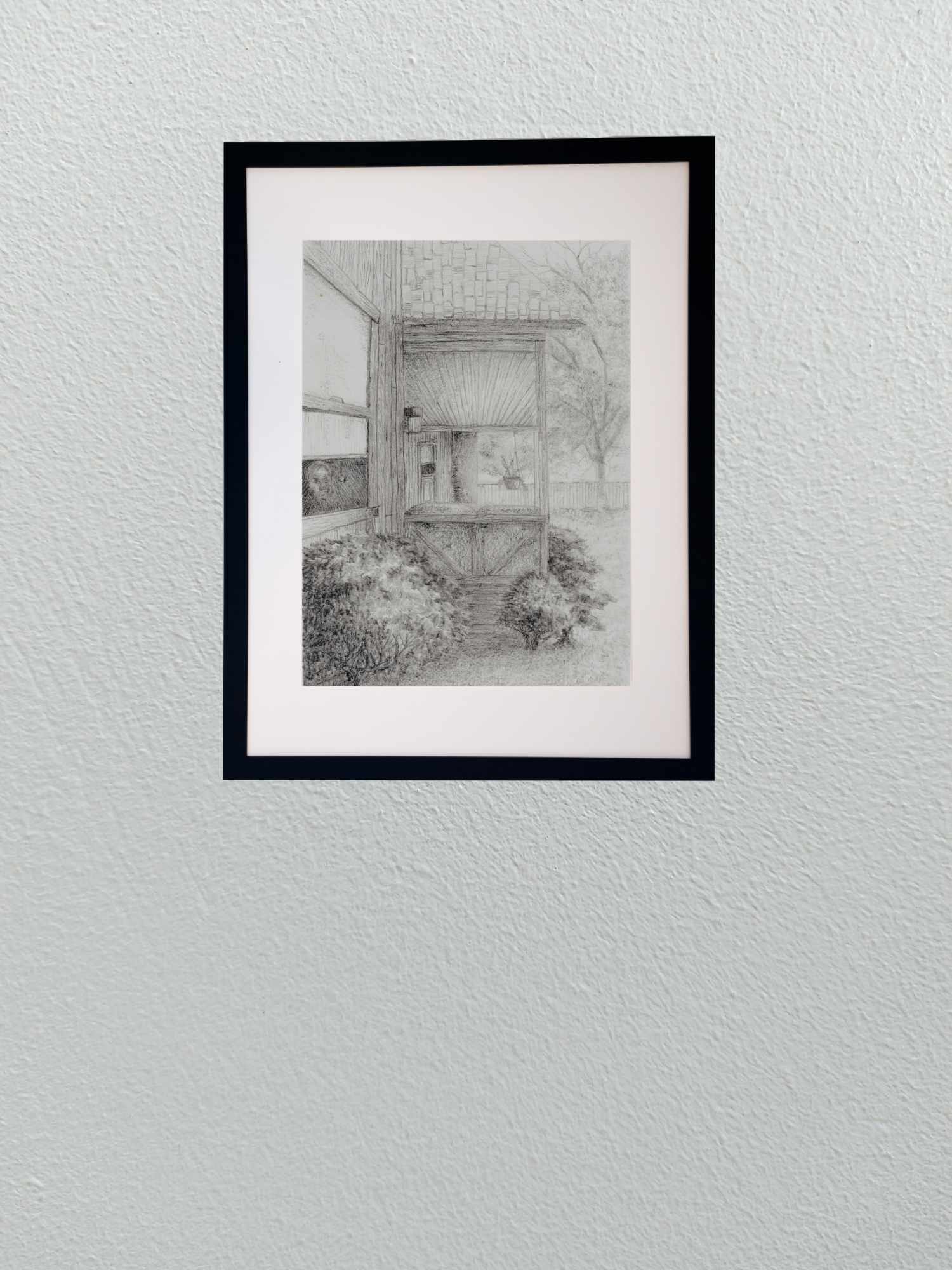
    This latest graphite piece returns to the tension of mundane horror, exploring what happens when the ordinary facade of suburban domesticity fractures. The composition leads the eye along the exterior flank of a residential home, past foundation shrubs and vertical siding toward a screened porch overlooking the backyard fence line.
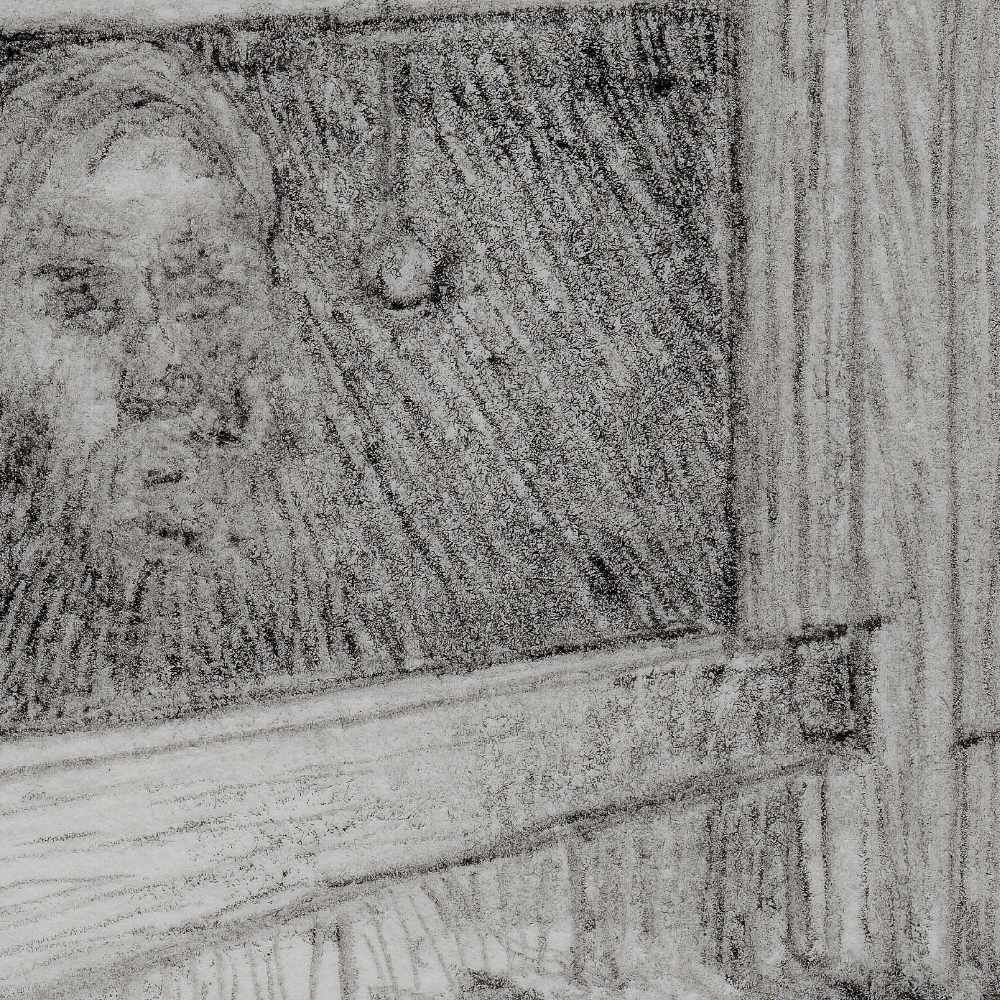
    Everything appears grounded in quiet neighborhood normalcy until the gaze drops to the lower window pane. Peering out from the deep interior shadow is a pale, distorted face pressed against the glass, staring directly back at the viewer. Coupled with the dark, empty doorway deeper along the porch, the scene introduces an immediate psychological chill: is the viewer looking in on a captive, an intruder, or something that belongs to the house itself?

    Technically, the drawing was completed on Strathmore heavyweight paper using Mitsubishi graphite pencils. The tooth of the heavyweight sheet creates a soft, tactile grain across the lawn, shrubs, and distant winter trees. To make the horror land, I leveraged the dark, velvety laydown of the Mitsubishi graphite to create a deep, light-drinking void in the window, using subtle negative rendering and soft erasure to pull the haunting contours of the face forward from the dark.


  • Along the Drive

    Along the Drive

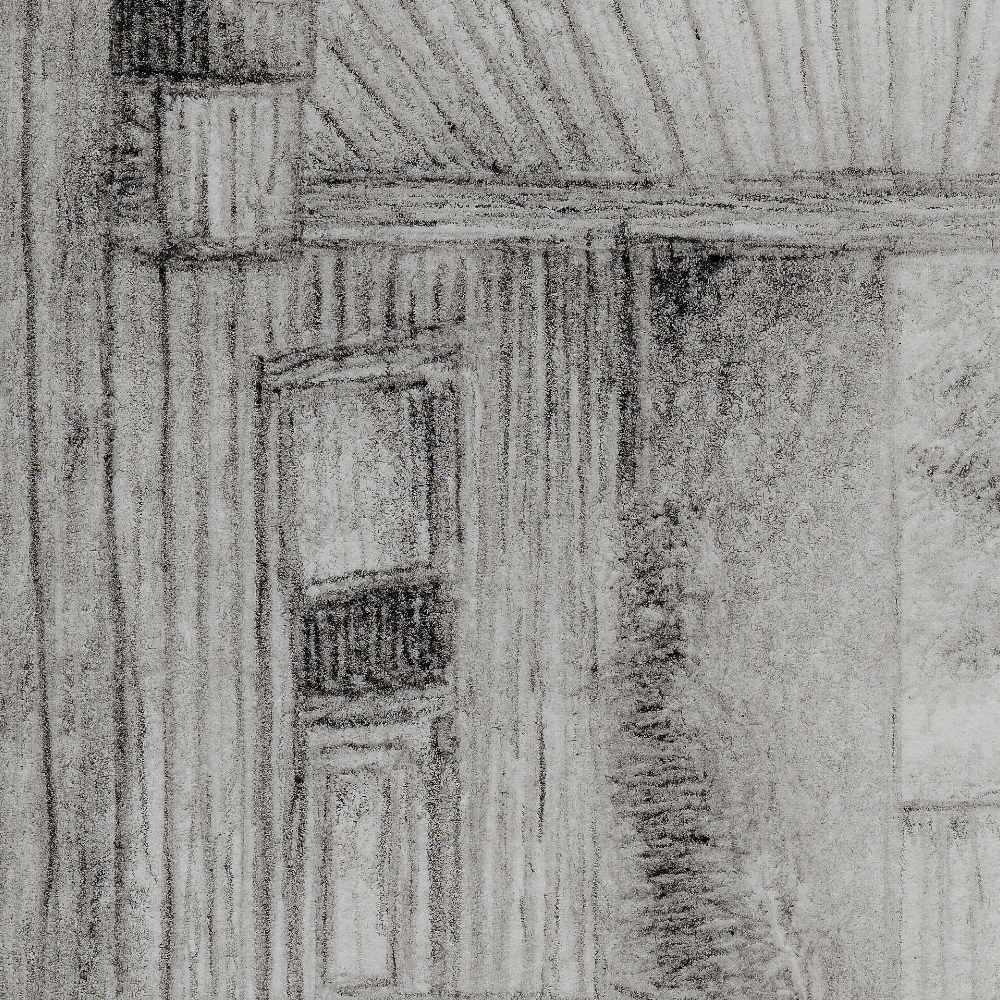
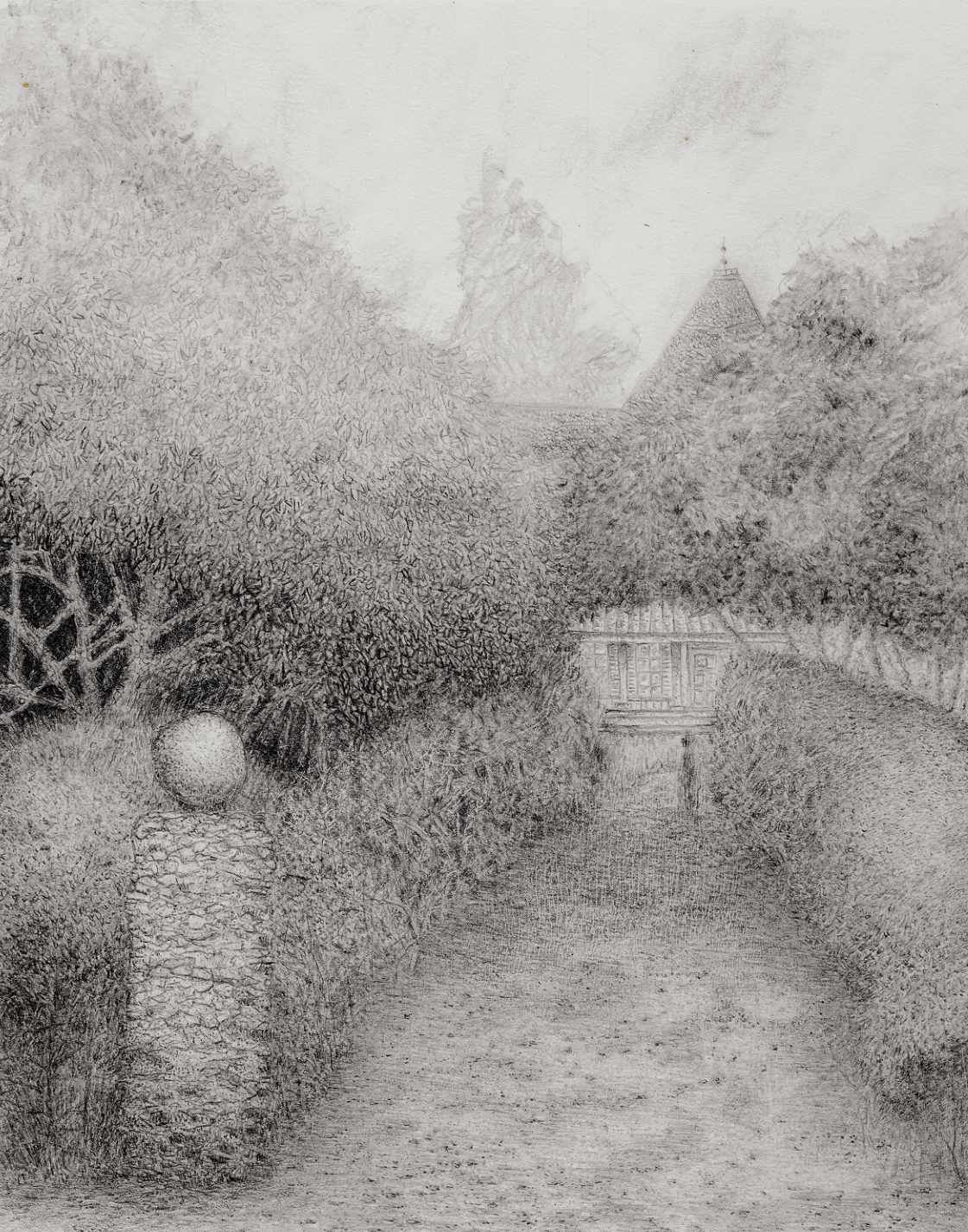
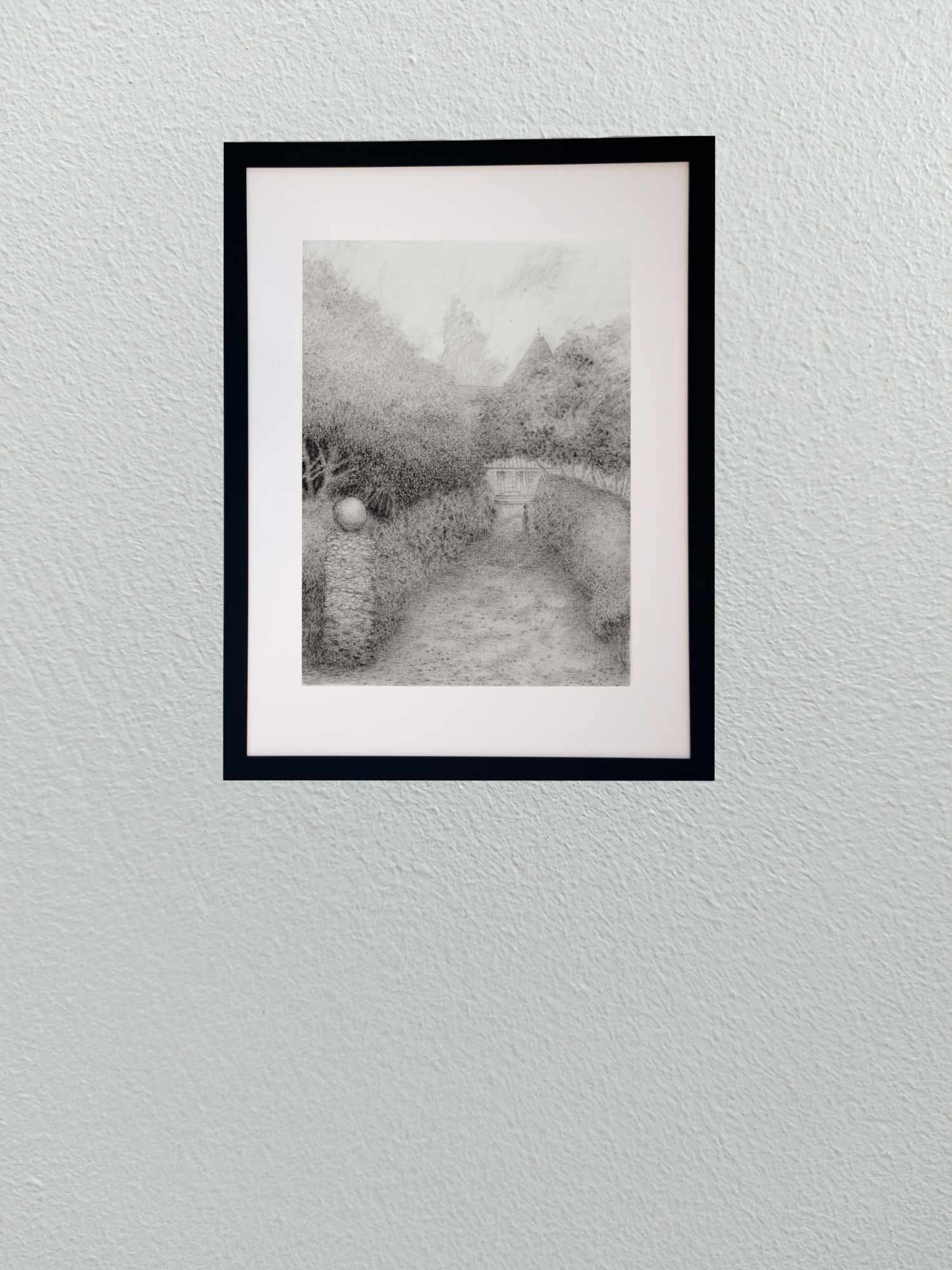
    Building directly on the earlier compositional study, this larger graphite drawing pushes deeper into a Southern Gothic mood of quiet decay, nostalgia, and loss. The scene captures a seemingly mundane domestic vista: a gravel driveway flanked by an aged stone pillar topped with a sphere, leading back toward a secluded home obscured by years of heavy hedge growth and sprawling trees.

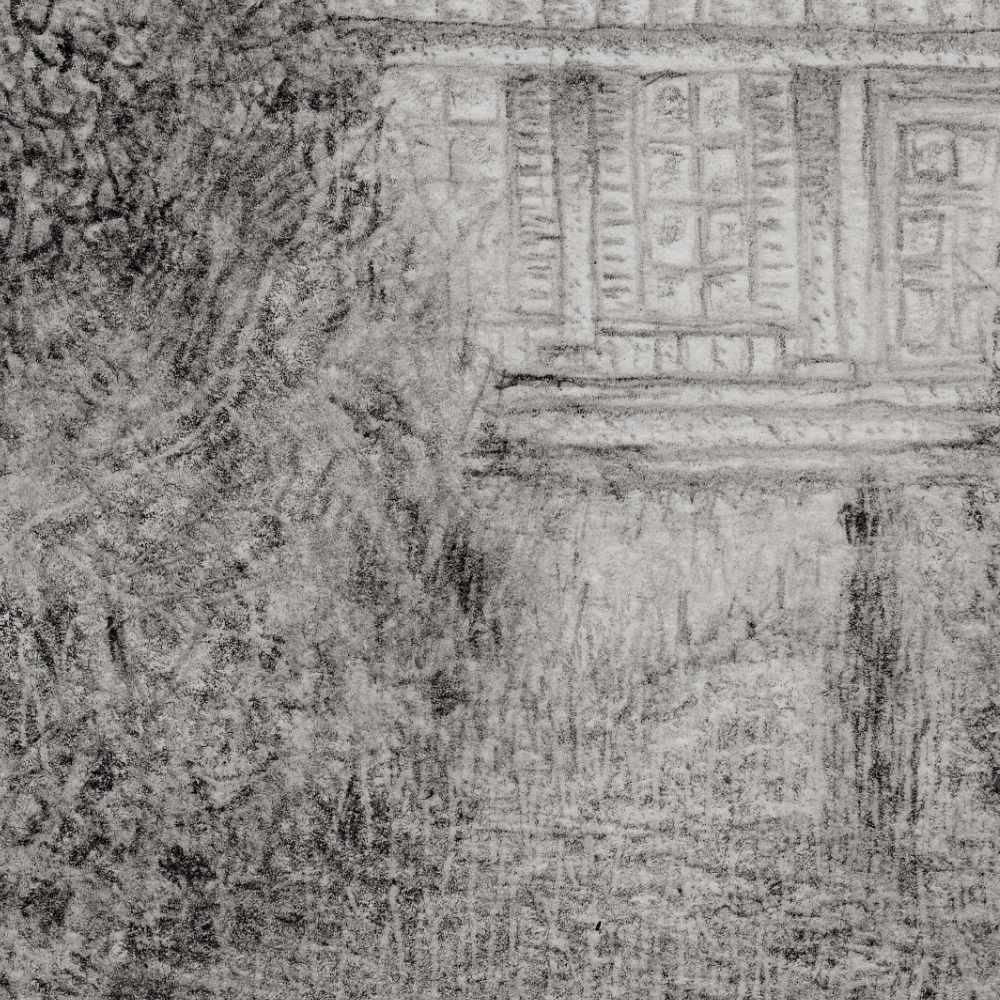
    The mood shifts through the atmosphere and subtle narrative detail. Bathed in a soft, silver-toned haze, the distance holds the quiet impression of a solitary silhouette standing along the hedge line near the porch steps. The figureโ€™s stillness turns the piece into a meditation on memoryโ€”an echo of someone who once belonged to this secluded home, lingering in the driveway as the landscape slowly reclaims the path.

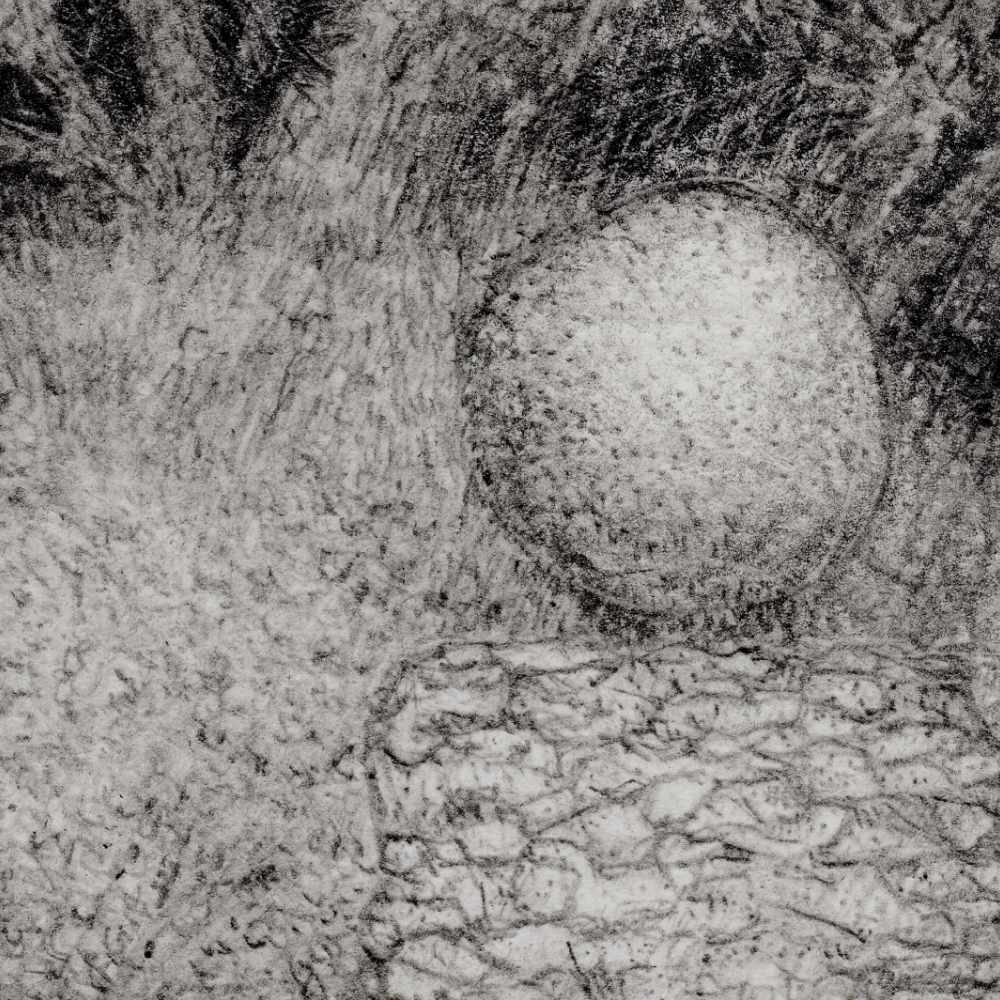
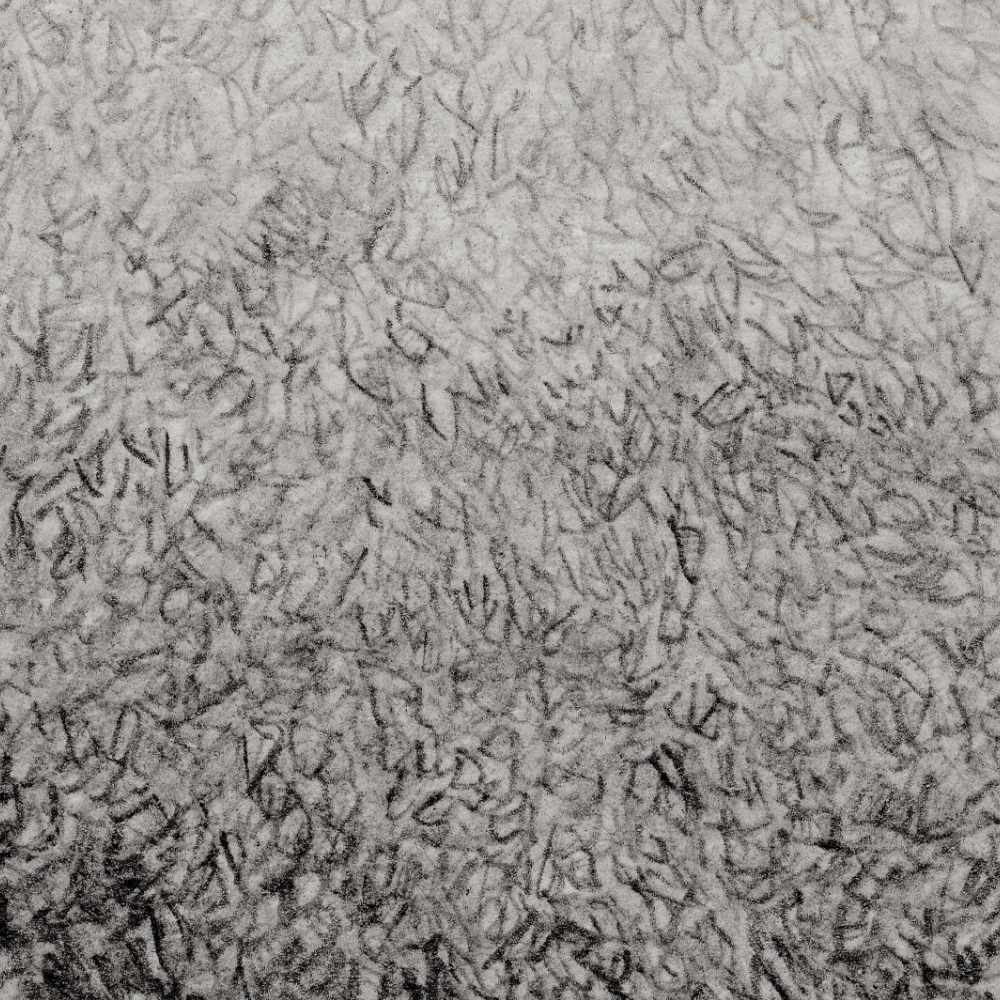
    Technically, the drawing was completed on Strathmore heavyweight paper using Mitsubishi graphite pencils. The tooth of the Strathmore paper catches the smooth, dark lead of the Mitsubishi pencils to build velvety, delicate foliage textures and textured stone surfaces, while soft, feathered strokes create the hazy, vaporous sky that softens the roofline and dense tree canopy.


  • Cloistered Roofline

    Cloistered Roofline

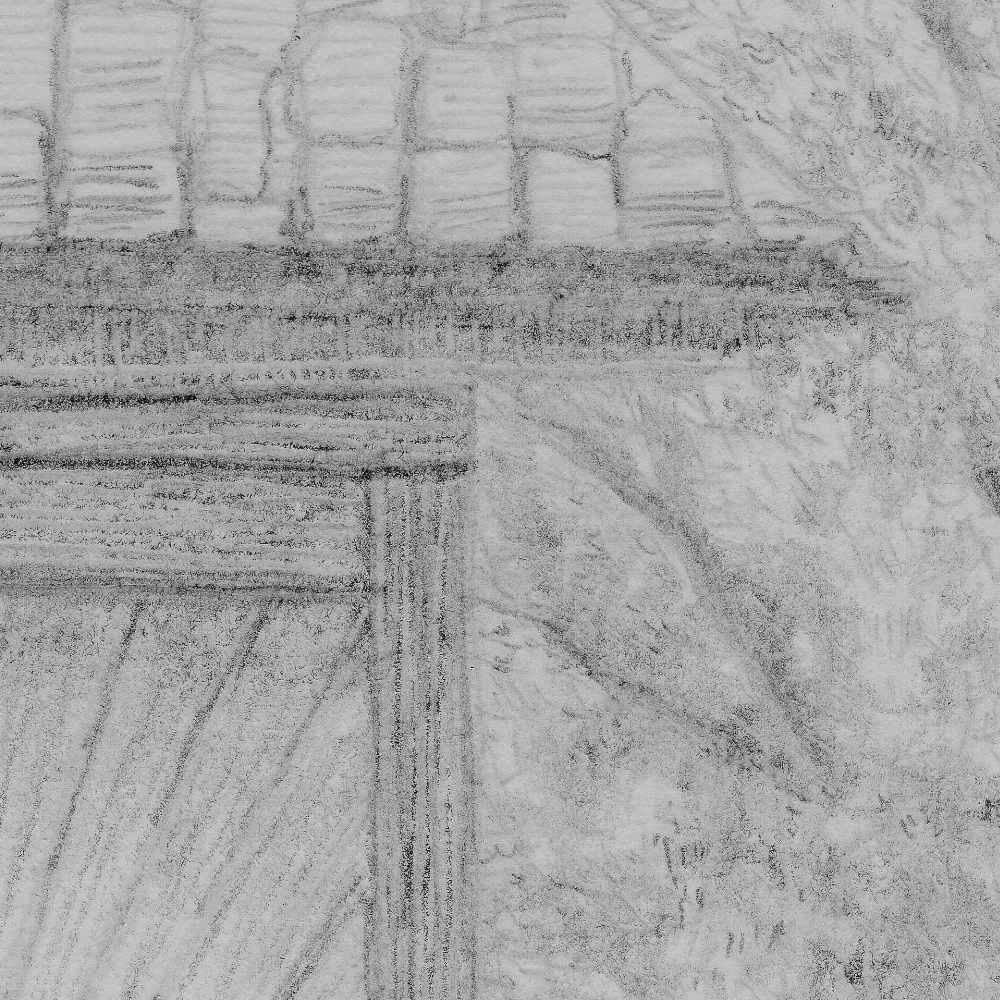
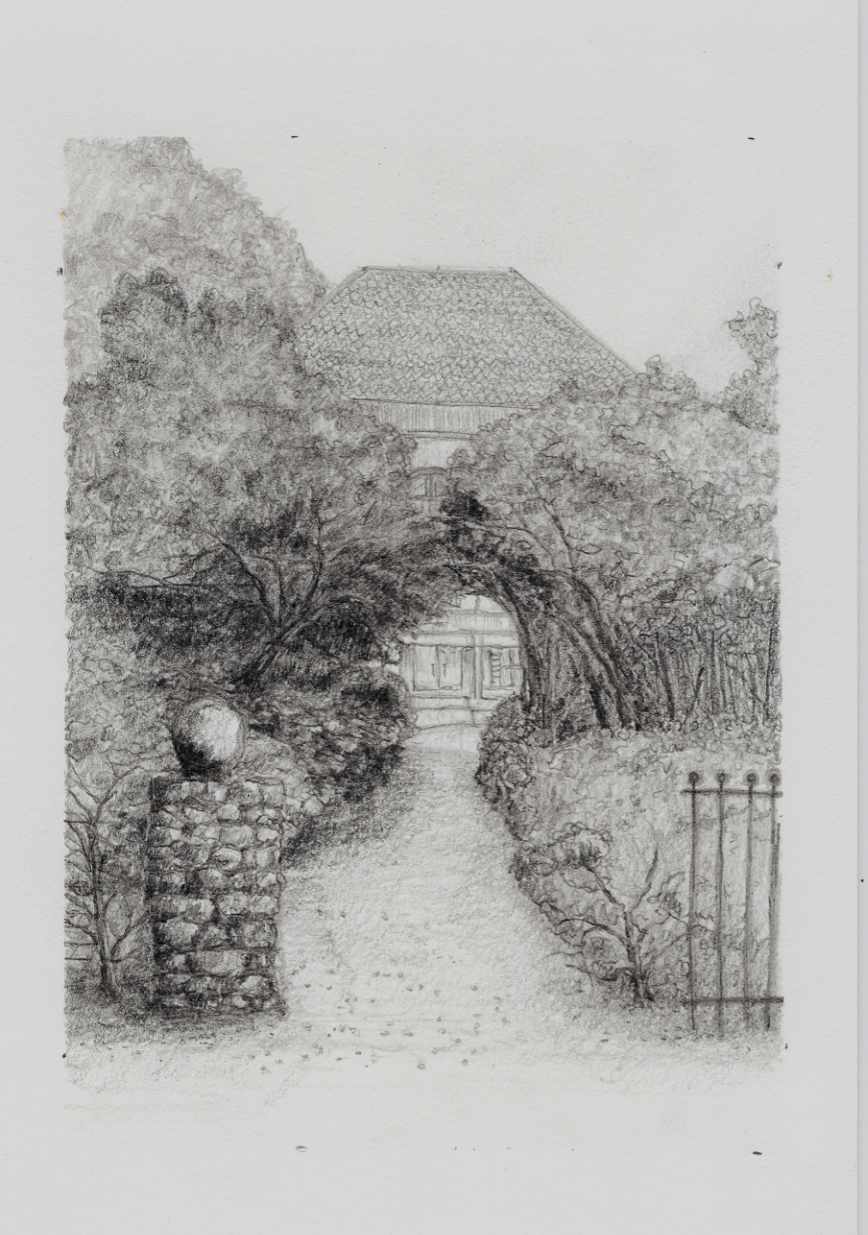
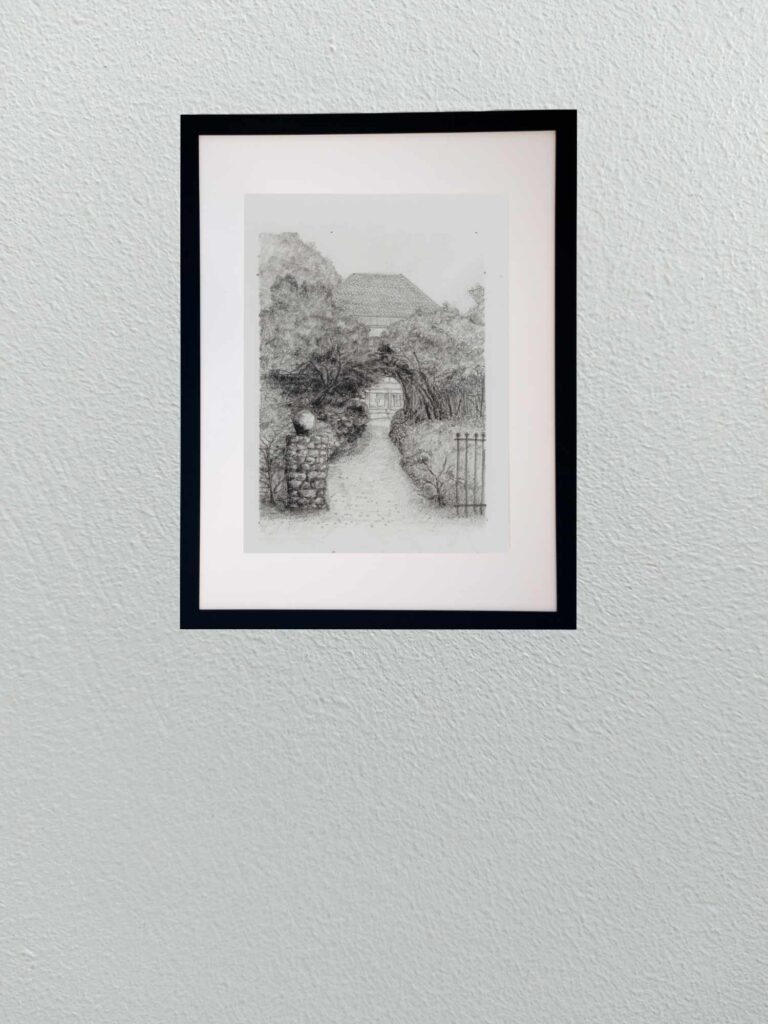
    his graphite study returns to quiet architectural mystery, focusing on the threshold between the open approach and a secluded domestic space. The composition centers on a curved gravel drive flanked by an old stone pillar topped with a sphere, an iron gate, and heavy, overgrown shrubbery.

    The drive disappears beneath a dense, shadowy arbor of bent trees, creating a shaded tunnel that conceals the majority of the house beyond. Only fragments of the structure emergeโ€”the steep pitch of a tiled or shingled roof, a hint of an upper dormer, and a sunlit porch tucked in the distance. The architecture feels cloistered and watchful, shielded by decades of growth. Leaving the interior obscured invites the viewer to wonder whether the home is occupied, abandoned, or quietly waiting behind the canopy.

    Technically, the drawing was executed on Strathmore heavyweight paper using Winsor & Newton graphite pencils. The paperโ€™s substantial tooth breaks up the graphite strokes, allowing for soft, vaporous transitions throughout the billowy tree crowns. The creamy laydown of the Winsor & Newton lead builds deep, velvety darks under the tree canopy and gives tangible weight and mortar depth to the individual fieldstones of the gatepost.


  • Flight Along the Hillside

    Flight Along the Hillside

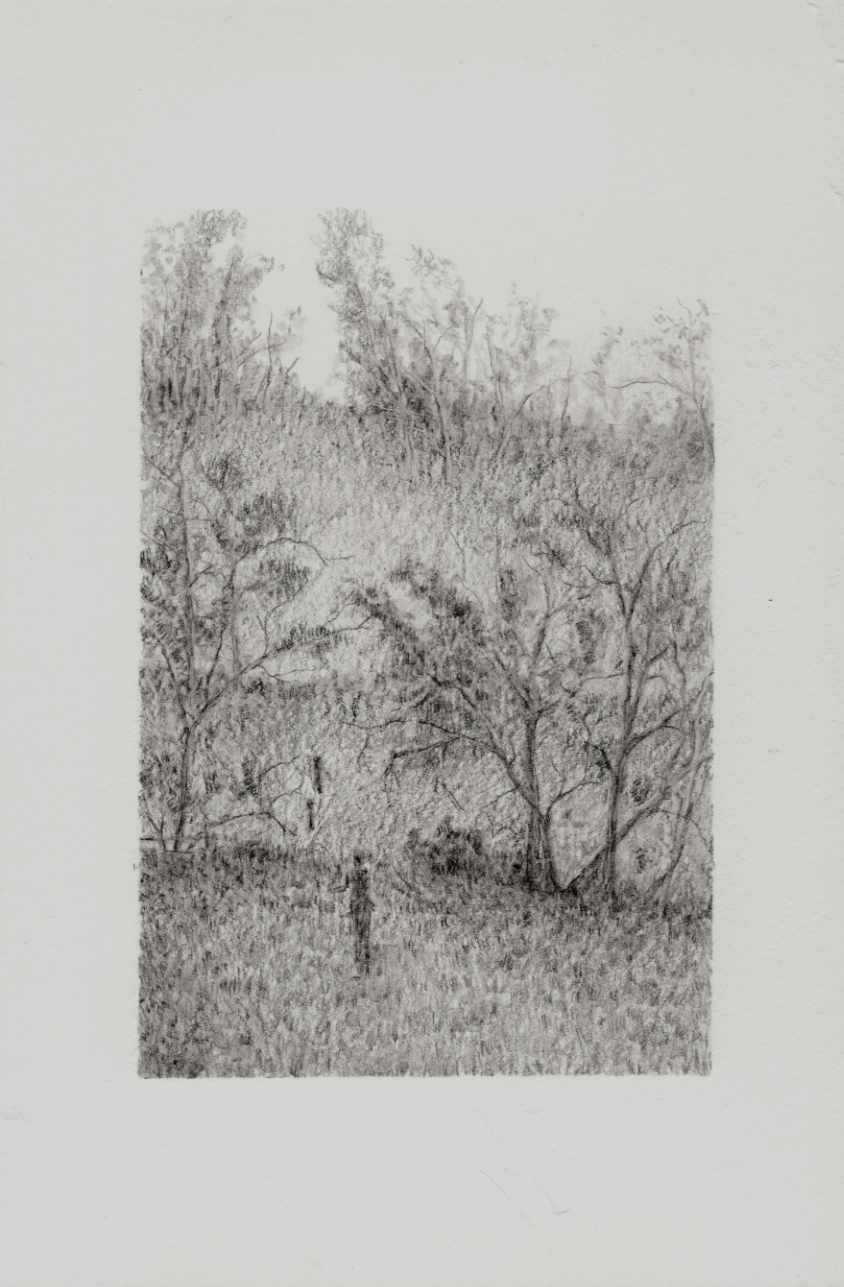
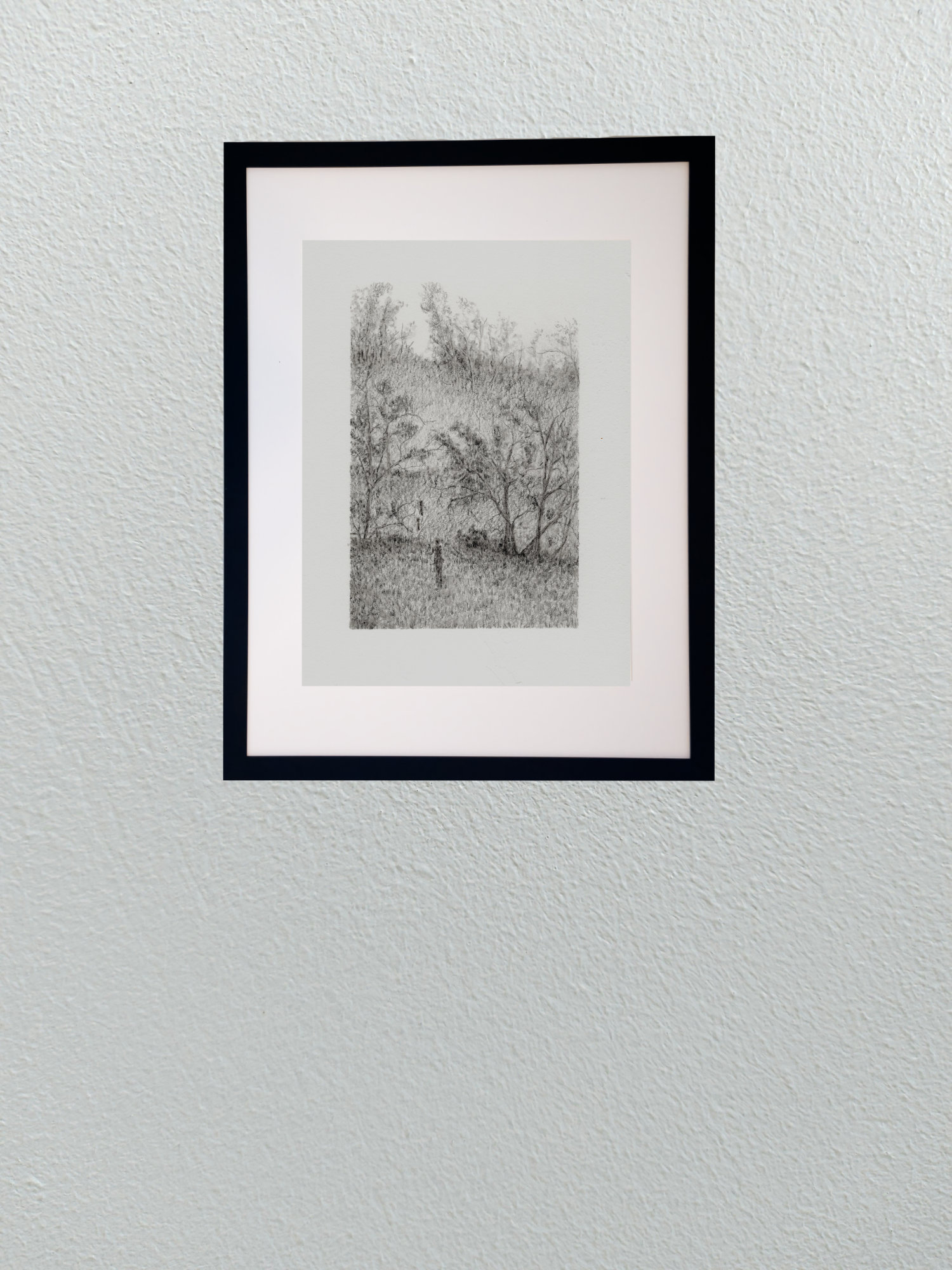
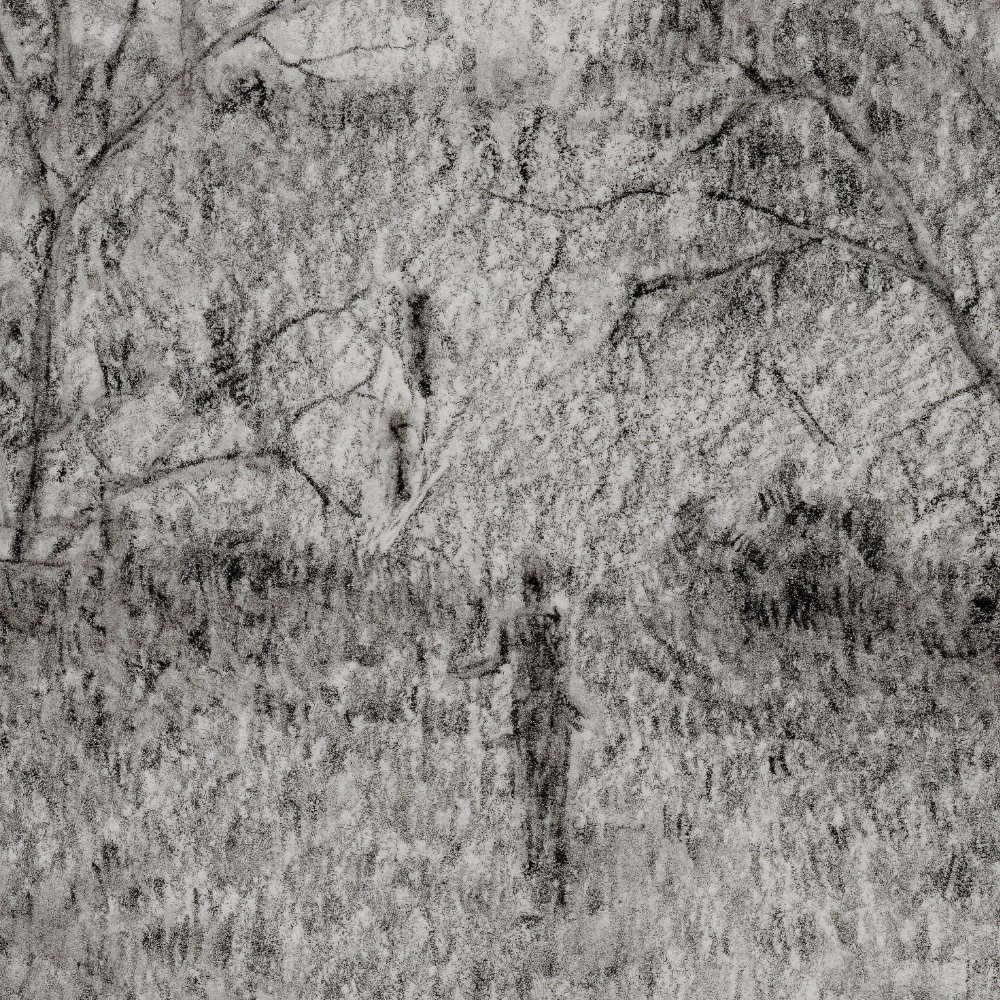
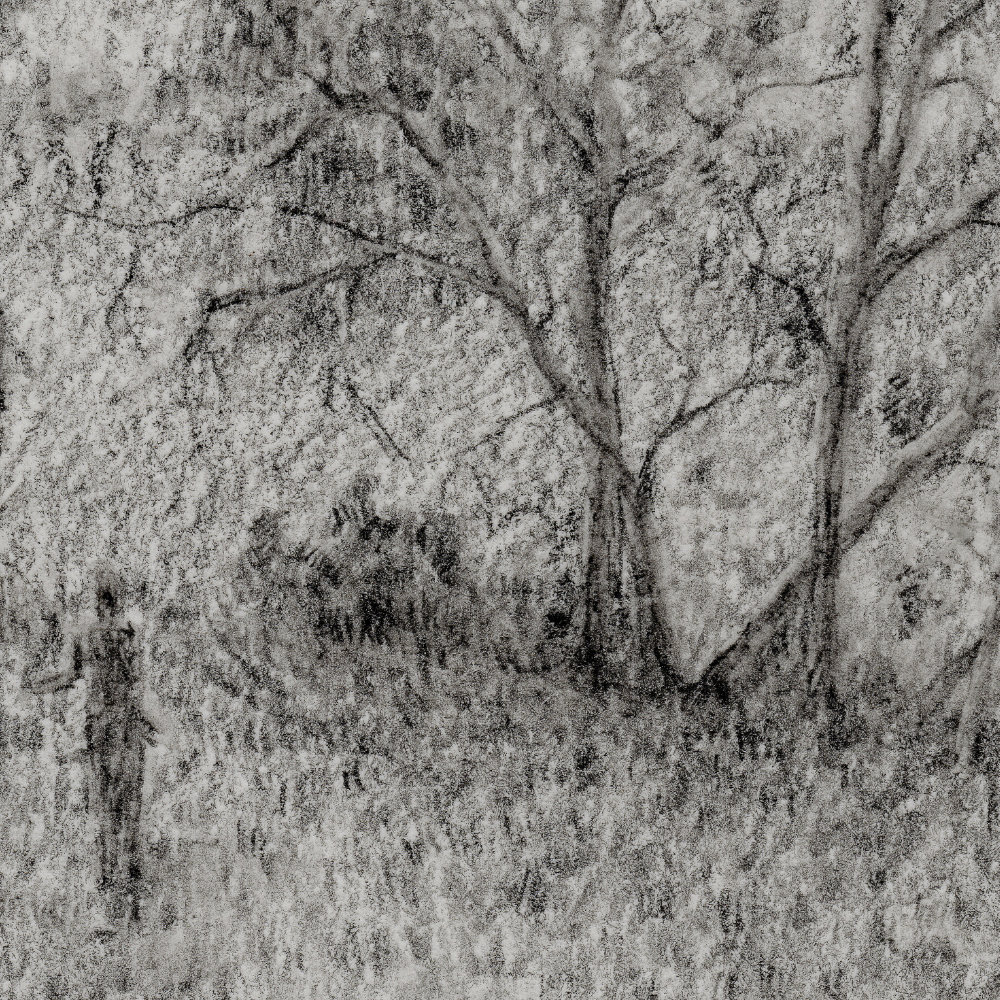
    This graphite piece pushes the themes of isolation and the unknown into an active, high-tension narrative. Moving away from the static, contemplative vigils of the earlier drawings, here we see a lone figure running directly toward the viewer through a dense, textured field.

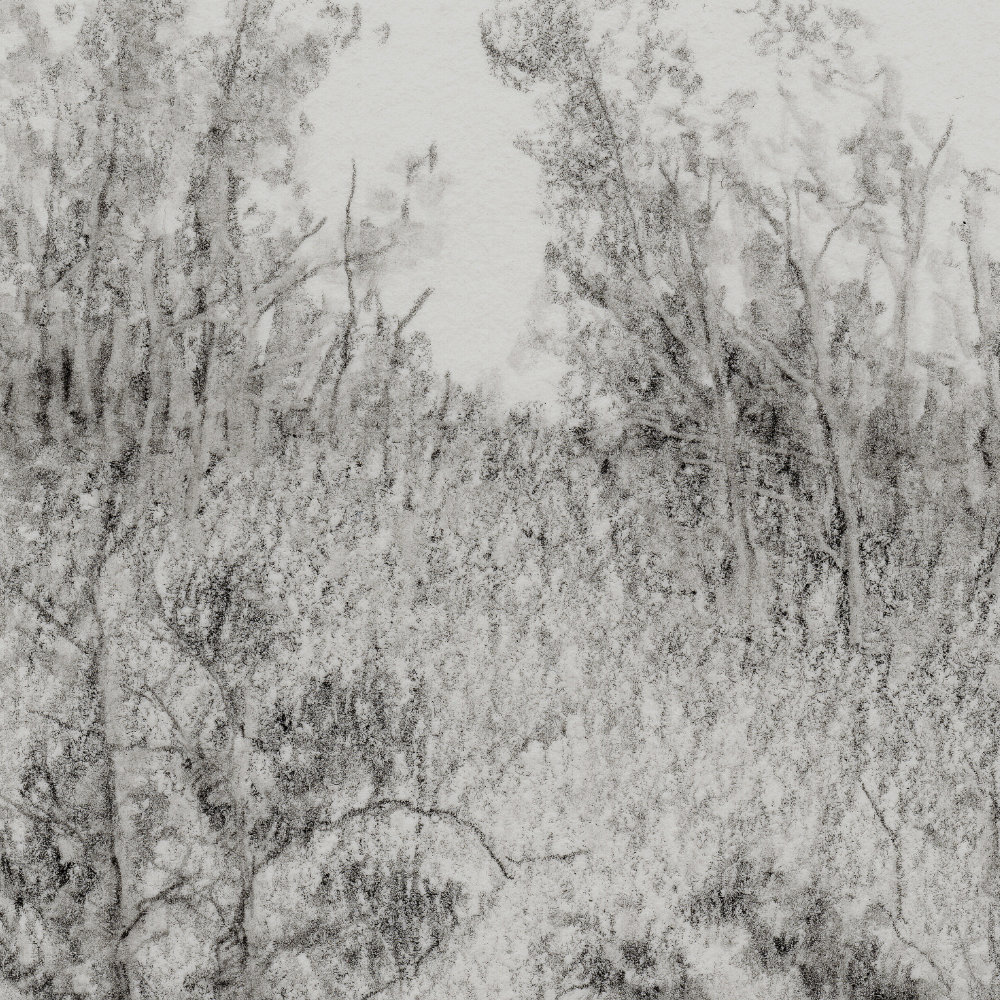
    The friction in the scene stems from what lingers just behind. Framed by bare, sprawling trees in the midground and the hazy canopy of the woods beyond, subtle marks in the graphite suggest additional figures watching or giving chase. Are they pursuers, ancient presences emerging from the tree line, or mere tricks of light in the overgrowth? Leaving those forms as vague impressions lets the viewer feel the urgency of the moment without spelling out the conclusion.

    Technically, the drawing was completed on Strathmore heavyweight paper using Staedtler graphite pencils. Staedtler lead offers crisp, controllable gradations that work exceptionally well across a textured ground. I used light, soft shading to establish the misty depth of the woods, while applying sharper, darker strokes to build the chaotic rhythm of the field and the sharp silhouette of the fleeing figure.


  • Quiet Boundary

    Quiet Boundary

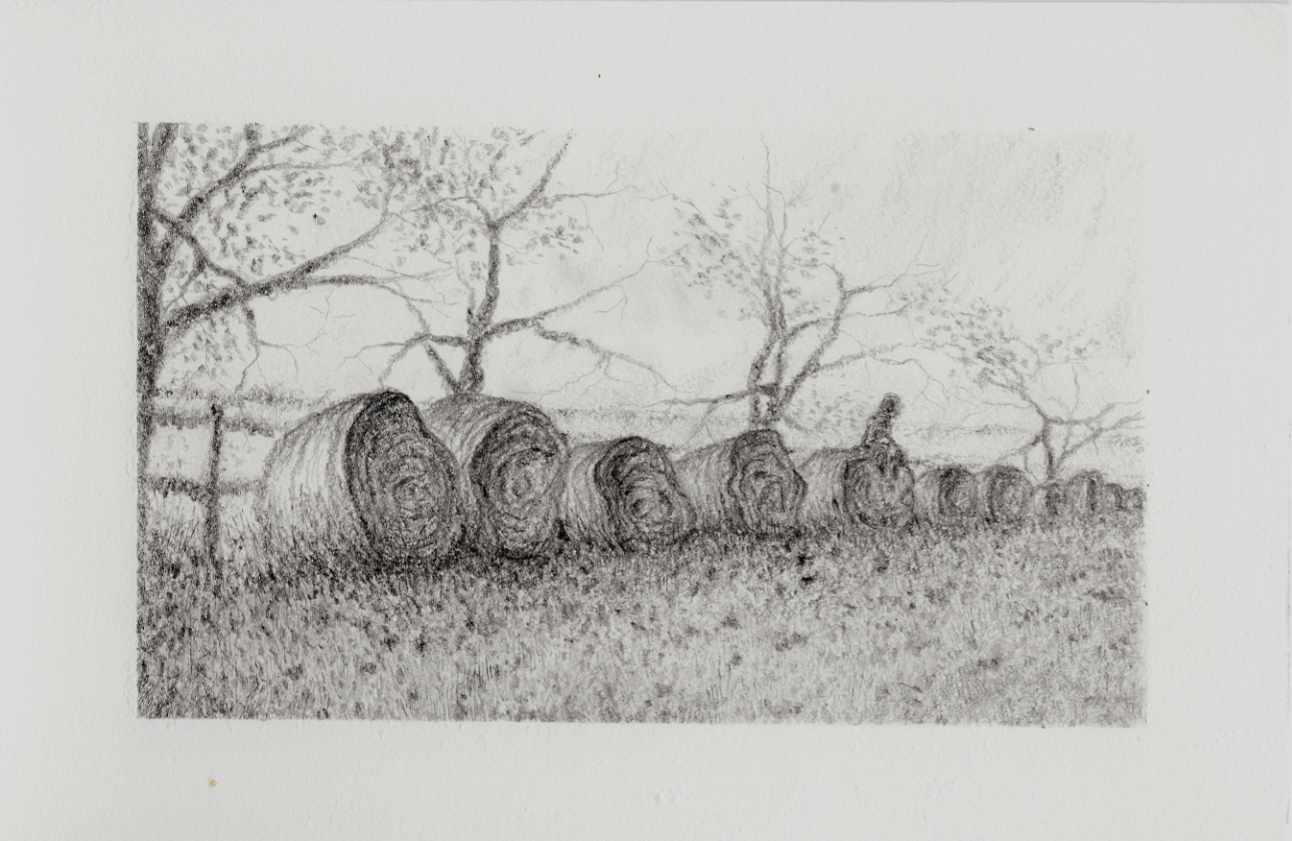
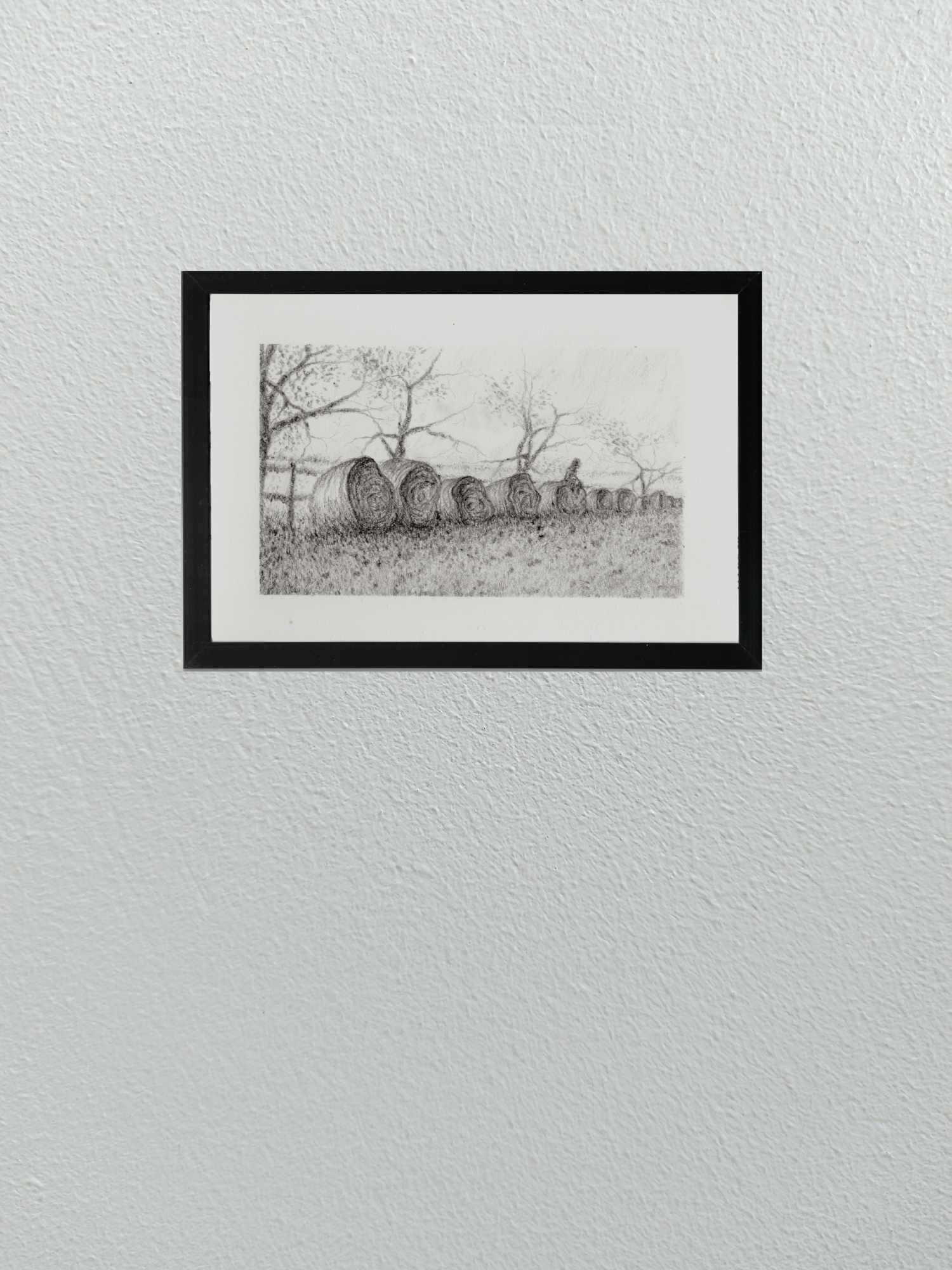
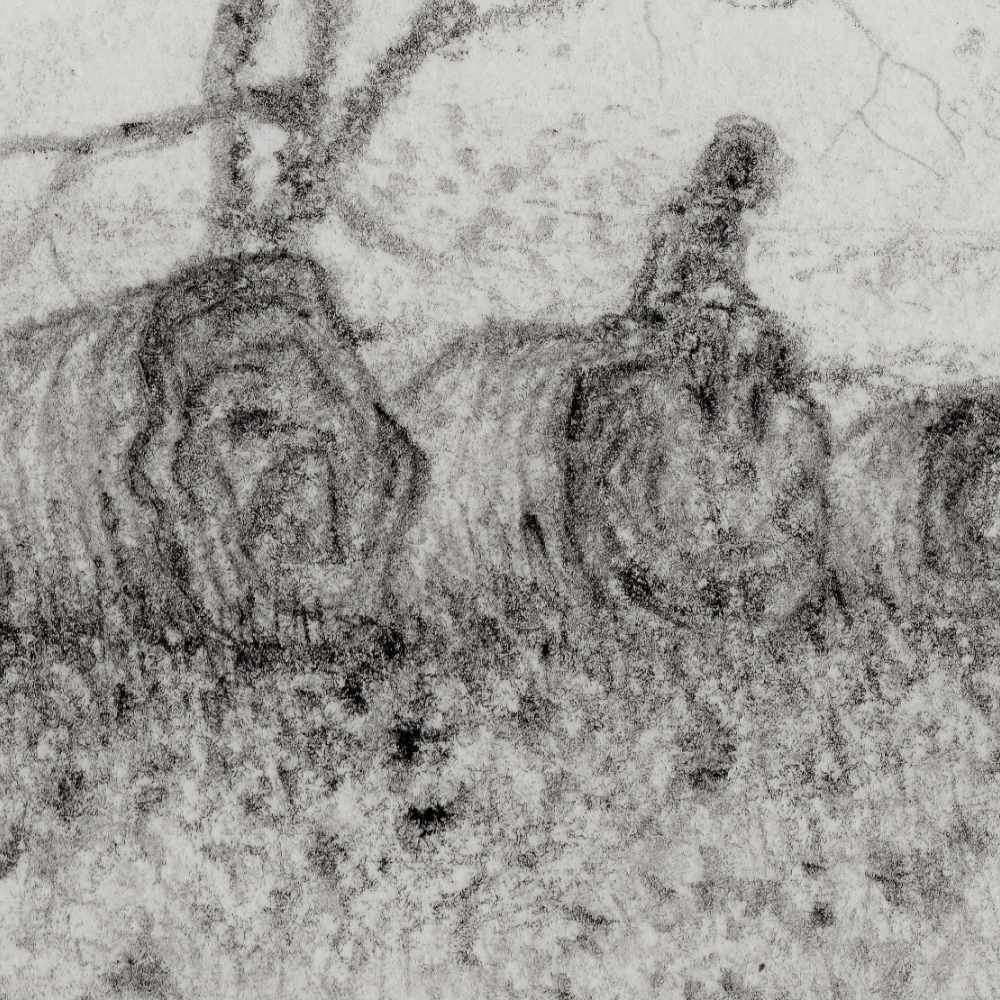
    This graphite piece builds on my continued exploration of solitude, memory, and quiet intervals in rural spaces. The composition follows a rhythmic line of rolled hay bales resting along a fence row beneath bare, sprawling trees. Perched atop one of the bales sits the subtle impression of a solitary figure, gazing out over the pasture in a private moment of pause.

    Graphite lends itself naturally to this kind of atmospheric work, allowing me to build a hazy, soft-focus impression where subtle marks and soft shading do the storytelling rather than rigid, hard lines.

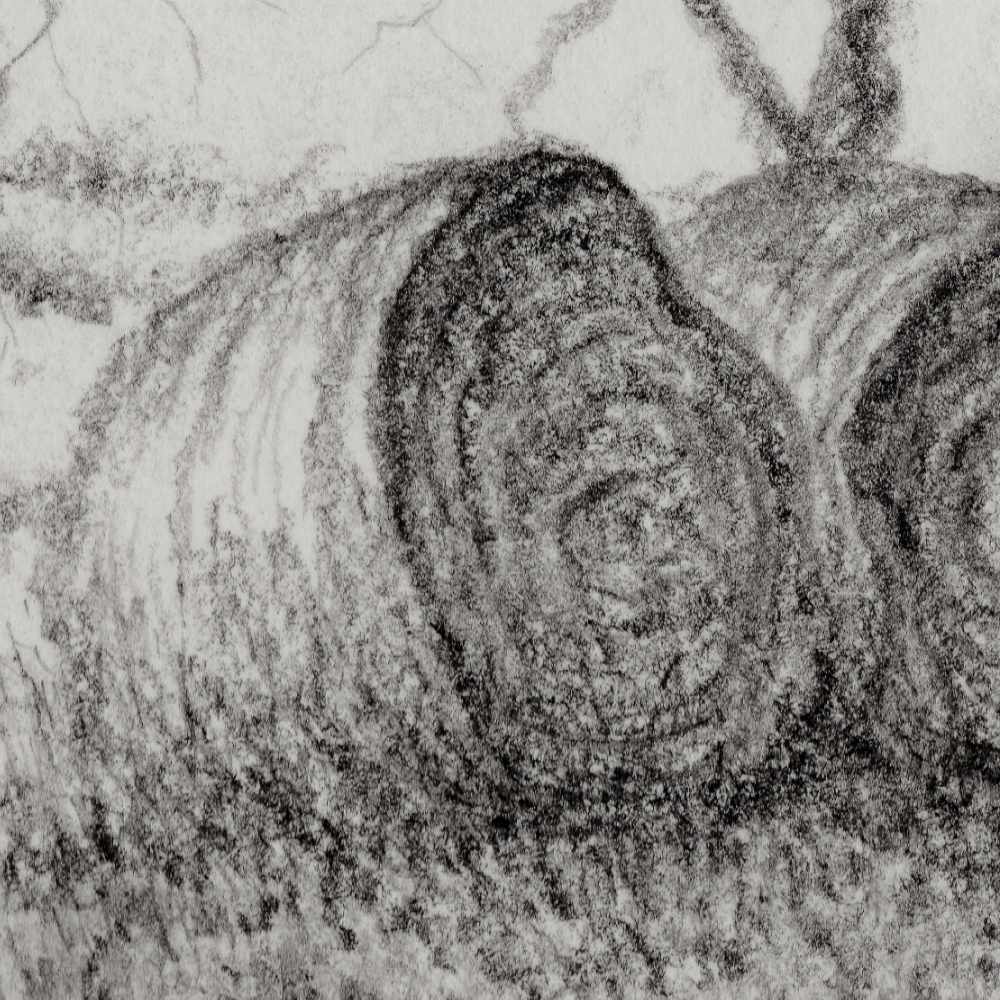
    Technically, the drawing was completed on Strathmore heavyweight paper using Mitsubishi graphite pencils. The paperโ€™s substantial tooth provides an ideal textured ground for dry media, catching the graphite to create a natural, grainy softness across the background and grass while allowing the darker Mitsubishi lead to lay down dense, rich contrast in the swirling texture of the bales and the tree branches.


  • Solitary Traverse

    Solitary Traverse

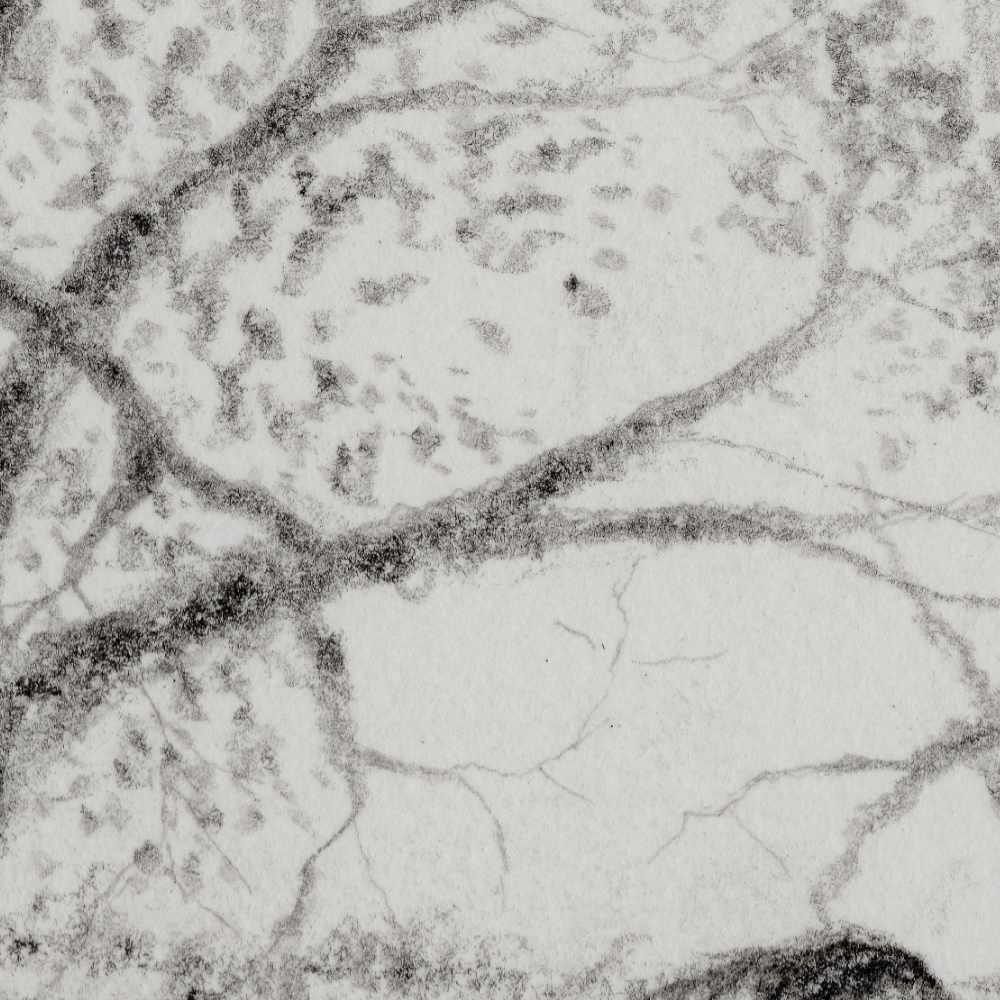
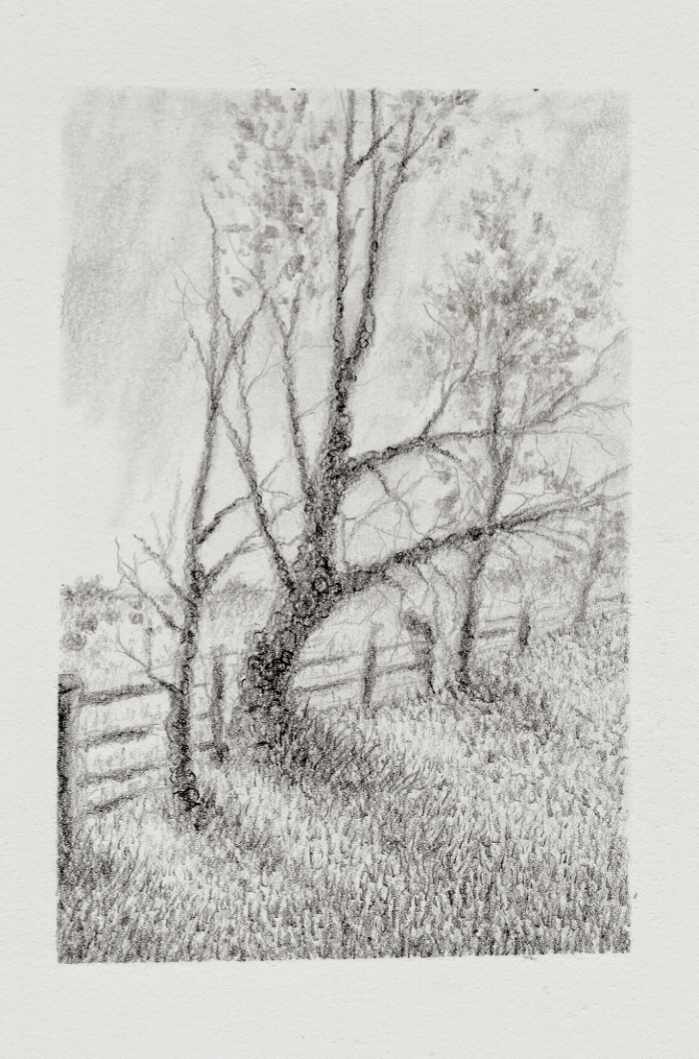
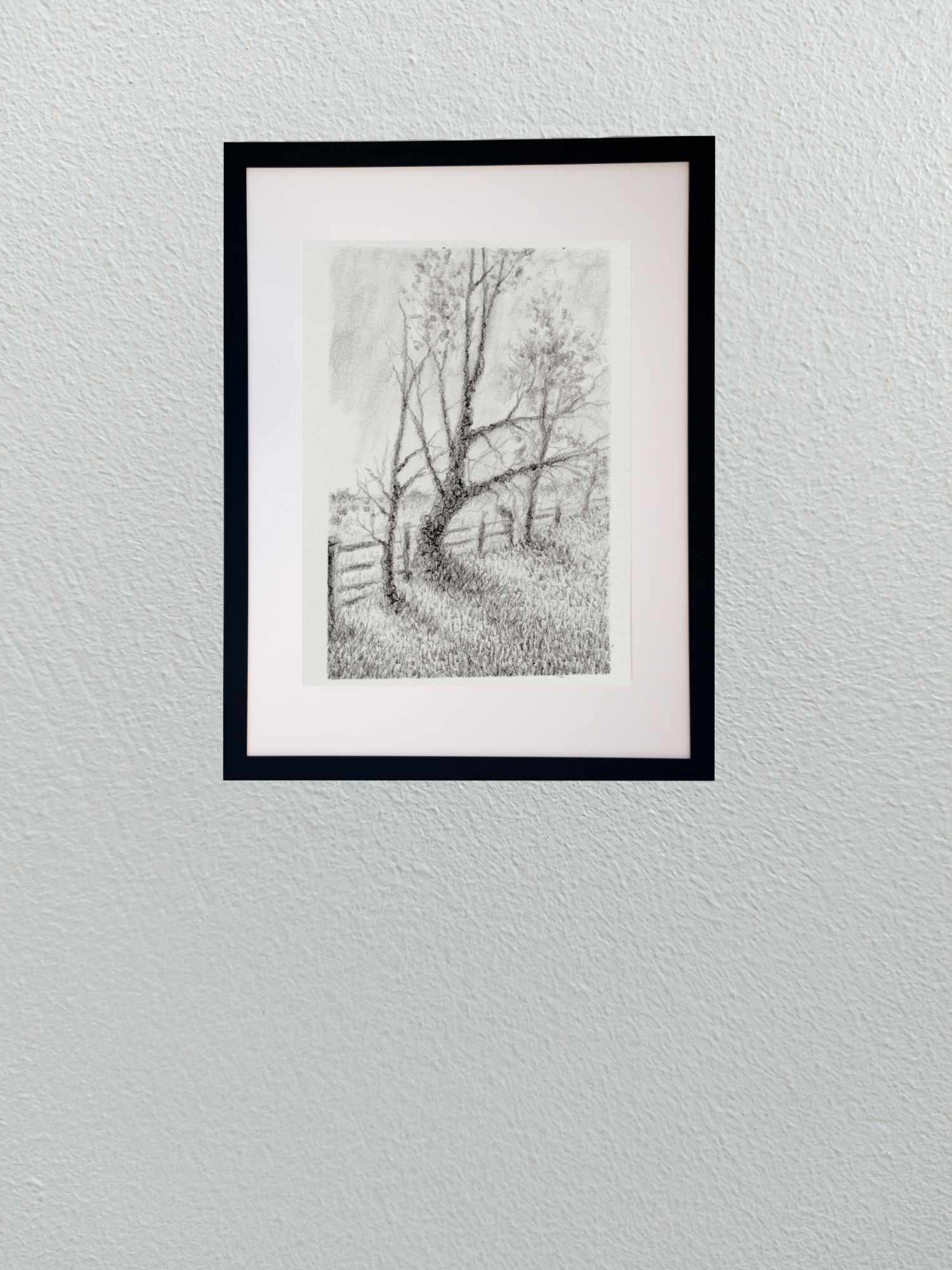
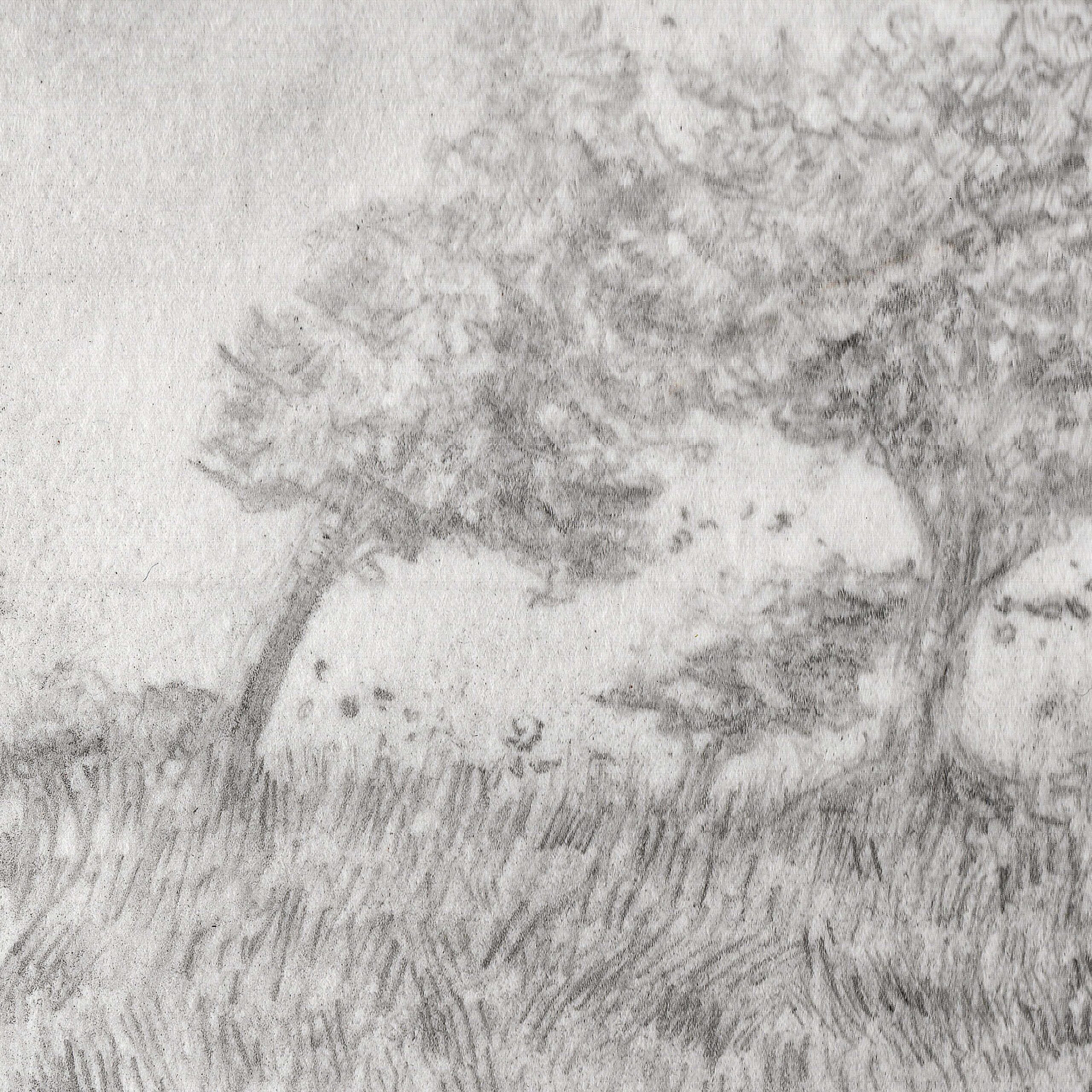
    This graphite drawing steps back into a quiet, atmospheric space, continuing my exploration of solitude, loss, and the unknown. At first glance, the composition presents a familiar rural vista: a weathered fence line tracing the curve of a hill, distant hay bales resting in the pasture, and a small cluster of bare trees leaning against the sky.

    Looking closer between the trunks reveals a faint, subtly shaded figure walking along the boundary. That quiet presence shifts the entire mood of the scene, turning a simple field study into a contemplative moment of transition. Is it a wanderer passing through, or an echo tied to these quiet acres? Leaving that narrative open allows the viewer to project their own sense of memory and stillness into the frame.

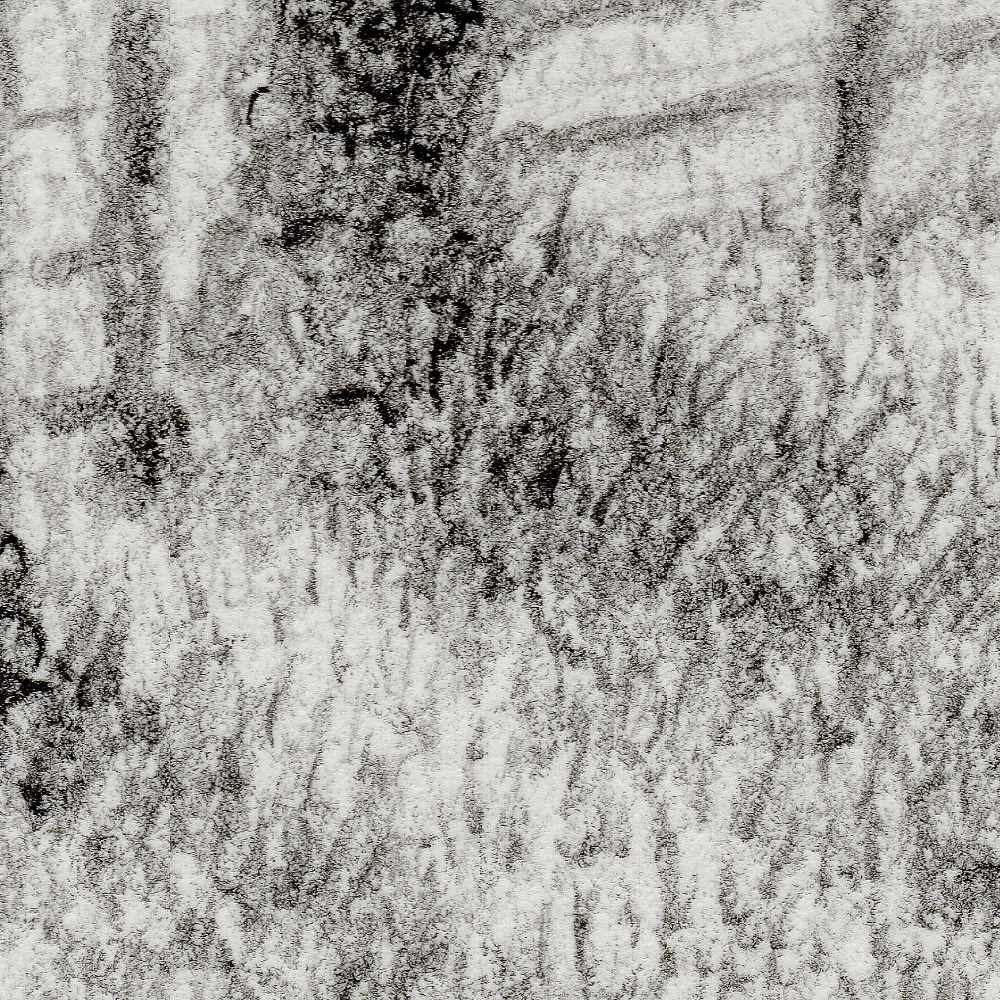
    Technically, the piece was completed on Strathmore heavyweight mixed media paper using Winsor & Newton medium graphite pencils. The pencils were a blind buy, but their soft, creamy graphite application laid down rich, dark values on the textured surface. The natural tooth of the heavyweight paper grabs the medium cleanly, creating a soft, stippled grain in the grass and sky while letting the darker graphite build dense, tactile fissures along the tree bark.


  • Sedge Walking

    Sedge Walking

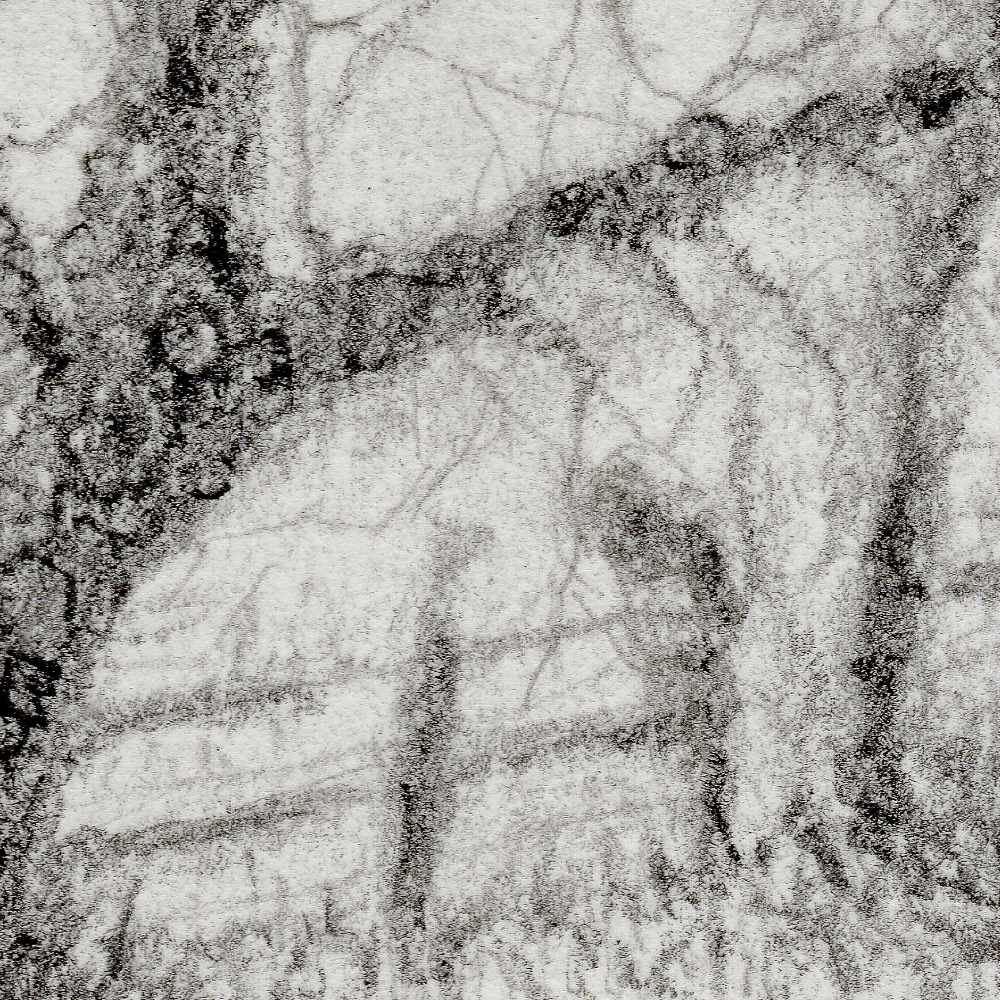
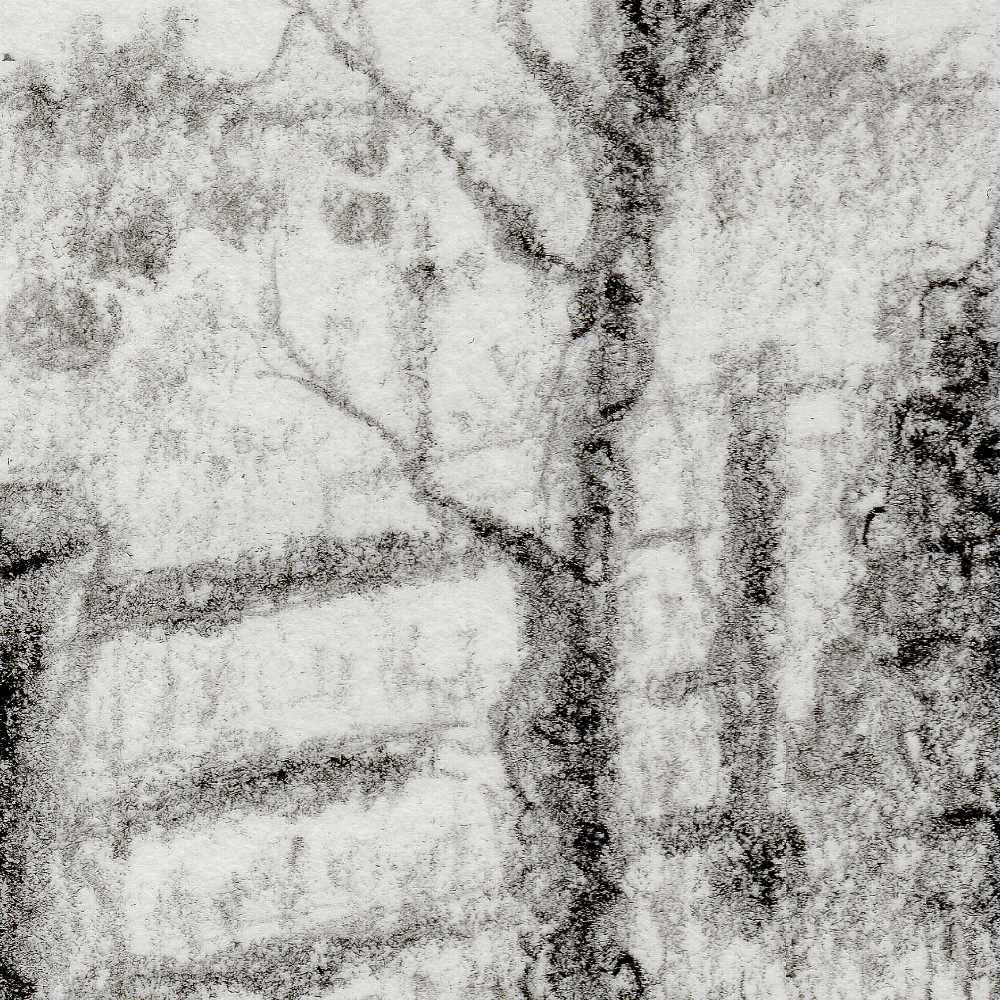
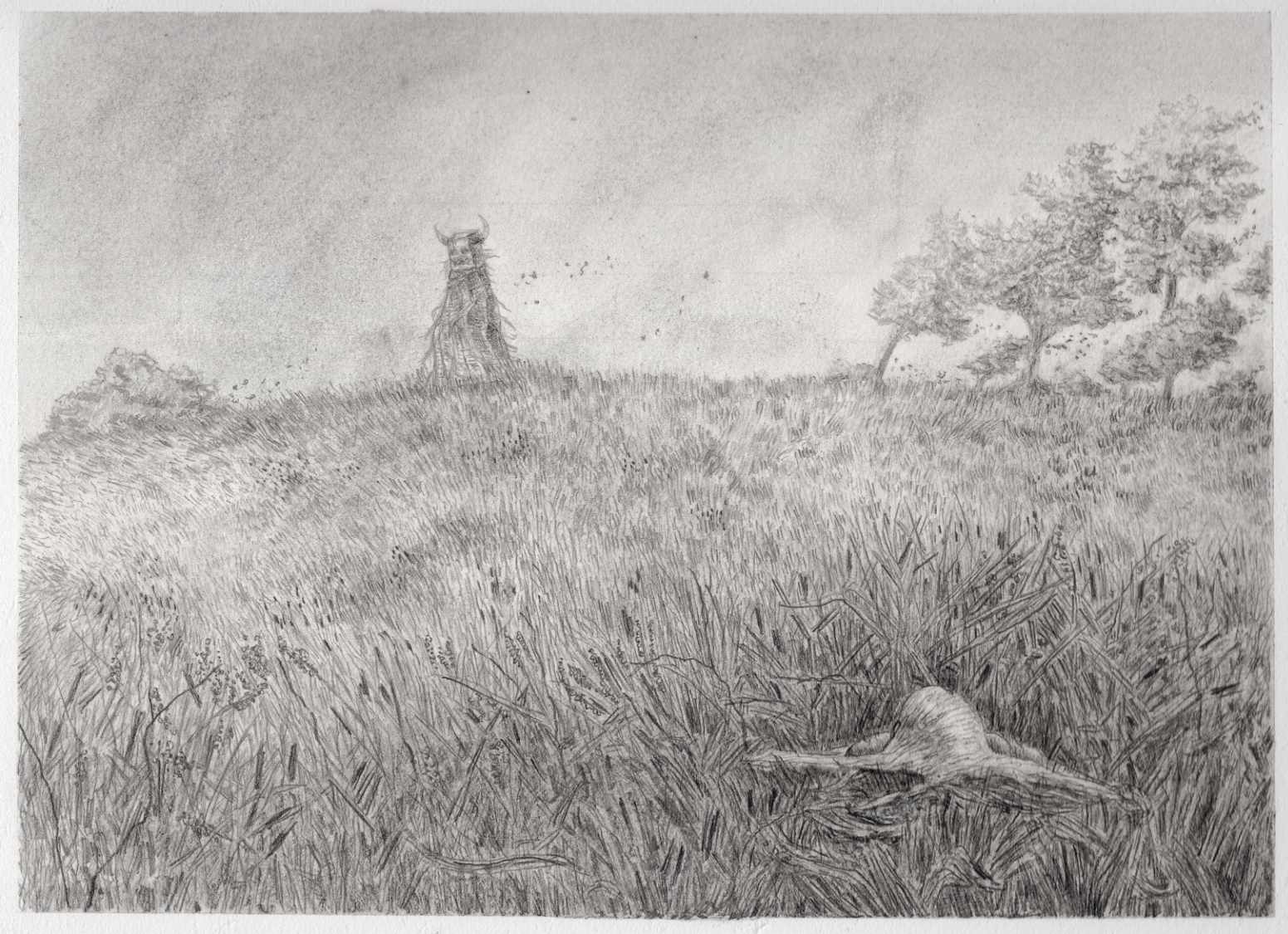
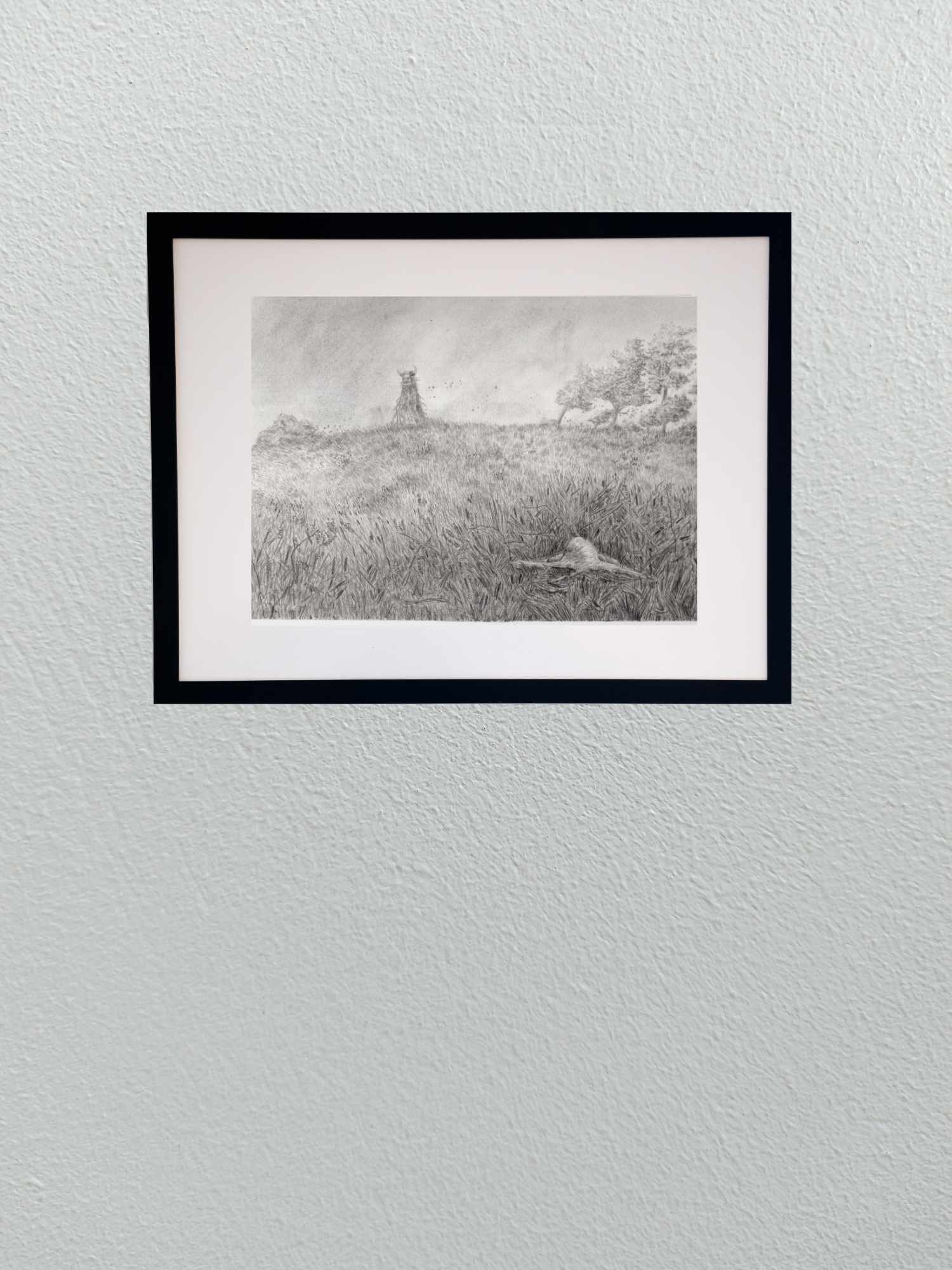
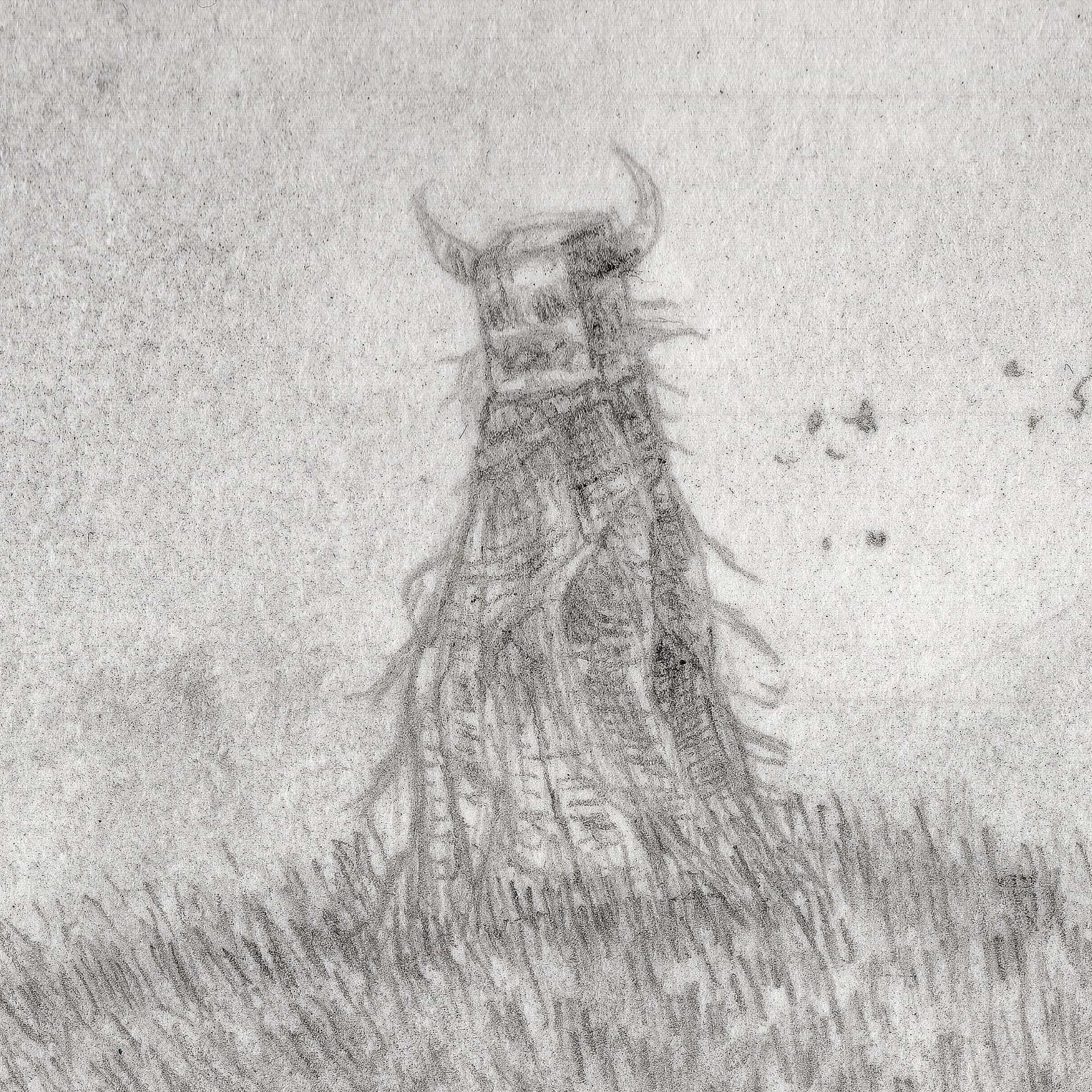
    This pencil sketch is the first concrete concept for a new direction I’m exploring. The series centers on the quiet, ancient presence that occupies our fields and prairies, using a recurring horned entity as a narrative anchor. I’ve been drawing inspiration from the looming, watchful nature of old-world land spirits like the Leshen, mixing that folklore with the indifferent vastness of our own open plains.

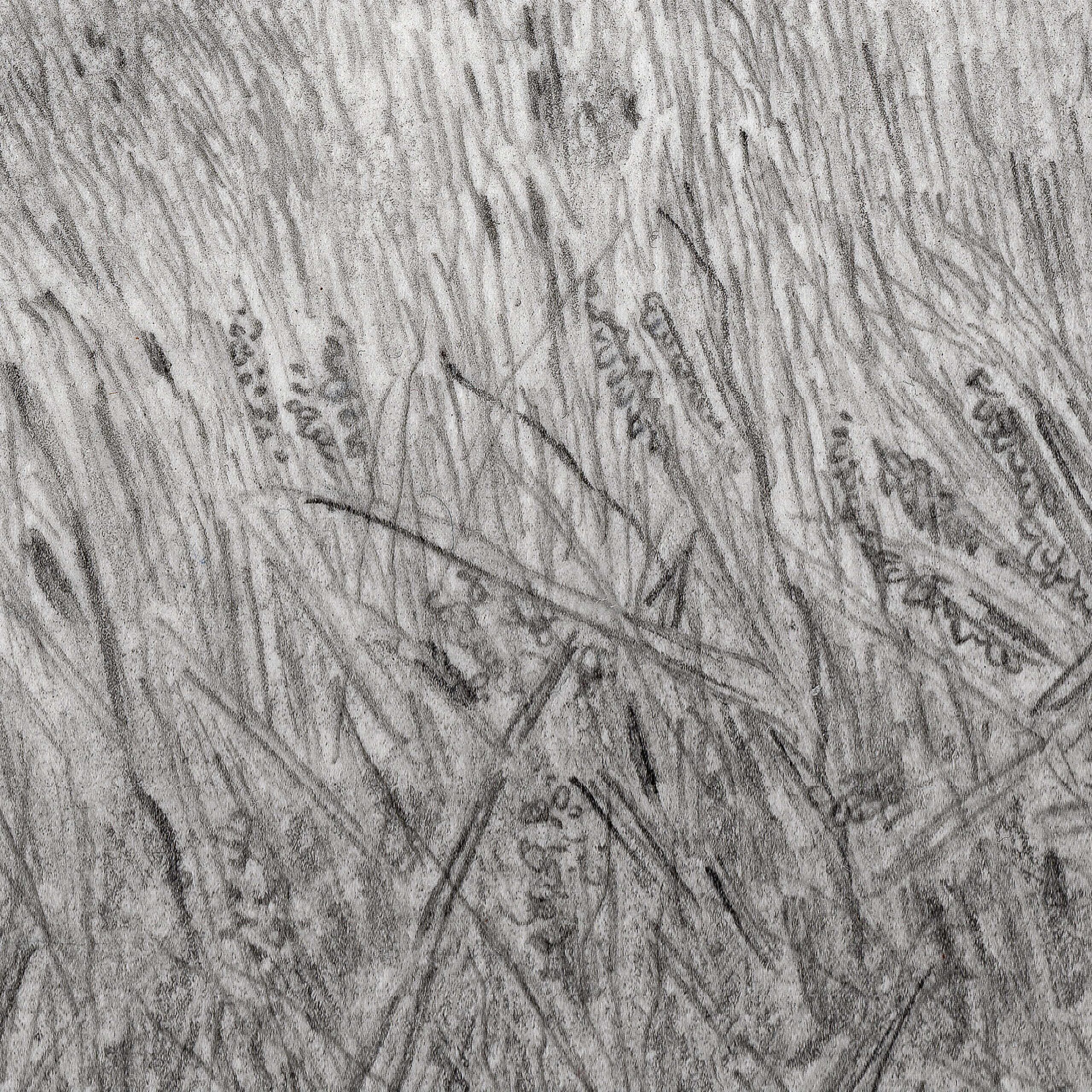
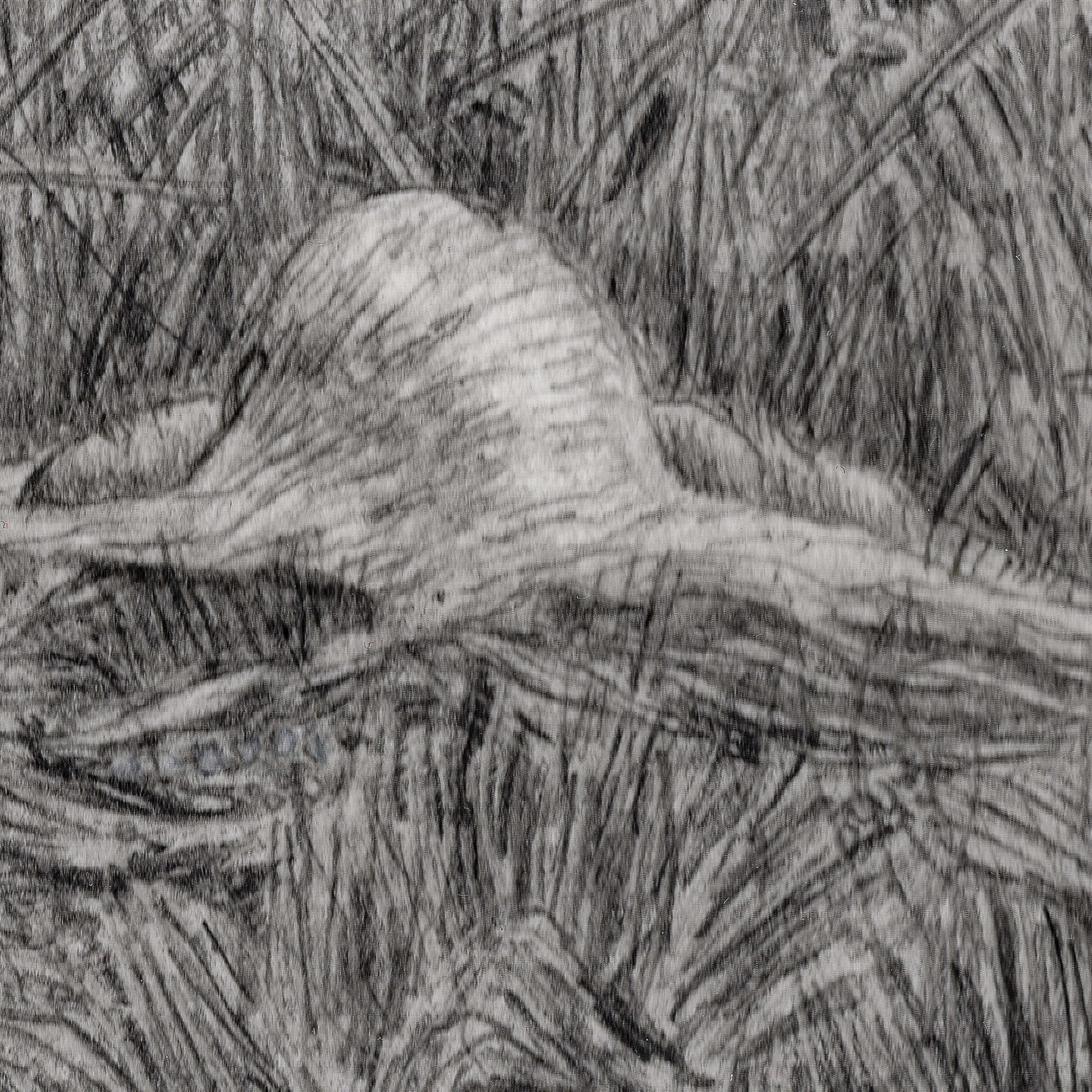
    With this specific piece, titled Sedge Walking, I wanted to play with a very quiet, localized scale of cosmic ambiguity. On first glance, you see the entity cresting the far ridge line, surveying the landscape. But if you look closer at the foreground, tangled and collapsed beneath the rough blades of the sedge, there is a second figure.

    By pulling that detail into the frame, the entire relationship shifts. It moves the work into a space of forlorn loss and raises questions I have no intention of answering cleanly. Is this ancient presence an active participant in this person’s quiet end, or is it merely a cosmic custodian performing the final, silent funeral rites for what the earth reclaims? Is it a protector, or an accountant taking a cold inventory of the decay?

    Technically, keeping this in pure pencil on cold press paper allowed me to focus entirely on the texture and the weight of the environment. The fine, dense linework builds the chaotic grain of the grass, burying the foreground figure in a way that forces the viewer to slow down and actually look for the story. Future pieces will continue to track this entityโ€”or the trailing remnants of its presenceโ€”through various field settings, establishing a running dialogue between the observer and the soil.


  • Rockwell Church Farmhouse

    Rockwell Church Farmhouse

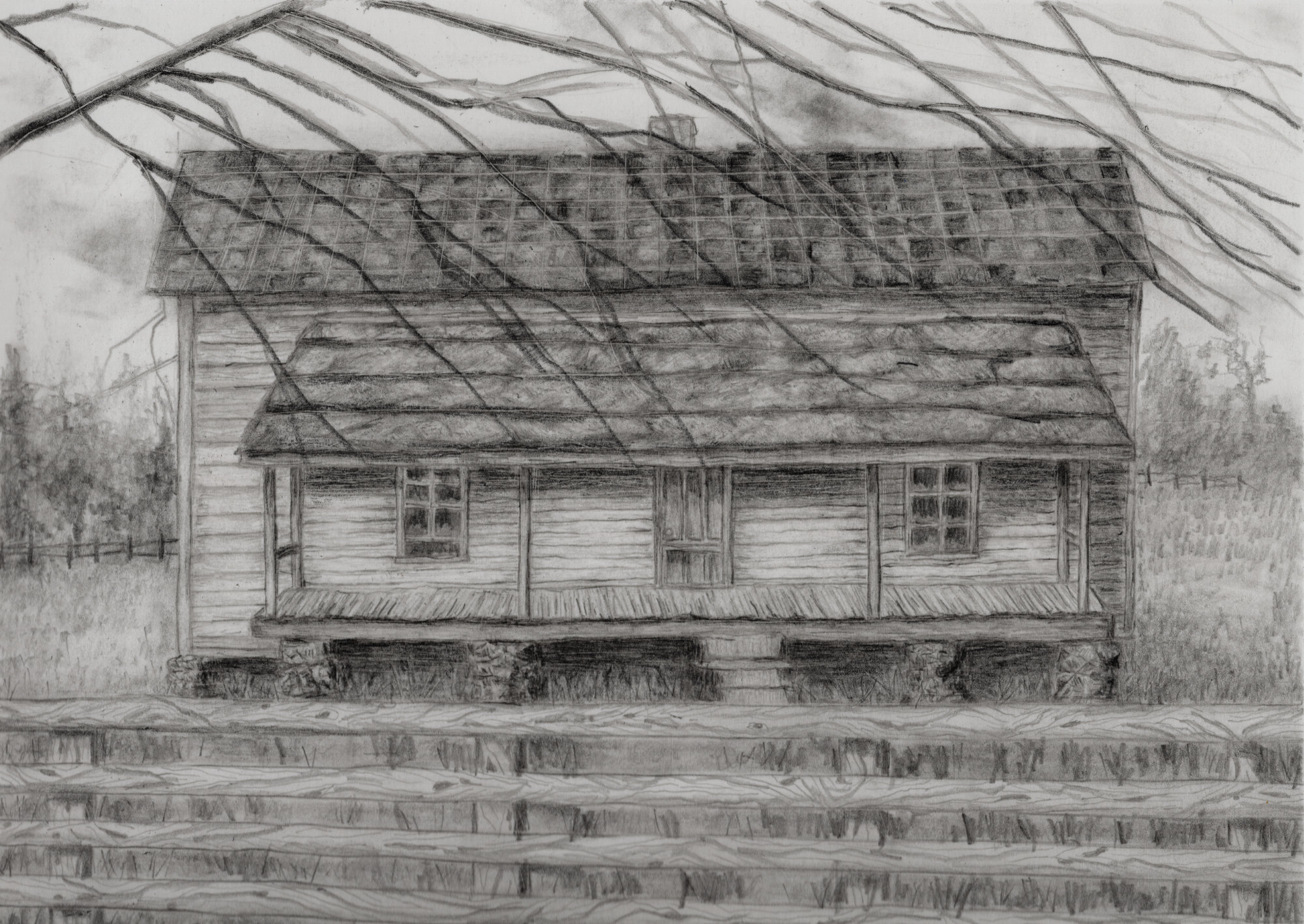
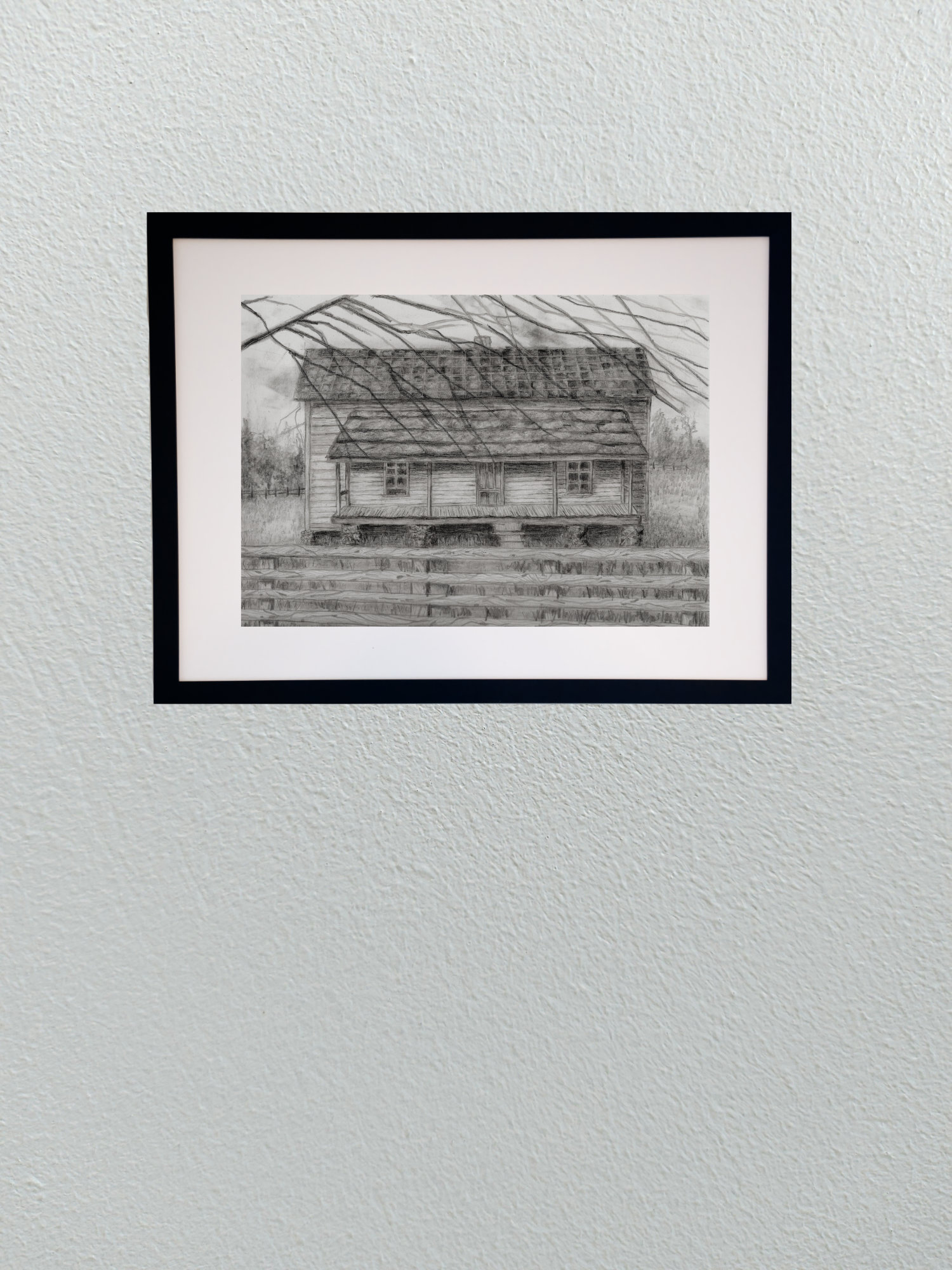
    I am sharing another graphite piece today that keeps us grounded in Barrow County, Georgia. Not far from the historic church I sketched recently sits this abandoned farmhouse, quietly decaying along Rockwell Church Road.

    Like much of my work, this drawing began as a photograph taken through the lens of my Pentax. There was something immediately striking about the isolation of the structure. For the translation to paper, I chose Staedtler Mars Lumograph pencils. The grading of these pencils allowed me to push the contrast, digging into the heavy, dark textures of the weathered siding and the deep, impenetrable shadows lurking beneath the covered porch.

    To enhance the feeling of quiet observation, I emphasized the barren, skeletal tree branches sweeping across the foreground. They act as a natural frame, pushing the farmhouse further back into the landscape and adding to that subtle, Southern Gothic atmosphere that permeates these forgotten spaces. It is a study in texture, memory, and the slow reclamation of rural architecture.

    Technical Details:

    • 9×12 hot press Fabriano
    • Staedtler Mars Lumograph pencils

    Rockwell Church Farmhouse-Distance1
  • Flowers and Undergrowth

    Flowers and Undergrowth

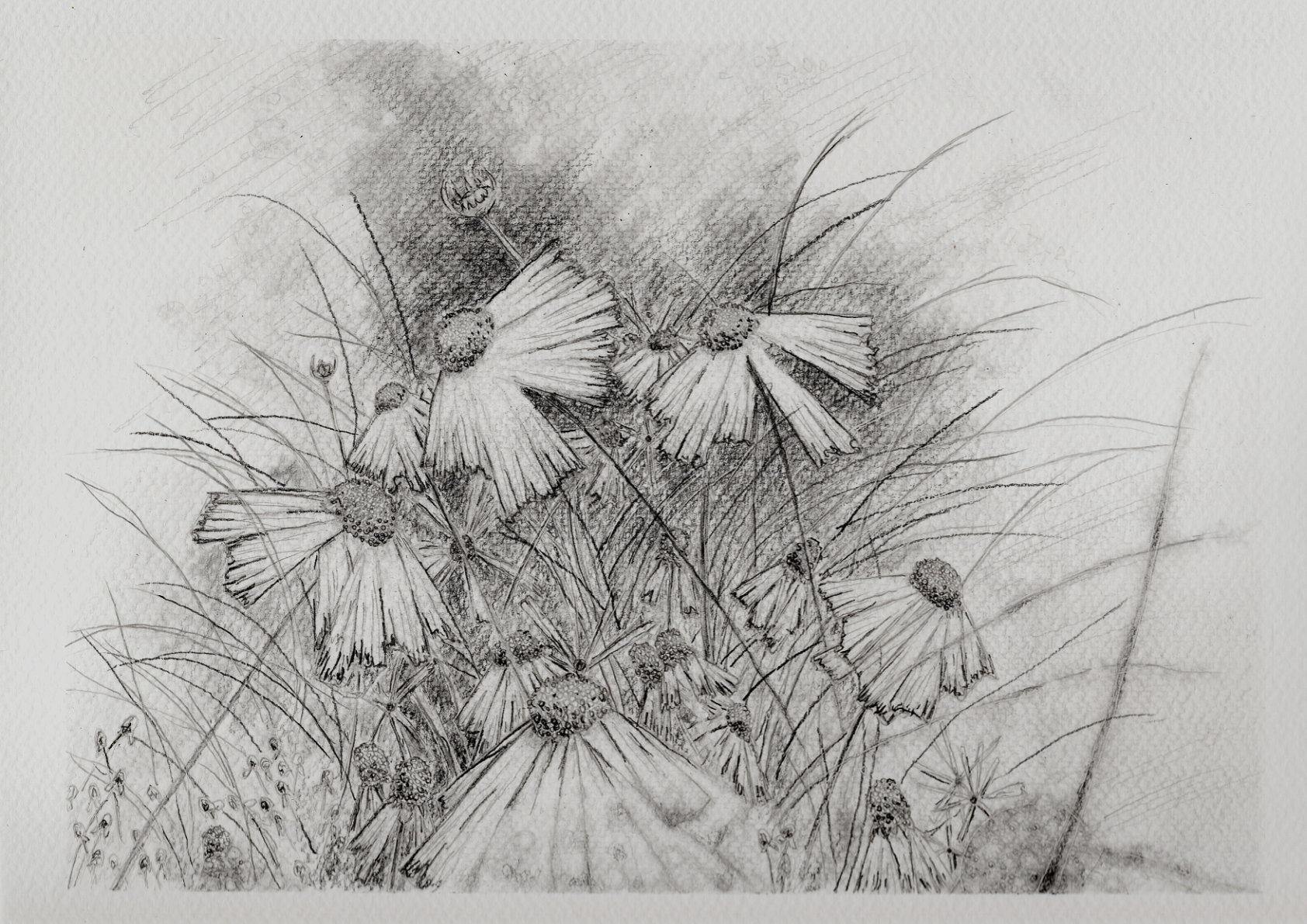
    I am sharing a new piece today that steps away from the ink and mixed media for a moment to focus entirely on pure pencil work. There is a specific kind of quiet intimacy that comes with a graphite studyโ€”it feels like a direct, unfiltered look into the sketchbook.

    This drawing is a study of the wild, tangled details of the undergrowth. My main goal was to play with extreme contrast and negative space. By heavily shading the background to create a deep, soft, almost hazy shadow, I was able to push the untouched white of the cold press paper forward. This allows the delicate petals of the flowers to catch the light and practically glow against the darkness.

    To keep the composition from feeling too heavy, I used sweeping, thin lines for the tall grasses. That fine linework gives the piece a lot of kinetic energy, which balances perfectly against the heavier, more textured shading in the centers of the blooms.

    It is a quiet observation of the forest floor, relying entirely on shifting values to find the light hidden in the shadows.

    Technical Details:

    • Mitsubishi graphite pencils
    • 9ร—12 140lb cold press