
Tag: grass

  • Standing Lamp

    Standing Lamp

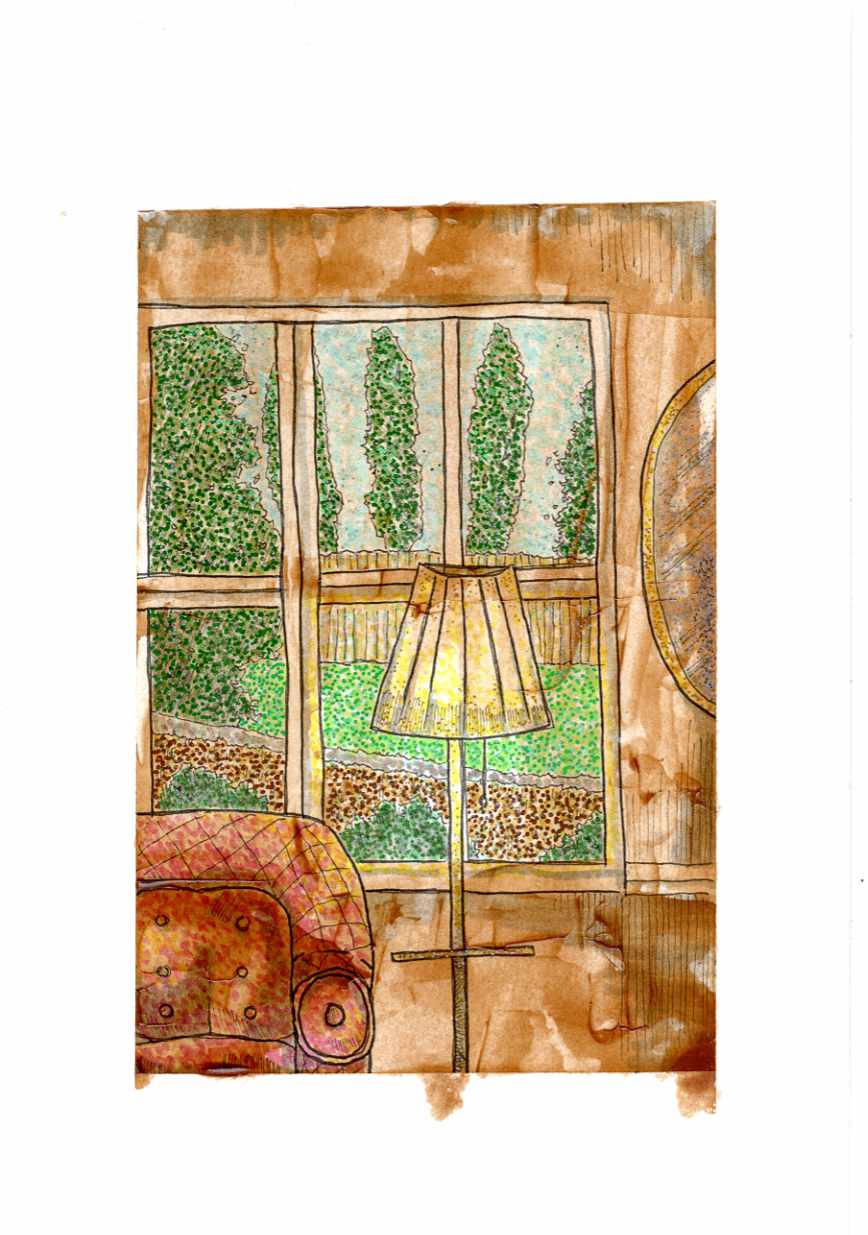
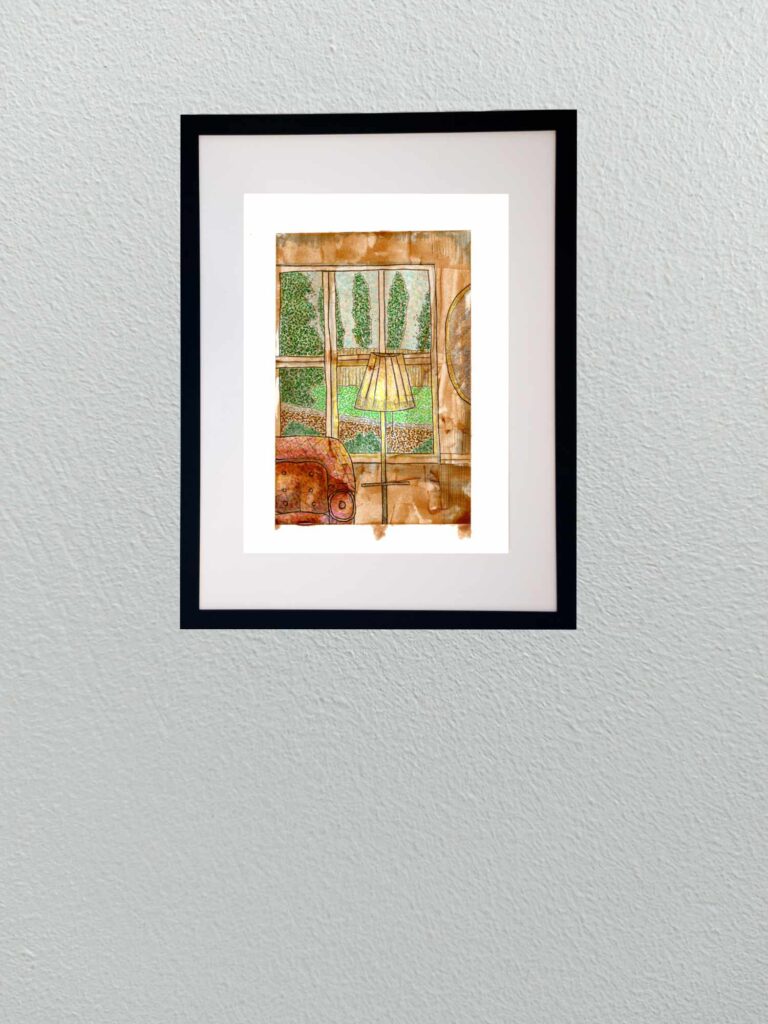
    This piece completes the three-part window vignette series, pulling the vantage point into a cozy living area. The composition balances interior solitude against the outside world: a tufted, patterned armchair and an oval wall mirror frame a central standing floor lamp, whose pleated shade sits directly against the glass of a wide picture window.

    Through the panes, a tidy fence line gives way to a row of tall, columnar evergreen trees rendered with dense stippling and dot work. The indoor light remains intentionally ambiguous. The room is bathed in rich, tea-and-sepia fluid washes that pool and stain the paper like late afternoon shadows, antique incandescent warmth, or quiet lamplight holding back the dark. The fluid drips extending past the lower border celebrate the raw, physical behavior of the medium on the page.

    Technically, this was created on Strathmore heavyweight paper using acrylic, fine-line pen, and India ink. Architectural ink hatching defines the wood paneling, floorboards, and window trim, while precise stippling gives the lawn and garden shrubbery organic mass. The warm, translucent washes create natural blooms and watermarks across the walls, establishing a soft, nostalgic atmosphere that offsets the clean structure of the furniture and glass.
  • The Fire Behind

    The Fire Behind

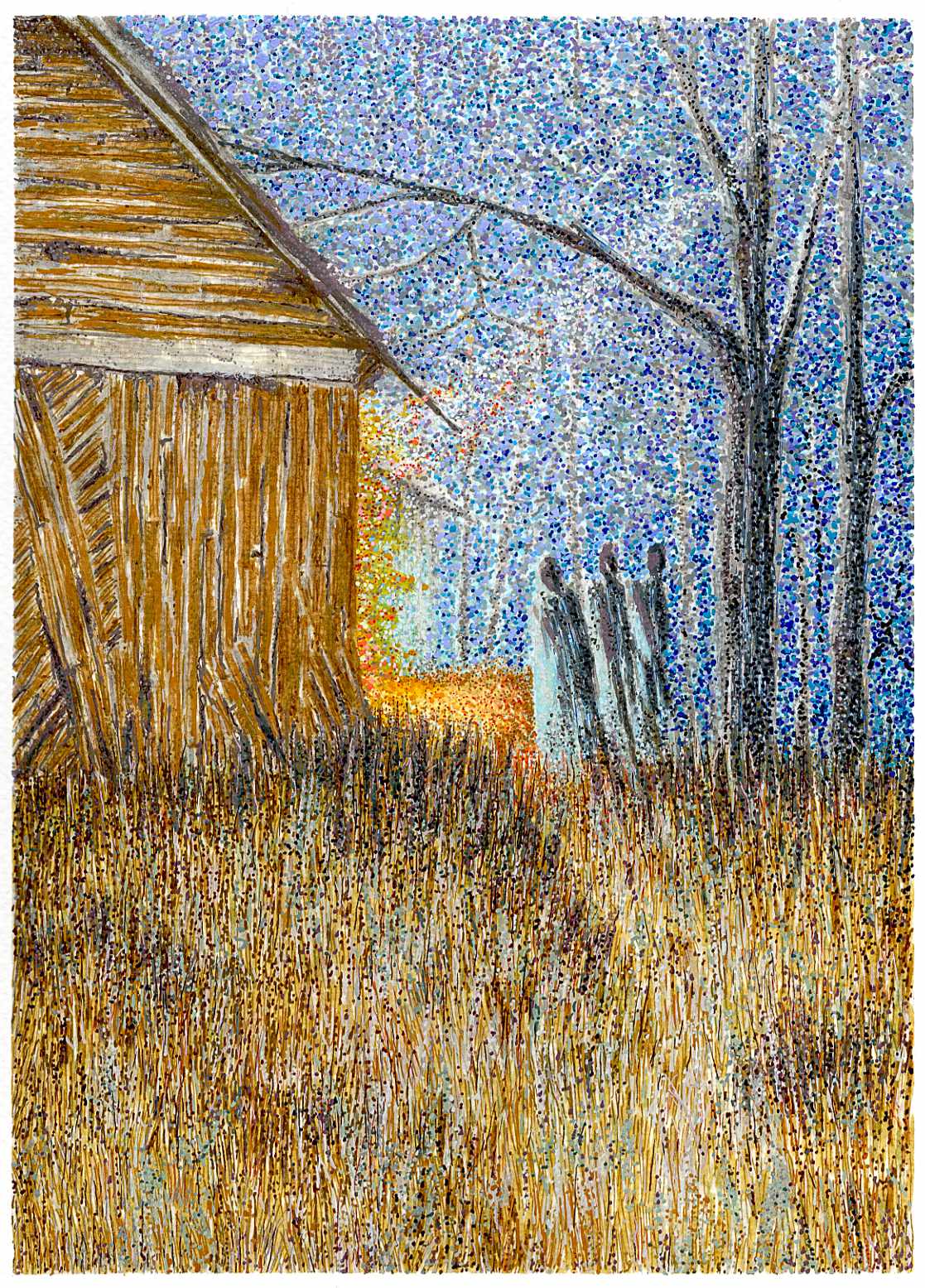
    This latest piece continues my dive into folklore-inspired landscapes, using a rural backdrop to hold a quiet, unsettling moment. On the surface, itโ€™s a familiar structureโ€”a weathered wooden barn or outbuilding sitting at the edge of a field. But the narrative turns on the corner of that wall, where three pale, hooded figures stand in the shadows, peering past the wood toward a sudden burst of flame.

    Technically, this was built using a tight mix of acrylic pens, Sakura gel pens, and Faber-Castell Pitt pens on cold press paper. I wanted the architecture and the field to feel heavily textured, using dense, directional strokes to capture the rough grain of the wooden siding and the dry, standing grass.

    The atmospheric tension comes from the contrast in mark-making and color temperature. I used a stippling technique for the sky, layering blues, purples, and cool grays to give the canopy a vibrating, electric static. That cold background makes the hot oranges and yellows of the fire spill around the corner with real intensity, throwing the three specters into stark relief as they witness whatever is burning just out of sight.

    Leaving the source of the fire and the identity of the observers open-ended is the core of the piece. It frames a moment of quiet intrusionโ€”where the mundane rural landscape breaks open to reveal a ritual or a reckoning.