Tag: heavyweight

  • Late Day Hollow

    Late Day Hollow

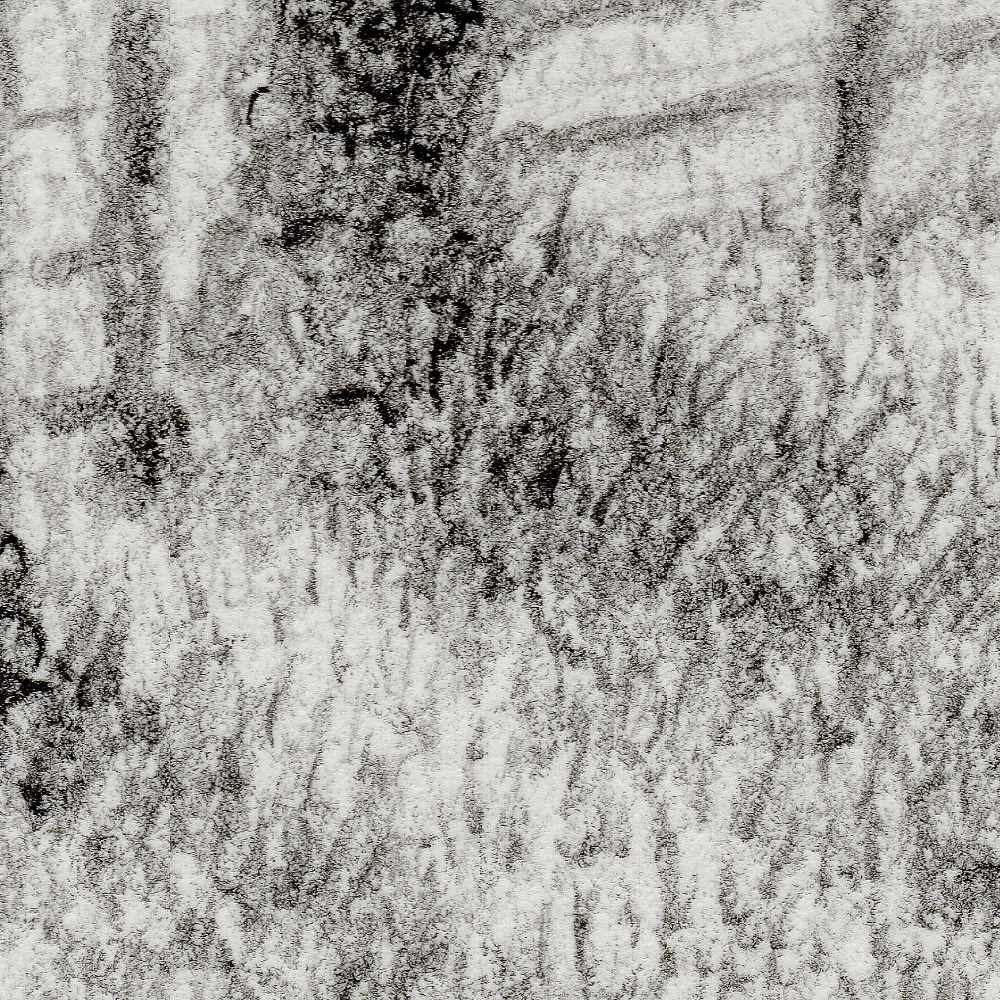
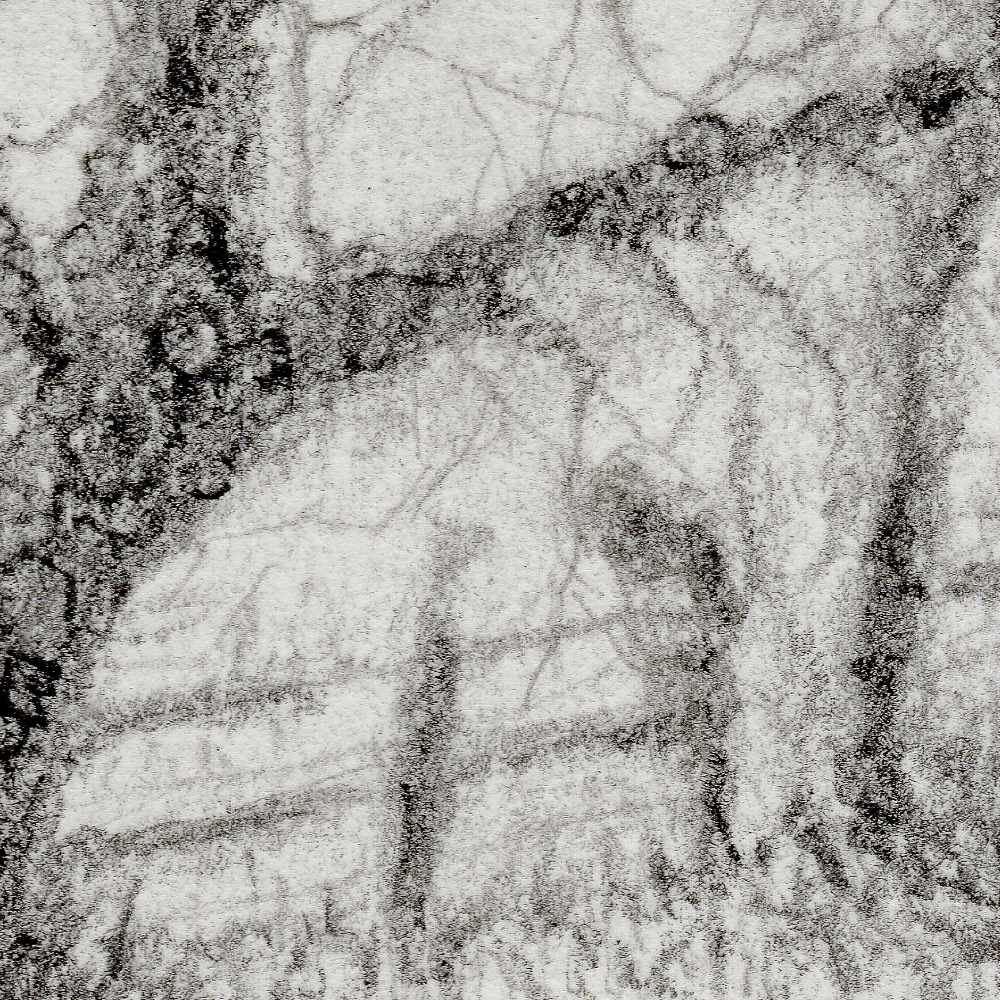
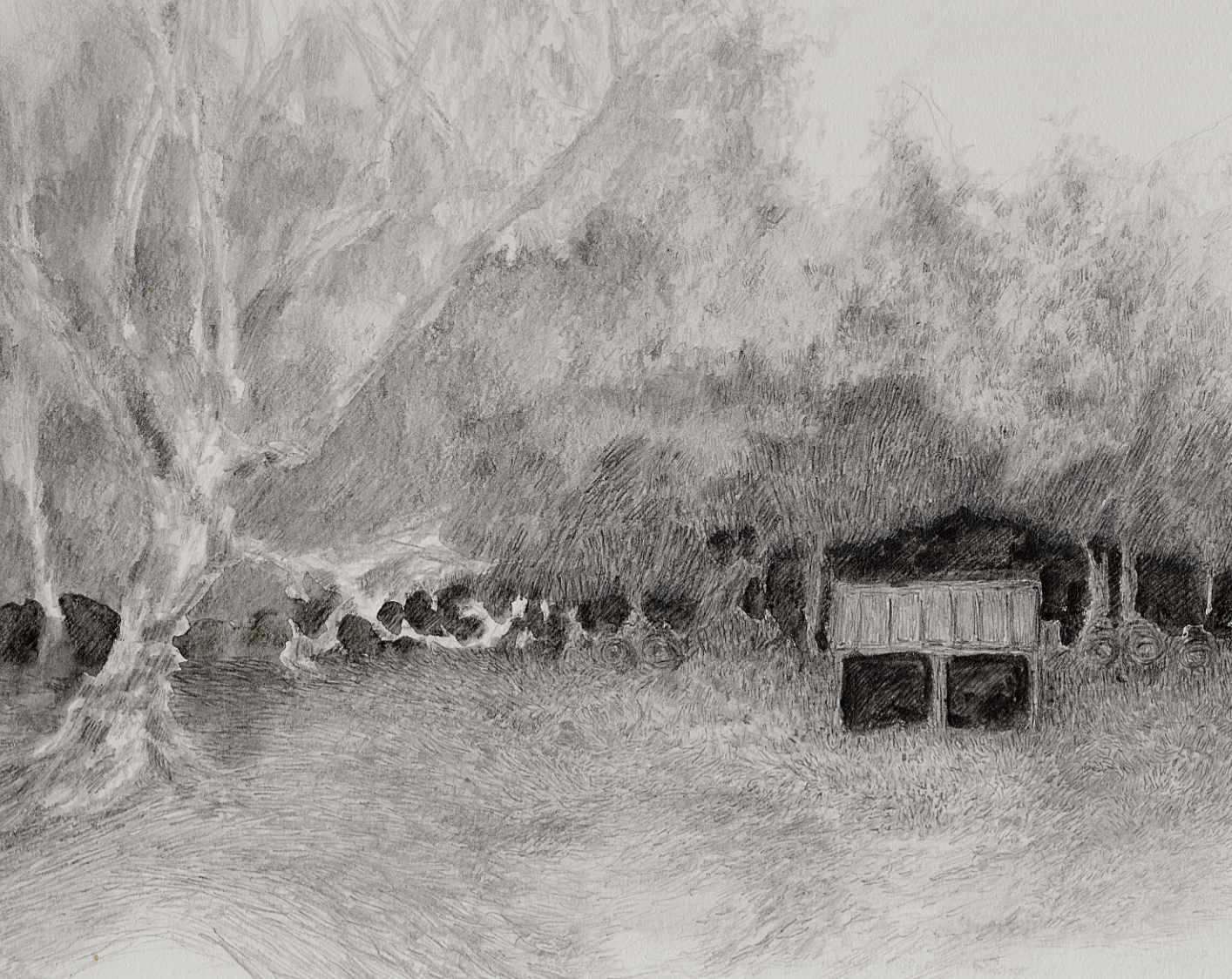
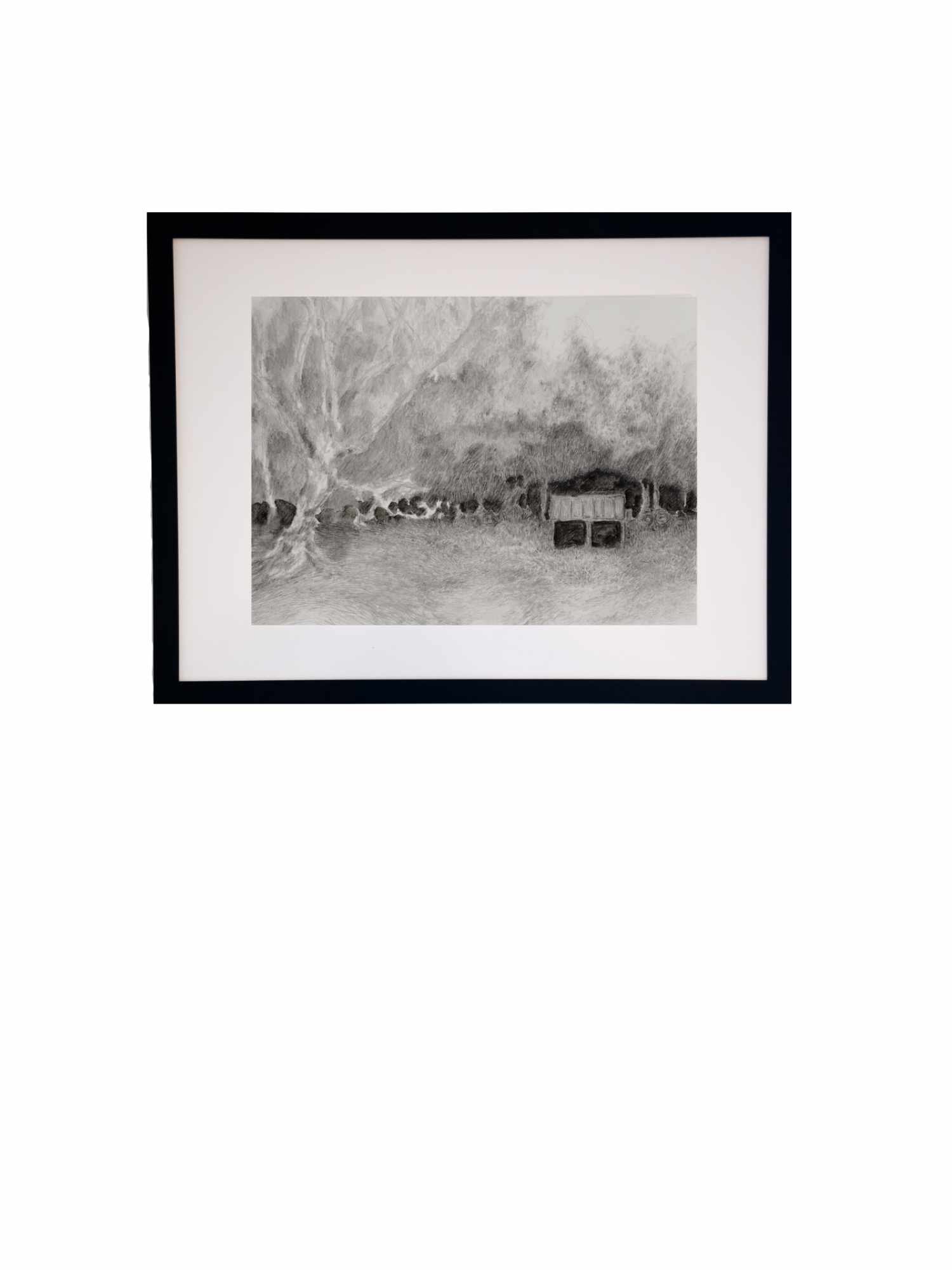
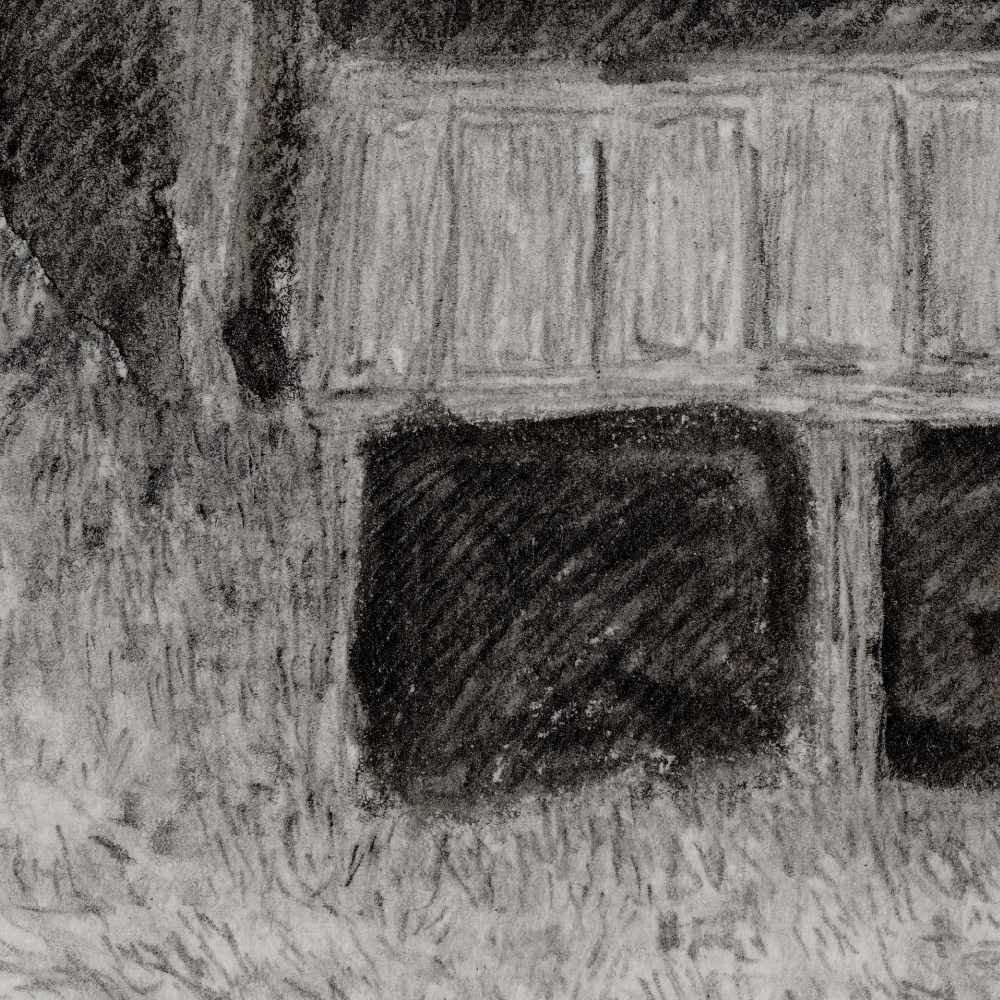
    This graphite piece explores the boundary where rural order gives way to wild overgrowth, leaning into an atmospheric ambiguity where organic forms seem to hum with quiet animism. The scene captures a modest outbuilding resting against a heavy treeline at the edge of day, framed by a pale, twisted tree reaching into an overcast sky.

    Rather than defining every branch and boundary with literal clarity, the drawing relies on soft transitions and directional shading. The dark understory beneath the canopy forms a dense band of shadow that swallows the perimeter. The marks suggest subtle shifts in mass and negative spaceโ€”inviting the eye to question whether the dark pockets between the trunks are merely evening shadows or something watching from within the timber.

    Technically, the piece was completed on Strathmore heavyweight paper using Staedtler graphite pencils. The natural tooth of the sheet softens the lead, allowing the field and canopy to melt into hazy, atmospheric mid-tones. Dense, repeated strokes build velvety black values beneath the eaves and along the forest floor, using contrast to let the pale wood of the building and the ghostly trunk emerge like bone against the gloom.
  • Peer

    Peer

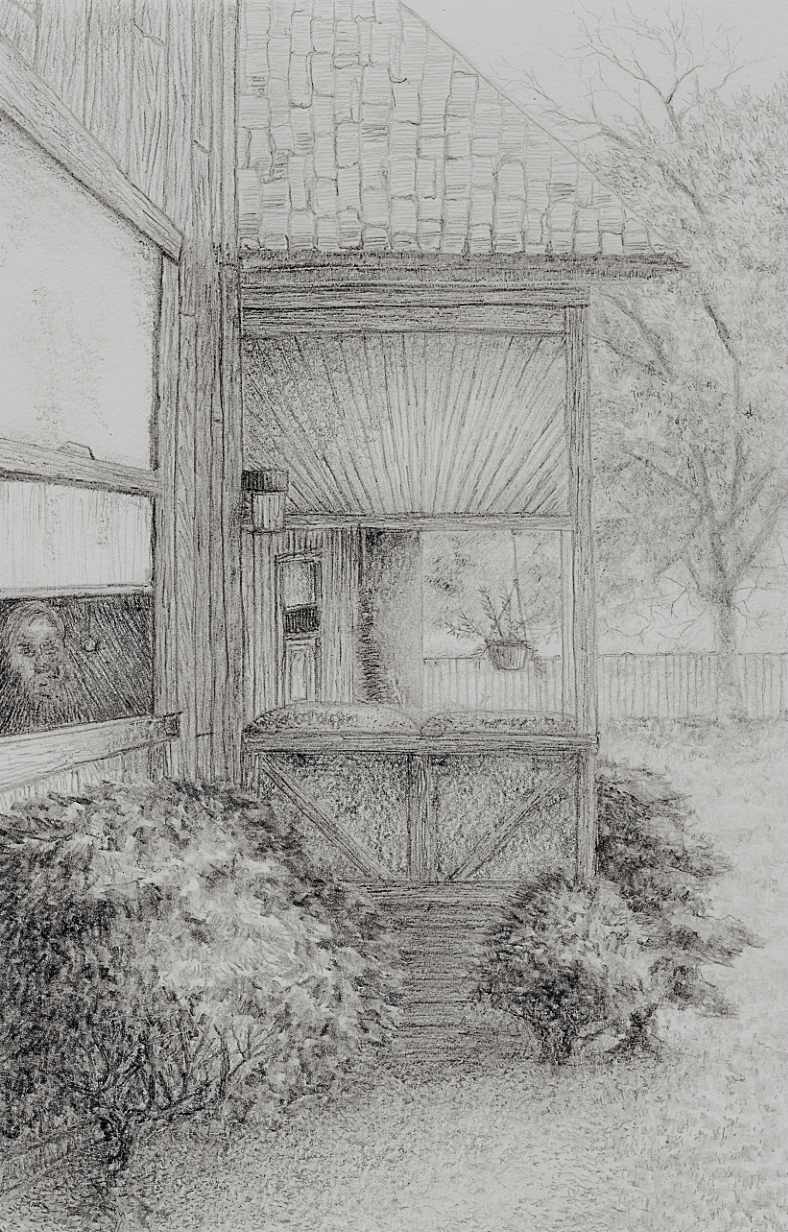
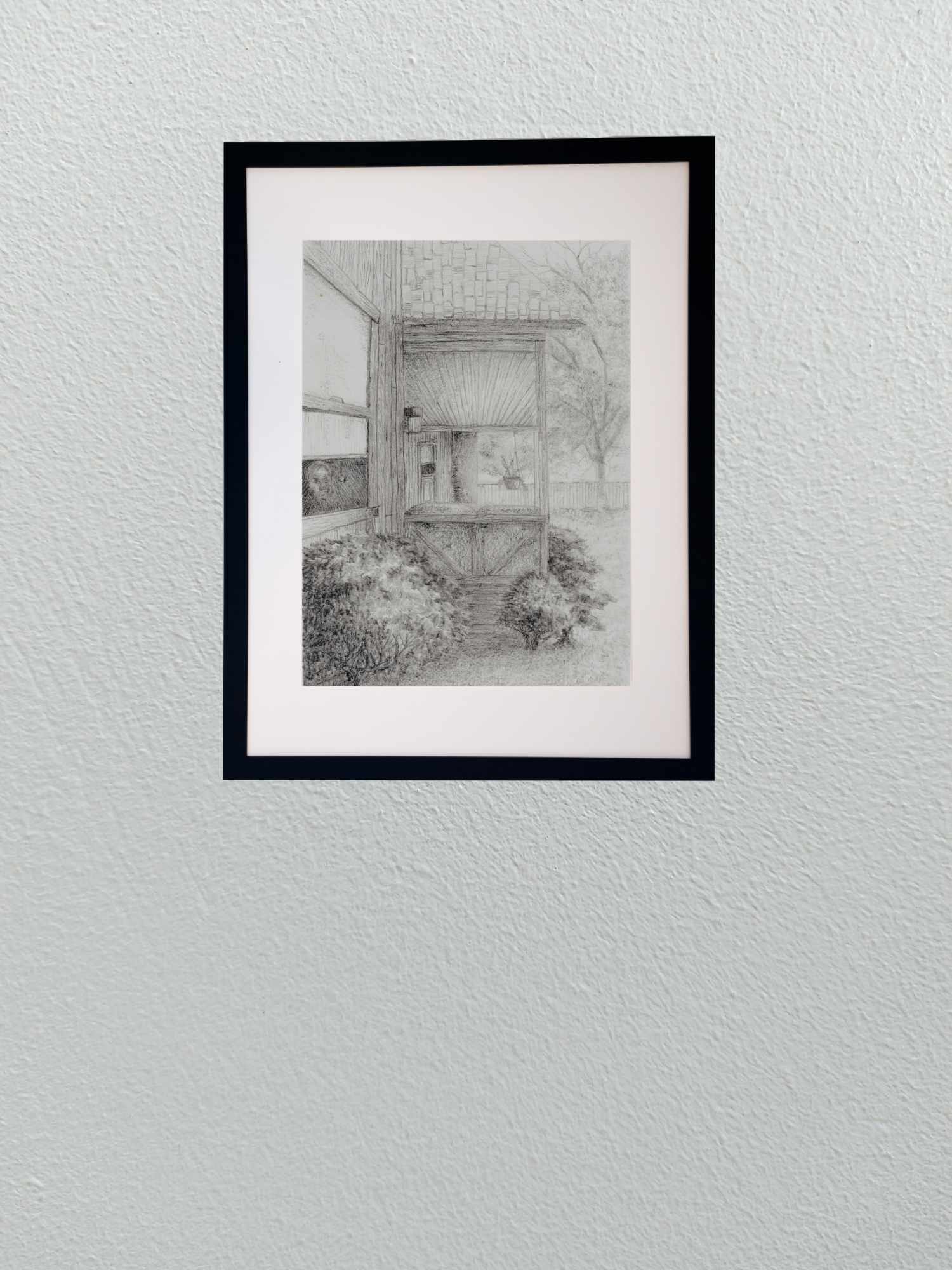
    This latest graphite piece returns to the tension of mundane horror, exploring what happens when the ordinary facade of suburban domesticity fractures. The composition leads the eye along the exterior flank of a residential home, past foundation shrubs and vertical siding toward a screened porch overlooking the backyard fence line.

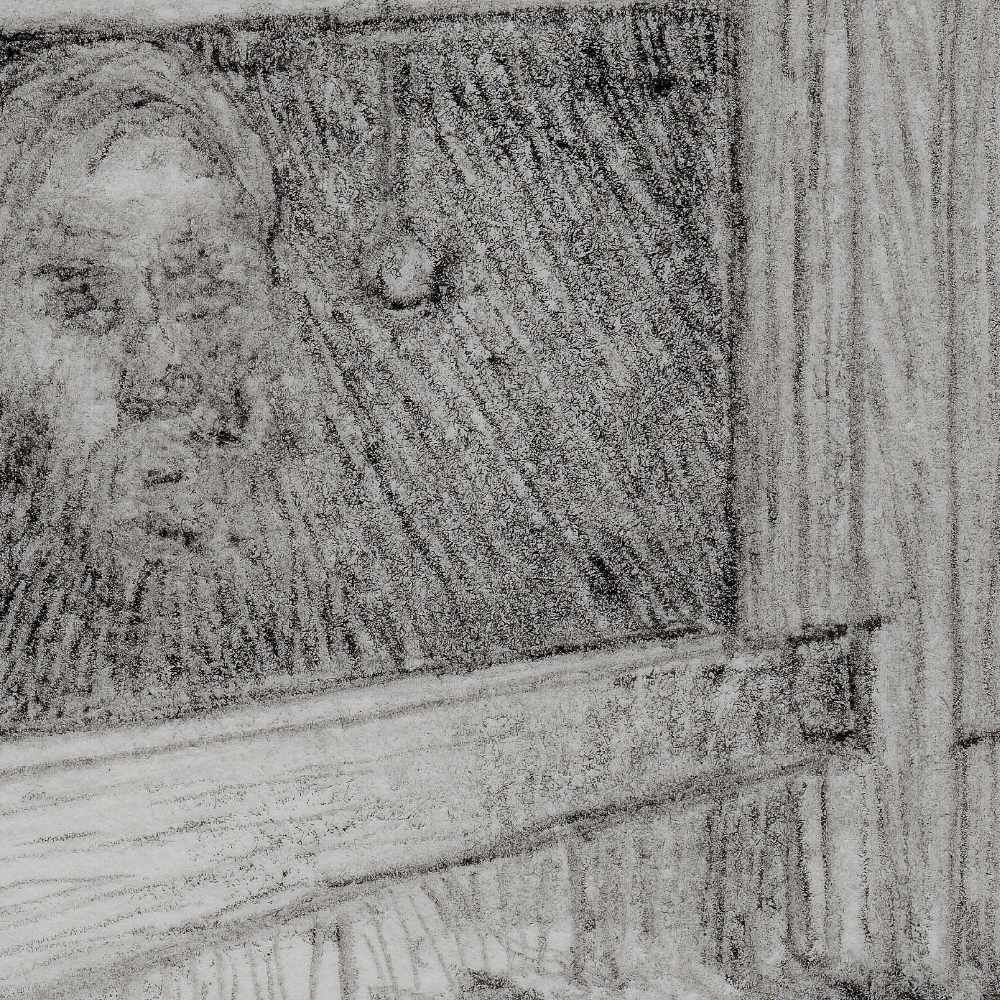
    Everything appears grounded in quiet neighborhood normalcy until the gaze drops to the lower window pane. Peering out from the deep interior shadow is a pale, distorted face pressed against the glass, staring directly back at the viewer. Coupled with the dark, empty doorway deeper along the porch, the scene introduces an immediate psychological chill: is the viewer looking in on a captive, an intruder, or something that belongs to the house itself?

    Technically, the drawing was completed on Strathmore heavyweight paper using Mitsubishi graphite pencils. The tooth of the heavyweight sheet creates a soft, tactile grain across the lawn, shrubs, and distant winter trees. To make the horror land, I leveraged the dark, velvety laydown of the Mitsubishi graphite to create a deep, light-drinking void in the window, using subtle negative rendering and soft erasure to pull the haunting contours of the face forward from the dark.


  • Cloistered Roofline

    Cloistered Roofline

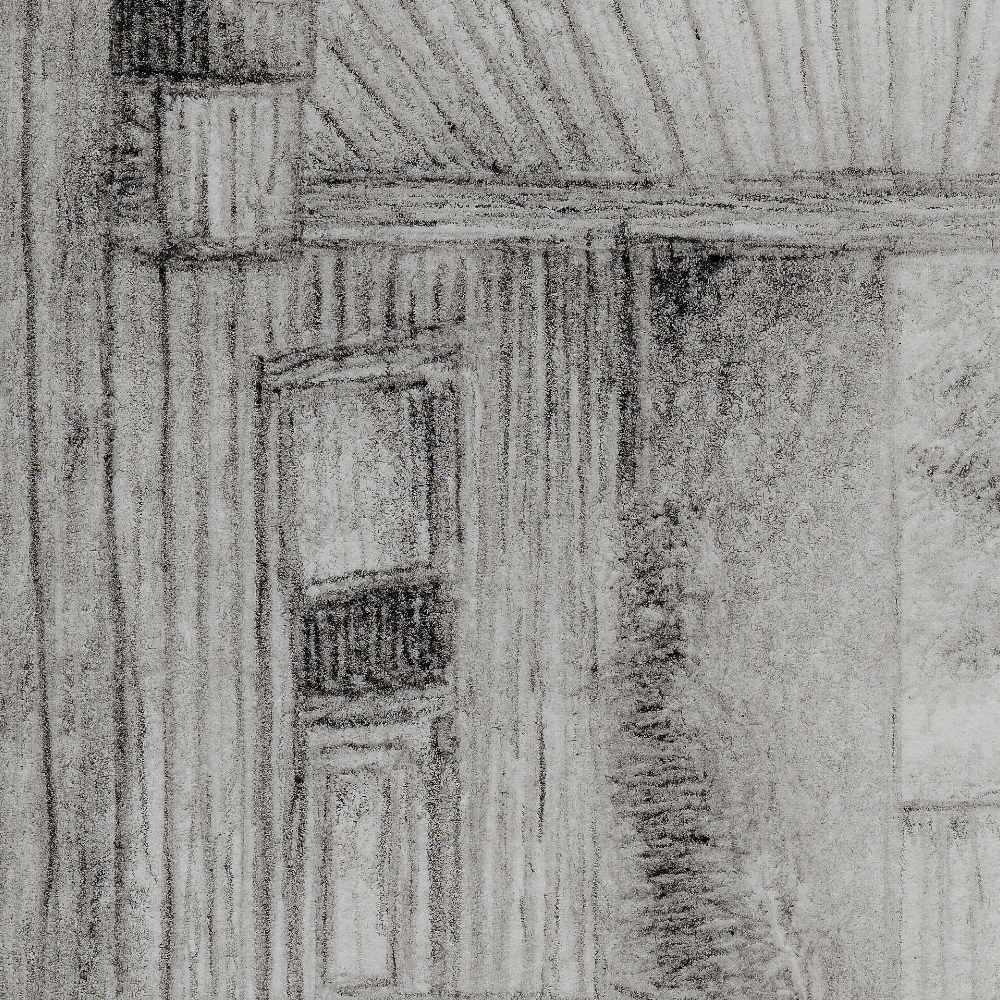
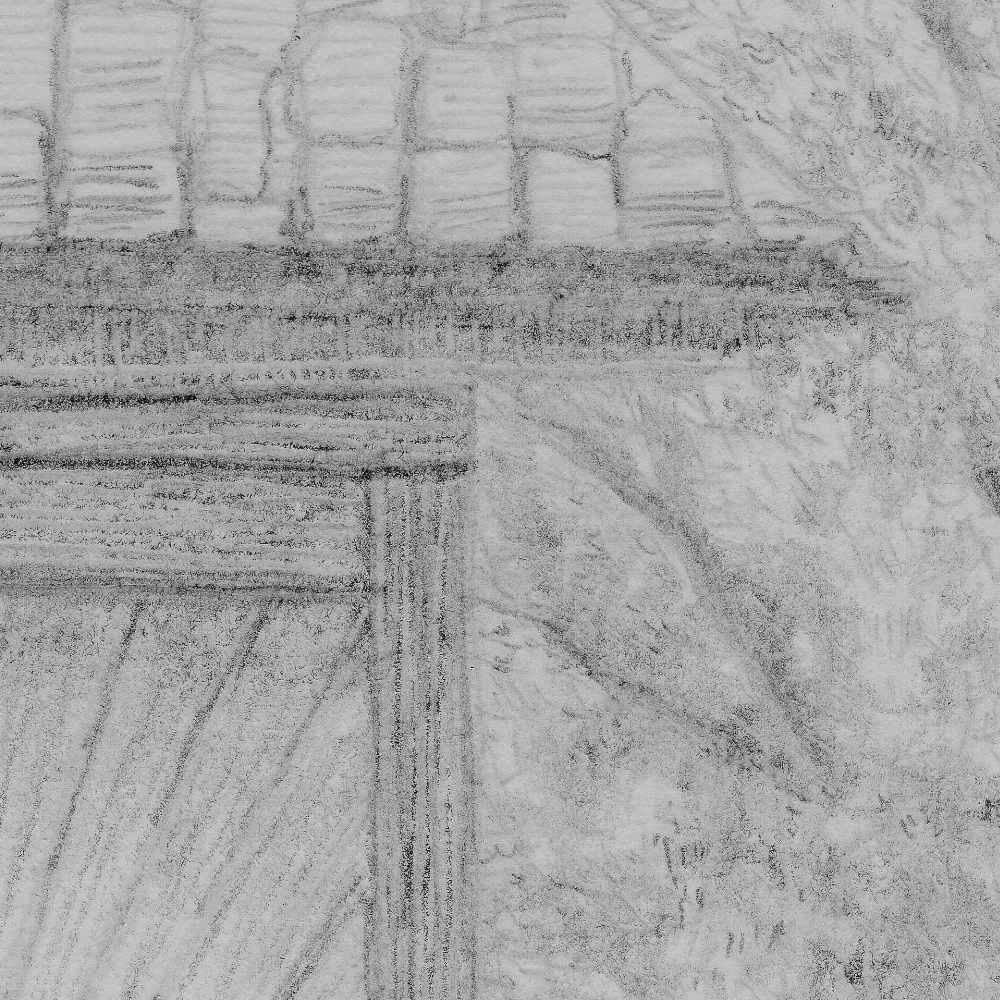
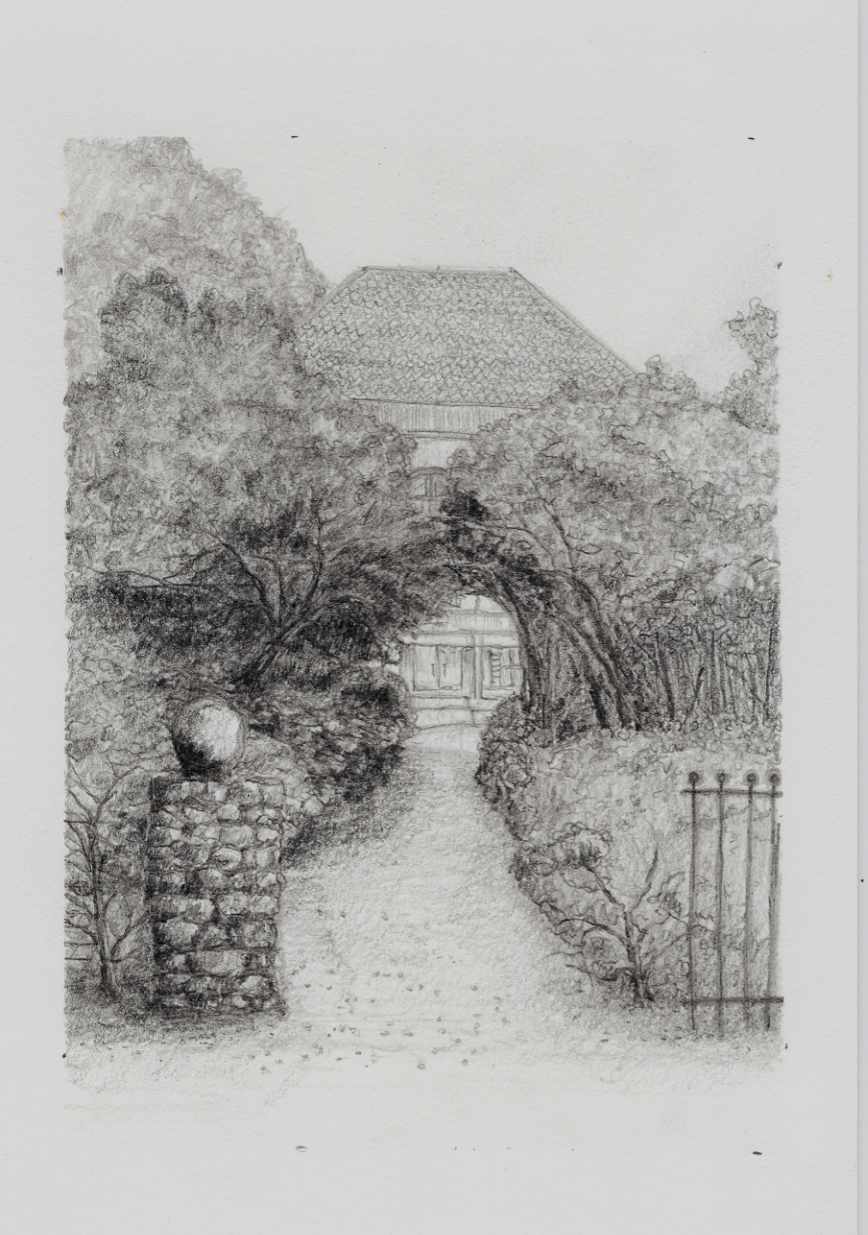
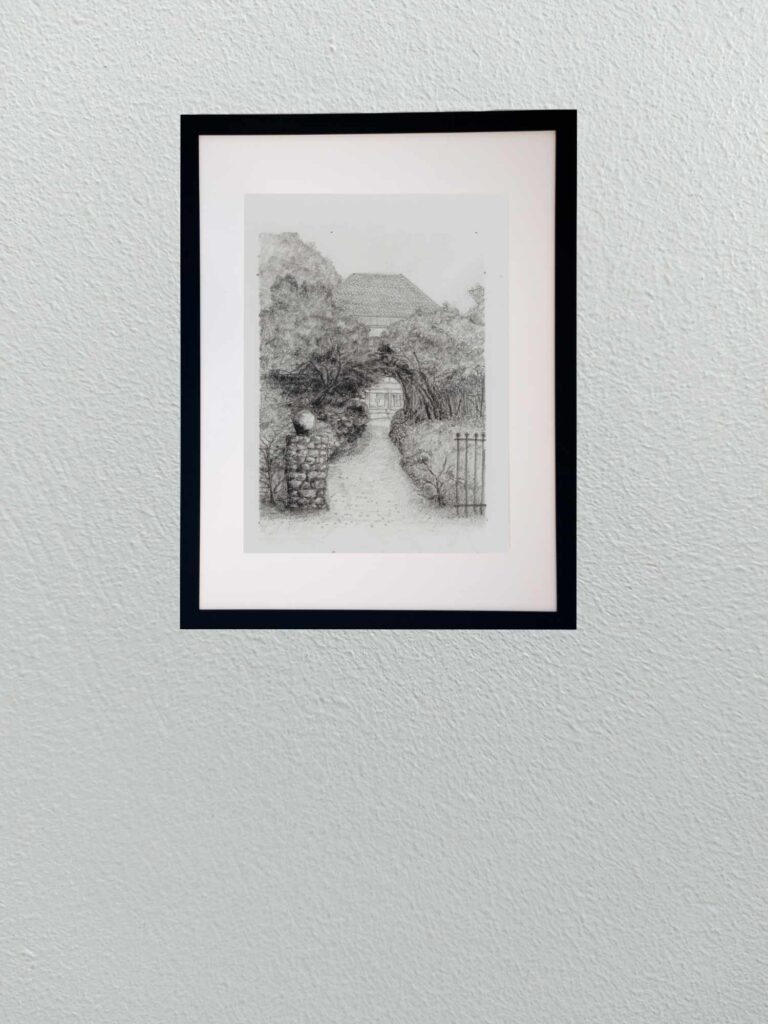
    his graphite study returns to quiet architectural mystery, focusing on the threshold between the open approach and a secluded domestic space. The composition centers on a curved gravel drive flanked by an old stone pillar topped with a sphere, an iron gate, and heavy, overgrown shrubbery.

    The drive disappears beneath a dense, shadowy arbor of bent trees, creating a shaded tunnel that conceals the majority of the house beyond. Only fragments of the structure emergeโ€”the steep pitch of a tiled or shingled roof, a hint of an upper dormer, and a sunlit porch tucked in the distance. The architecture feels cloistered and watchful, shielded by decades of growth. Leaving the interior obscured invites the viewer to wonder whether the home is occupied, abandoned, or quietly waiting behind the canopy.

    Technically, the drawing was executed on Strathmore heavyweight paper using Winsor & Newton graphite pencils. The paperโ€™s substantial tooth breaks up the graphite strokes, allowing for soft, vaporous transitions throughout the billowy tree crowns. The creamy laydown of the Winsor & Newton lead builds deep, velvety darks under the tree canopy and gives tangible weight and mortar depth to the individual fieldstones of the gatepost.


  • Across the Way

    Across the Way

    This piece begins a small, three-part series exploring vignettes of daily life framed entirely through the threshold of a window. It shifts focus toward quiet domestic voyeurism and contemplationโ€”capturing ordinary moments observed from the stillness of an interior room.

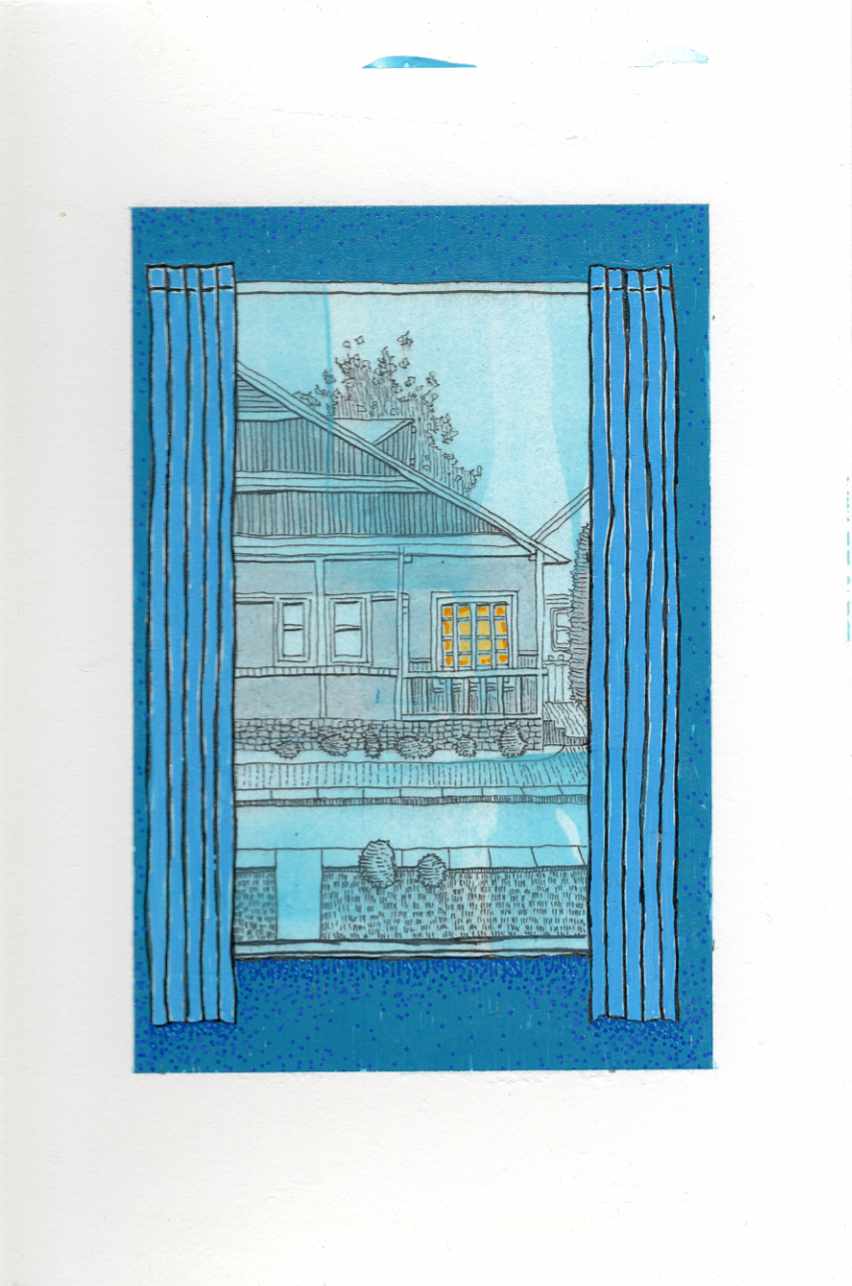
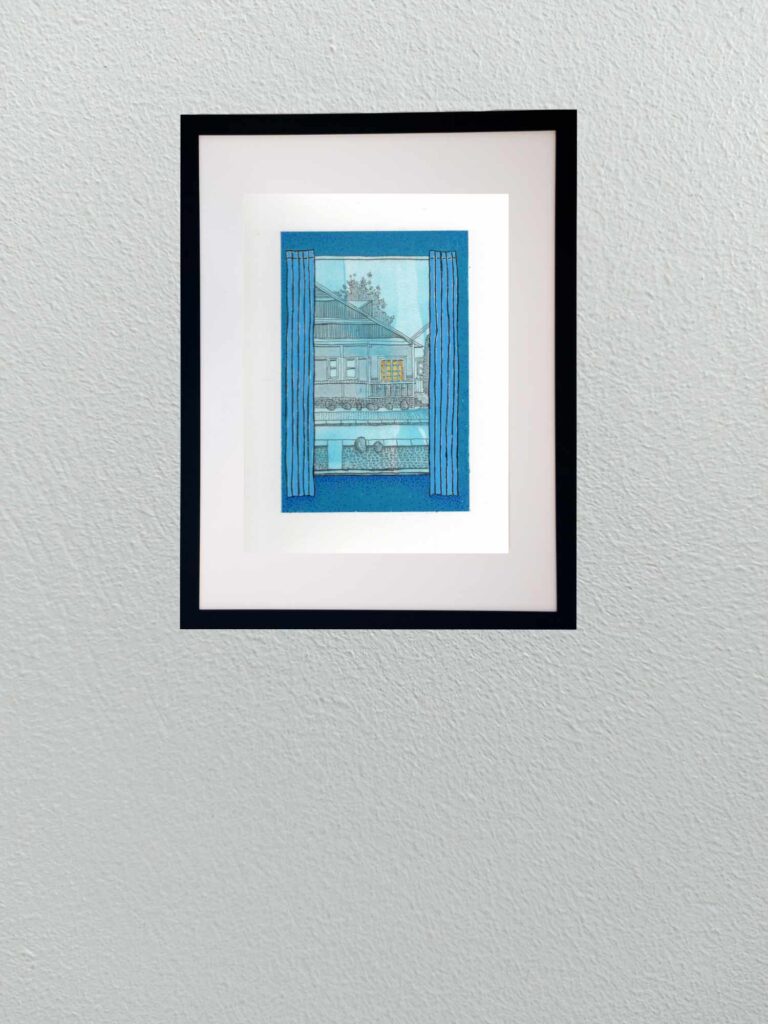
    The composition centers on the house directly across the street, viewed between the clean, vertical folds of draped curtains. While the street and exterior walls rest in cool, muted tones, a single window on the porch glows with warm, amber light. That single point of warmth creates an immediate narrative pause: an indicator of quiet routine, someone awake inside, or a silent beacon anchoring the neighborhood dusk.

    Technically, the drawing was completed on Strathmore heavyweight paper using a mixed-media combination of acrylic, pen, and India ink. Fine-tipped ink pens provide architectural precision, capturing the textured shingles, siding, and sidewalk brickwork. India ink washes create delicate tonal gradients across the glass pane, while opaque acrylic builds the saturated blue curtains and the textured interior border framing the view.


  • A Hand Grinder in Five Passes

    A Hand Grinder in Five Passes

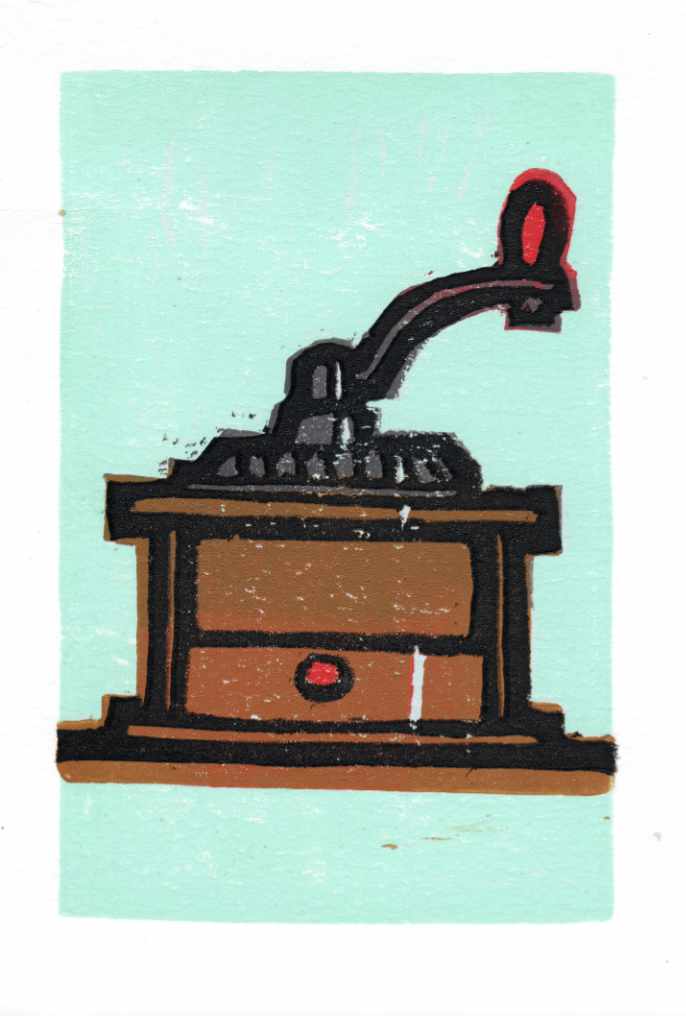
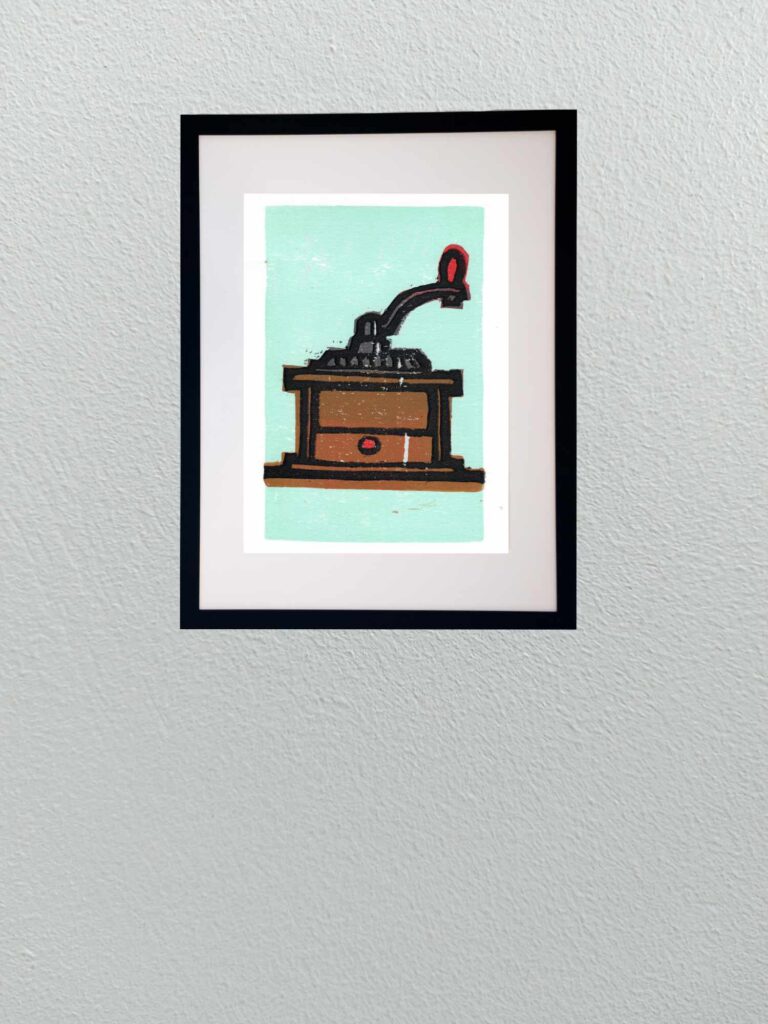
    Continuing the ongoing “Coffee” series, this piece shifts focus to an antique-style hand coffee grinder. Following the earlier studies, this was executed as a 5-color reduction print, peeling away layers of the design sequentially from the same block.

    Reduction printing always brings a healthy dose of discipline to the studio table. Because the block is progressively destroyed with each color pass, there is no backtrackingโ€”every cut has to be planned around the sequence of values. The print balances warm ochre and chestnut wood tones for the box, bold red accents on the drawer knob and crank handle, a solid black structural outline for the cast hopper and arm, and a cool, muted mint background.

    Technically, this was carved into a Speedball Speedy-Carve block and printed on Strathmore heavyweight printmaking paper using Speedball water-based inks. The pink rubber block cuts smoothly, allowing for fluid curved lines on the crank and hopper while still holding crisp architectural edges on the box. The water-based ink lays down with a velvety, slightly broken texture on the heavy paper, giving the final pull an honest, hand-crafted feel.


  • Quiet Boundary

    Quiet Boundary

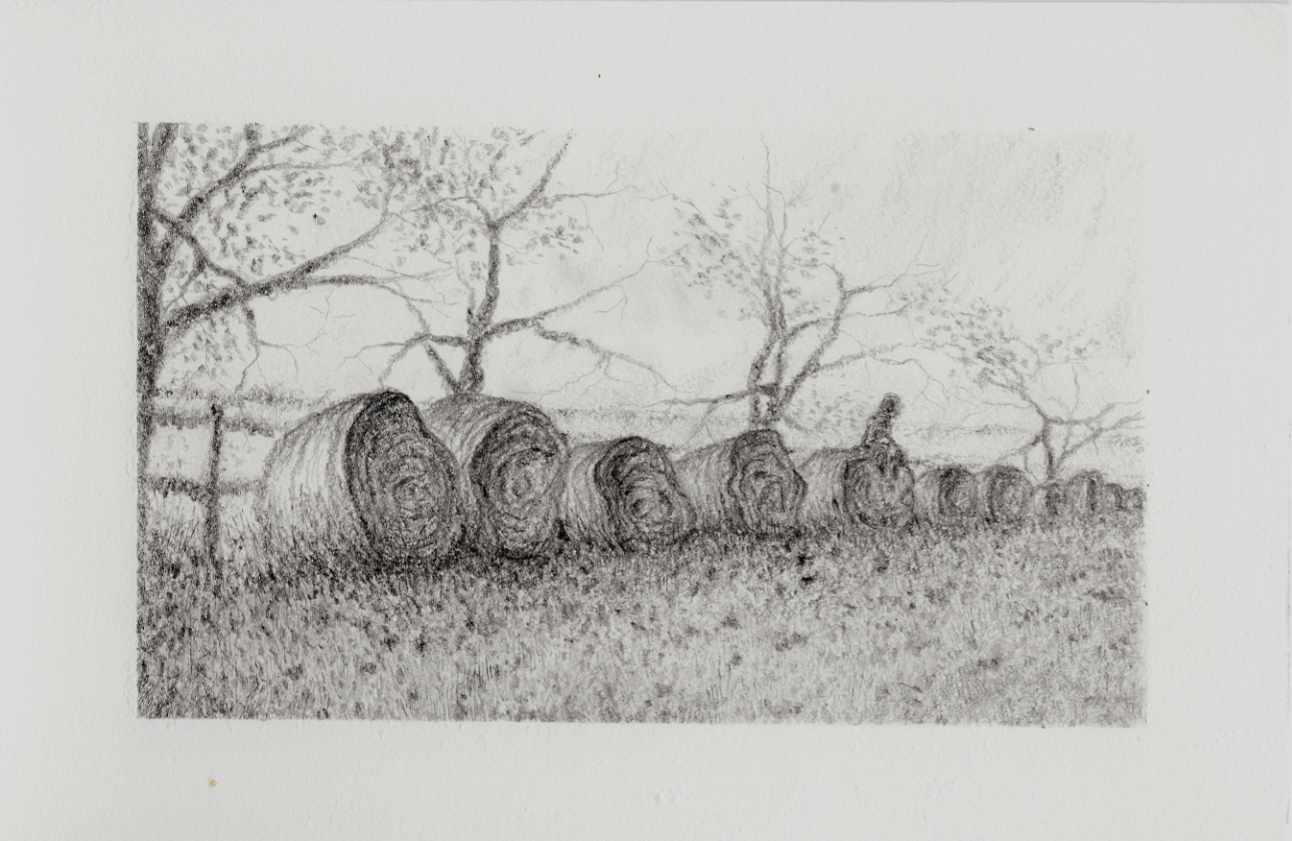
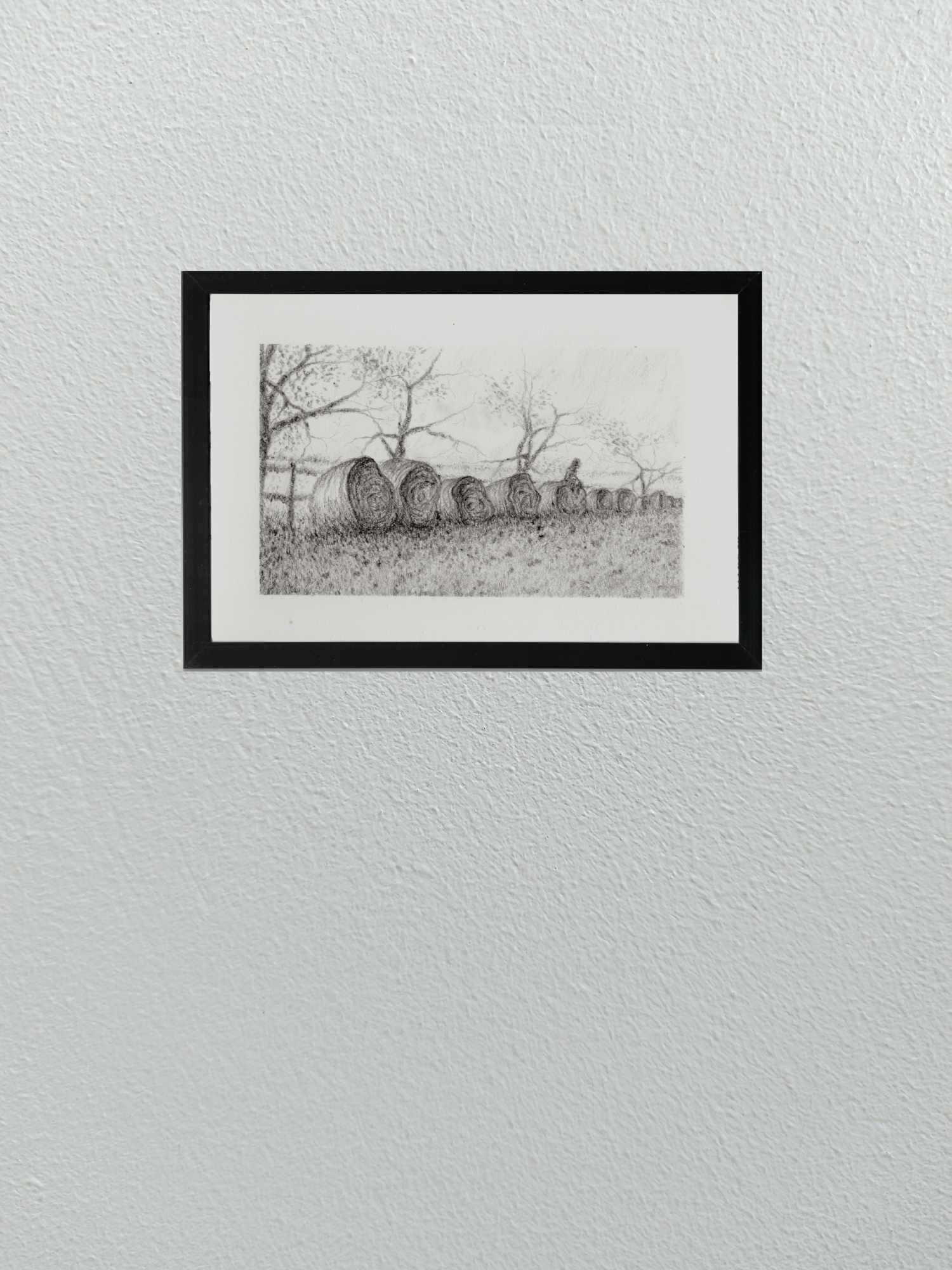
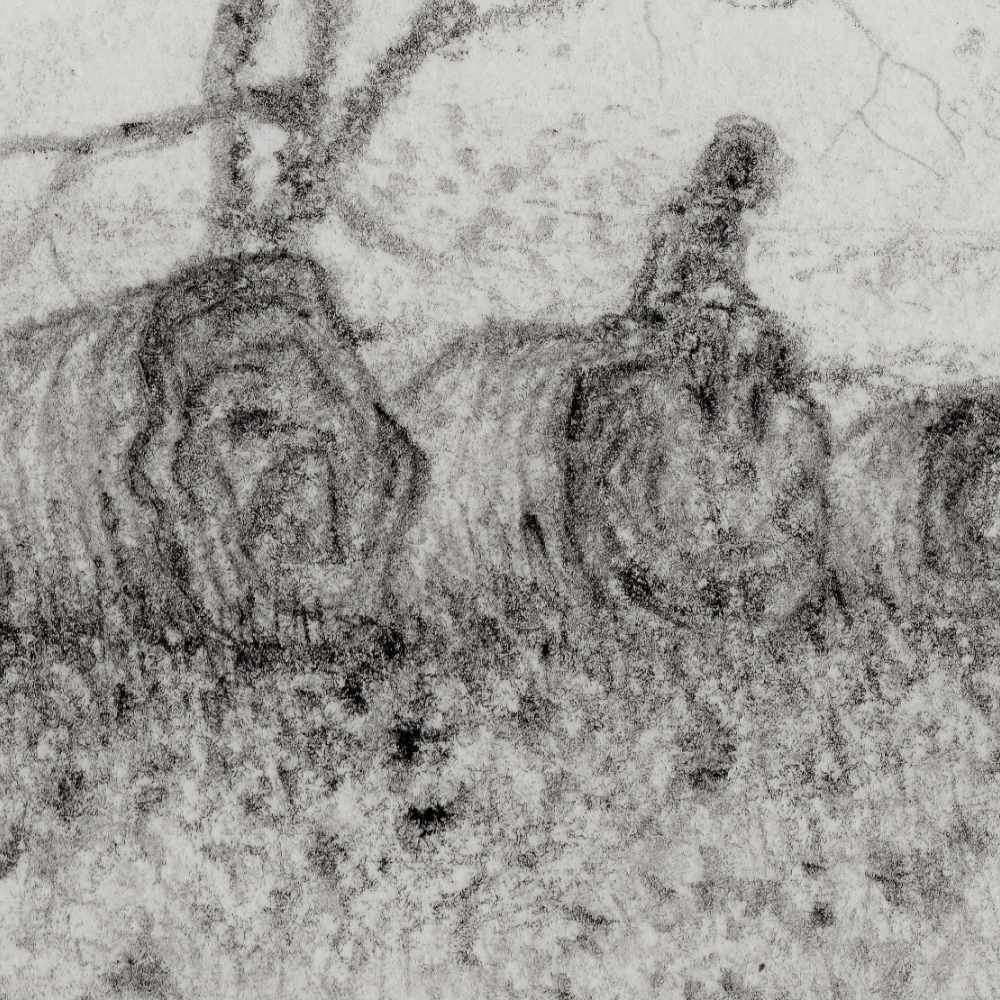
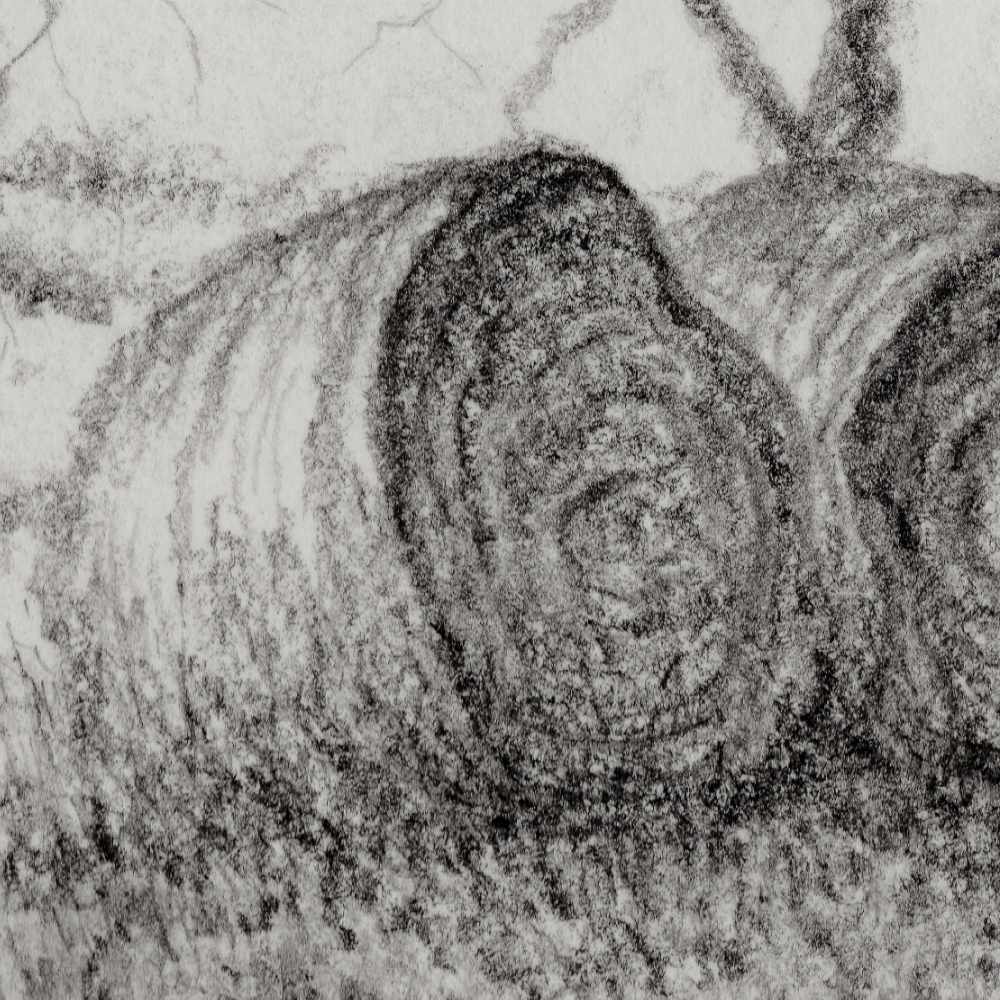
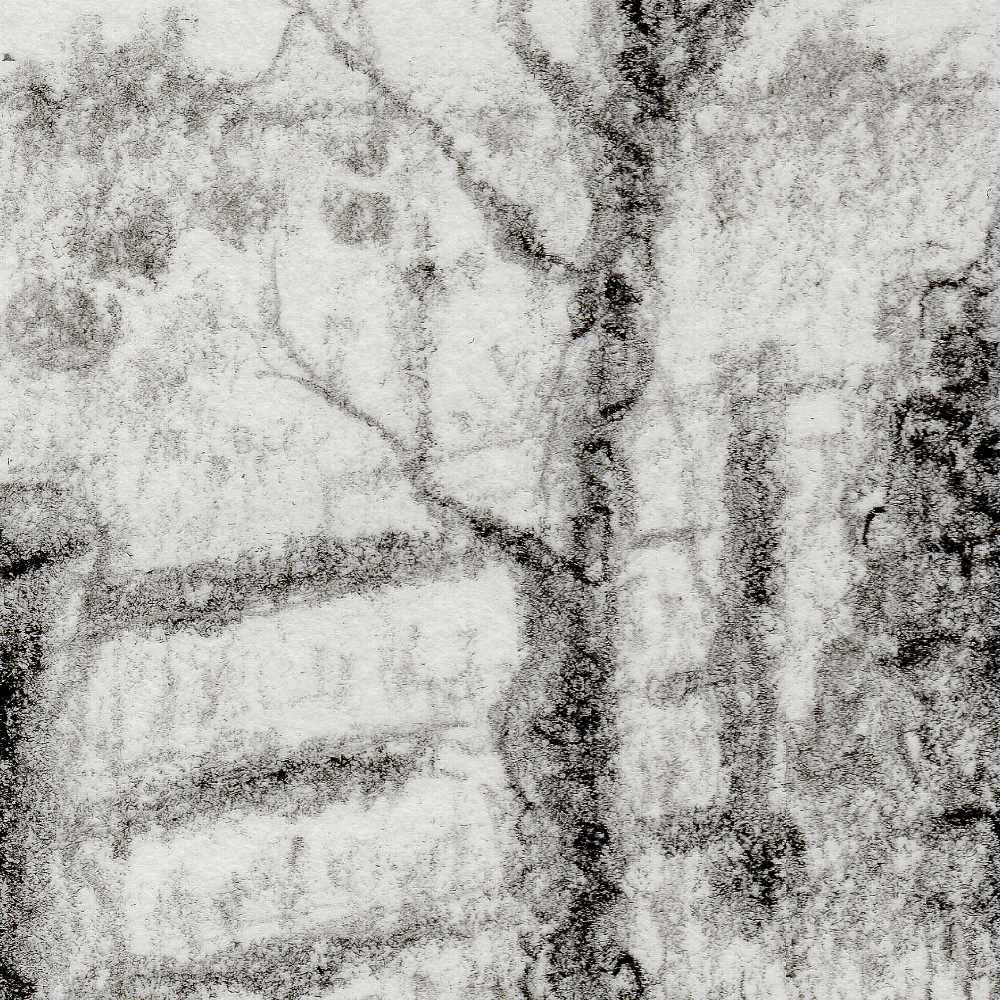
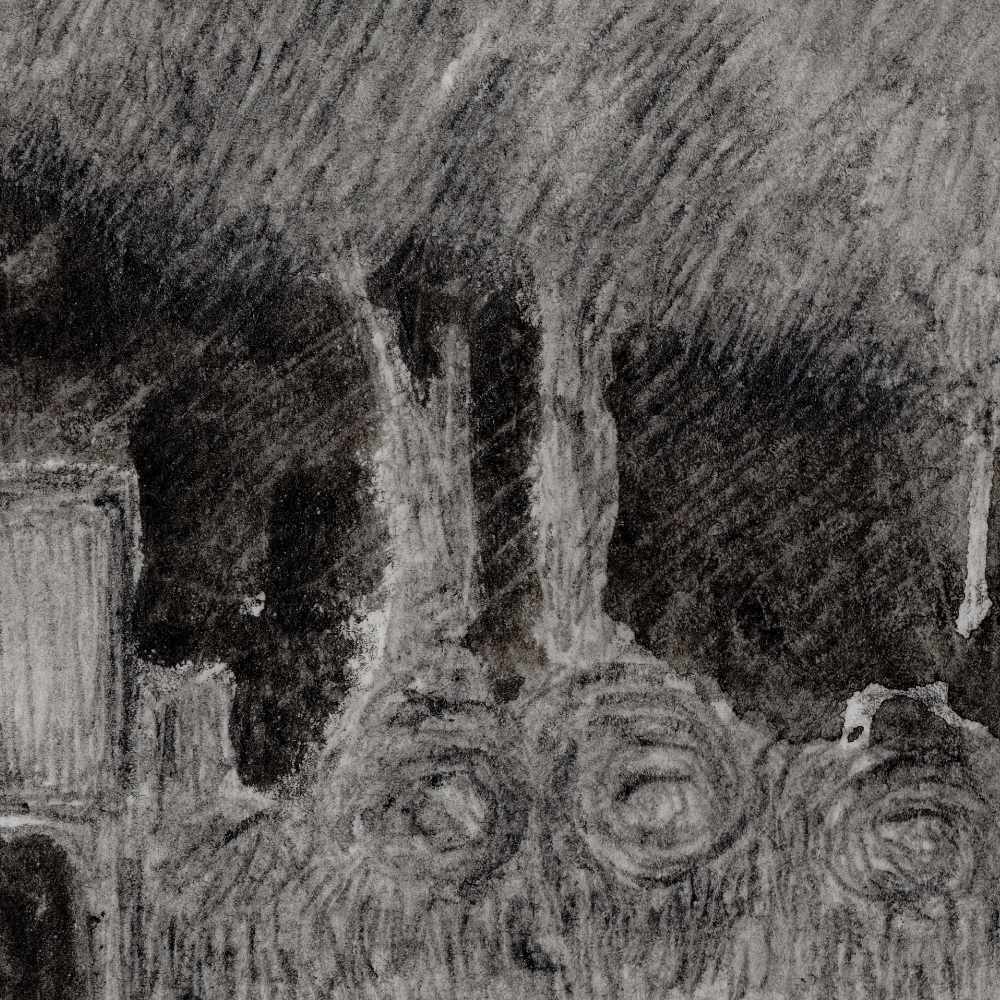
    This graphite piece builds on my continued exploration of solitude, memory, and quiet intervals in rural spaces. The composition follows a rhythmic line of rolled hay bales resting along a fence row beneath bare, sprawling trees. Perched atop one of the bales sits the subtle impression of a solitary figure, gazing out over the pasture in a private moment of pause.

    Graphite lends itself naturally to this kind of atmospheric work, allowing me to build a hazy, soft-focus impression where subtle marks and soft shading do the storytelling rather than rigid, hard lines.

    Technically, the drawing was completed on Strathmore heavyweight paper using Mitsubishi graphite pencils. The paperโ€™s substantial tooth provides an ideal textured ground for dry media, catching the graphite to create a natural, grainy softness across the background and grass while allowing the darker Mitsubishi lead to lay down dense, rich contrast in the swirling texture of the bales and the tree branches.


  • Solitary Traverse

    Solitary Traverse

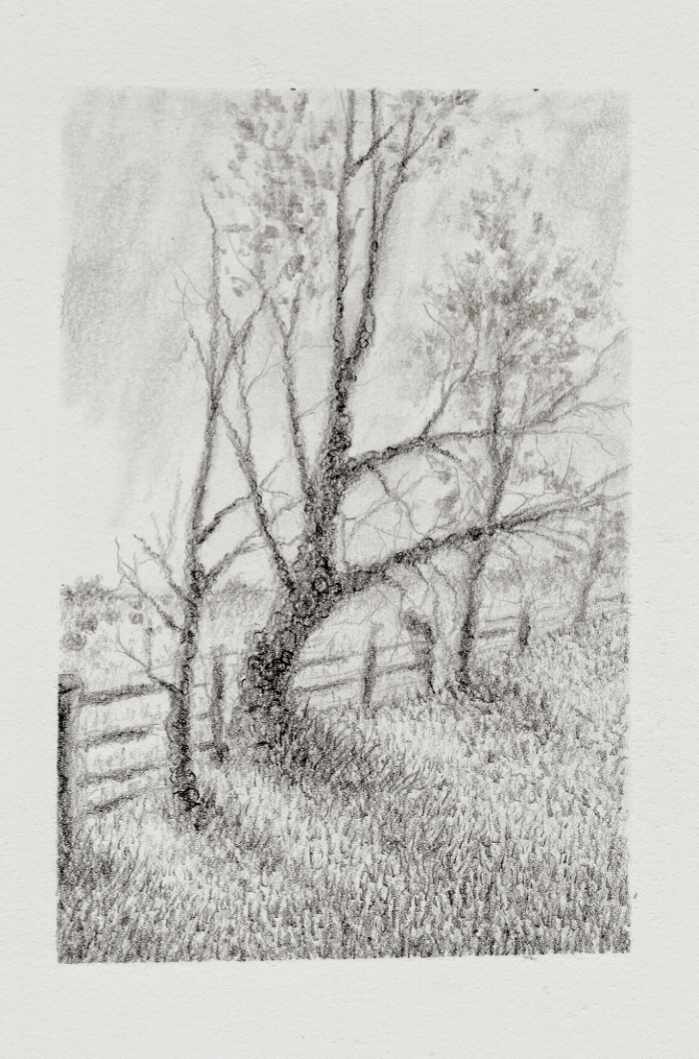
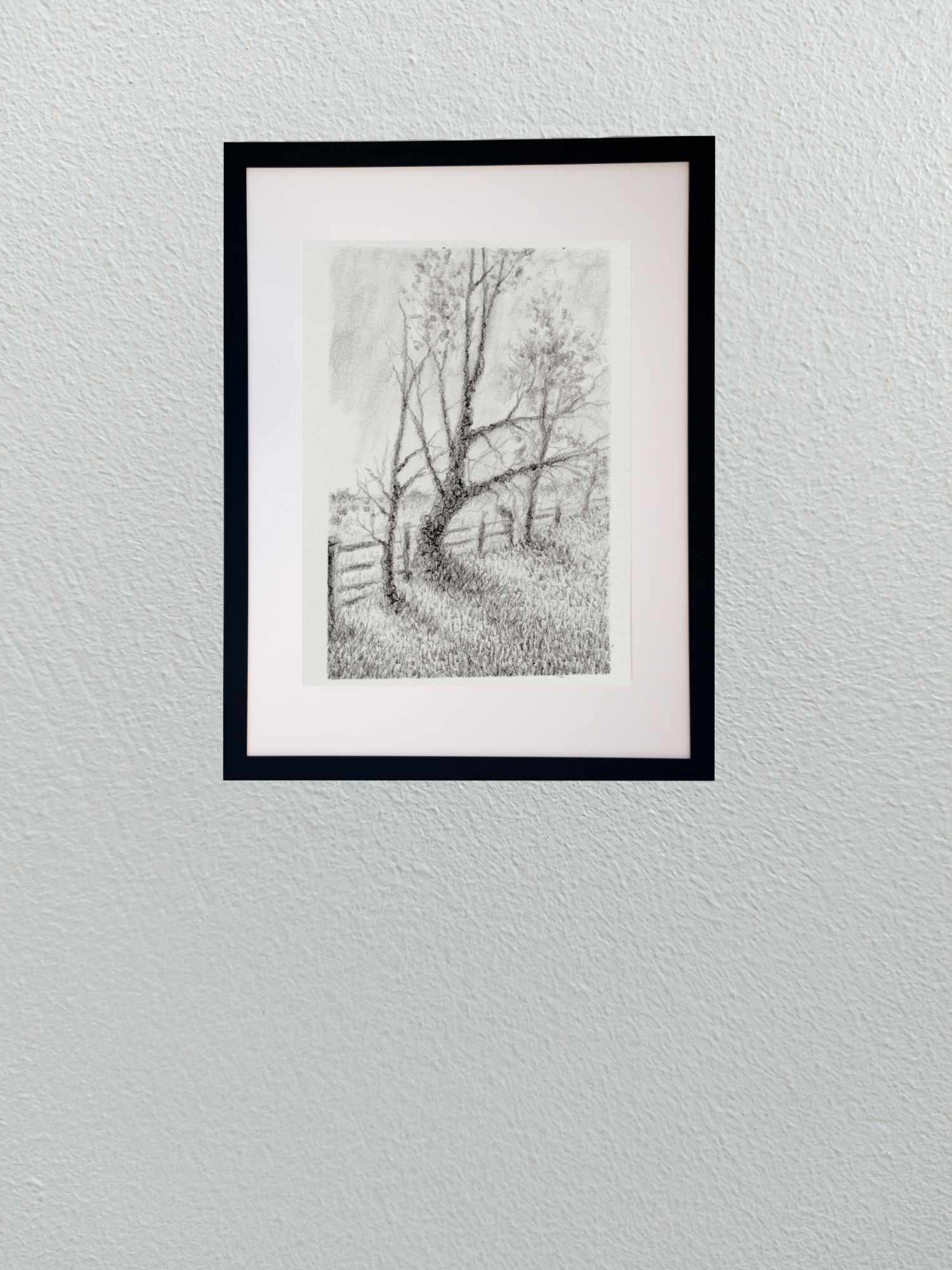
    This graphite drawing steps back into a quiet, atmospheric space, continuing my exploration of solitude, loss, and the unknown. At first glance, the composition presents a familiar rural vista: a weathered fence line tracing the curve of a hill, distant hay bales resting in the pasture, and a small cluster of bare trees leaning against the sky.

    Looking closer between the trunks reveals a faint, subtly shaded figure walking along the boundary. That quiet presence shifts the entire mood of the scene, turning a simple field study into a contemplative moment of transition. Is it a wanderer passing through, or an echo tied to these quiet acres? Leaving that narrative open allows the viewer to project their own sense of memory and stillness into the frame.

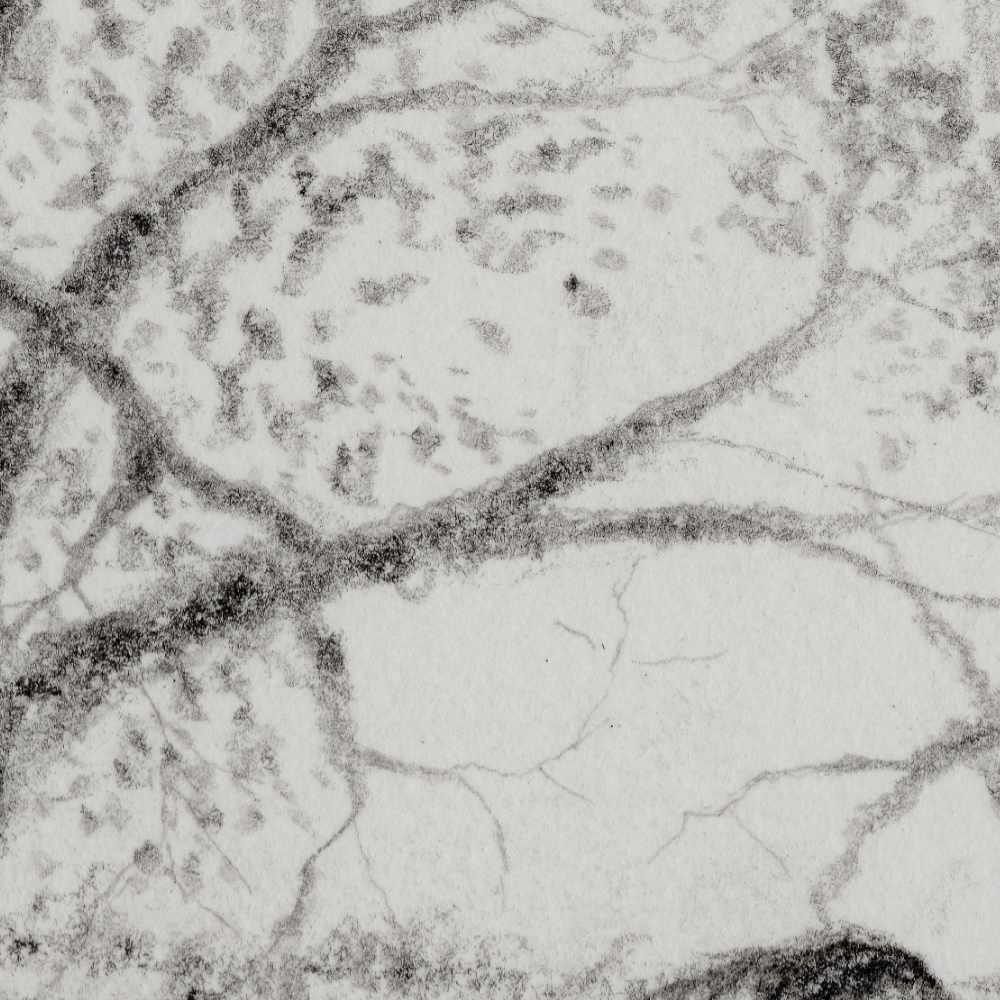
    Technically, the piece was completed on Strathmore heavyweight mixed media paper using Winsor & Newton medium graphite pencils. The pencils were a blind buy, but their soft, creamy graphite application laid down rich, dark values on the textured surface. The natural tooth of the heavyweight paper grabs the medium cleanly, creating a soft, stippled grain in the grass and sky while letting the darker graphite build dense, tactile fissures along the tree bark.


  • Bound Sentry

    Bound Sentry

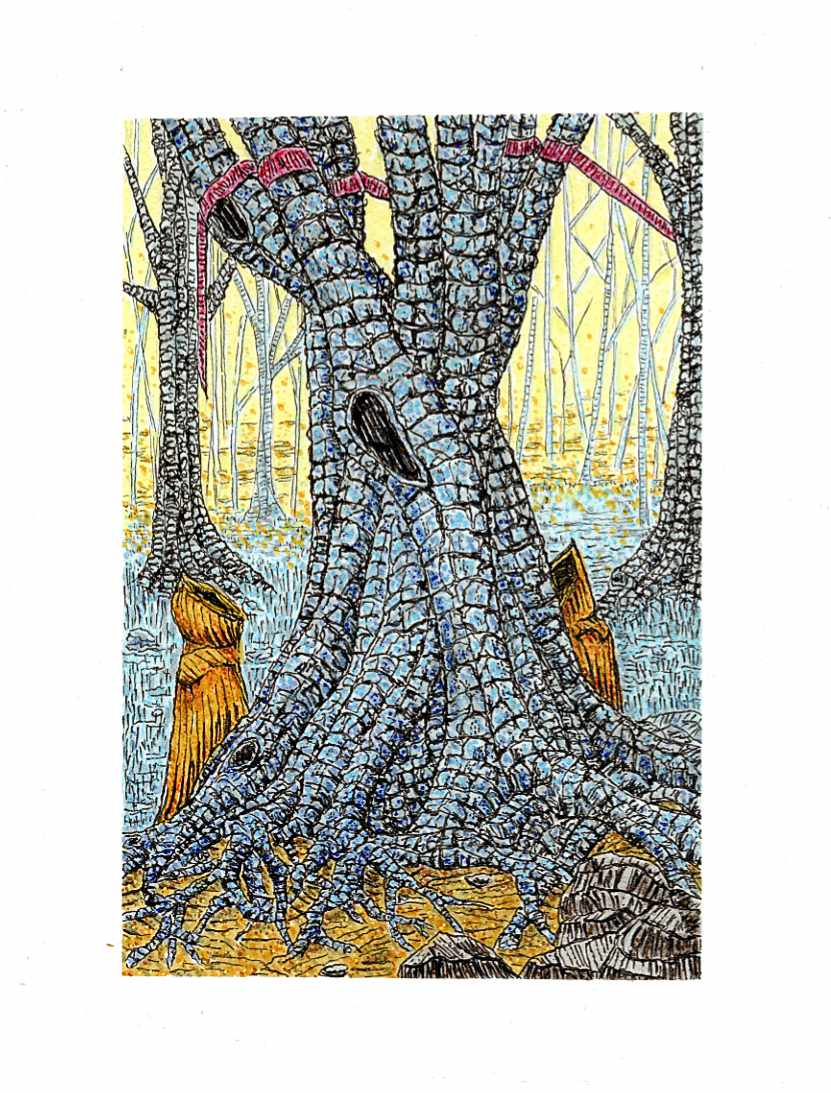
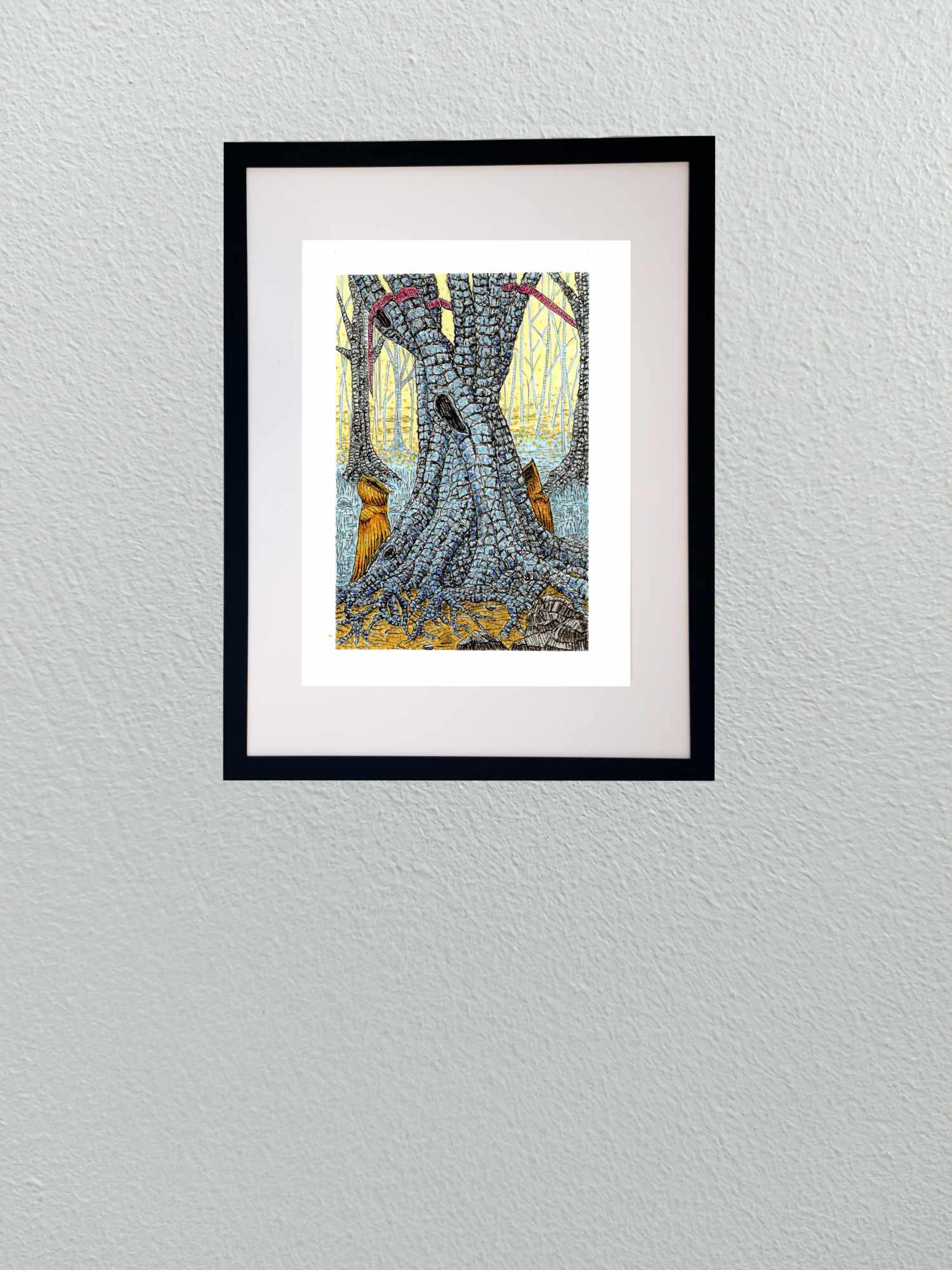
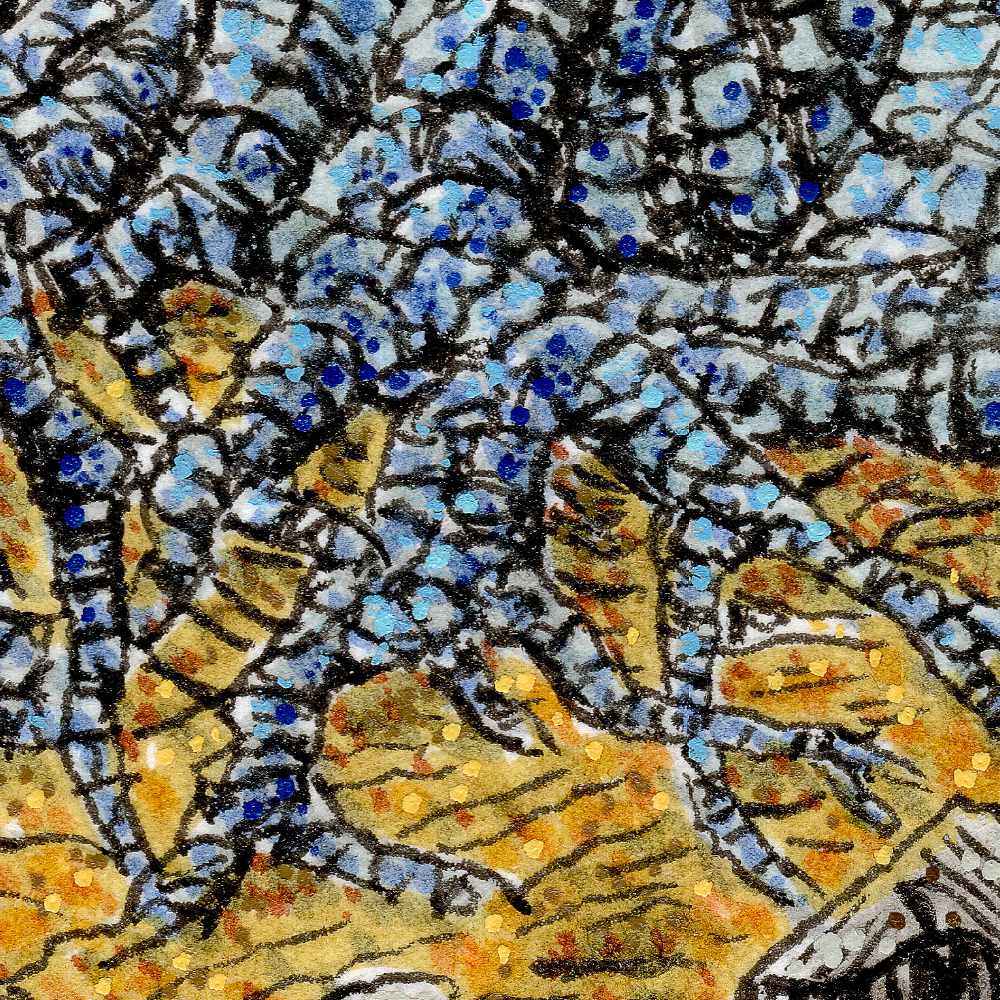
    This piece continues my exploration of folklore and the eerie quiet of deep woodland spaces. The composition centers on a massive, ancient tree whose trunk and sprawling root system dominate the foreground, breaking the forest floor like petrified muscle.

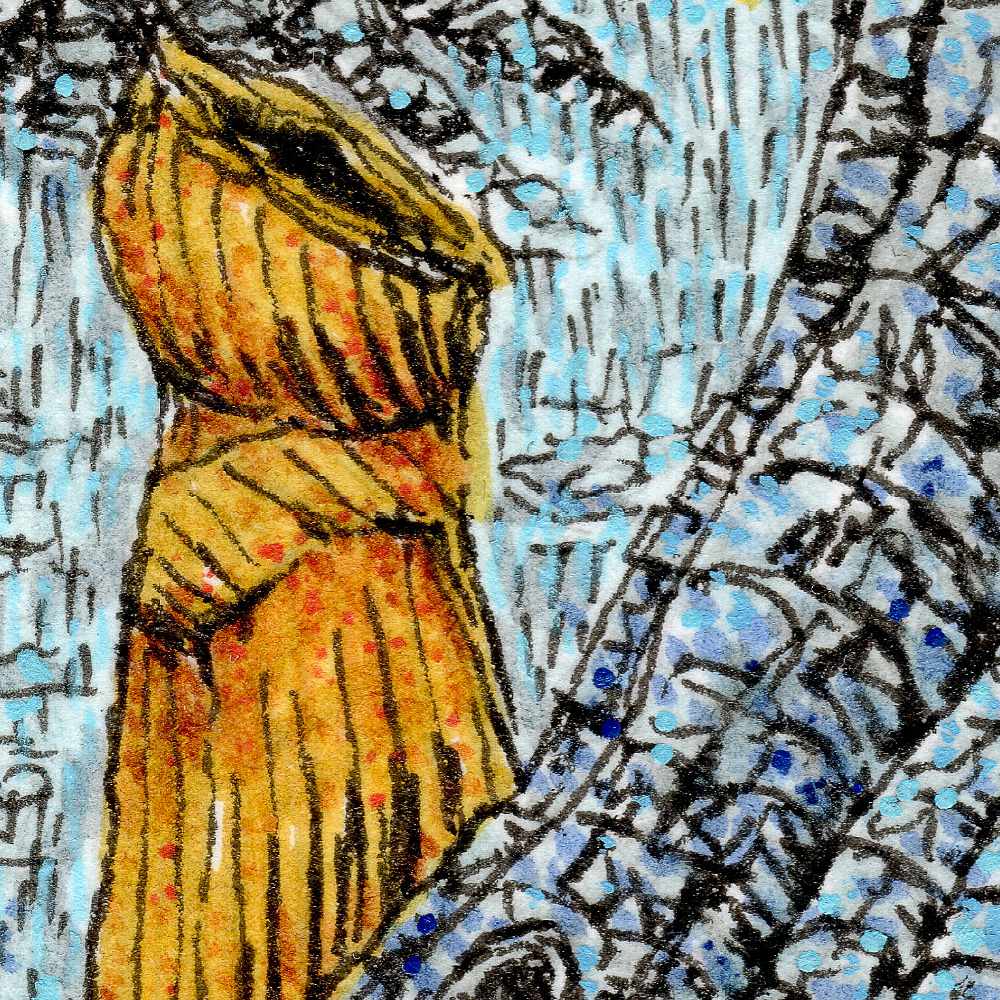
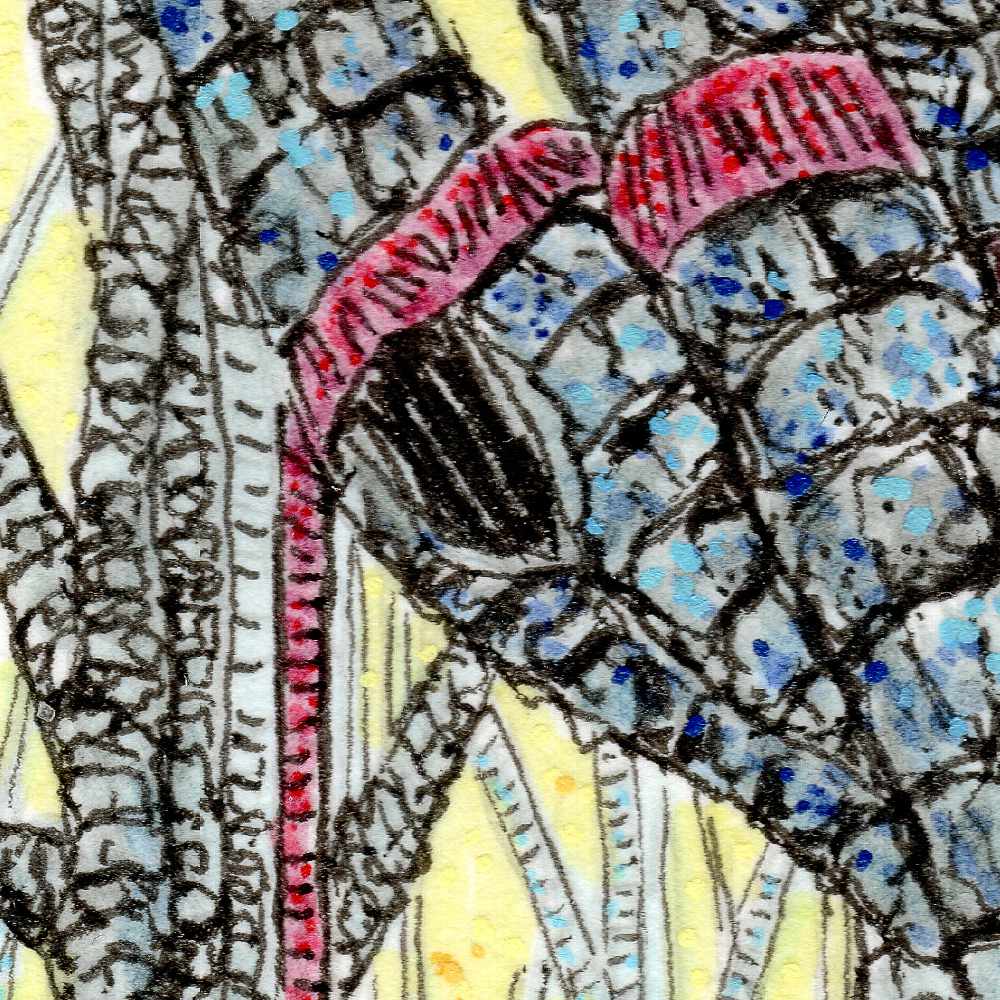
    Flanking the base of the roots are two hooded figures cloaked in deep ochre, standing motionless before the hollows of the trunk. High in the branches, the crimson ribbon appears once again, bound around the limbsโ€”a subtle, recurring marker that weaves through this series, hinting at an unseen presence or a quiet rite known only to those who wander these woods.

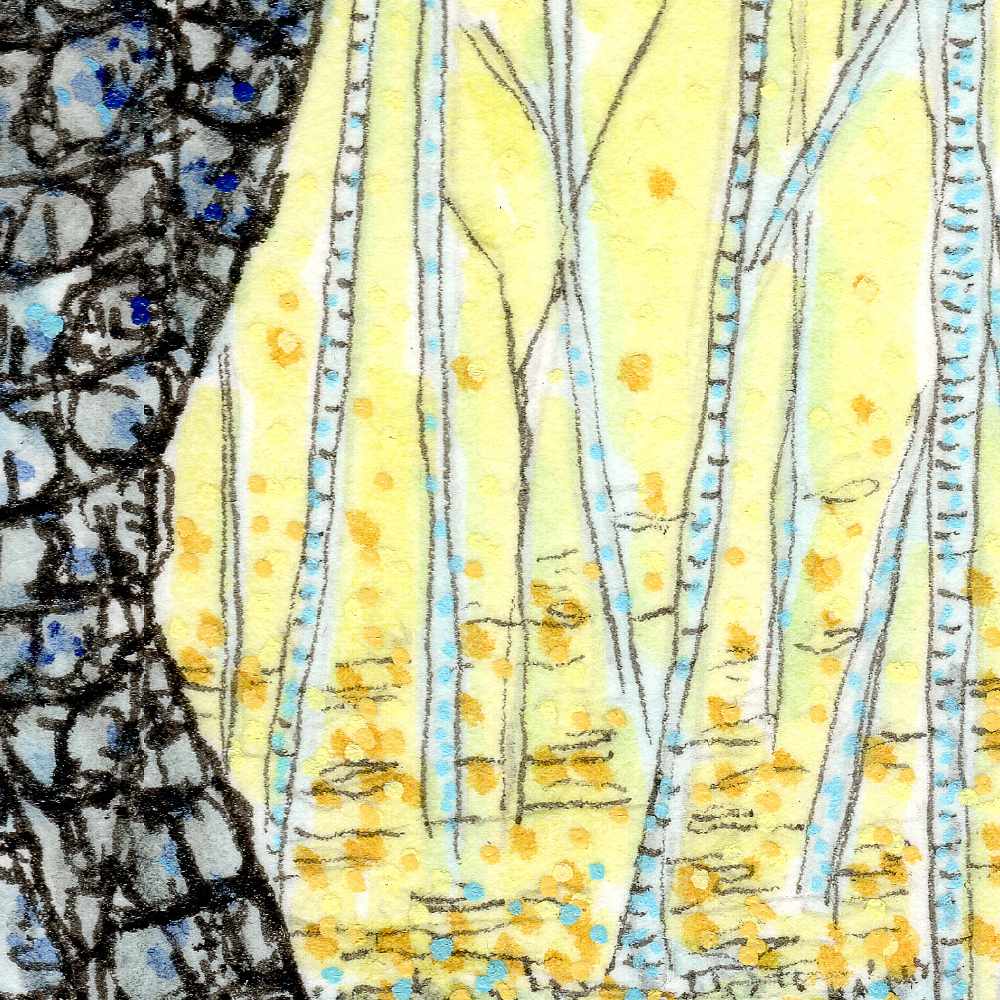
    Technically, this was completed on Strathmore heavyweight mixed media paper using Faber-Castell Pitt pens and Staedtler fine liners, with subtle pointillism applied via acrylic pens. I used the fine liners to construct the heavy, modular texture of the bark, mapping out dense, individual fissures across the trunk. Pitt pen washes established the cool blue-gray tones of the wood and the glowing yellow light filtering through the background trees. To bring extra vibration to the canopy and ground plane, I layered fine acrylic dots over the ink work, giving the ambient light an electric, atmospheric tooth.