Tag: house

  • Peer

    Peer

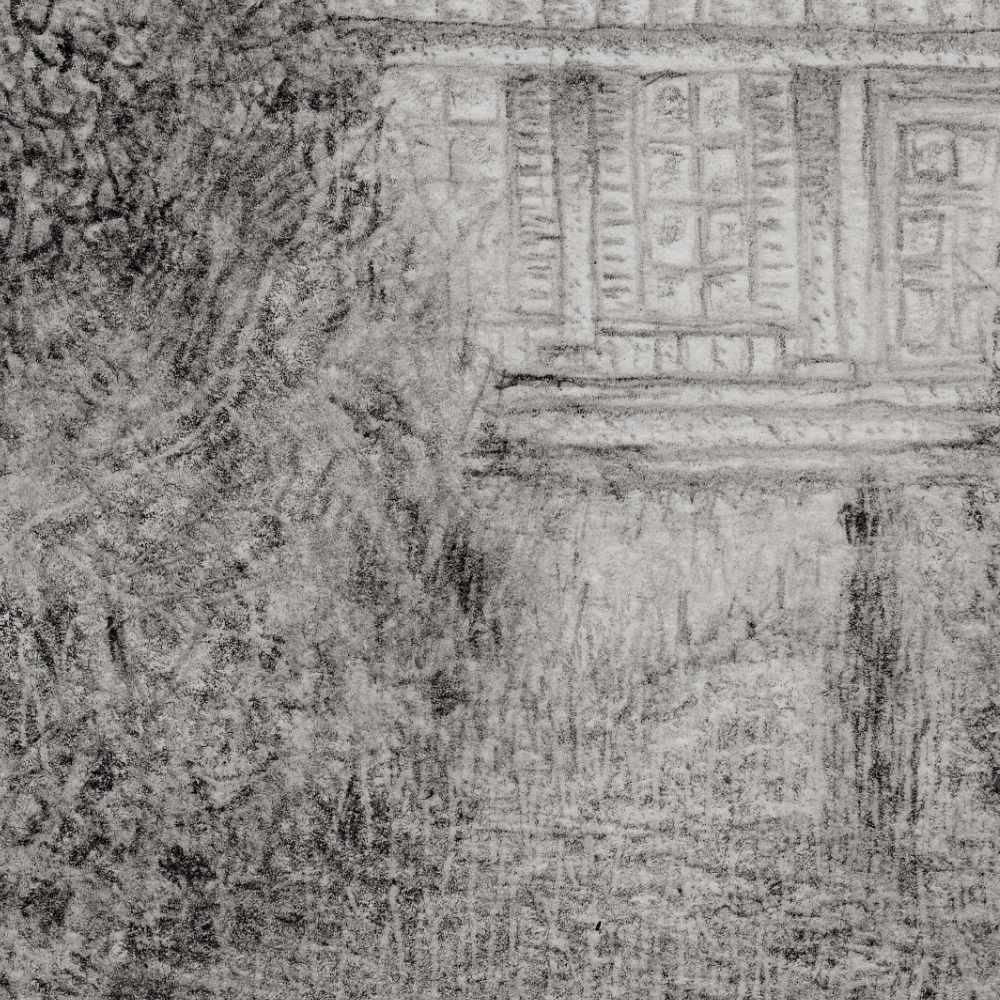
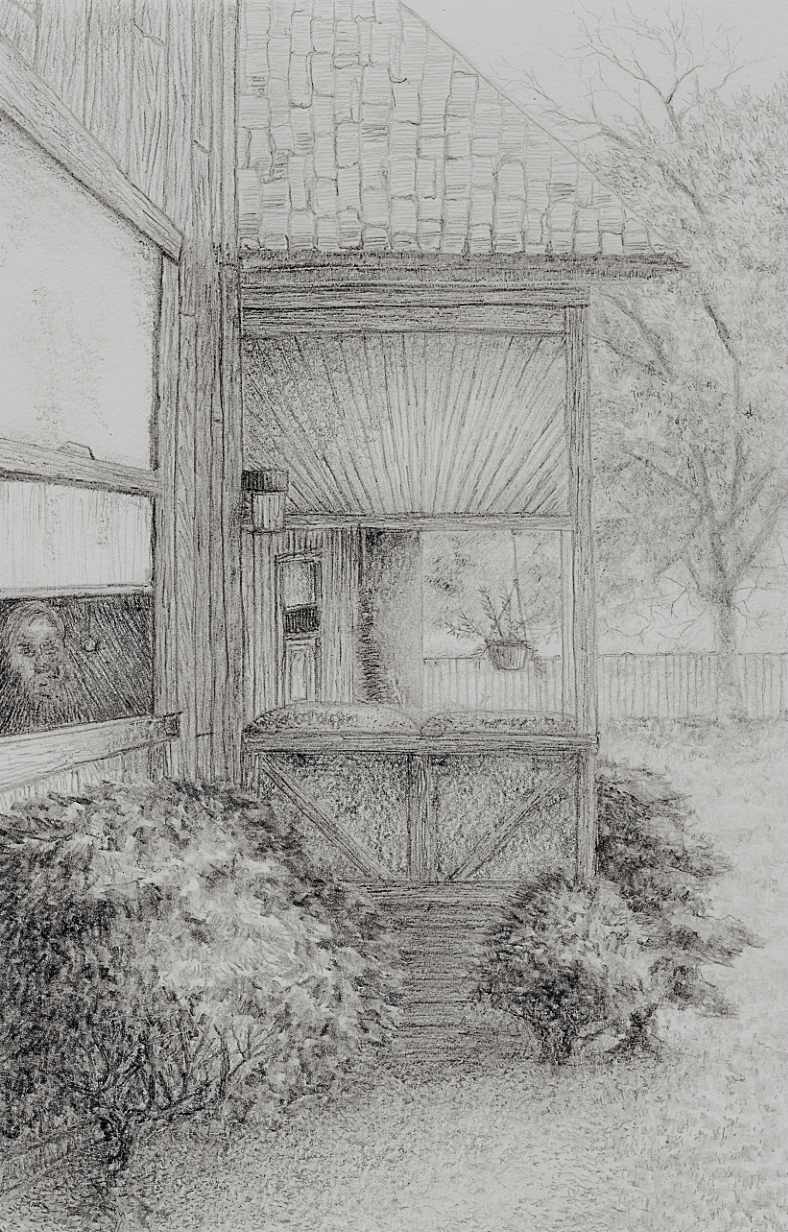
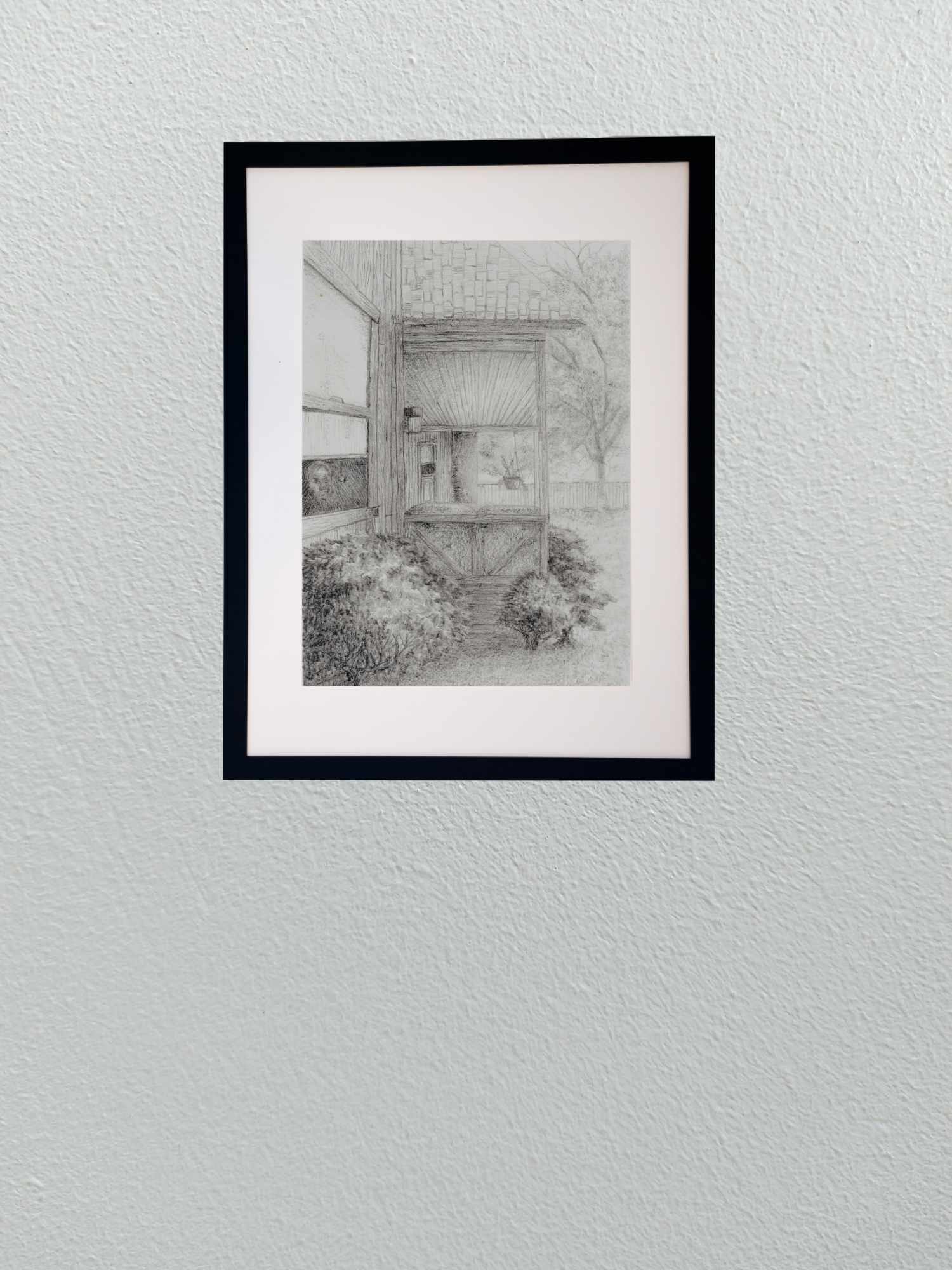
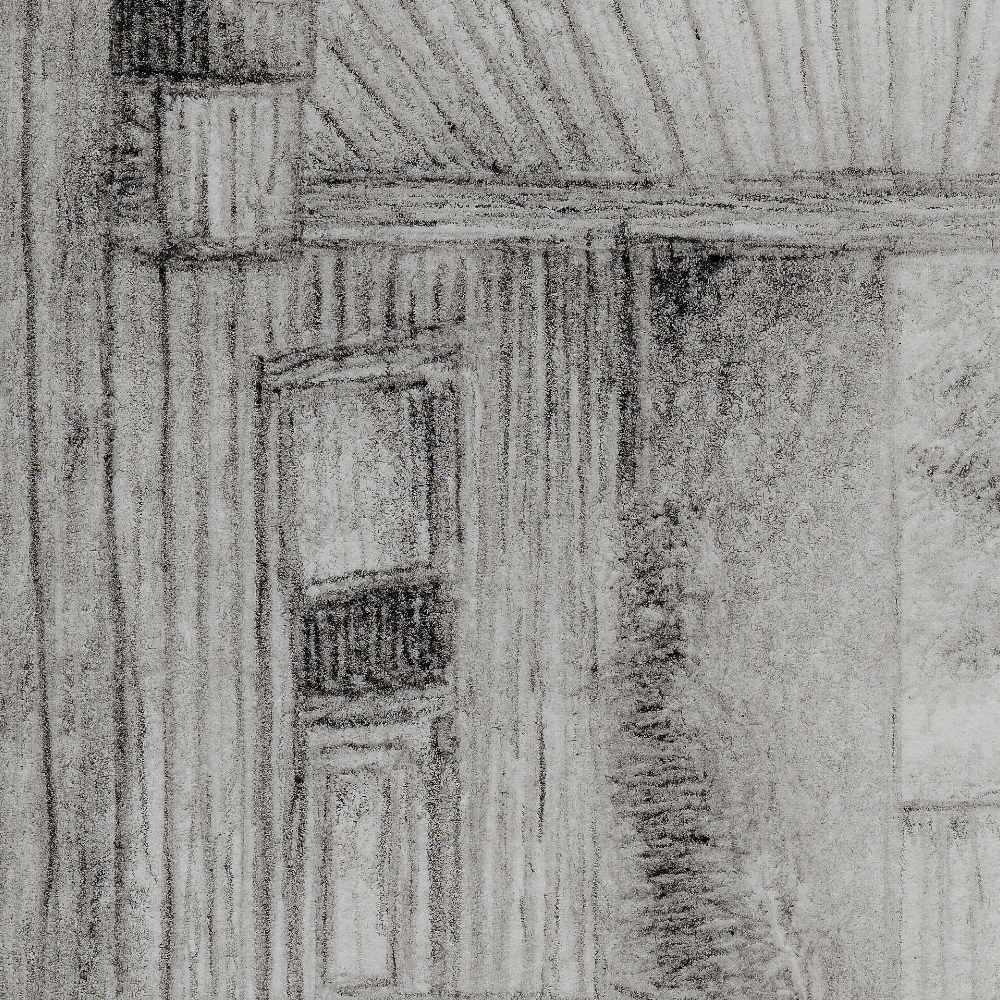
    This latest graphite piece returns to the tension of mundane horror, exploring what happens when the ordinary facade of suburban domesticity fractures. The composition leads the eye along the exterior flank of a residential home, past foundation shrubs and vertical siding toward a screened porch overlooking the backyard fence line.

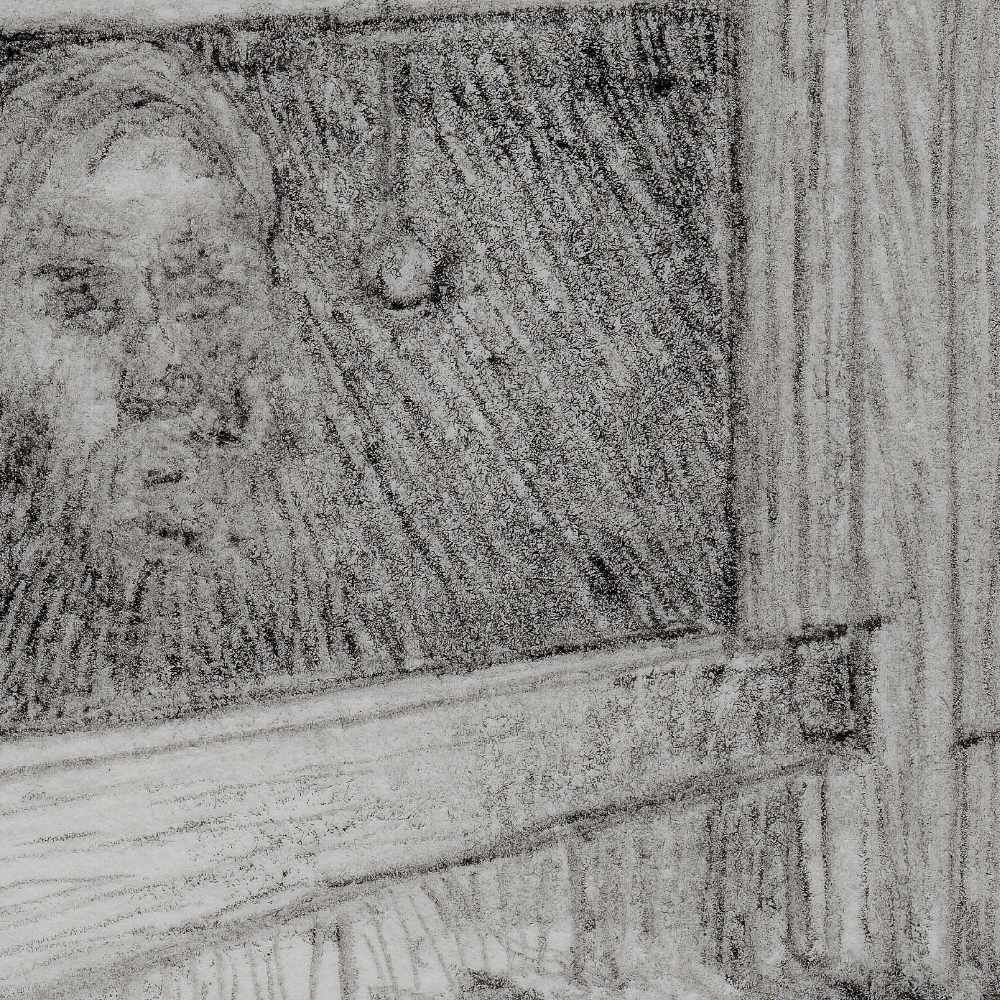
    Everything appears grounded in quiet neighborhood normalcy until the gaze drops to the lower window pane. Peering out from the deep interior shadow is a pale, distorted face pressed against the glass, staring directly back at the viewer. Coupled with the dark, empty doorway deeper along the porch, the scene introduces an immediate psychological chill: is the viewer looking in on a captive, an intruder, or something that belongs to the house itself?

    Technically, the drawing was completed on Strathmore heavyweight paper using Mitsubishi graphite pencils. The tooth of the heavyweight sheet creates a soft, tactile grain across the lawn, shrubs, and distant winter trees. To make the horror land, I leveraged the dark, velvety laydown of the Mitsubishi graphite to create a deep, light-drinking void in the window, using subtle negative rendering and soft erasure to pull the haunting contours of the face forward from the dark.
  • Along the Drive

    Along the Drive

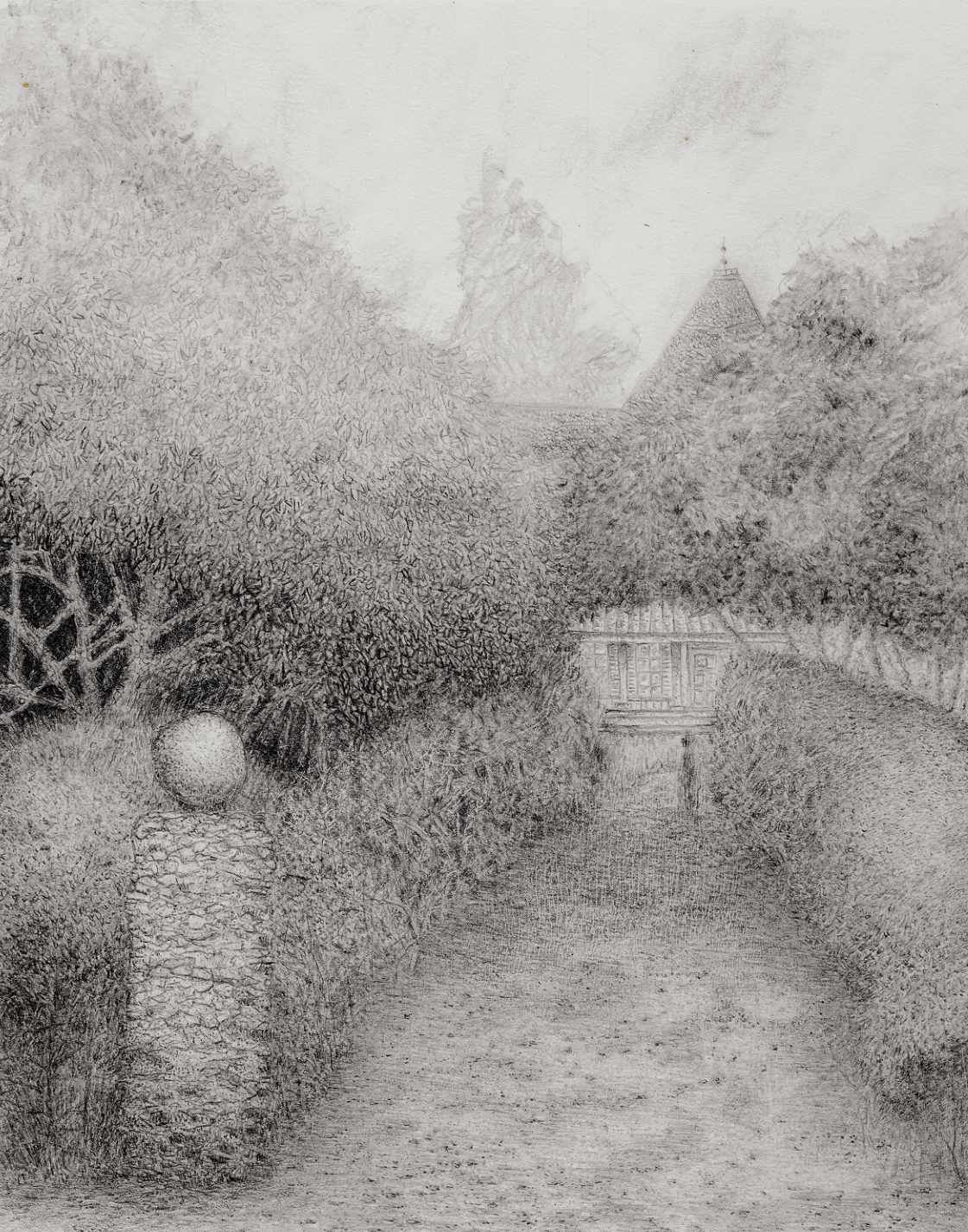
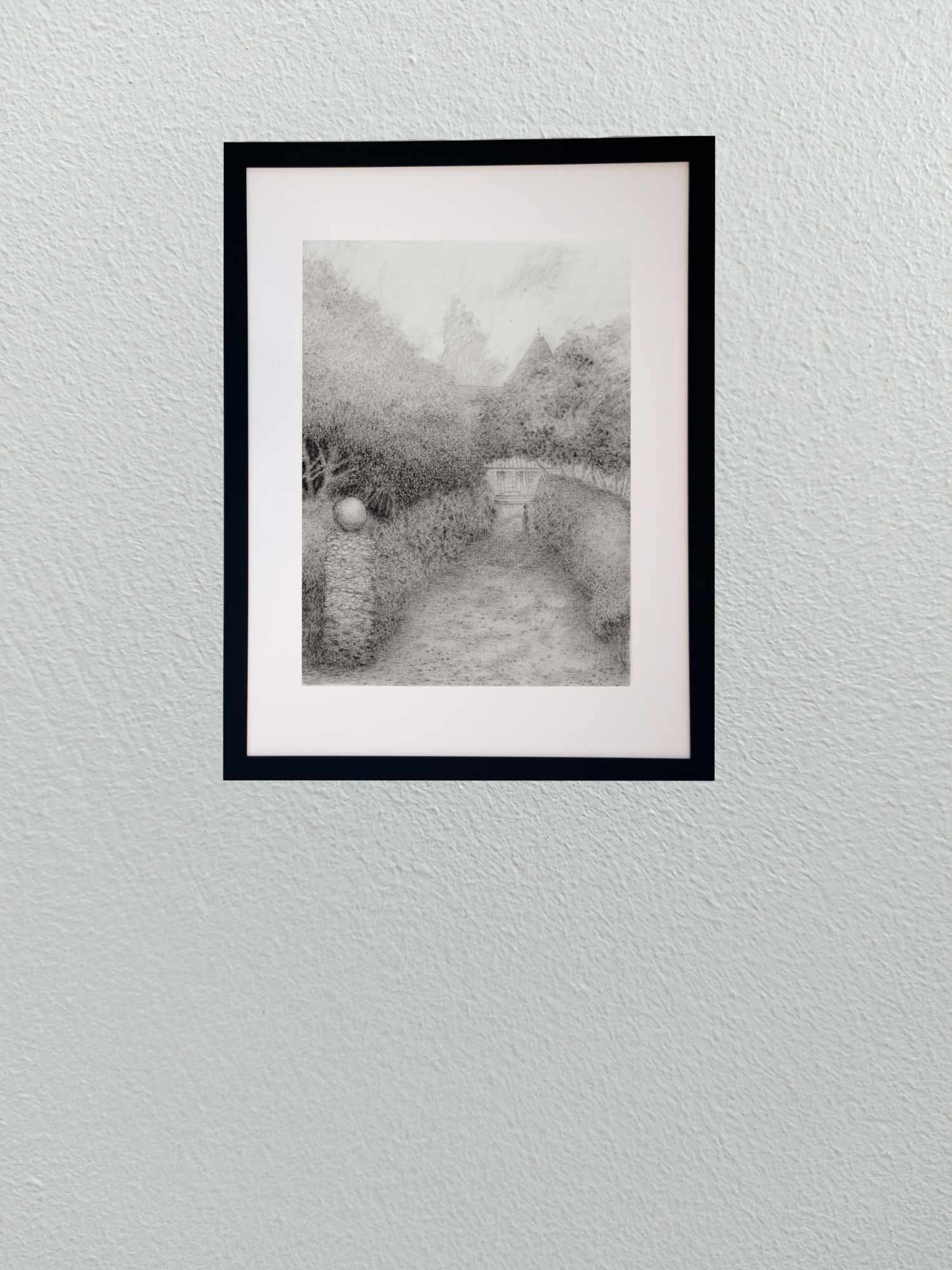
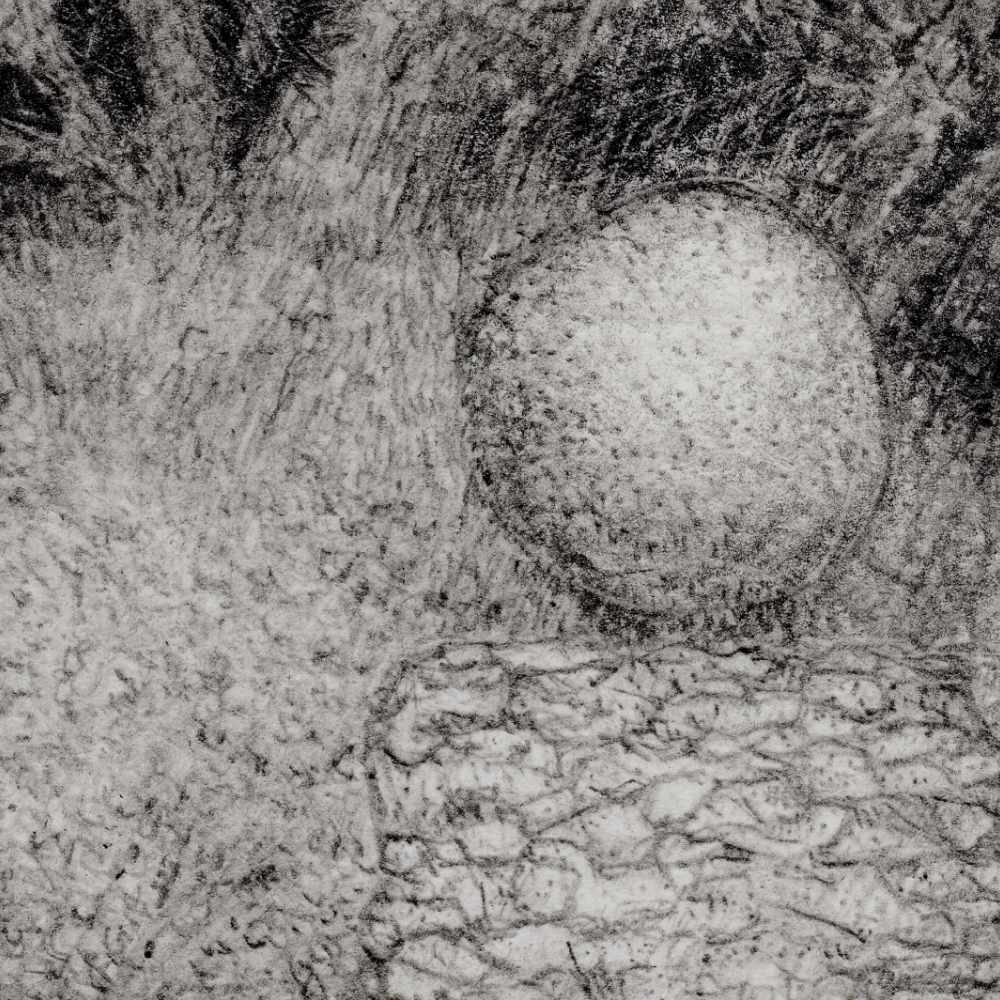
    Building directly on the earlier compositional study, this larger graphite drawing pushes deeper into a Southern Gothic mood of quiet decay, nostalgia, and loss. The scene captures a seemingly mundane domestic vista: a gravel driveway flanked by an aged stone pillar topped with a sphere, leading back toward a secluded home obscured by years of heavy hedge growth and sprawling trees.

    The mood shifts through the atmosphere and subtle narrative detail. Bathed in a soft, silver-toned haze, the distance holds the quiet impression of a solitary silhouette standing along the hedge line near the porch steps. The figureโ€™s stillness turns the piece into a meditation on memoryโ€”an echo of someone who once belonged to this secluded home, lingering in the driveway as the landscape slowly reclaims the path.

    Technically, the drawing was completed on Strathmore heavyweight paper using Mitsubishi graphite pencils. The tooth of the Strathmore paper catches the smooth, dark lead of the Mitsubishi pencils to build velvety, delicate foliage textures and textured stone surfaces, while soft, feathered strokes create the hazy, vaporous sky that softens the roofline and dense tree canopy.


  • Cloistered Roofline

    Cloistered Roofline

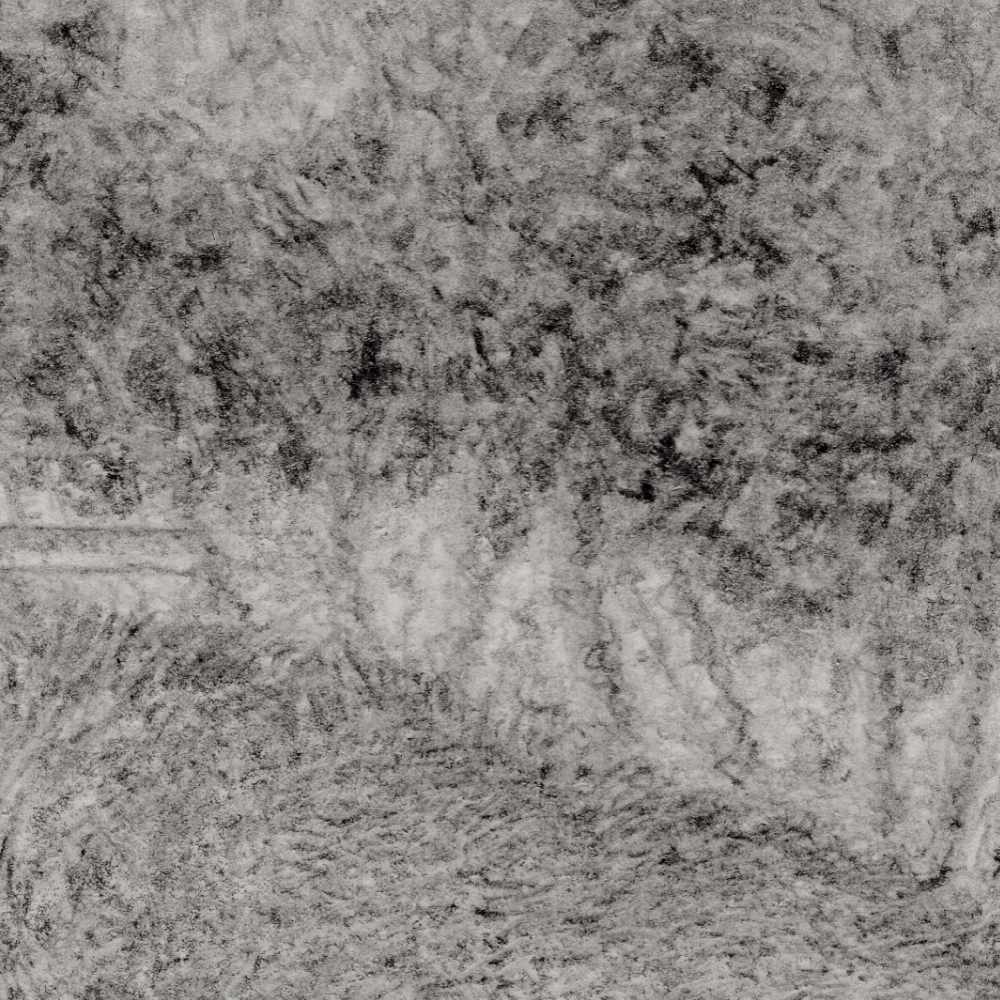
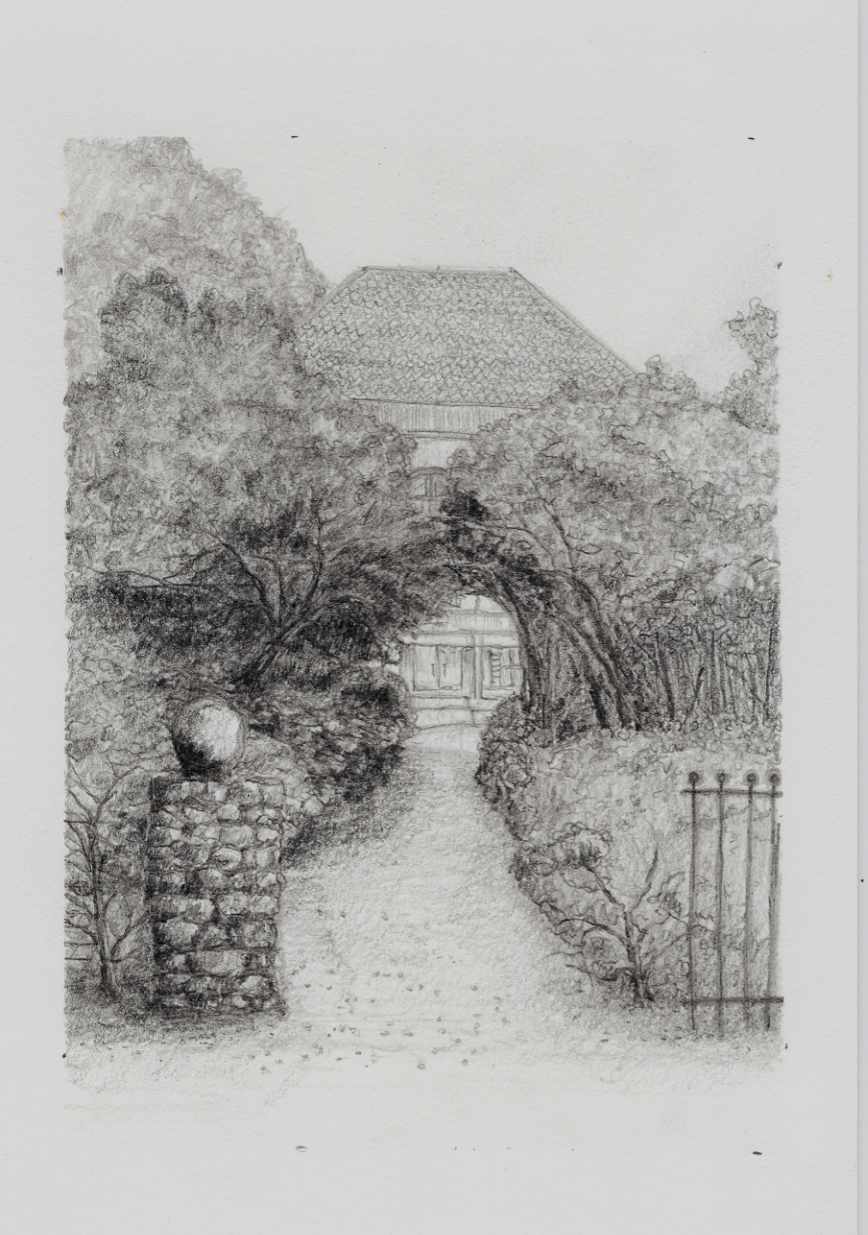
    his graphite study returns to quiet architectural mystery, focusing on the threshold between the open approach and a secluded domestic space. The composition centers on a curved gravel drive flanked by an old stone pillar topped with a sphere, an iron gate, and heavy, overgrown shrubbery.

    The drive disappears beneath a dense, shadowy arbor of bent trees, creating a shaded tunnel that conceals the majority of the house beyond. Only fragments of the structure emergeโ€”the steep pitch of a tiled or shingled roof, a hint of an upper dormer, and a sunlit porch tucked in the distance. The architecture feels cloistered and watchful, shielded by decades of growth. Leaving the interior obscured invites the viewer to wonder whether the home is occupied, abandoned, or quietly waiting behind the canopy.

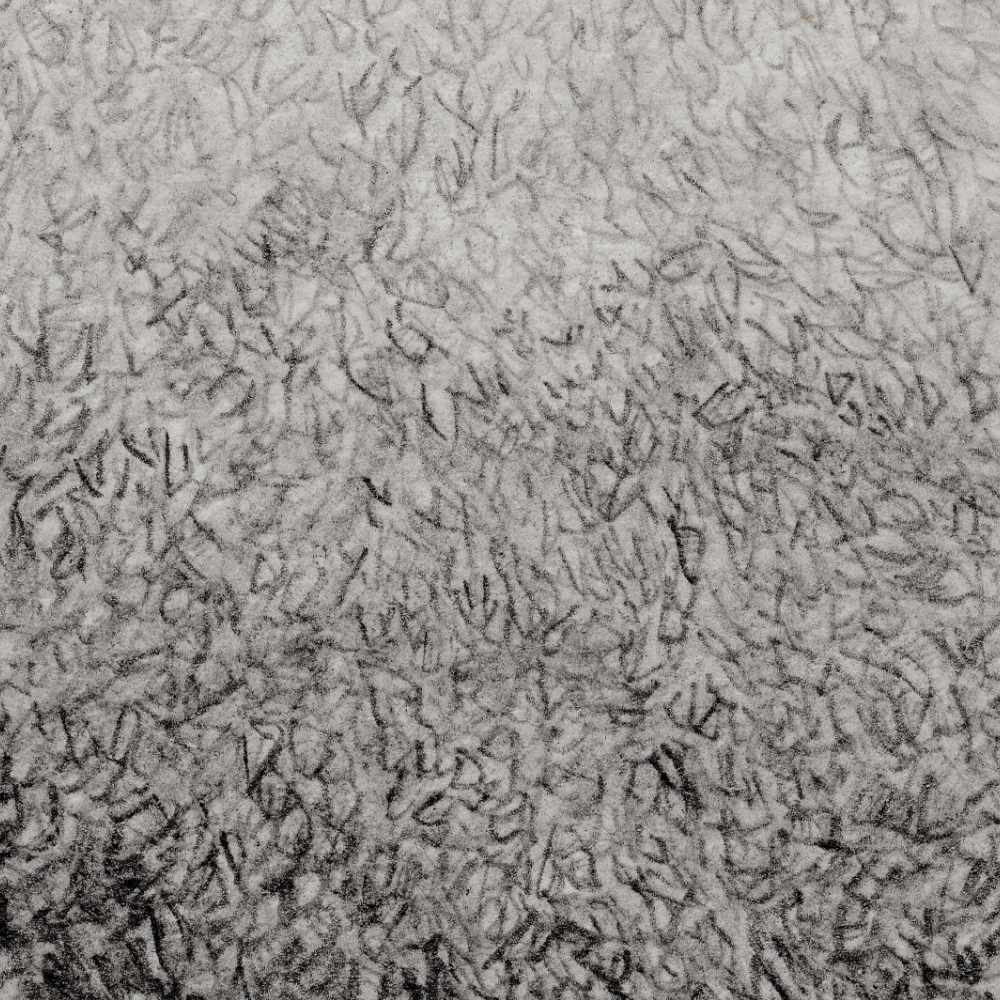
    Technically, the drawing was executed on Strathmore heavyweight paper using Winsor & Newton graphite pencils. The paperโ€™s substantial tooth breaks up the graphite strokes, allowing for soft, vaporous transitions throughout the billowy tree crowns. The creamy laydown of the Winsor & Newton lead builds deep, velvety darks under the tree canopy and gives tangible weight and mortar depth to the individual fieldstones of the gatepost.


  • Across the Way

    Across the Way

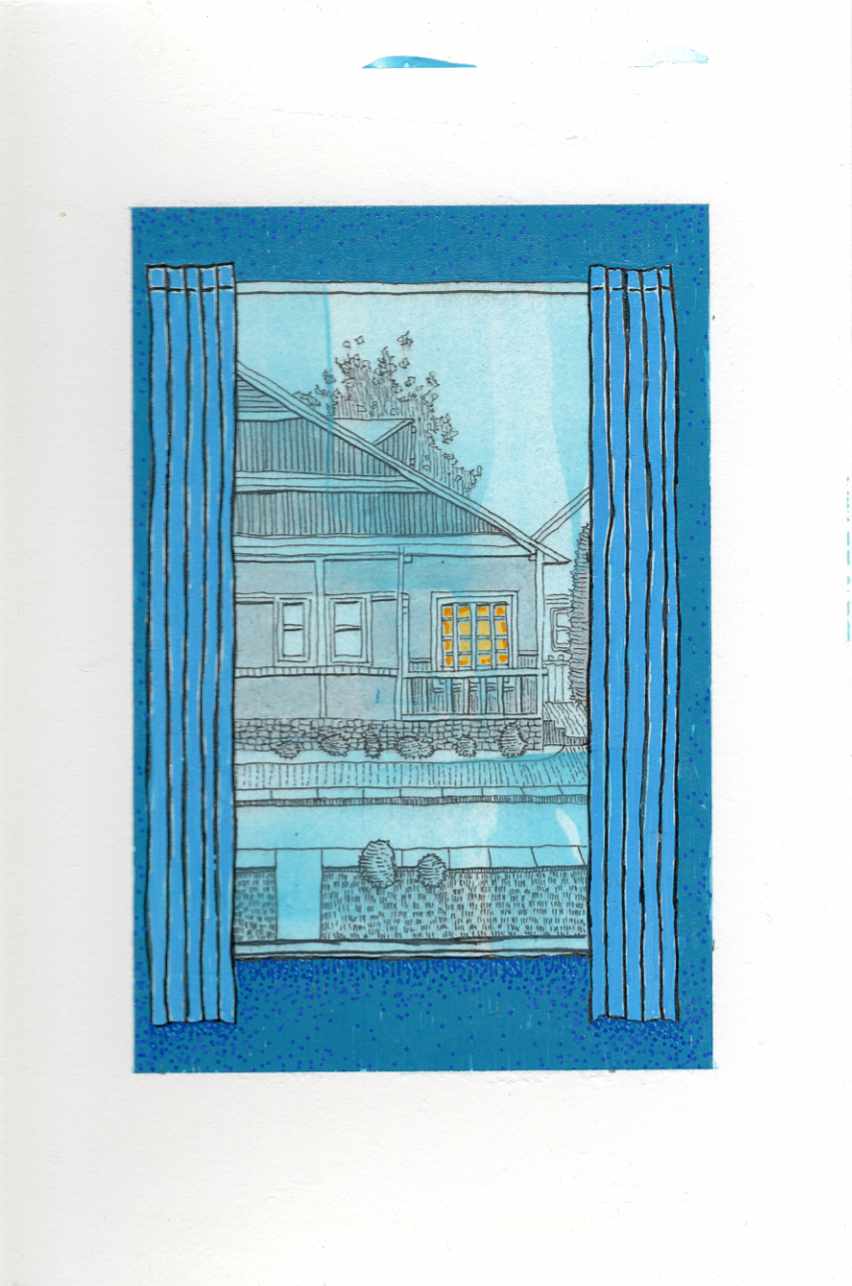
    This piece begins a small, three-part series exploring vignettes of daily life framed entirely through the threshold of a window. It shifts focus toward quiet domestic voyeurism and contemplationโ€”capturing ordinary moments observed from the stillness of an interior room.

    The composition centers on the house directly across the street, viewed between the clean, vertical folds of draped curtains. While the street and exterior walls rest in cool, muted tones, a single window on the porch glows with warm, amber light. That single point of warmth creates an immediate narrative pause: an indicator of quiet routine, someone awake inside, or a silent beacon anchoring the neighborhood dusk.

    Technically, the drawing was completed on Strathmore heavyweight paper using a mixed-media combination of acrylic, pen, and India ink. Fine-tipped ink pens provide architectural precision, capturing the textured shingles, siding, and sidewalk brickwork. India ink washes create delicate tonal gradients across the glass pane, while opaque acrylic builds the saturated blue curtains and the textured interior border framing the view.


  • Falling

    Falling

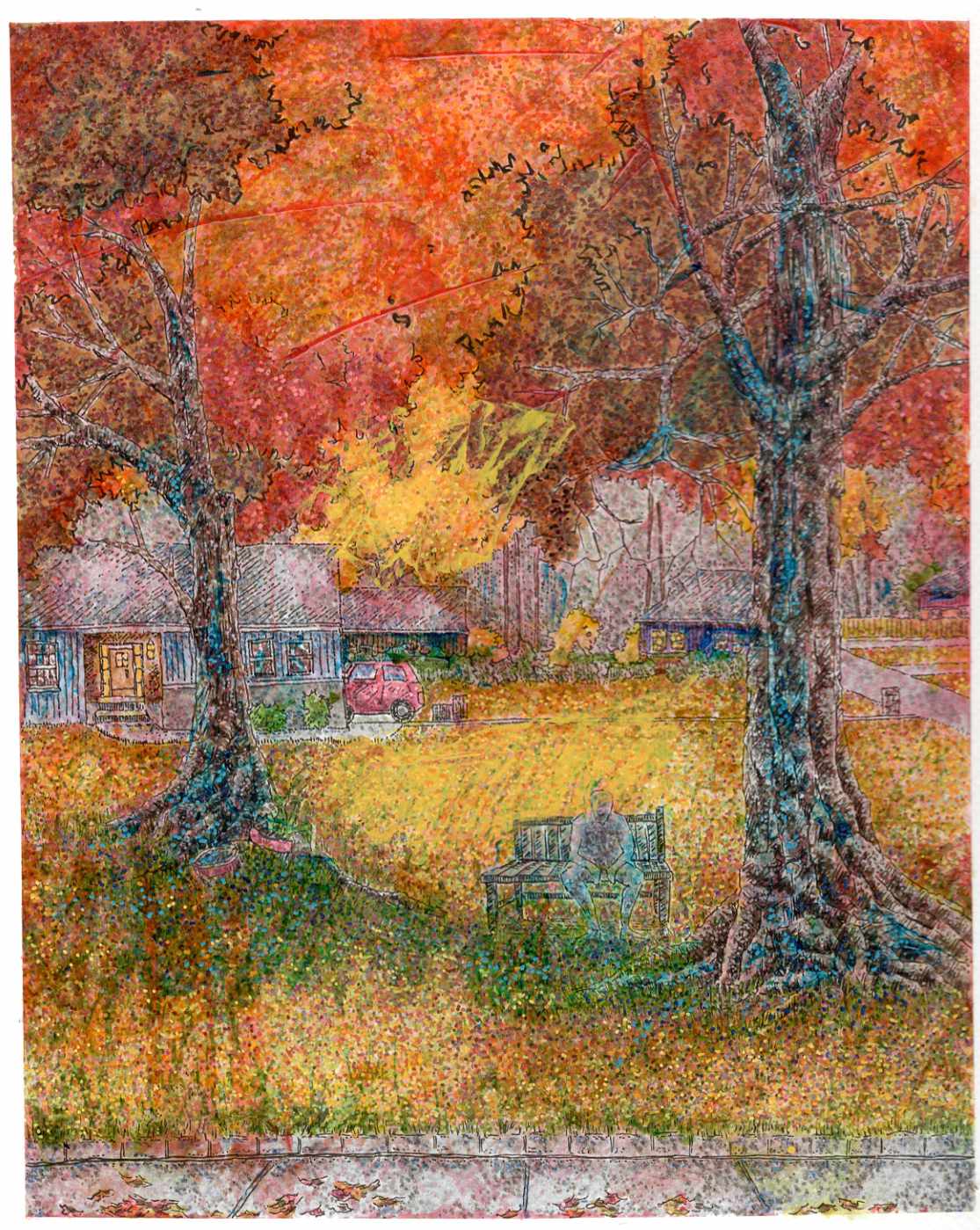
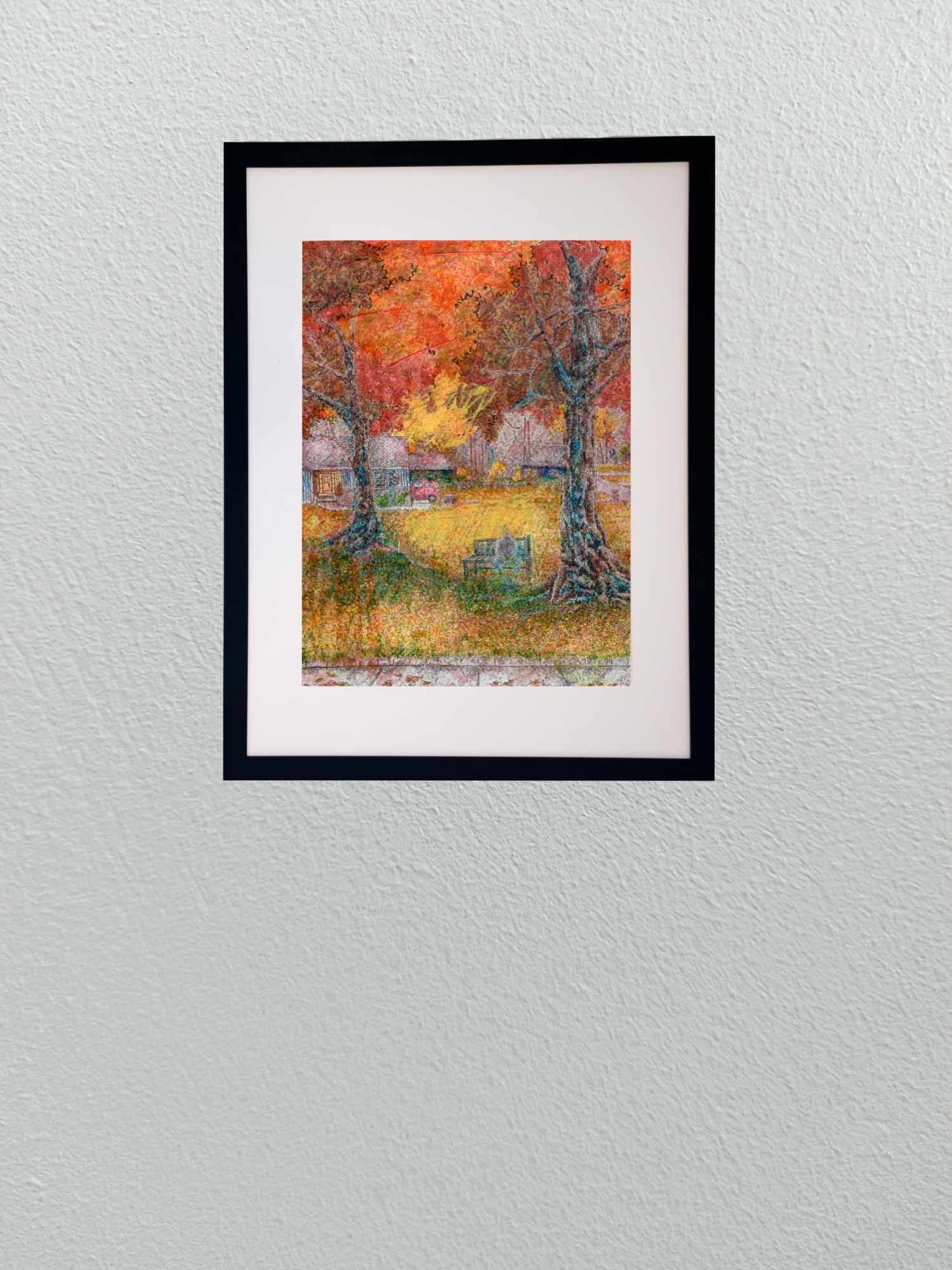
    This piece steps into a quiet suburban street during peak autumn, using familiar neighborhood architecture to explore an underlying narrative of melancholy, solitude, and narrative tension.

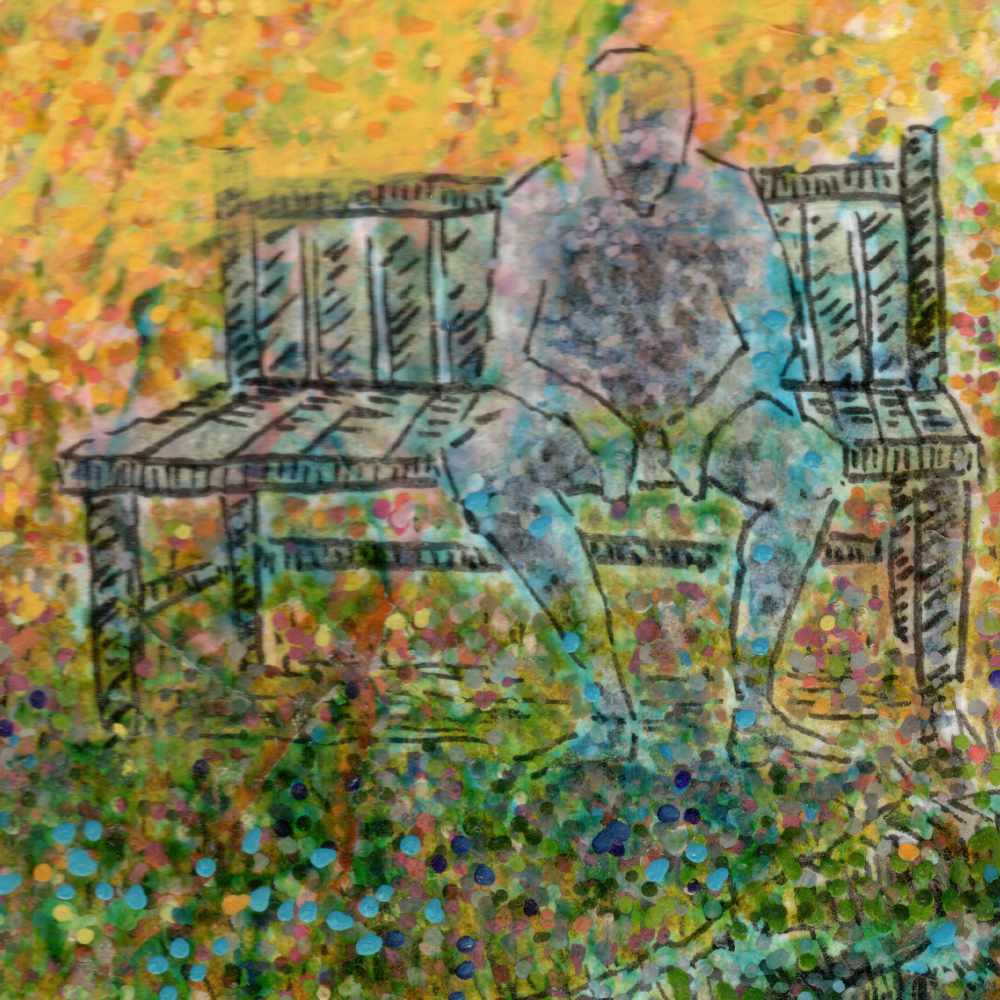
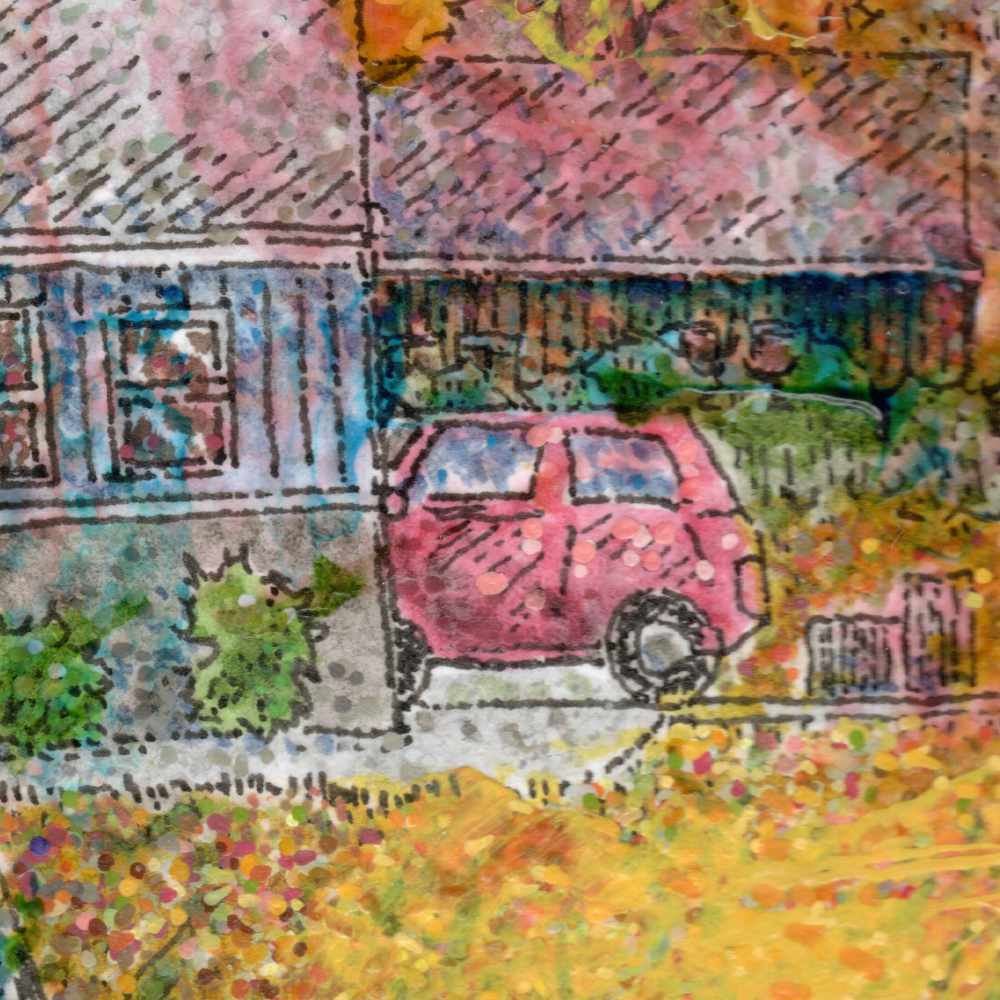
    The foreground is dominated by two massive, ancient trees framing a small lawn, where a solitary, semi-translucent figure sits slumped on a bench. Across the street, suburban life sits suspended in transition: a car parked by the curb beside cardboard boxes, and neighboring houses with their windows glowing warm against the cool encroaching evening. Are we witnessing someone waiting to leave, an eviction, a quiet reckoning with loss, or the ghostly memory of someone who once lived here watching new lives unfold? Leaving the circumstance ambiguous invites the viewer to fill the silence between the bench and the curb.

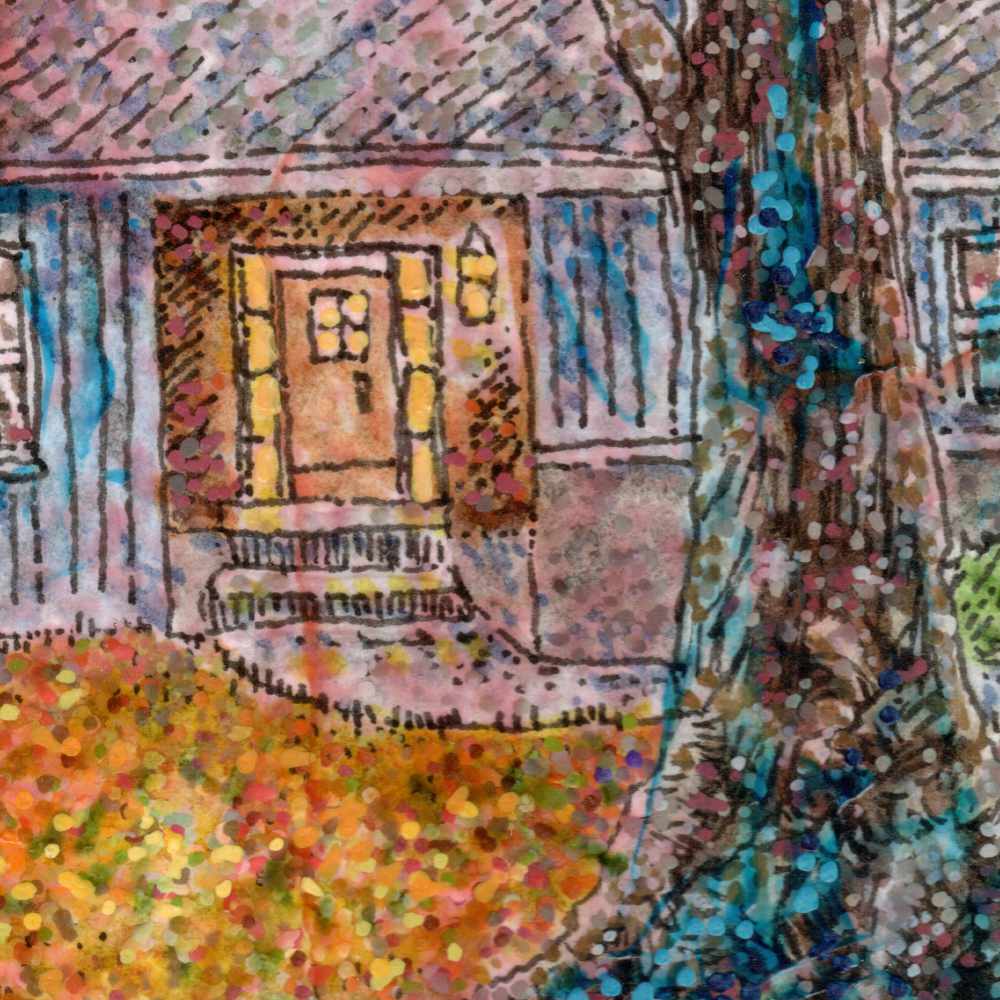
    Technically, the drawing was executed on watercolor paper using acrylics, India ink, and gel pens. The dense autumn canopy was built using intense, saturated acrylic washes layered with intricate pointillist dot work to create a shimmering, textured carpet of gold, copper, and vermilion. India ink linework defines the muscular bark, sprawling root systems, and architectural siding. Gel pens were brought in to lay down crisp, opaque highlights and subtle color shifts across the tree bark, the pavement, and the solitary figure, giving them a luminous, spectral presence amidst the burning fall foliage.


  • Rockwell Church Farmhouse

    Rockwell Church Farmhouse

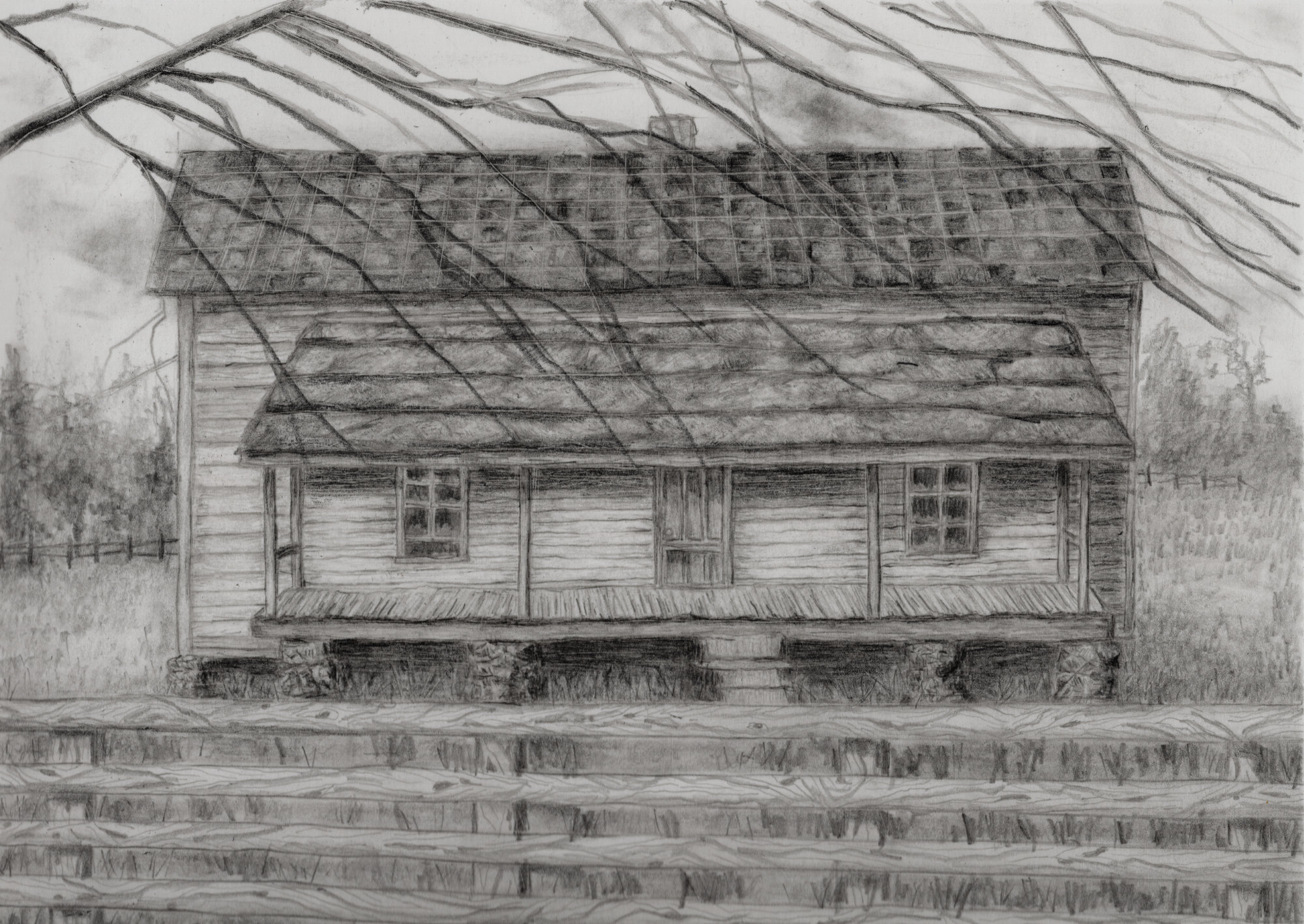
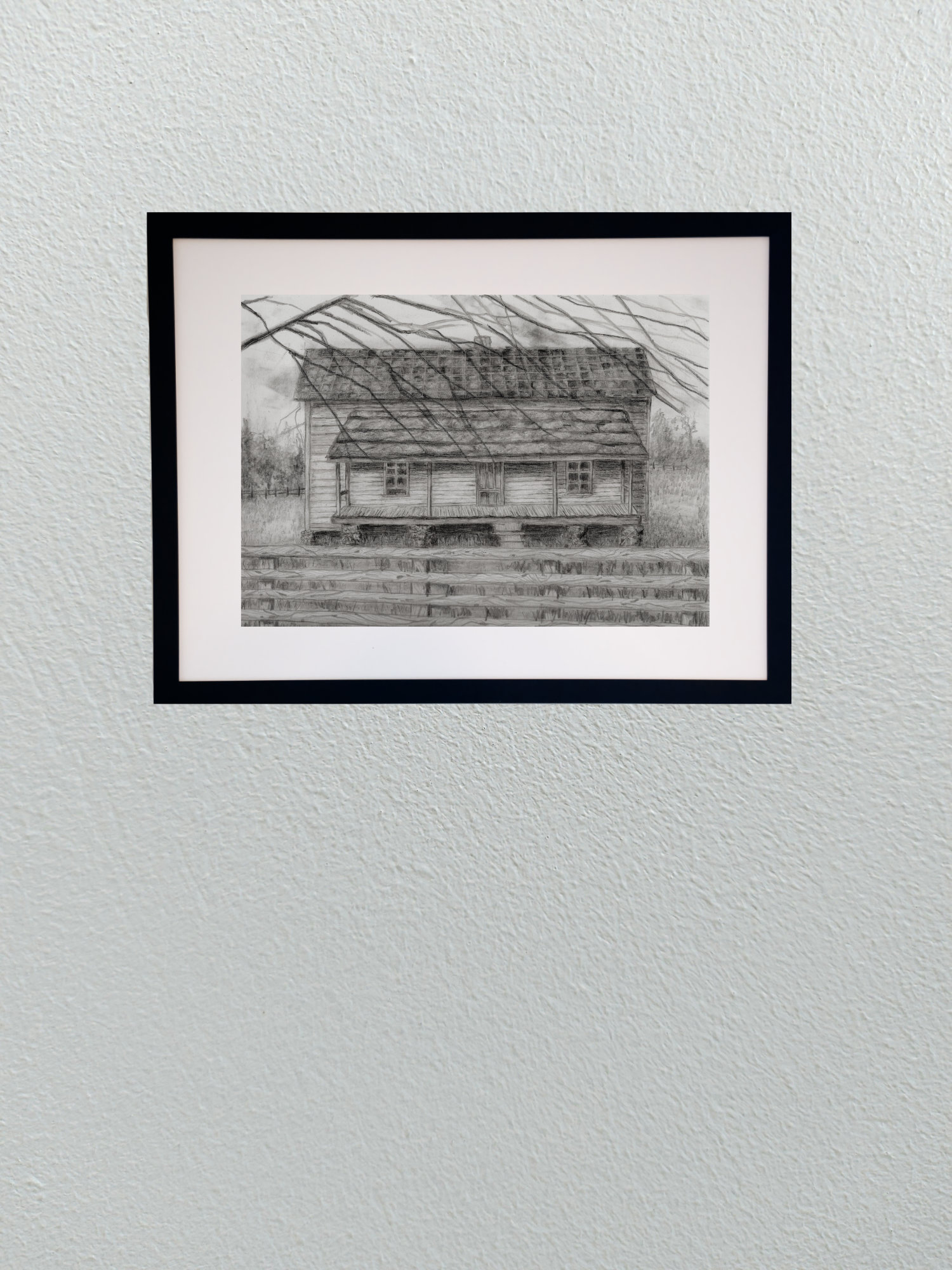
    I am sharing another graphite piece today that keeps us grounded in Barrow County, Georgia. Not far from the historic church I sketched recently sits this abandoned farmhouse, quietly decaying along Rockwell Church Road.

    Like much of my work, this drawing began as a photograph taken through the lens of my Pentax. There was something immediately striking about the isolation of the structure. For the translation to paper, I chose Staedtler Mars Lumograph pencils. The grading of these pencils allowed me to push the contrast, digging into the heavy, dark textures of the weathered siding and the deep, impenetrable shadows lurking beneath the covered porch.

    To enhance the feeling of quiet observation, I emphasized the barren, skeletal tree branches sweeping across the foreground. They act as a natural frame, pushing the farmhouse further back into the landscape and adding to that subtle, Southern Gothic atmosphere that permeates these forgotten spaces. It is a study in texture, memory, and the slow reclamation of rural architecture.

    Technical Details:

    • 9×12 hot press Fabriano
    • Staedtler Mars Lumograph pencils

    Rockwell Church Farmhouse-Distance1
  • Physical: Nunnally Road

    Physical: Nunnally Road

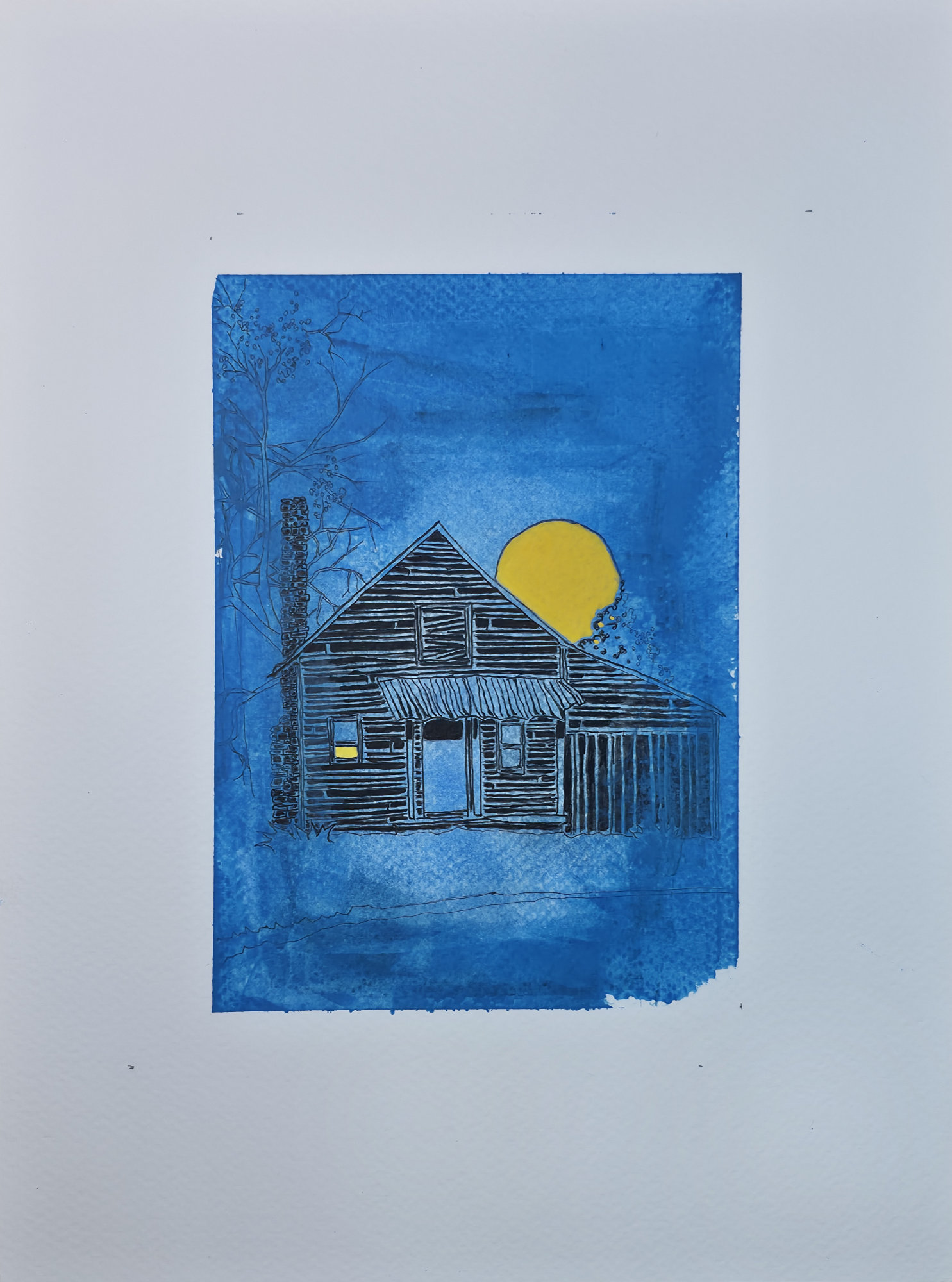
    Here is the first of the physical work for this series.

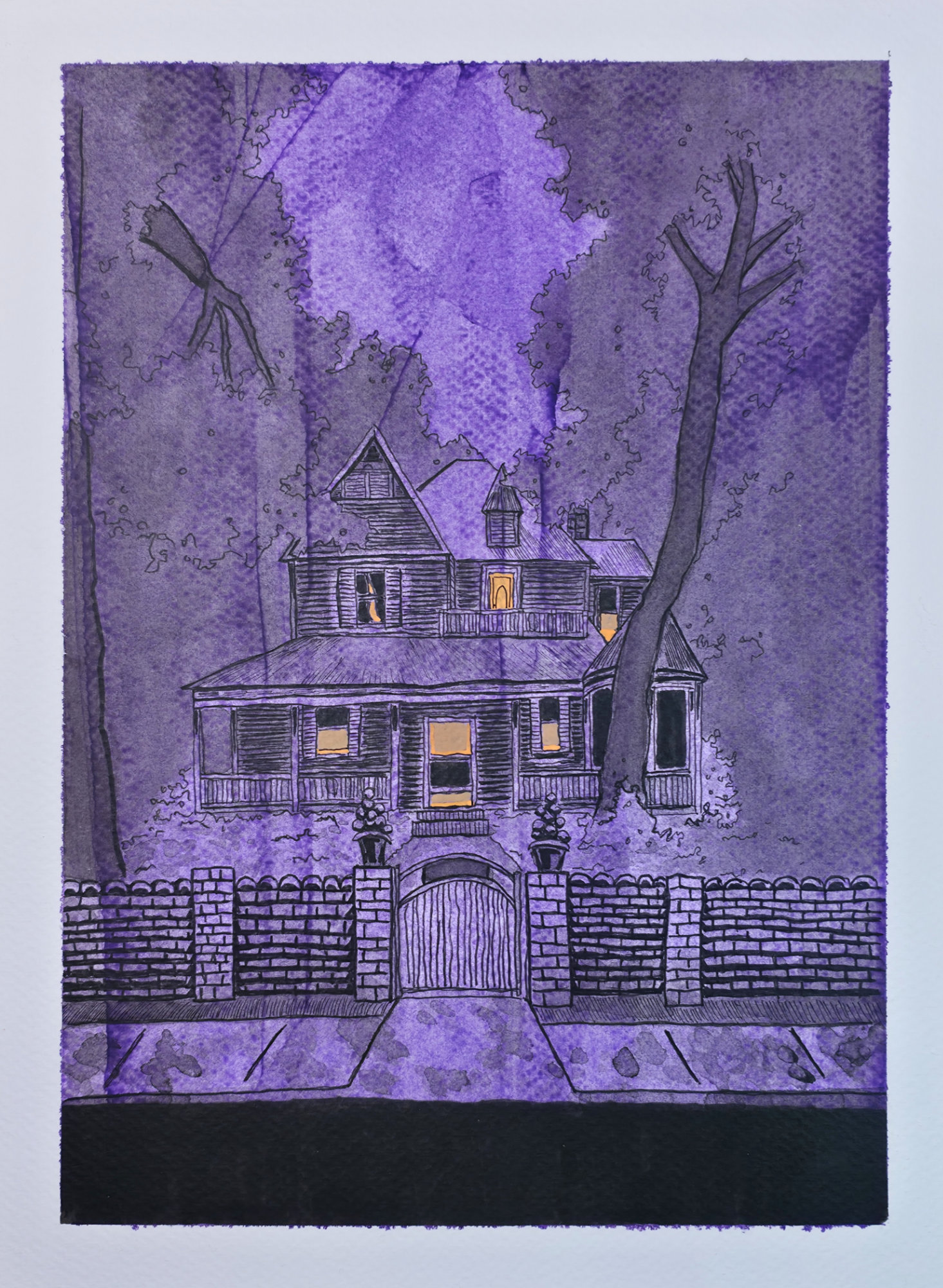
    Iโ€™m excited to introduce the first piece in a new three-part illustrative series. The theme is a blend of seasonal whimsy and the gentle, spooky feeling of unique, isolated structures. Over the years, Iโ€™ve collected photographs of fascinating buildings, and this series gives them a new life and a new story.

    I chose a stark, graphic style with strong linework to evoke the feeling of a classic block print or a storybook illustration. While this image was created digitally, Iโ€™m currently working on its physical counterpart, exploring the dialogue between the two mediums. This piece, โ€œNunnally Road,โ€ is the beginning of that exploration.

    Technical Details:

    • Acrylic swipe
    • Sakura Pigma pens
    • 9×12 140lb cold press
  • Physical: Hightower Road

    Physical: Hightower Road

    My physical creation of the original digital piece.

    Continuing my new three-part illustrative series where seasonal whimsy meets eerie Americana. This second piece is titled โ€œHightower Road,โ€ and it carries forward the theme of bringing old, forgotten structures back to life with a new, illustrative story.

    The style remains graphic and sketch-like, evoking the feel of a classic block print. As with the first piece, this is the digital version, and Iโ€™m continuing to develop the physical counterparts. The exploration of bridging these two mediums is at the heart of this series, and โ€œHightower Roadโ€ is the next step in that journey.

    Technical Details:

    • Acrylic swipe
    • Sakura Pigma pens
    • 9×12 140lb cold press

  • Physical: Cemetery Road

    Physical: Cemetery Road

    Physical version of this original digital piece.

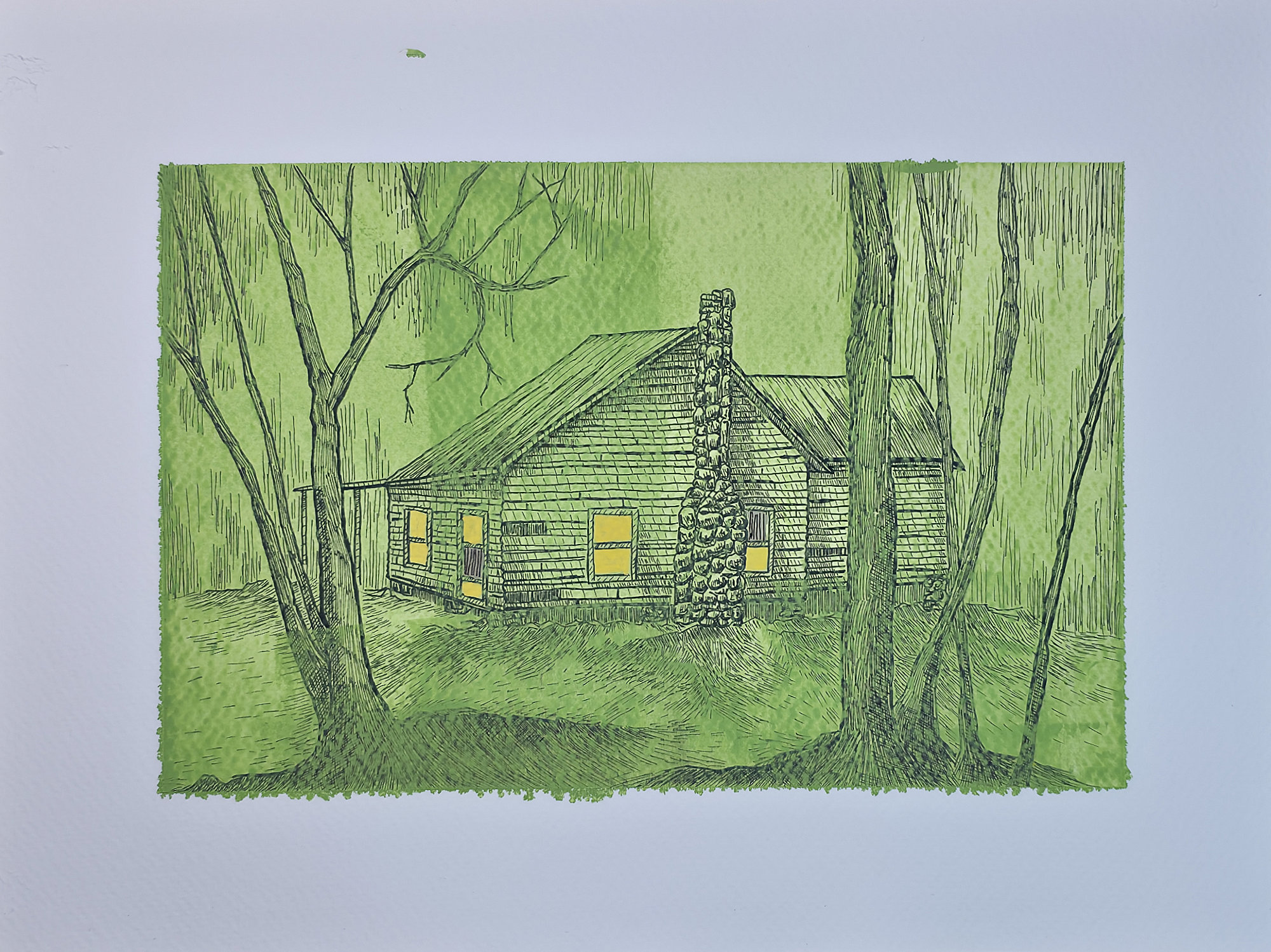
    And with that, the series is complete. This three-part digital collection was an exploration of seasonal whimsy and the mysterious vibes of forgotten places. From the first piece to this final one, โ€œCemetery Road,โ€ my goal was to take real structures Iโ€™ve photographed and imbue them with the feeling of a modern folk tale.

    For this final installment, I used a monochromatic green palette and the enchanting glow of fireflies to create a uniquely eerie and magical atmosphere. Itโ€™s been a fantastic journey blending photography, memory, and digital illustration. Physical versions of all three are still in the works!

    Technical Details:

    • Acrylic swipe
    • Sakura Pigma pens
    • 9×12 140lb cold press
  • Old Live Oak

    Old Live Oak

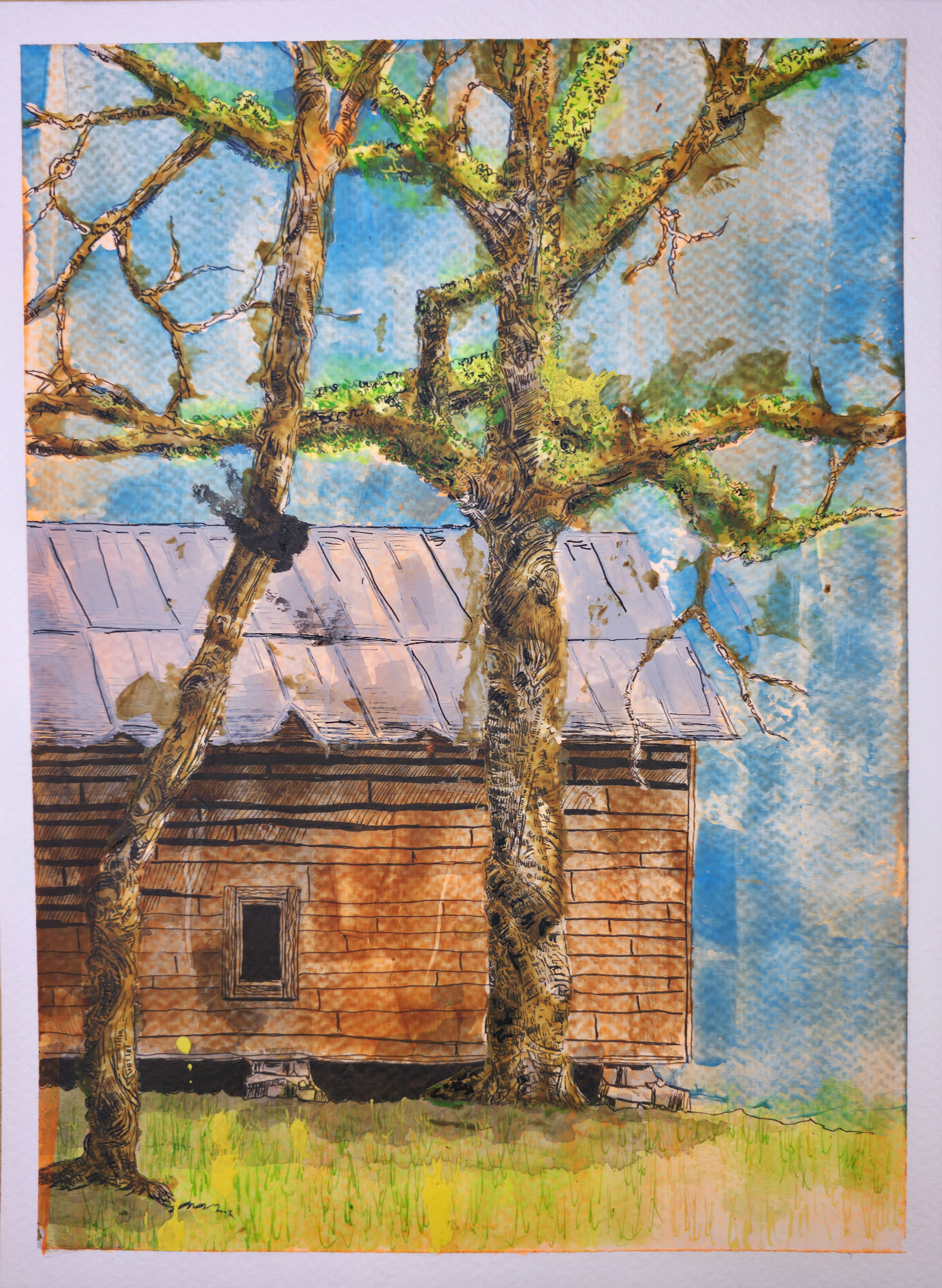
    I spotted this shack while driving. It was anchored by an old live oak with heavy, sprawling limbs. The wood was grey and tired. The tree was the oppositeโ€”covered in a vibrant green moss that felt alive against the weathered boards.

    What I found most interesting was this dimension of time. You have a structure slowly surrendering to the elements while the tree just keeps reaching. Itโ€™s a quiet, roadside dialogue.

    I used a mix of ink and acrylic for this piece. I also made a specific choice: I stopped correcting myself. If the ink bled or a line went wide, I let it stay. Usually, these are called errors. Here, the errors were the effort. They belong in the work, much like the rot belongs on the shack. Itโ€™s an honest way to record a moment.

    The ink defines the twisting architecture of the oak. The acrylic adds the weight to the sky and the moss. It is a rougher, more experimental process than my usual work, but it captures the grit I was looking for.

    Technical Details:

    • Acrylic swipe
    • Sakura Pigma pens
    • India ink with drip pen
    • 9×12 140lb cold press press