Tag: rustic

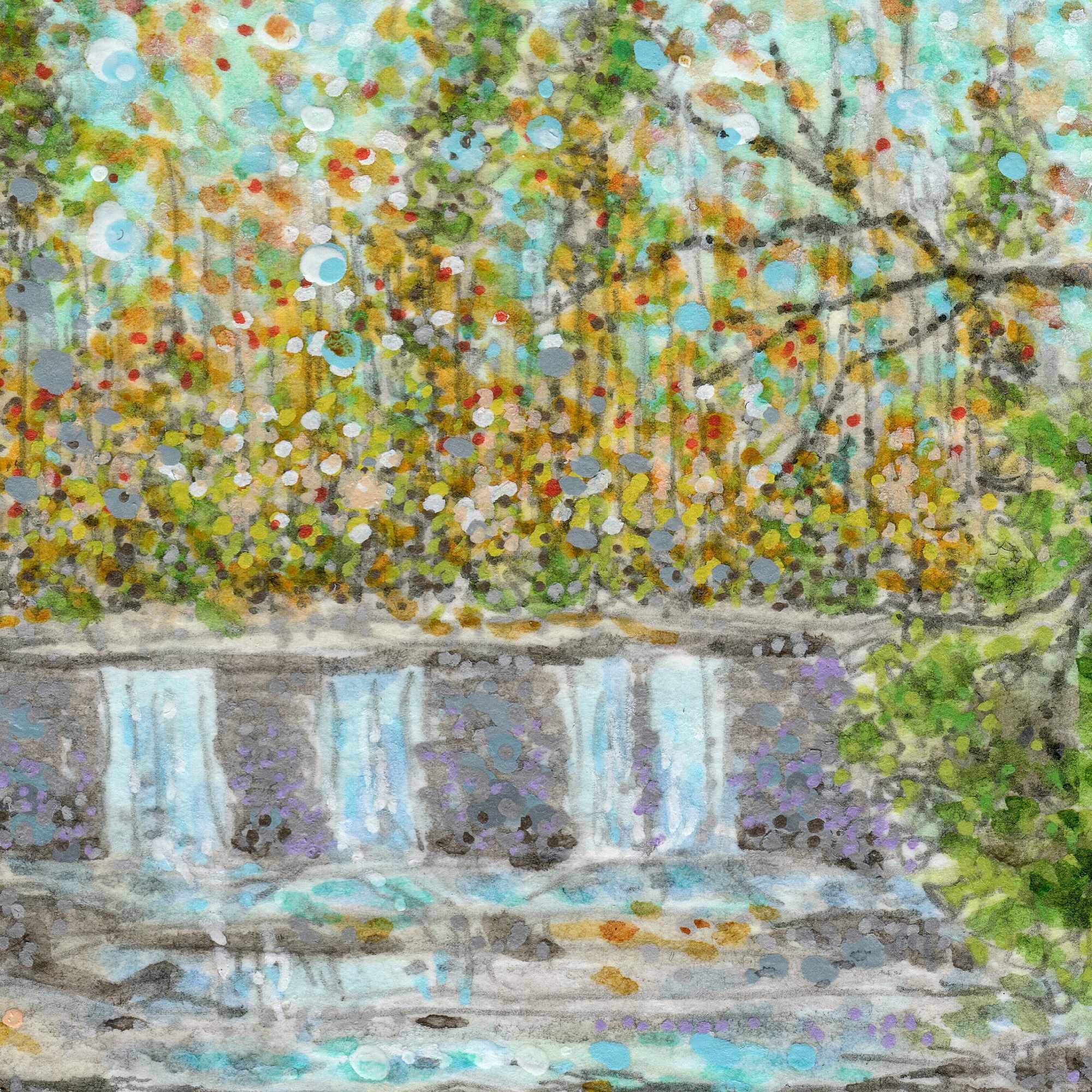
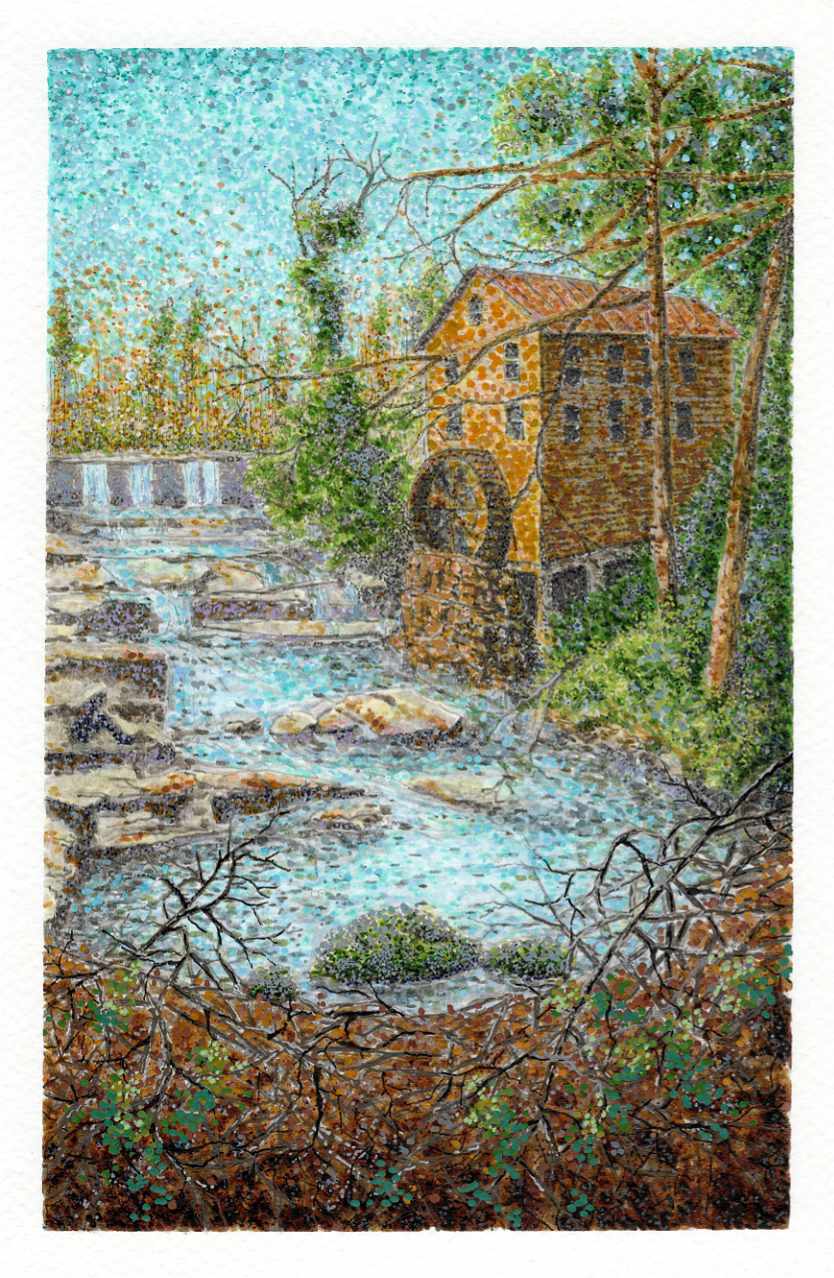
  • Sells Mill: Late Winter Light

    Sells Mill: Late Winter Light

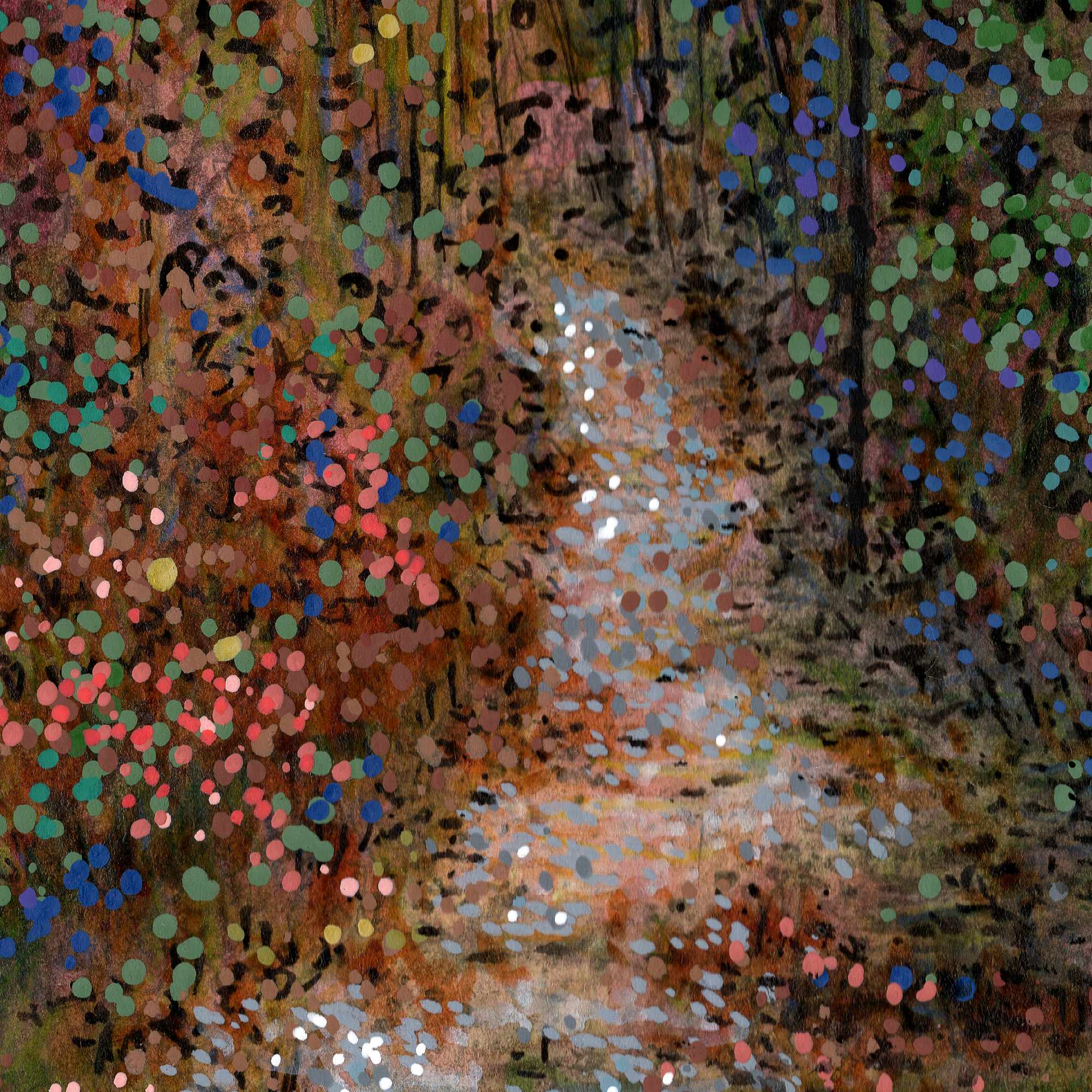
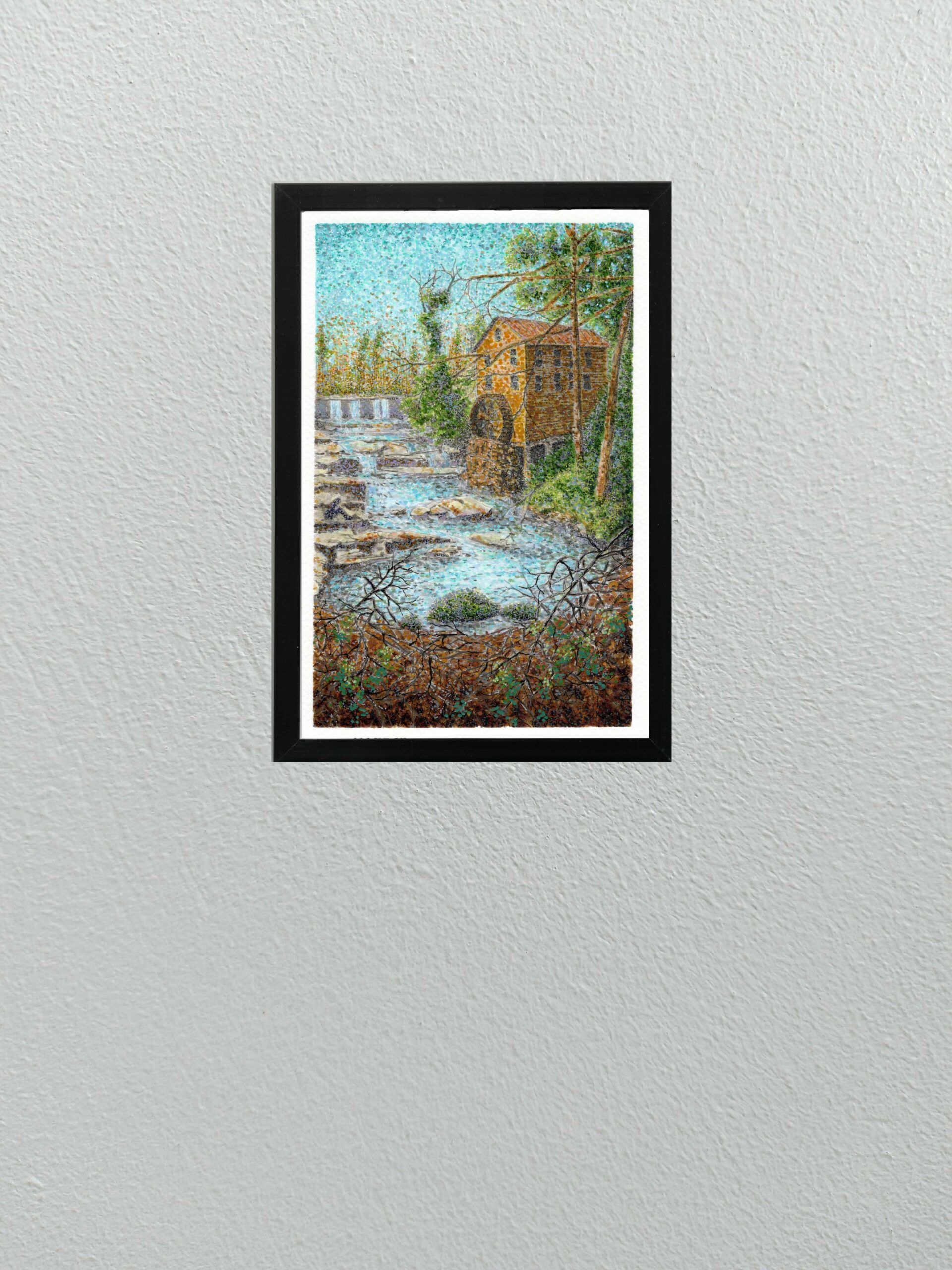
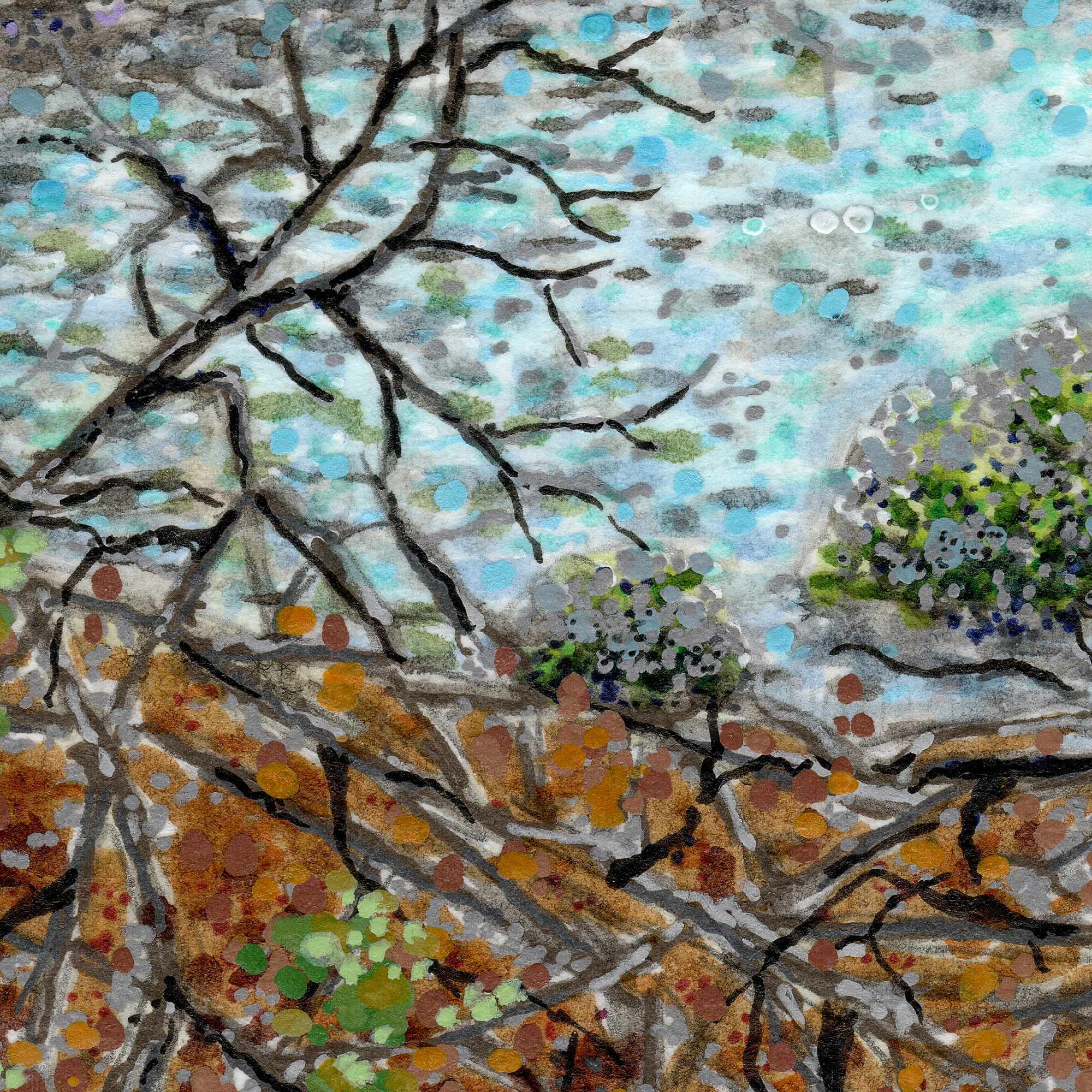
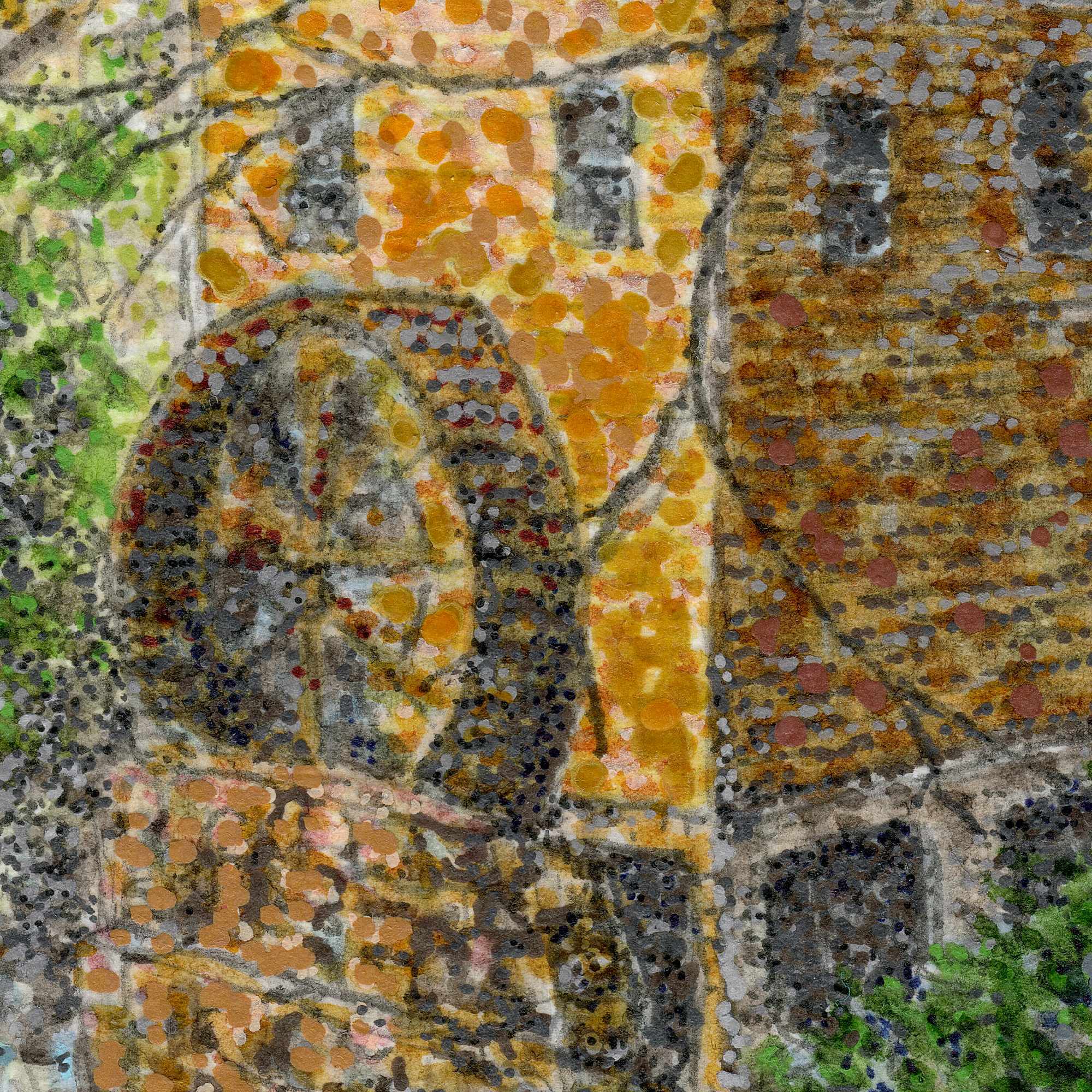
    here is a brief window at the end of winter where the landscape feels entirely transitional. The trees are still bare, but the light changes, catching the water and the earth differently. This study of Sells Mill was an attempt to record that specific, shifting energy.

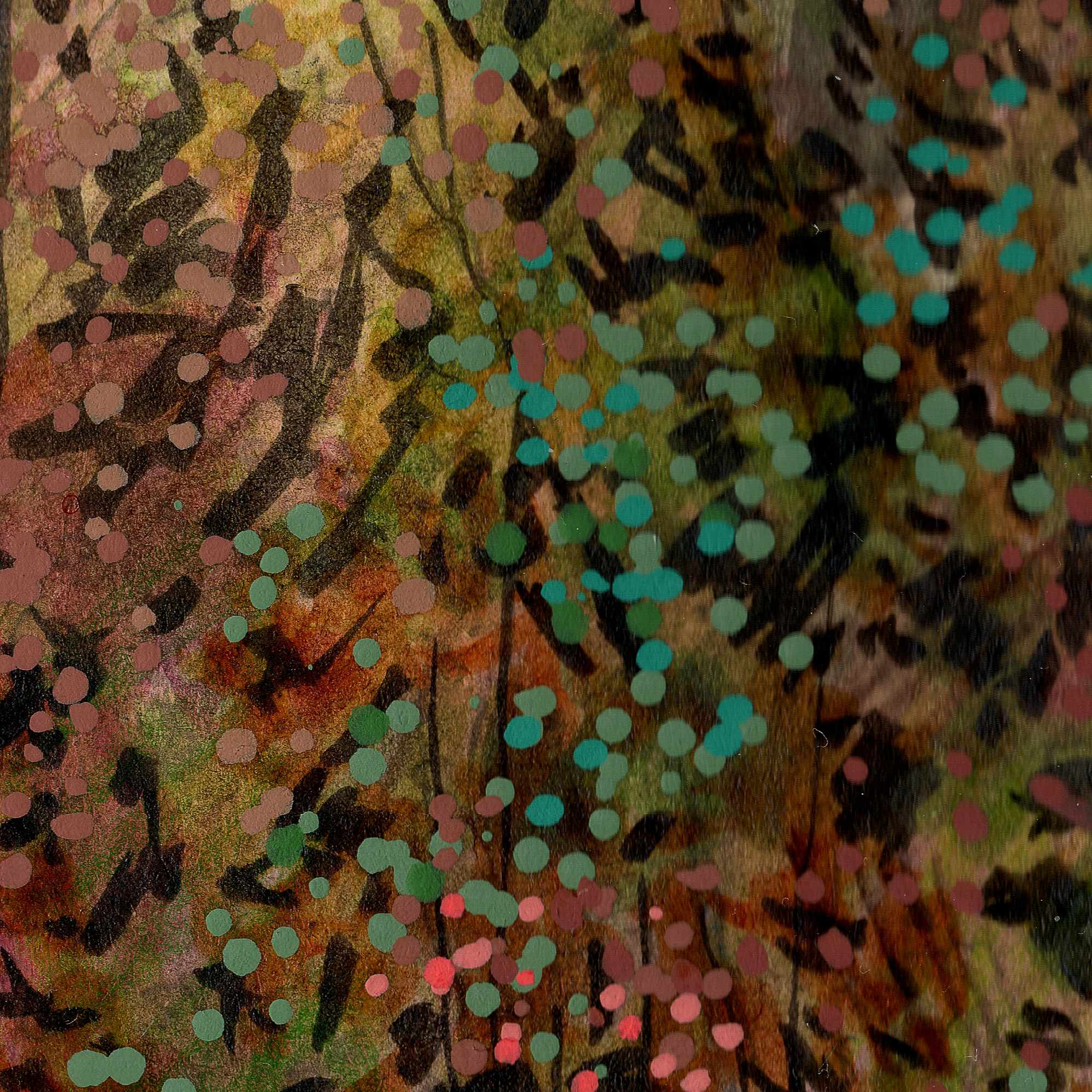
    Technically, Iโ€™ve continued to explore the boundaries of my mixed-media approach on cold press paper. I used a combination of Faber-Castell Pitt pens, acrylic pens, and Sakura pens to build the scene layer by layer.

    The process is a deliberate balance between structured architecture and organic chaos. I used the fine precision of the Sakura and Pitt pens to draft the rigid lines of the historic mill and the dense, tangled thicket of branches in the foreground. For the sky, the water, and the stone faรงade, I leaned heavily into a pointillist technique. By applying thousands of individual dots of ink and acrylic, the surface begins to vibrateโ€”allowing the cool blues of the late winter sky and the rushing stream to catch a sense of movement.

    The paperโ€™s tooth works as a quiet partner here, holding the pigments exactly where they land but allowing the sheer volume of marks to optically blend. Itโ€™s a slow, rhythmic way to work that captures the texture of a place without forcing it into a sterile, perfect drawing.
  • The Fence Line

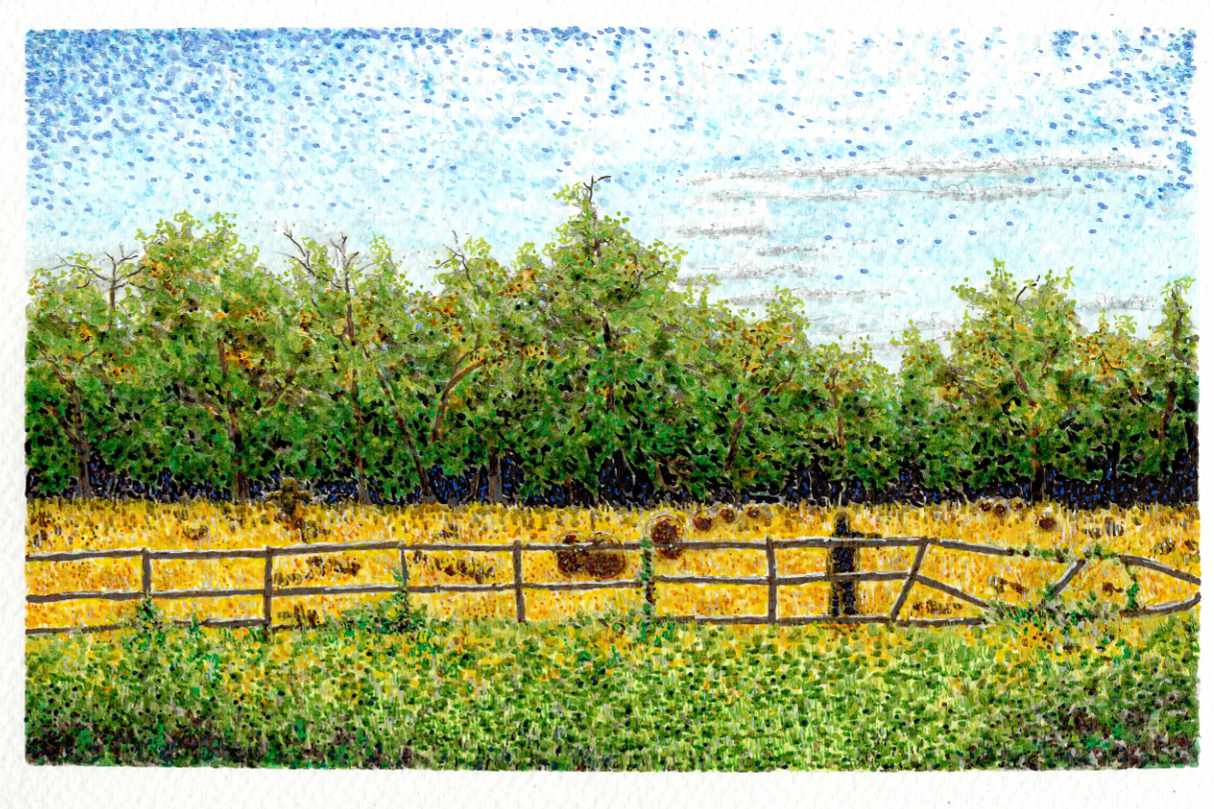
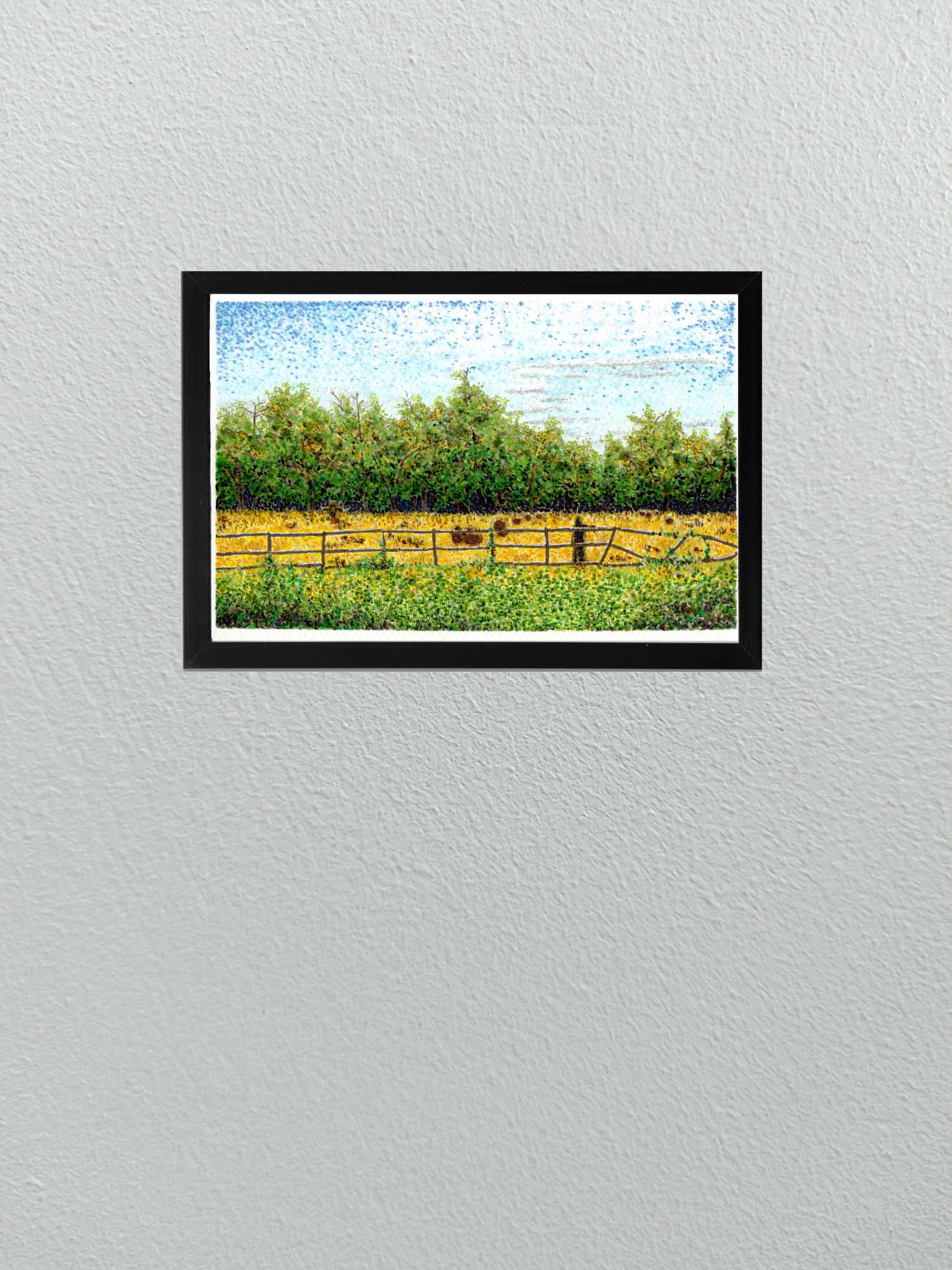
    The Fence Line

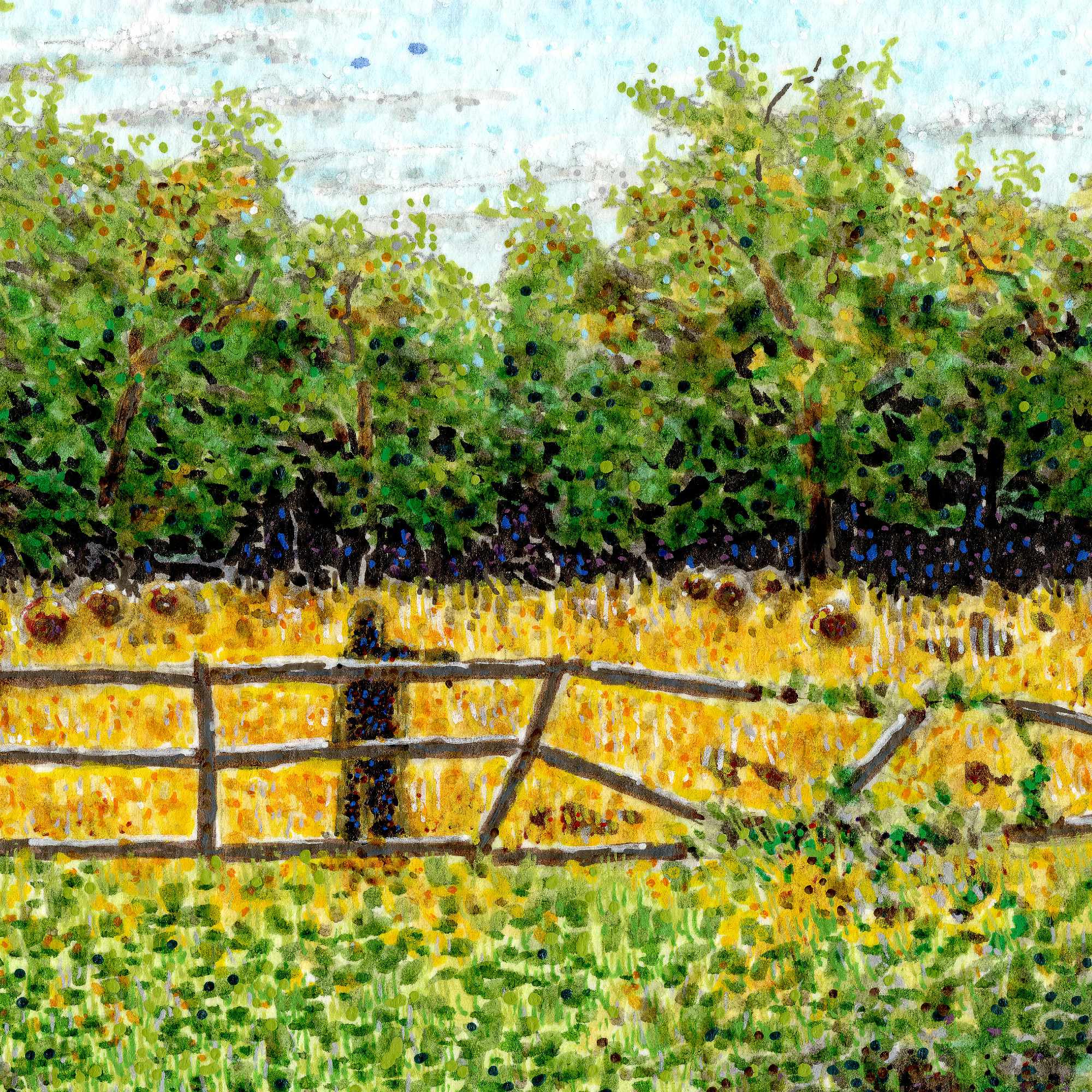
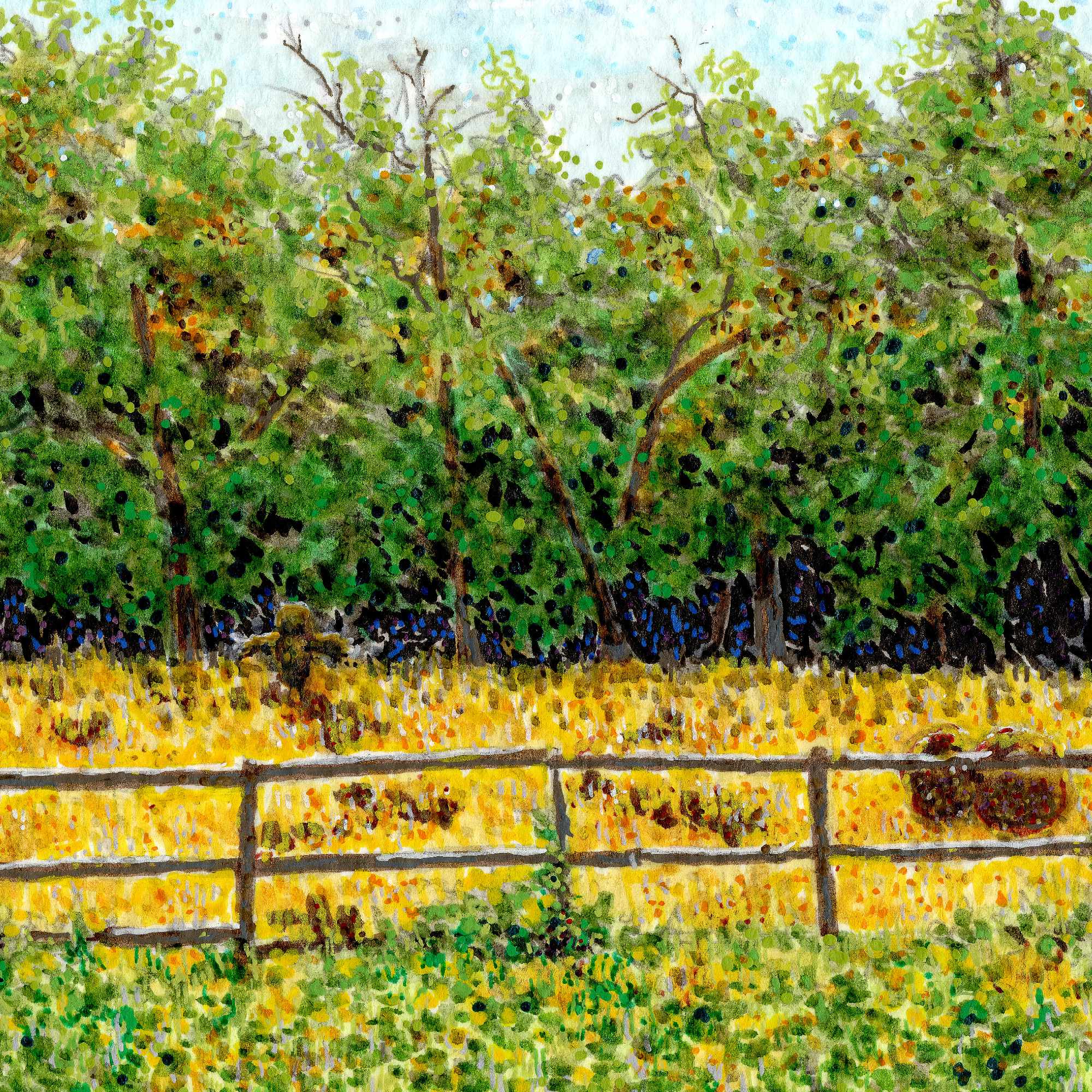
    This is a small 6×9 study on cold press paper, born from an interest in the quiet friction between the ordinary and the unknown. On the surface, itโ€™s a mundane rural sceneโ€”a sunlit field, a line of dense green trees, and a weathered wooden fence stretching across the frame.

    I built the composition using Faber-Castell Pitt pens and acrylic. The cold press texture acts as a partner in the process, catching the ink and stippled marks to build up the fields of color without losing the organic feel of the paper. I wanted the sky and the foreground greenery to feel alive, using rapid dots of pigment that make the light shimmer across the canvas.

    The real shift in the piece comes with the shaded figure standing in the foreground field. By placing this dark, silhouetted form right against the fence line, a simple landscape transforms into a moment of mystery. It introduces a narrative element without over-explaining itself, leaving the viewer to wonder who is standing by the field, and why.


  • Eveningโ€™s Quiet Unrest

    Eveningโ€™s Quiet Unrest

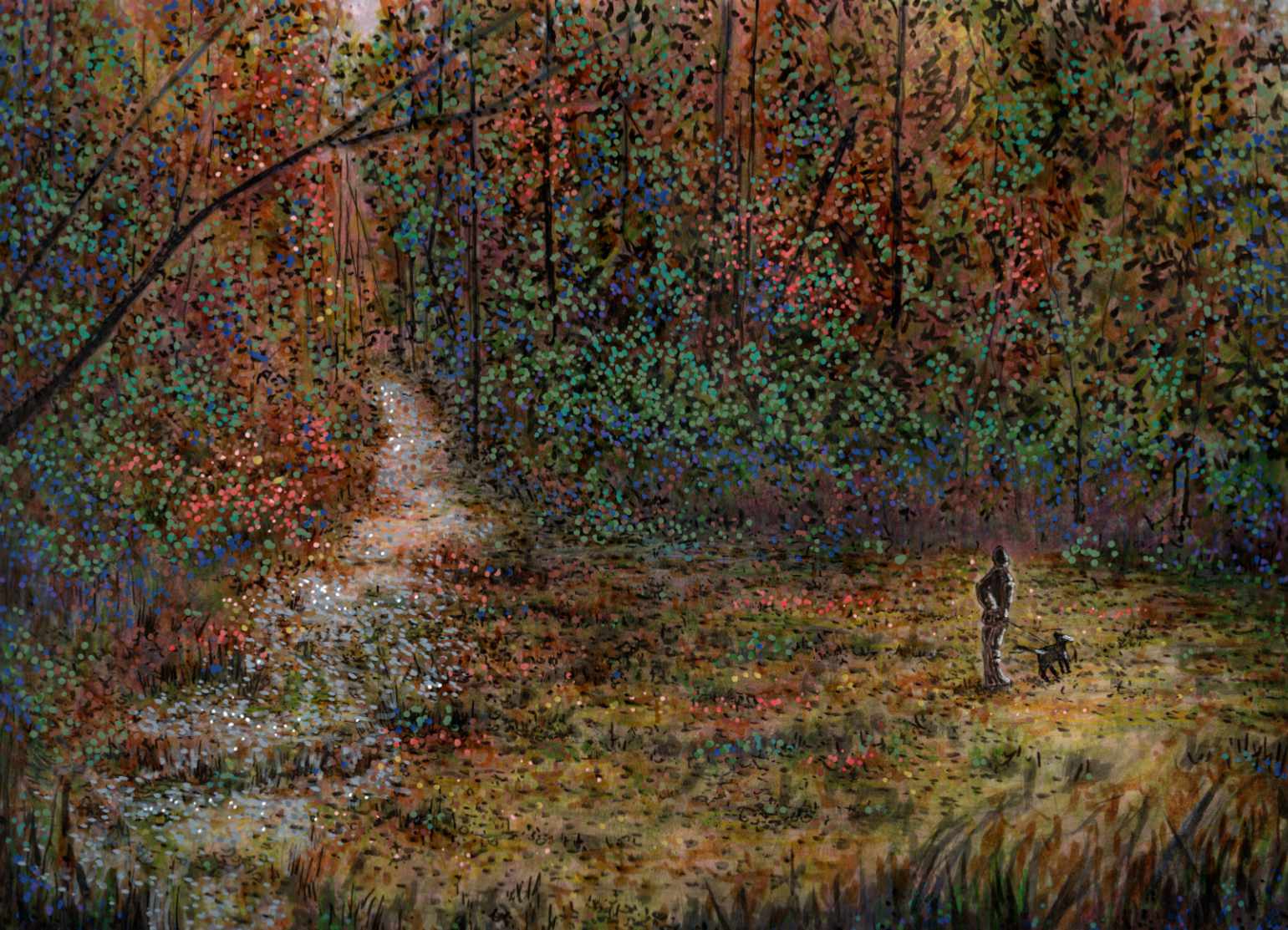
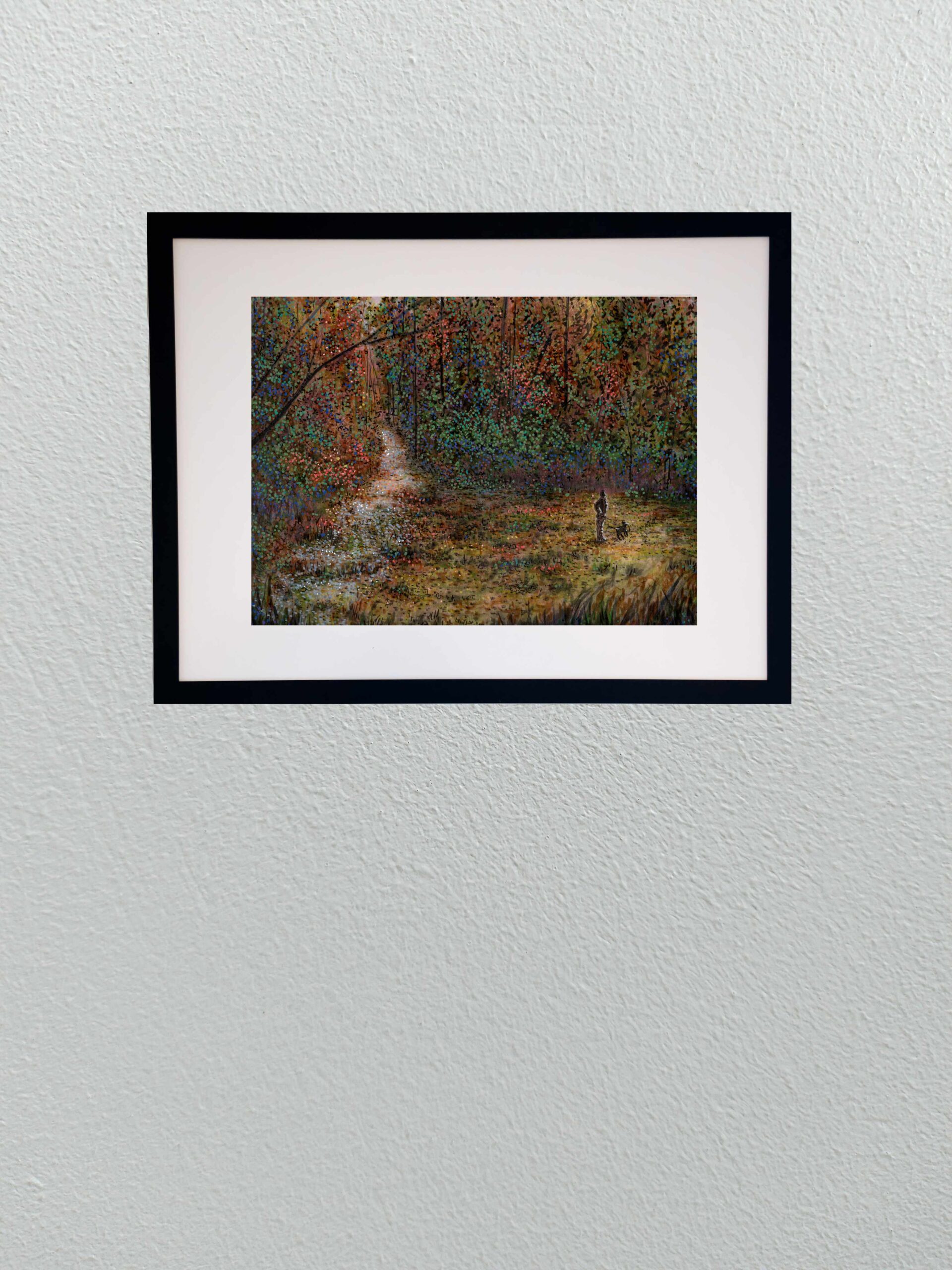
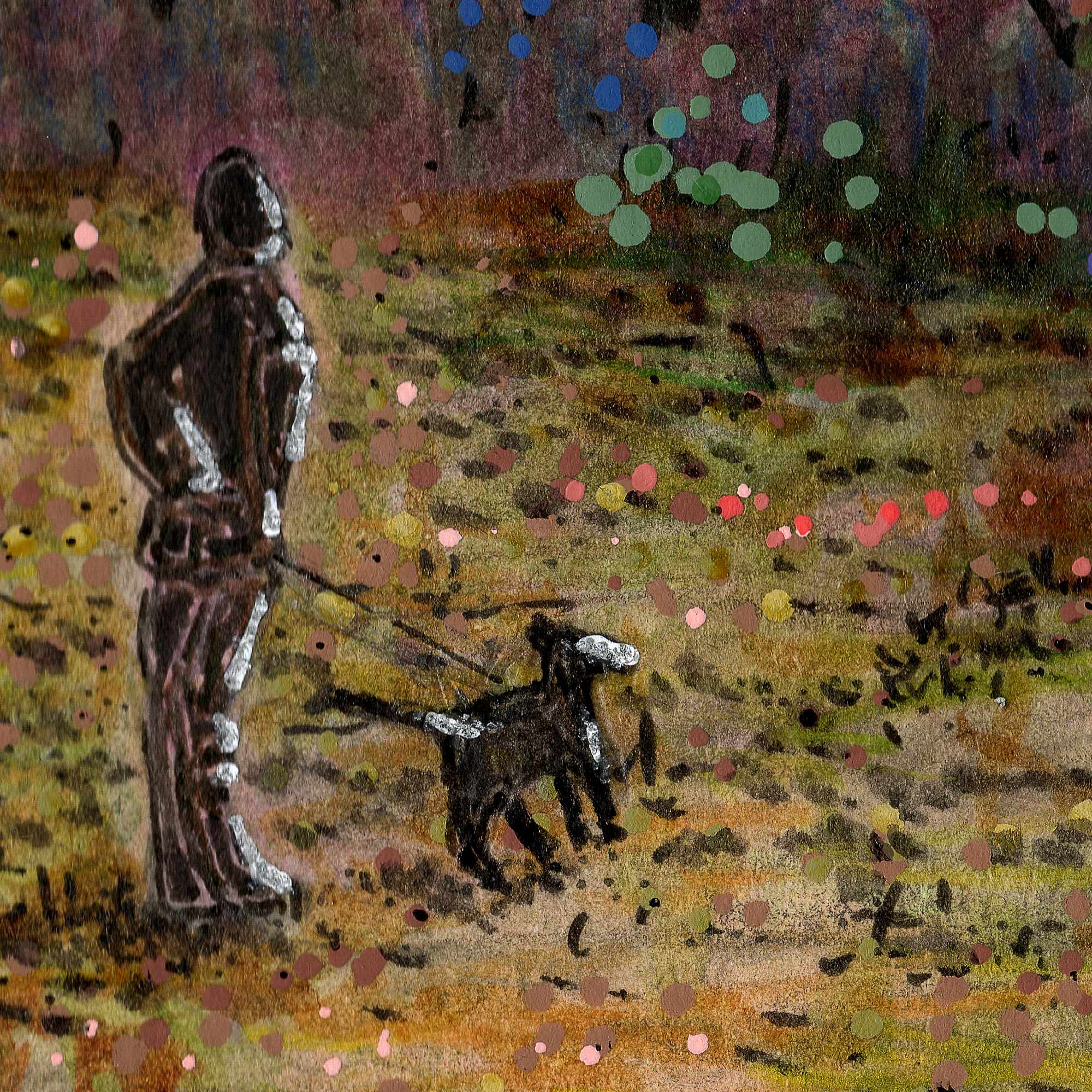
    Today I am sharing a new mixed media piece that explores a specific memoryโ€”twilight in a silent meadow. This composition, based on a low-light photograph taken a few years ago, was an exercise in capturing a delicate visual tension. The scene possesses a profound tranquility, yet beneath that stillness lies something subtly unsettlingโ€”a feeling I wanted to preserve and amplify.

    While the original photo provided the structure and the quiet posture of the figure, the translation to paper was driven entirely by a need to dictate emotional weight through medium. I build the density and movement in the foreground undergrowth through networks of energetic, scratching lines using Sakura fineliners and Faber-Castell Pitt pens, contrasting against the still, flat fields of color in the sky.

    By utilizing a Post-Impressionist or Synthetist paletteโ€”swapping natural colors for a heavy, low-light atmosphere of muted purple, cool blue, and an unnerving yellow-greenโ€”I aimed to create a psychological filter. This piece combines the raw texture of graphite and ink from my earlier studies with the bold, non-naturalistic color blocking I’ve been exploring recently. It is a portrait of solitude, suspended in a vibrating, eerie twilight.

    Technical Details:

    • 9×12 140lb cold press
    • Faber-Castell Pitt pens
    • Shuttle Art paint pens
    • Staedtler Pigment Liner
    • Sakura Pigma

  • Rockwell Church Farmhouse

    Rockwell Church Farmhouse

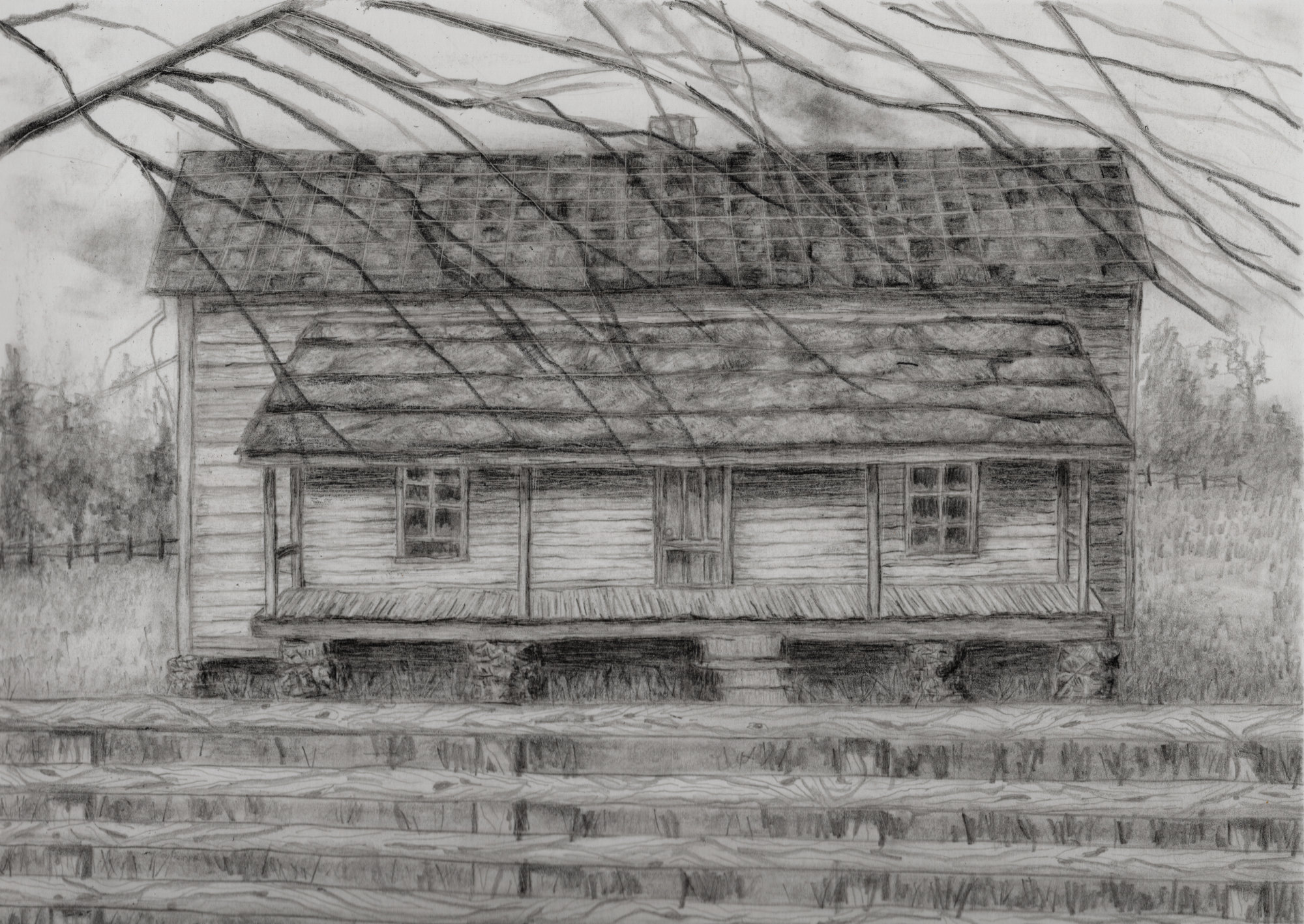
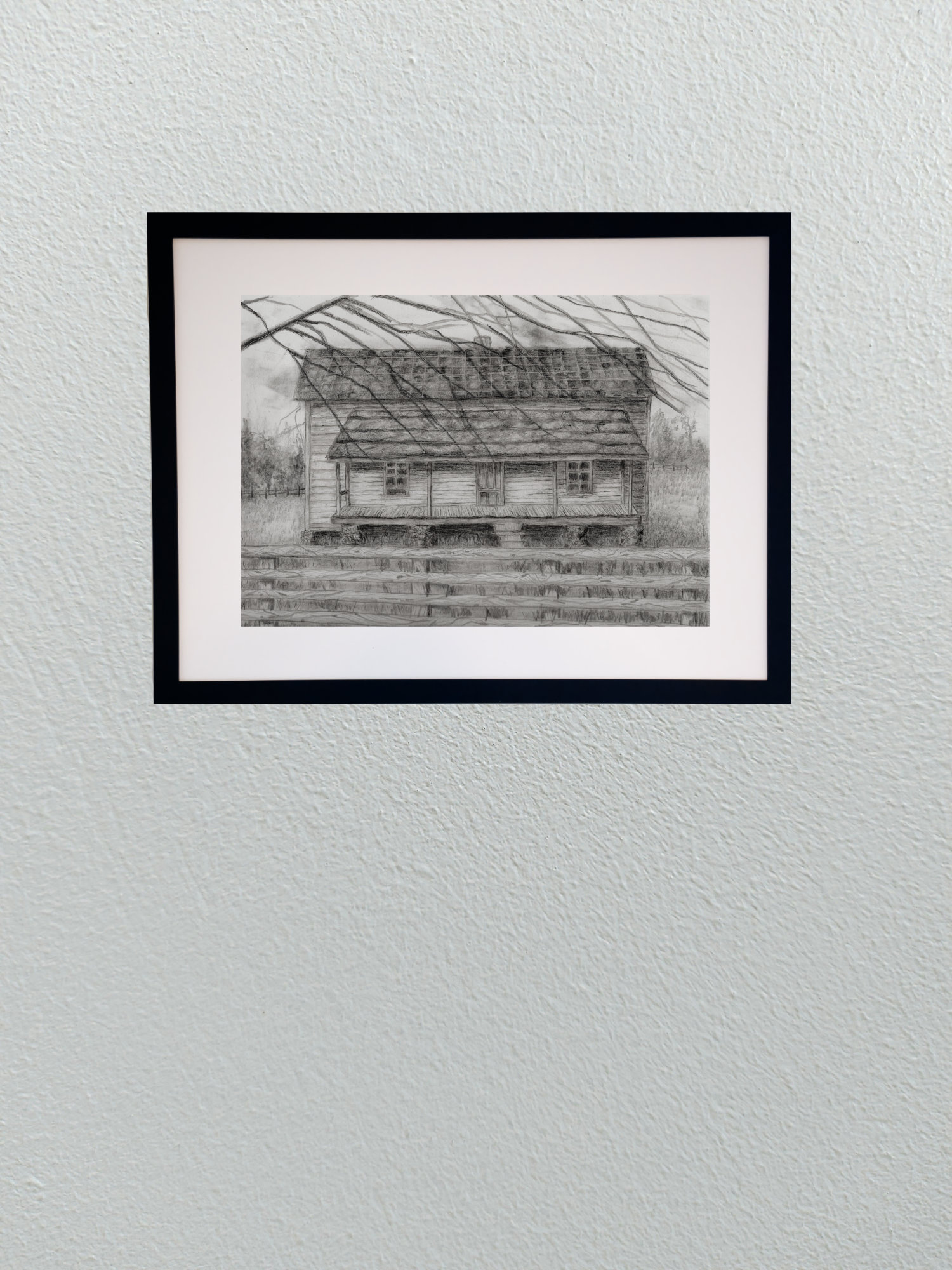
    I am sharing another graphite piece today that keeps us grounded in Barrow County, Georgia. Not far from the historic church I sketched recently sits this abandoned farmhouse, quietly decaying along Rockwell Church Road.

    Like much of my work, this drawing began as a photograph taken through the lens of my Pentax. There was something immediately striking about the isolation of the structure. For the translation to paper, I chose Staedtler Mars Lumograph pencils. The grading of these pencils allowed me to push the contrast, digging into the heavy, dark textures of the weathered siding and the deep, impenetrable shadows lurking beneath the covered porch.

    To enhance the feeling of quiet observation, I emphasized the barren, skeletal tree branches sweeping across the foreground. They act as a natural frame, pushing the farmhouse further back into the landscape and adding to that subtle, Southern Gothic atmosphere that permeates these forgotten spaces. It is a study in texture, memory, and the slow reclamation of rural architecture.

    Technical Details:

    • 9×12 hot press Fabriano
    • Staedtler Mars Lumograph pencils

    Rockwell Church Farmhouse-Distance1
  • Spring Vetch

    Spring Vetch

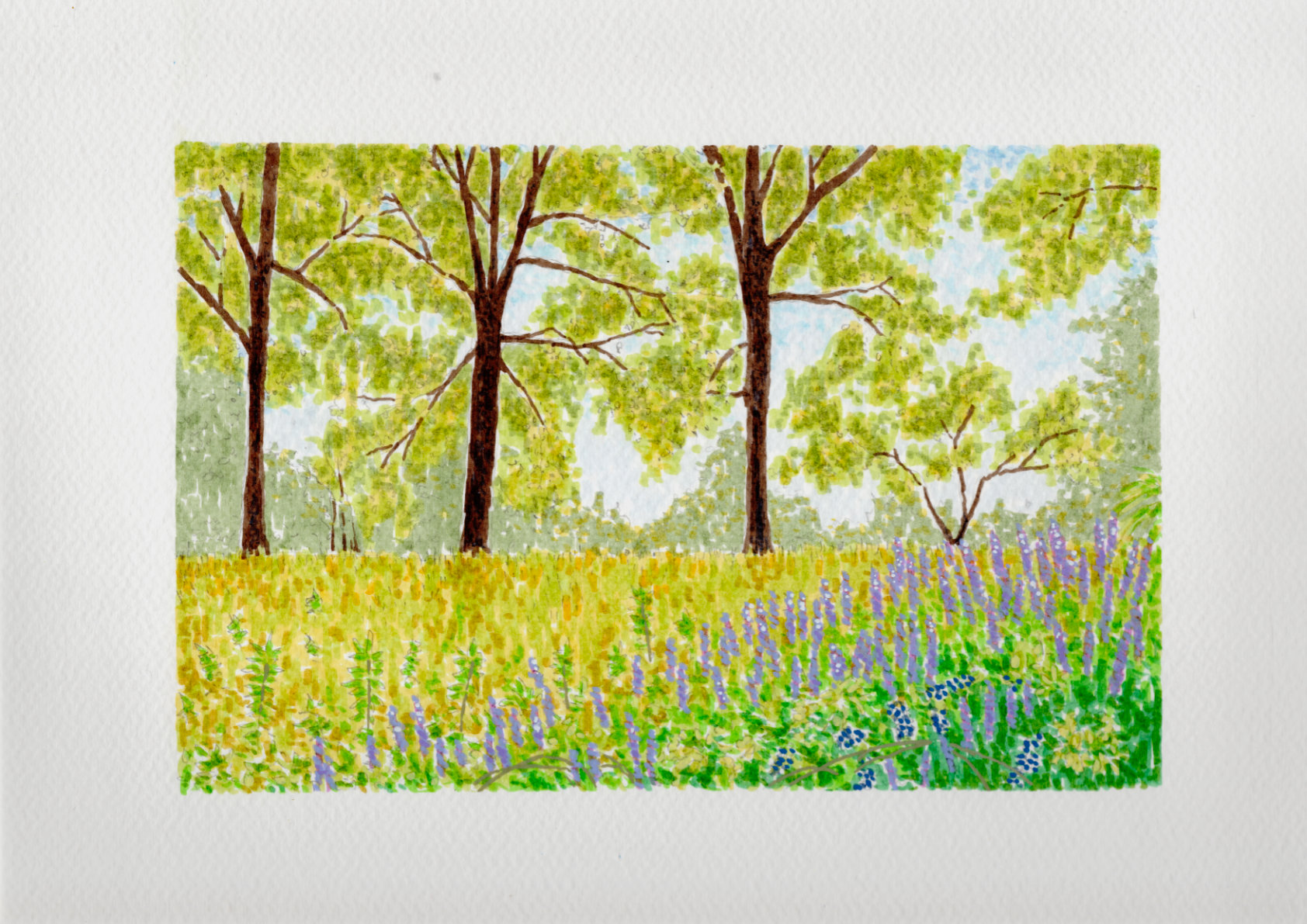
    This study captures a spring field in Georgia, where the greens and yellows feel like they arrived overnight. I used India ink to build the colors in layers, following an Impressionist approach where the depth emerges slowly through repeated marks rather than solid lines. Against that translucent ink, I used acrylics sparingly as a solid, opaque counterpoint.

    I applied them specifically to the purple vetch in the foreground and a few select leaves to give the eye a place to land. The cold press paper captures and holds the ink exactly where I want it, keeping the pigment in place while allowing just the smallest edges to blend into the tooth. Itโ€™s a fast, rhythmic way to work that records the spirit of the place without getting bogged down in every individual blade of grass.

    Technical Details:

    • 8×10 140lb cold press
    • Sakura Pigma pens
    • Faber-Castell Pitt pens
    • Acrylic swipe
  • sweets shoppe

    sweets shoppe

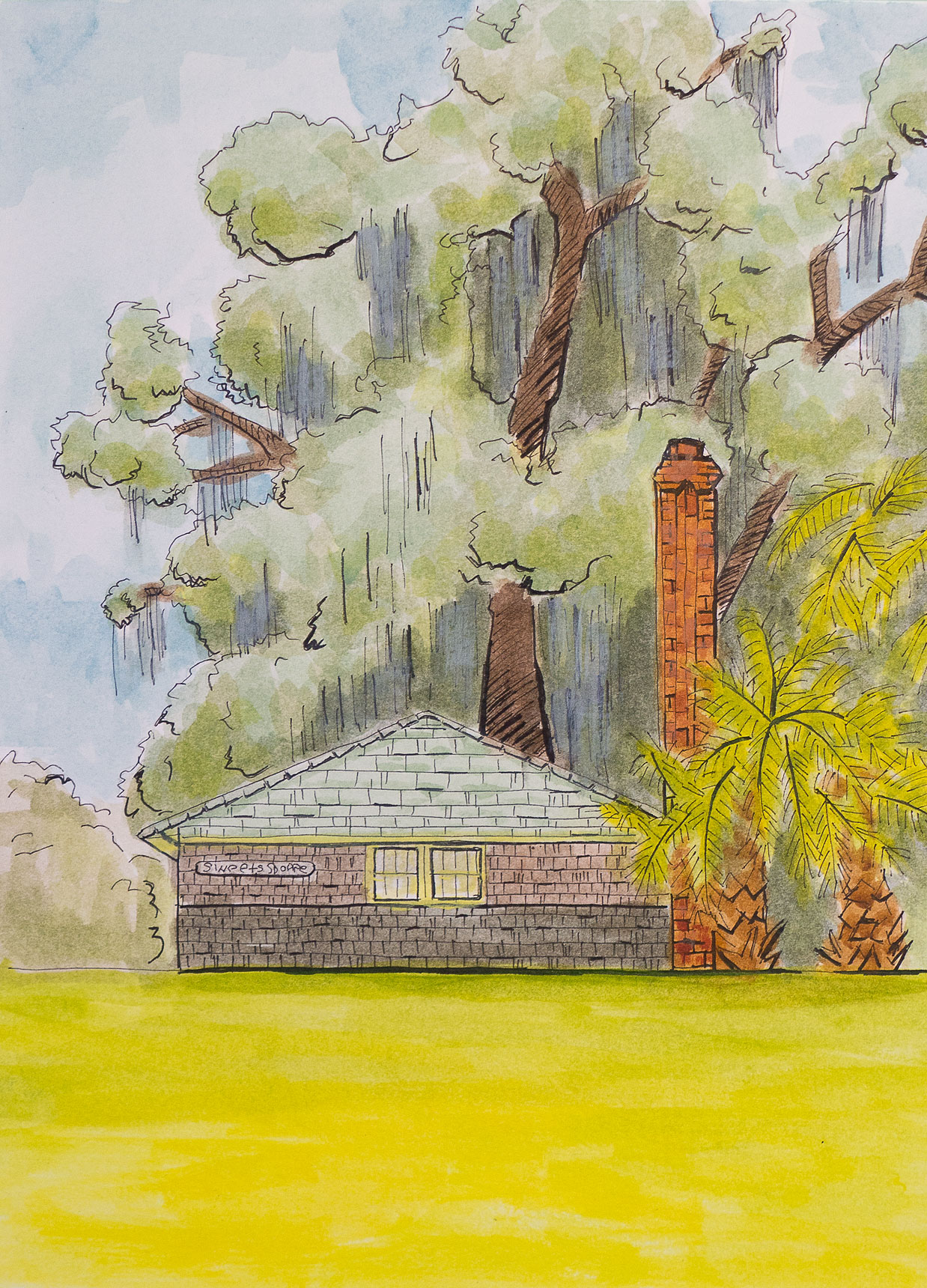
    The painting presents a charming drawing of a local confectionery by a verdant landscape. The house itself has a classic design, featuring a grey roof and brick walls, with two windows that add to its cozy and welcoming appearance.ย 

    In the background, the image is framed by towering trees with dense foliage, providing a natural backdrop that contributes to the overall serenity. The variety of trees, including palm trees on the right, adds a touch of tropical beauty and diversity to the setting. The bright colors used for the sky and surroundings indicate that it is daytime, casting the entire scene in a cheerful and peaceful light. The drawing captures a picturesque moment, inviting viewers to imagine the tranquility of life in such a lovely environment.

    Technical Details:

    • Acrylic wash
    • Sakura Pigma pens
    • 9ร—12 140lb cold press
  • Physical: Nunnally Road

    Physical: Nunnally Road

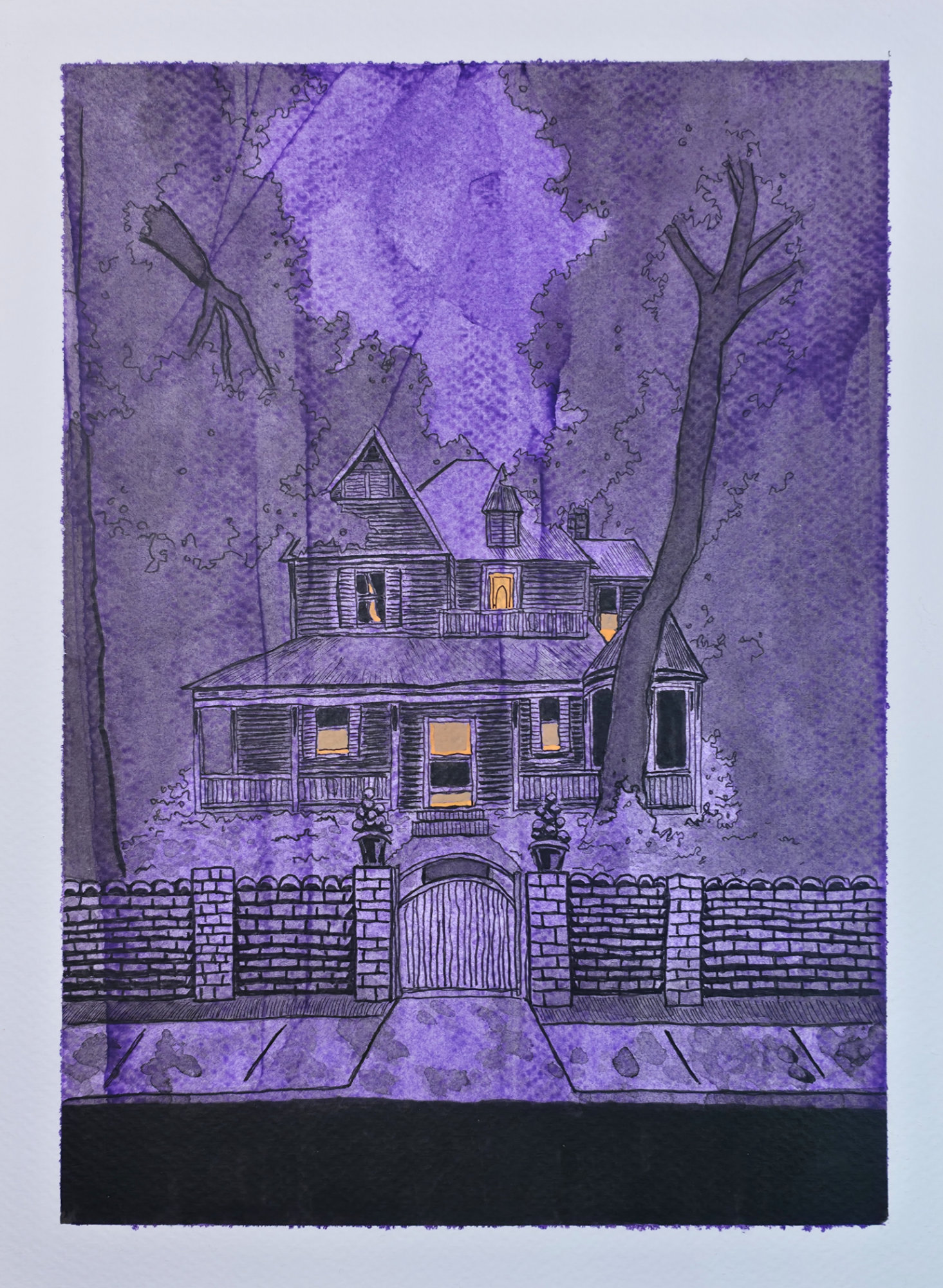
    Here is the first of the physical work for this series.

    Iโ€™m excited to introduce the first piece in a new three-part illustrative series. The theme is a blend of seasonal whimsy and the gentle, spooky feeling of unique, isolated structures. Over the years, Iโ€™ve collected photographs of fascinating buildings, and this series gives them a new life and a new story.

    I chose a stark, graphic style with strong linework to evoke the feeling of a classic block print or a storybook illustration. While this image was created digitally, Iโ€™m currently working on its physical counterpart, exploring the dialogue between the two mediums. This piece, โ€œNunnally Road,โ€ is the beginning of that exploration.

    Technical Details:

    • Acrylic swipe
    • Sakura Pigma pens
    • 9×12 140lb cold press
  • Physical: Hightower Road

    Physical: Hightower Road

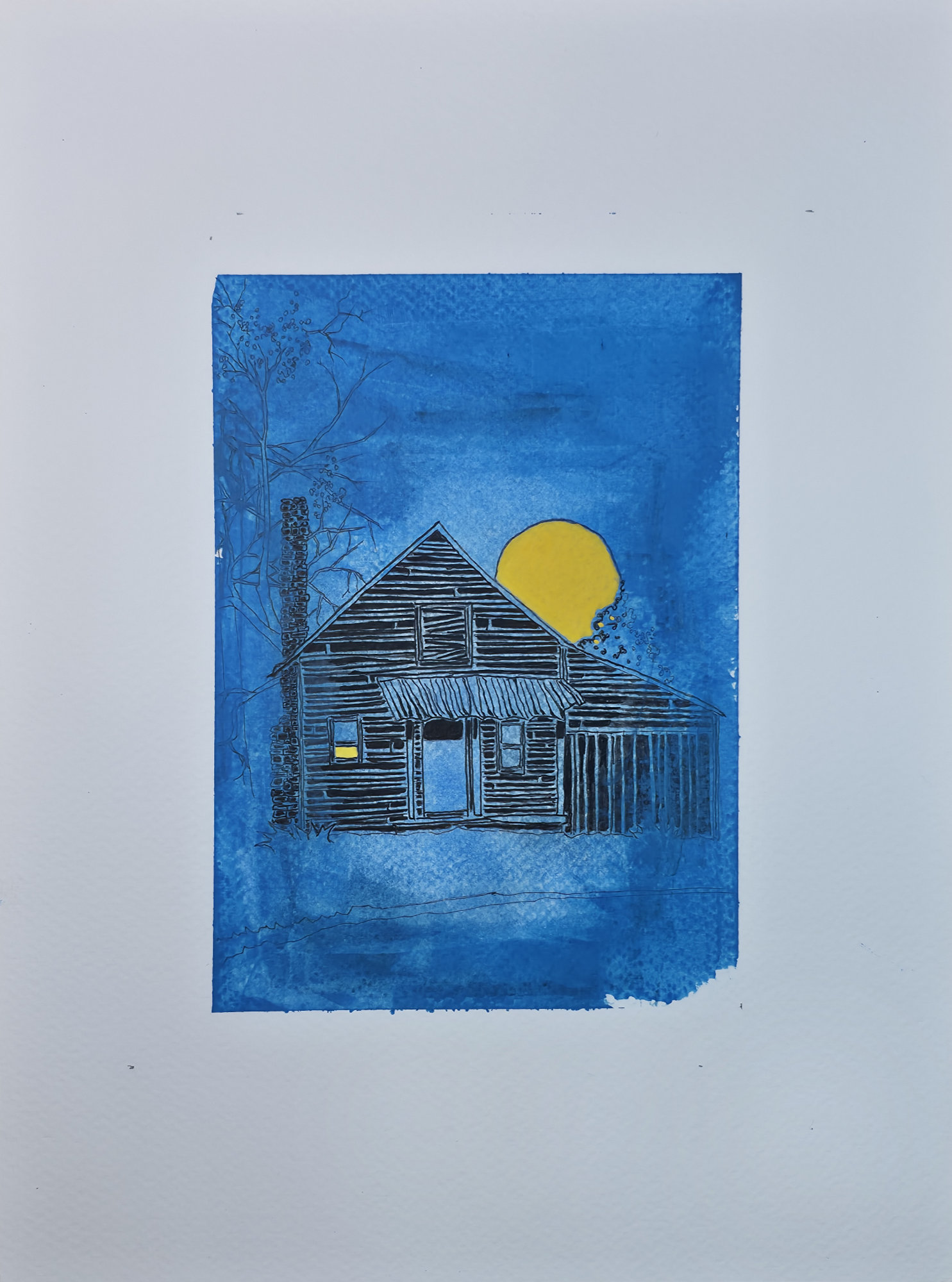
    My physical creation of the original digital piece.

    Continuing my new three-part illustrative series where seasonal whimsy meets eerie Americana. This second piece is titled โ€œHightower Road,โ€ and it carries forward the theme of bringing old, forgotten structures back to life with a new, illustrative story.

    The style remains graphic and sketch-like, evoking the feel of a classic block print. As with the first piece, this is the digital version, and Iโ€™m continuing to develop the physical counterparts. The exploration of bridging these two mediums is at the heart of this series, and โ€œHightower Roadโ€ is the next step in that journey.

    Technical Details:

    • Acrylic swipe
    • Sakura Pigma pens
    • 9×12 140lb cold press

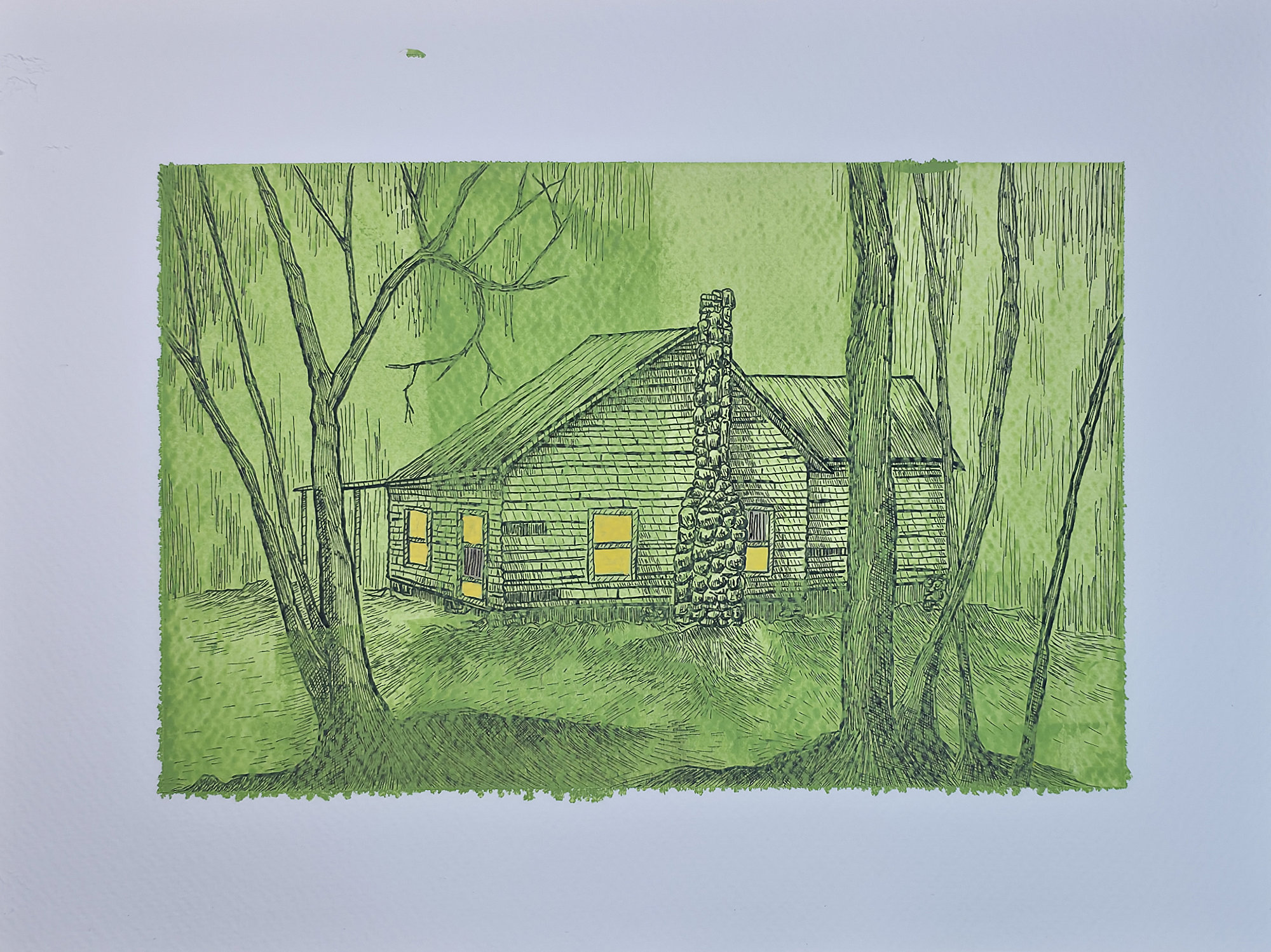
  • Physical: Cemetery Road

    Physical: Cemetery Road

    Physical version of this original digital piece.

    And with that, the series is complete. This three-part digital collection was an exploration of seasonal whimsy and the mysterious vibes of forgotten places. From the first piece to this final one, โ€œCemetery Road,โ€ my goal was to take real structures Iโ€™ve photographed and imbue them with the feeling of a modern folk tale.

    For this final installment, I used a monochromatic green palette and the enchanting glow of fireflies to create a uniquely eerie and magical atmosphere. Itโ€™s been a fantastic journey blending photography, memory, and digital illustration. Physical versions of all three are still in the works!

    Technical Details:

    • Acrylic swipe
    • Sakura Pigma pens
    • 9×12 140lb cold press
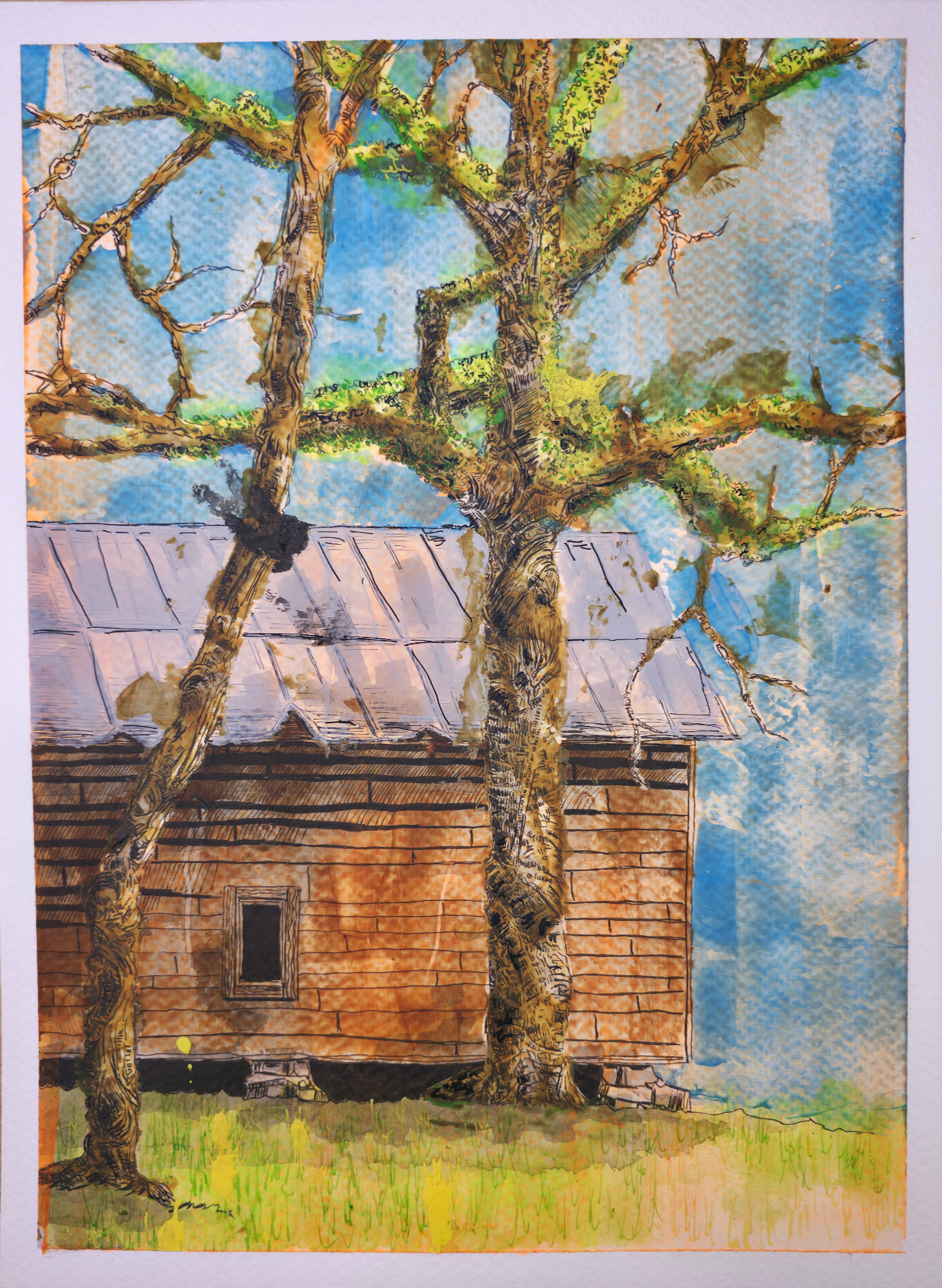
  • Old Live Oak

    Old Live Oak

    I spotted this shack while driving. It was anchored by an old live oak with heavy, sprawling limbs. The wood was grey and tired. The tree was the oppositeโ€”covered in a vibrant green moss that felt alive against the weathered boards.

    What I found most interesting was this dimension of time. You have a structure slowly surrendering to the elements while the tree just keeps reaching. Itโ€™s a quiet, roadside dialogue.

    I used a mix of ink and acrylic for this piece. I also made a specific choice: I stopped correcting myself. If the ink bled or a line went wide, I let it stay. Usually, these are called errors. Here, the errors were the effort. They belong in the work, much like the rot belongs on the shack. Itโ€™s an honest way to record a moment.

    The ink defines the twisting architecture of the oak. The acrylic adds the weight to the sky and the moss. It is a rougher, more experimental process than my usual work, but it captures the grit I was looking for.

    Technical Details:

    • Acrylic swipe
    • Sakura Pigma pens
    • India ink with drip pen
    • 9×12 140lb cold press press