Tag: southern

  • Along the Drive

    Along the Drive

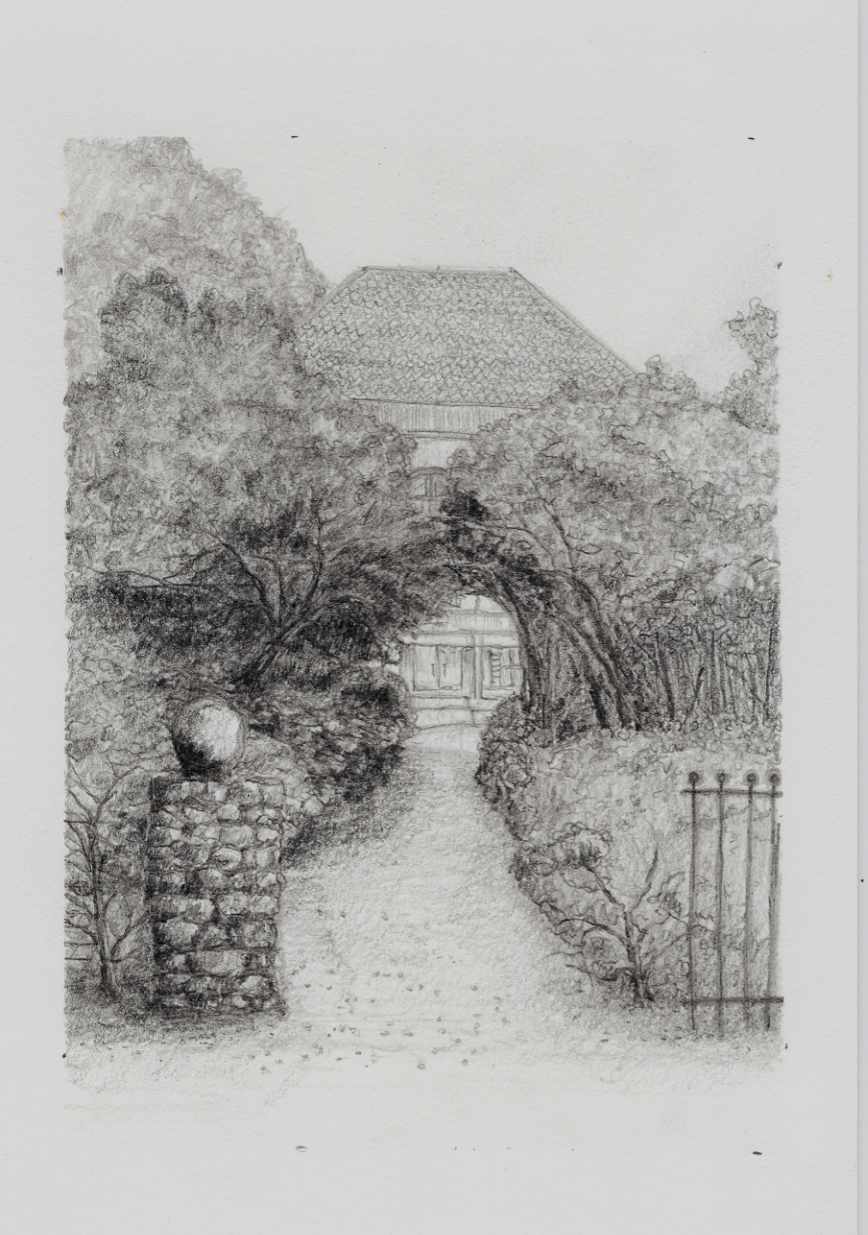
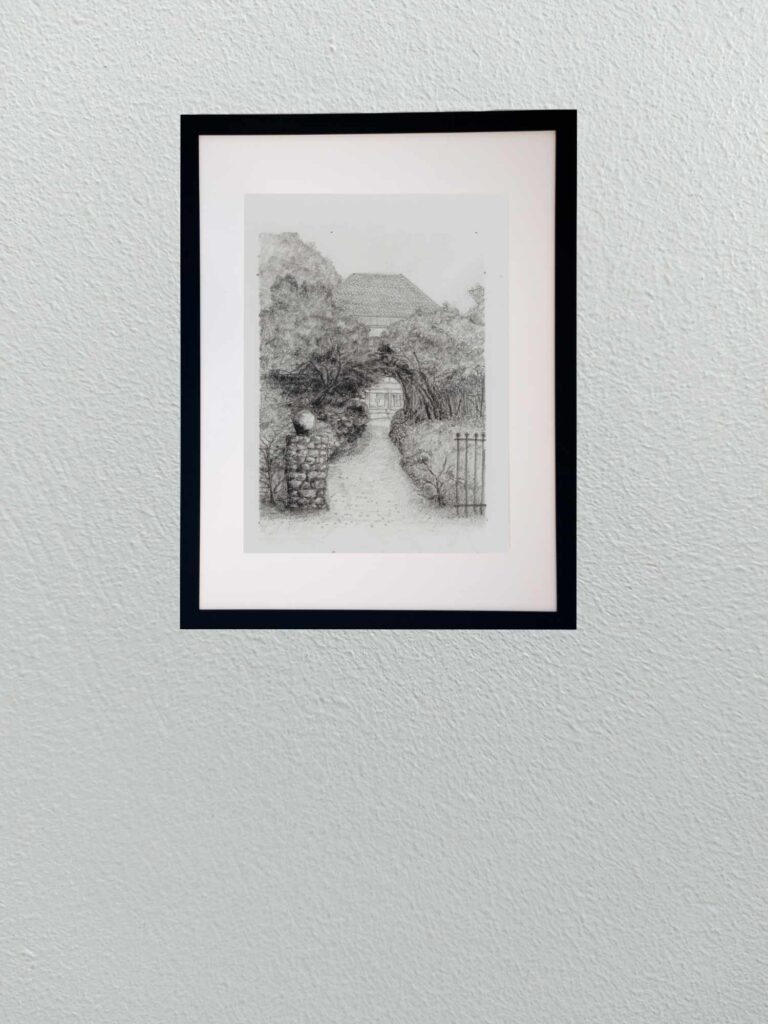
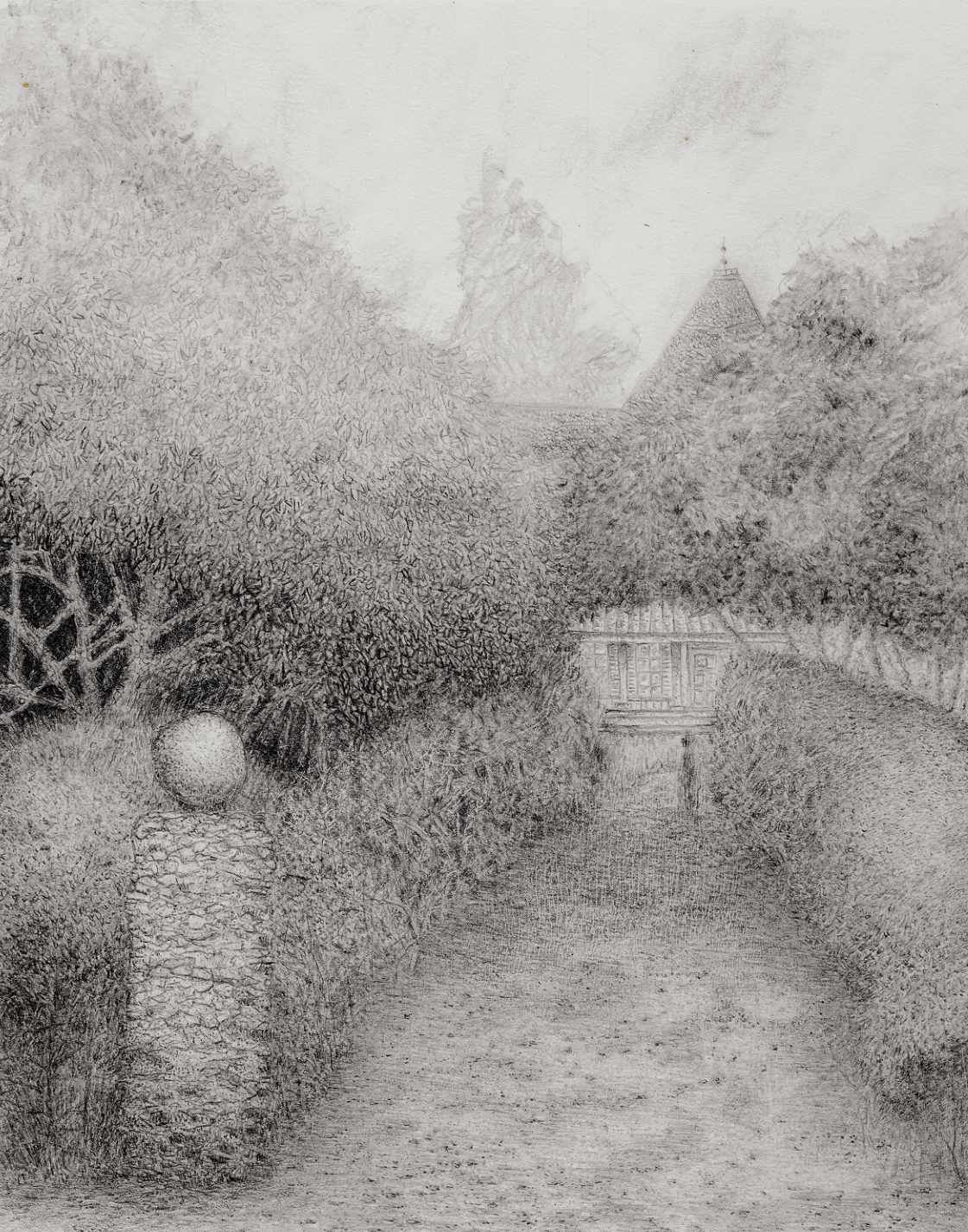
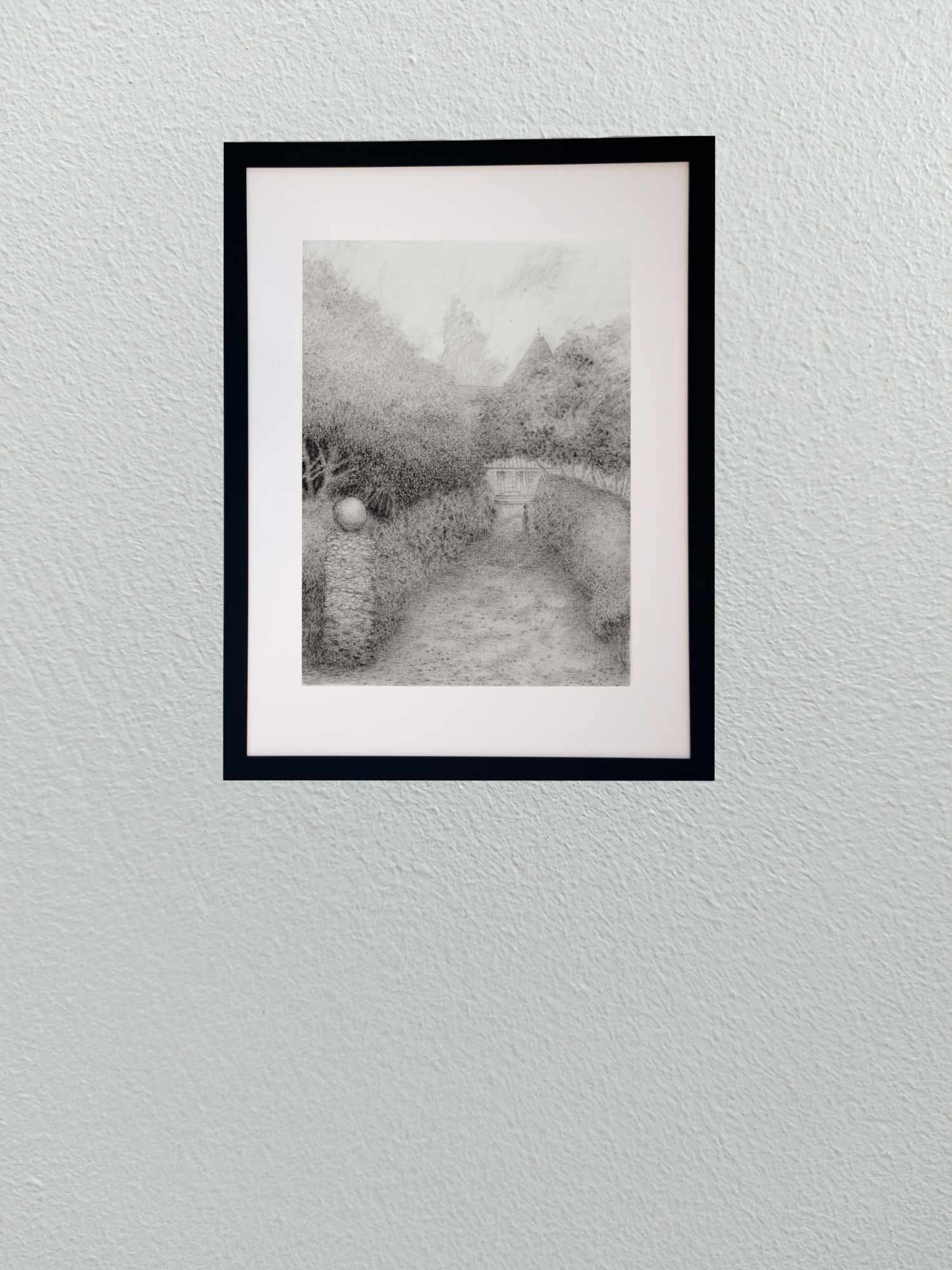
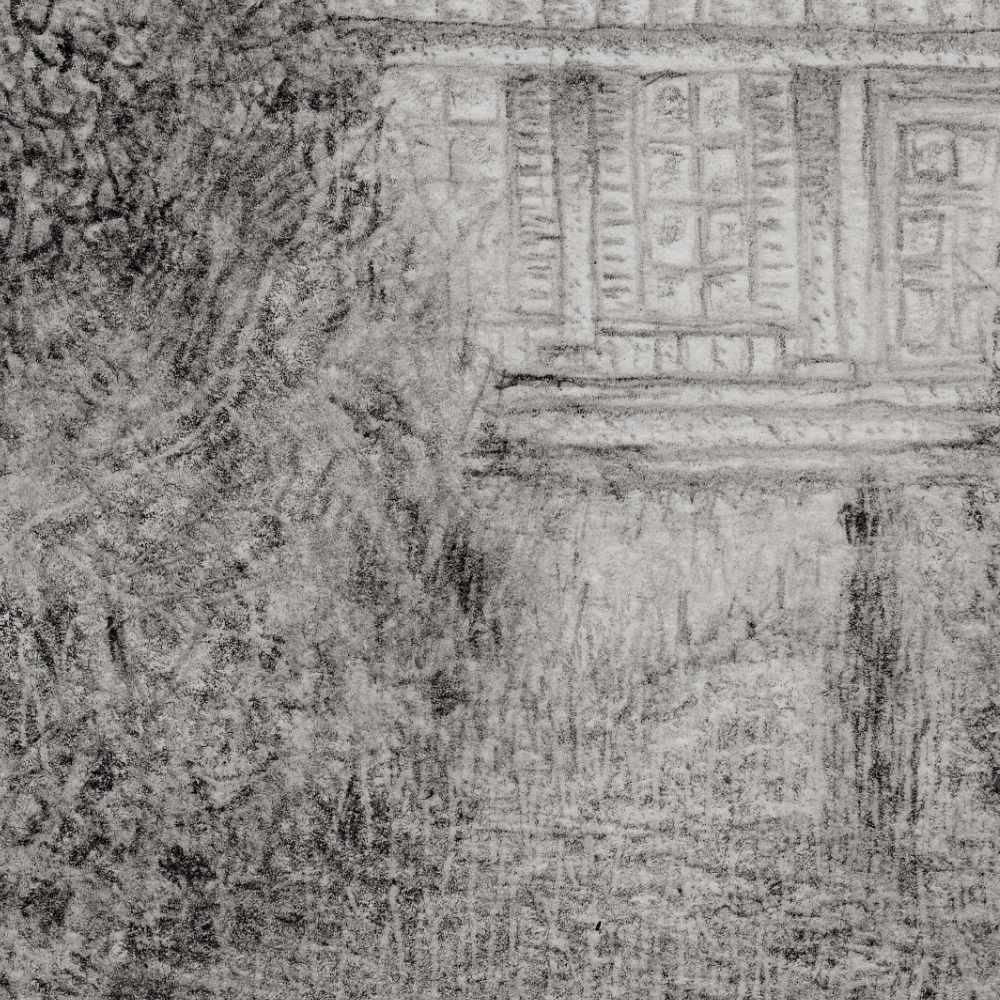
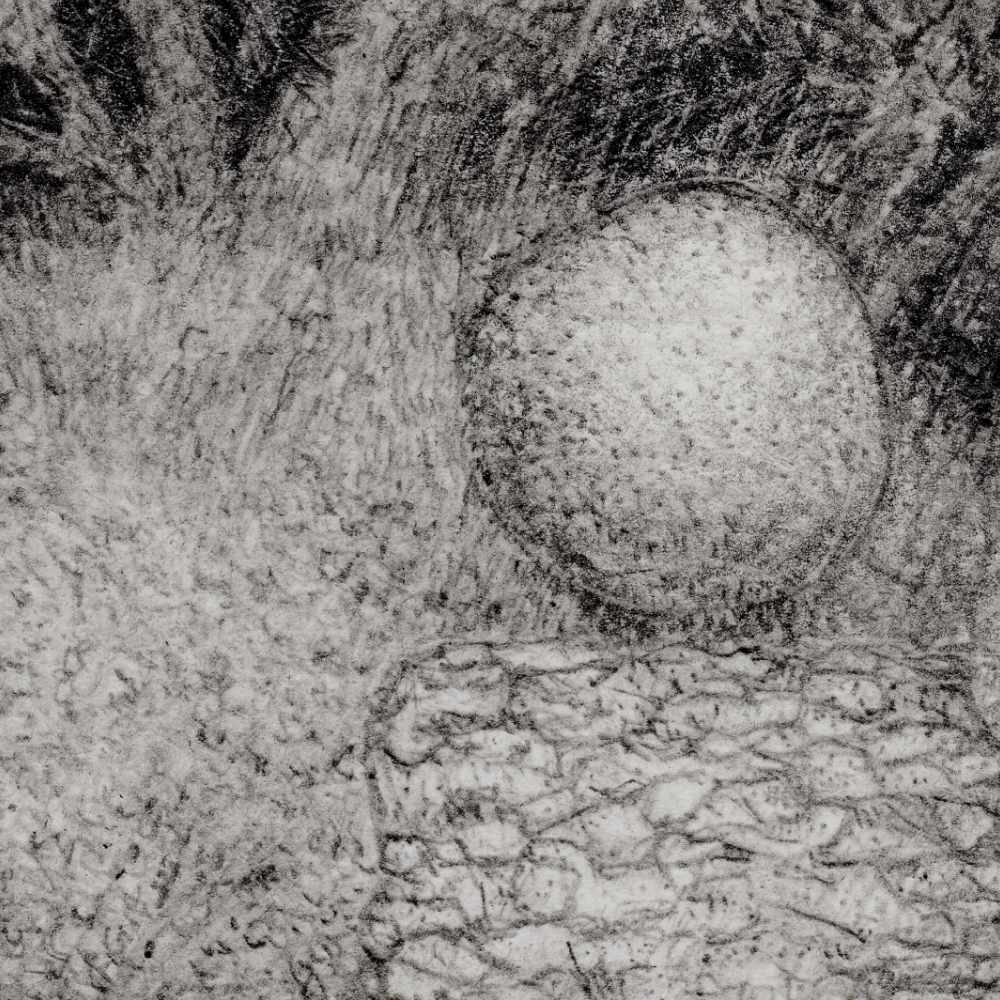
    Building directly on the earlier compositional study, this larger graphite drawing pushes deeper into a Southern Gothic mood of quiet decay, nostalgia, and loss. The scene captures a seemingly mundane domestic vista: a gravel driveway flanked by an aged stone pillar topped with a sphere, leading back toward a secluded home obscured by years of heavy hedge growth and sprawling trees.

    The mood shifts through the atmosphere and subtle narrative detail. Bathed in a soft, silver-toned haze, the distance holds the quiet impression of a solitary silhouette standing along the hedge line near the porch steps. The figureโ€™s stillness turns the piece into a meditation on memoryโ€”an echo of someone who once belonged to this secluded home, lingering in the driveway as the landscape slowly reclaims the path.

    Technically, the drawing was completed on Strathmore heavyweight paper using Mitsubishi graphite pencils. The tooth of the Strathmore paper catches the smooth, dark lead of the Mitsubishi pencils to build velvety, delicate foliage textures and textured stone surfaces, while soft, feathered strokes create the hazy, vaporous sky that softens the roofline and dense tree canopy.
  • Cloistered Roofline

    Cloistered Roofline

    his graphite study returns to quiet architectural mystery, focusing on the threshold between the open approach and a secluded domestic space. The composition centers on a curved gravel drive flanked by an old stone pillar topped with a sphere, an iron gate, and heavy, overgrown shrubbery.

    The drive disappears beneath a dense, shadowy arbor of bent trees, creating a shaded tunnel that conceals the majority of the house beyond. Only fragments of the structure emergeโ€”the steep pitch of a tiled or shingled roof, a hint of an upper dormer, and a sunlit porch tucked in the distance. The architecture feels cloistered and watchful, shielded by decades of growth. Leaving the interior obscured invites the viewer to wonder whether the home is occupied, abandoned, or quietly waiting behind the canopy.

    Technically, the drawing was executed on Strathmore heavyweight paper using Winsor & Newton graphite pencils. The paperโ€™s substantial tooth breaks up the graphite strokes, allowing for soft, vaporous transitions throughout the billowy tree crowns. The creamy laydown of the Winsor & Newton lead builds deep, velvety darks under the tree canopy and gives tangible weight and mortar depth to the individual fieldstones of the gatepost.


  • Physical: Nunnally Road

    Physical: Nunnally Road

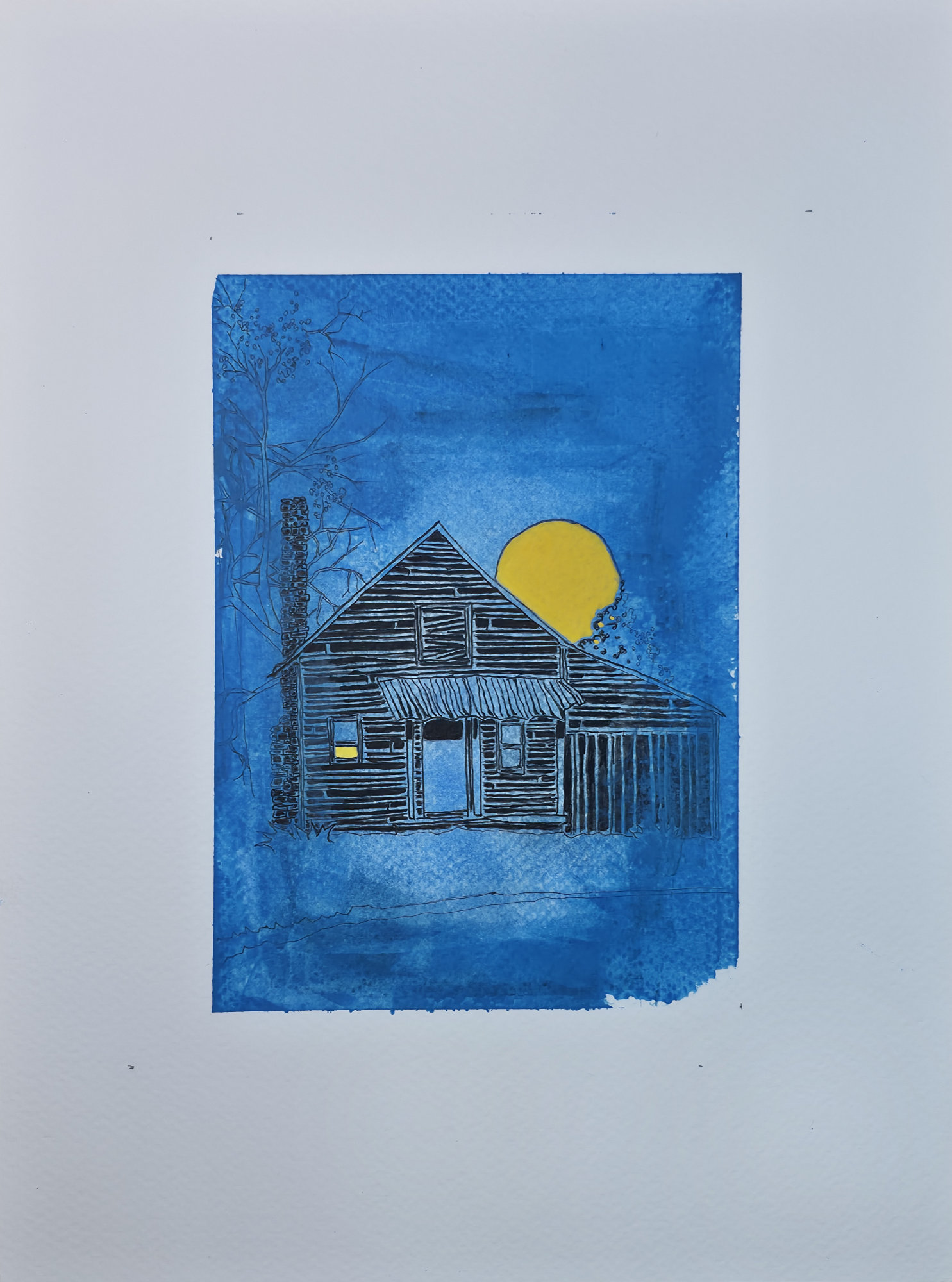
    Here is the first of the physical work for this series.

    Iโ€™m excited to introduce the first piece in a new three-part illustrative series. The theme is a blend of seasonal whimsy and the gentle, spooky feeling of unique, isolated structures. Over the years, Iโ€™ve collected photographs of fascinating buildings, and this series gives them a new life and a new story.

    I chose a stark, graphic style with strong linework to evoke the feeling of a classic block print or a storybook illustration. While this image was created digitally, Iโ€™m currently working on its physical counterpart, exploring the dialogue between the two mediums. This piece, โ€œNunnally Road,โ€ is the beginning of that exploration.

    Technical Details:

    • Acrylic swipe
    • Sakura Pigma pens
    • 9×12 140lb cold press
  • Physical: Cemetery Road

    Physical: Cemetery Road

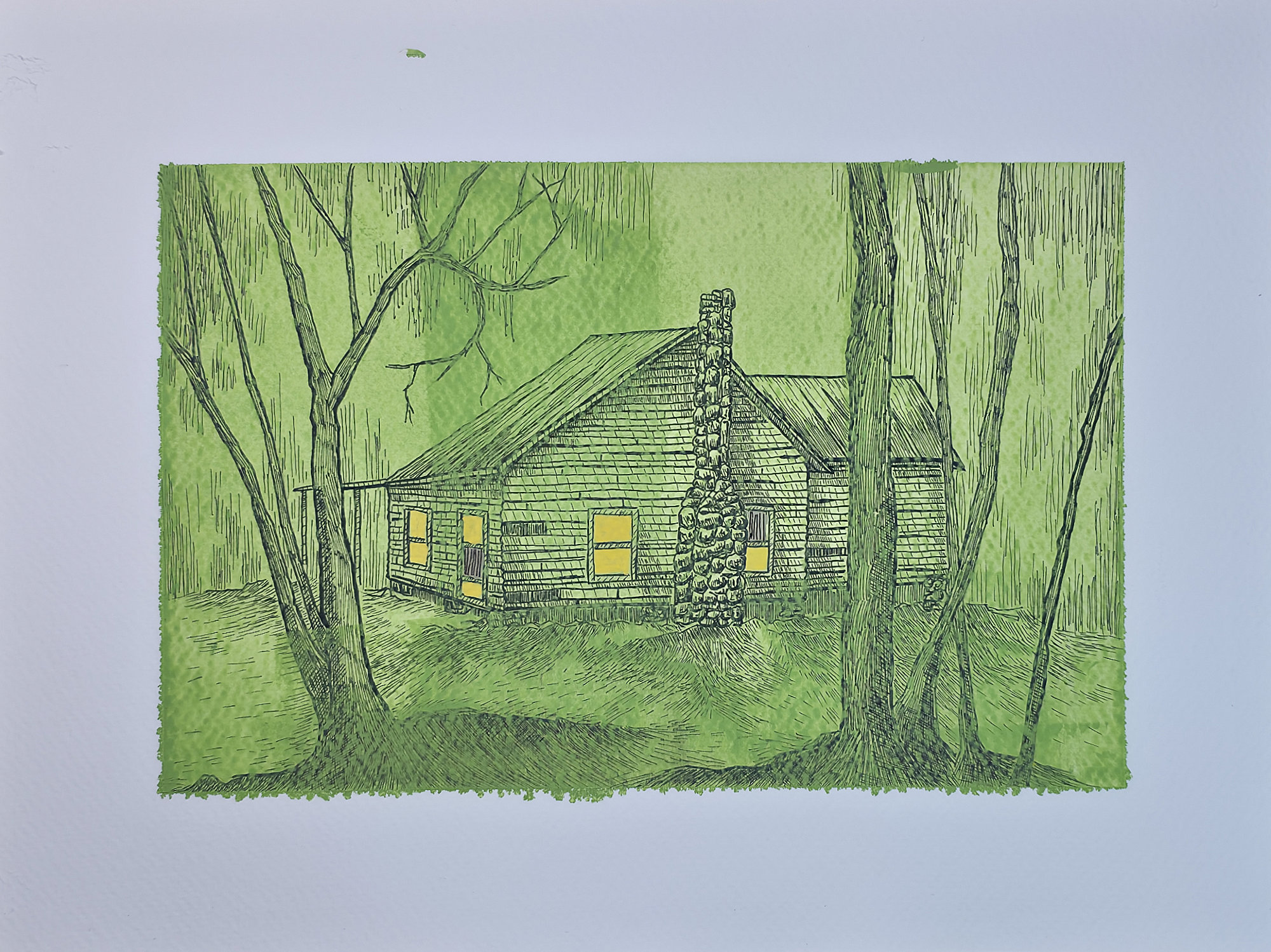
    Physical version of this original digital piece.

    And with that, the series is complete. This three-part digital collection was an exploration of seasonal whimsy and the mysterious vibes of forgotten places. From the first piece to this final one, โ€œCemetery Road,โ€ my goal was to take real structures Iโ€™ve photographed and imbue them with the feeling of a modern folk tale.

    For this final installment, I used a monochromatic green palette and the enchanting glow of fireflies to create a uniquely eerie and magical atmosphere. Itโ€™s been a fantastic journey blending photography, memory, and digital illustration. Physical versions of all three are still in the works!

    Technical Details:

    • Acrylic swipe
    • Sakura Pigma pens
    • 9×12 140lb cold press
  • Old Live Oak

    Old Live Oak

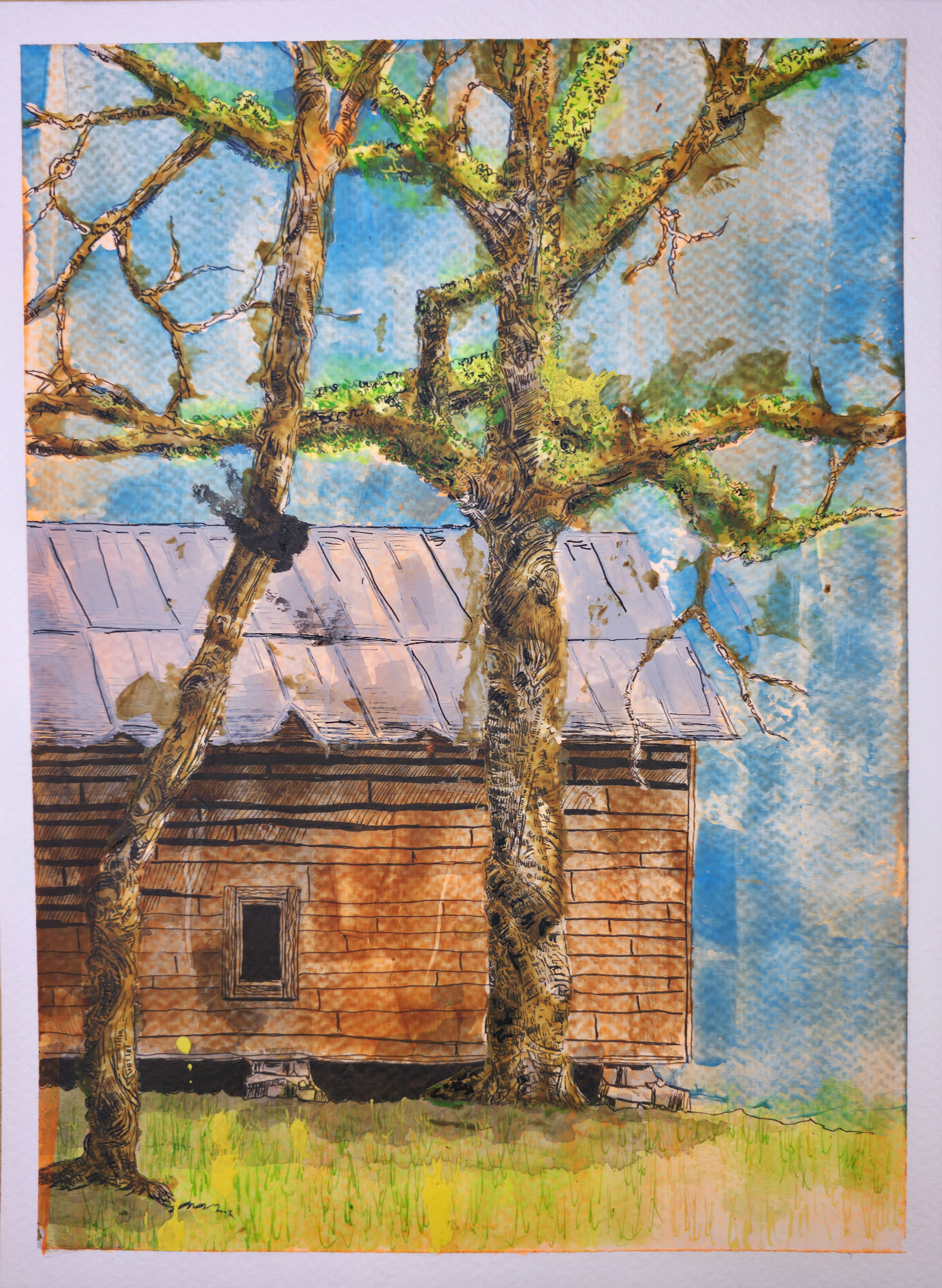
    I spotted this shack while driving. It was anchored by an old live oak with heavy, sprawling limbs. The wood was grey and tired. The tree was the oppositeโ€”covered in a vibrant green moss that felt alive against the weathered boards.

    What I found most interesting was this dimension of time. You have a structure slowly surrendering to the elements while the tree just keeps reaching. Itโ€™s a quiet, roadside dialogue.

    I used a mix of ink and acrylic for this piece. I also made a specific choice: I stopped correcting myself. If the ink bled or a line went wide, I let it stay. Usually, these are called errors. Here, the errors were the effort. They belong in the work, much like the rot belongs on the shack. Itโ€™s an honest way to record a moment.

    The ink defines the twisting architecture of the oak. The acrylic adds the weight to the sky and the moss. It is a rougher, more experimental process than my usual work, but it captures the grit I was looking for.

    Technical Details:

    • Acrylic swipe
    • Sakura Pigma pens
    • India ink with drip pen
    • 9×12 140lb cold press press