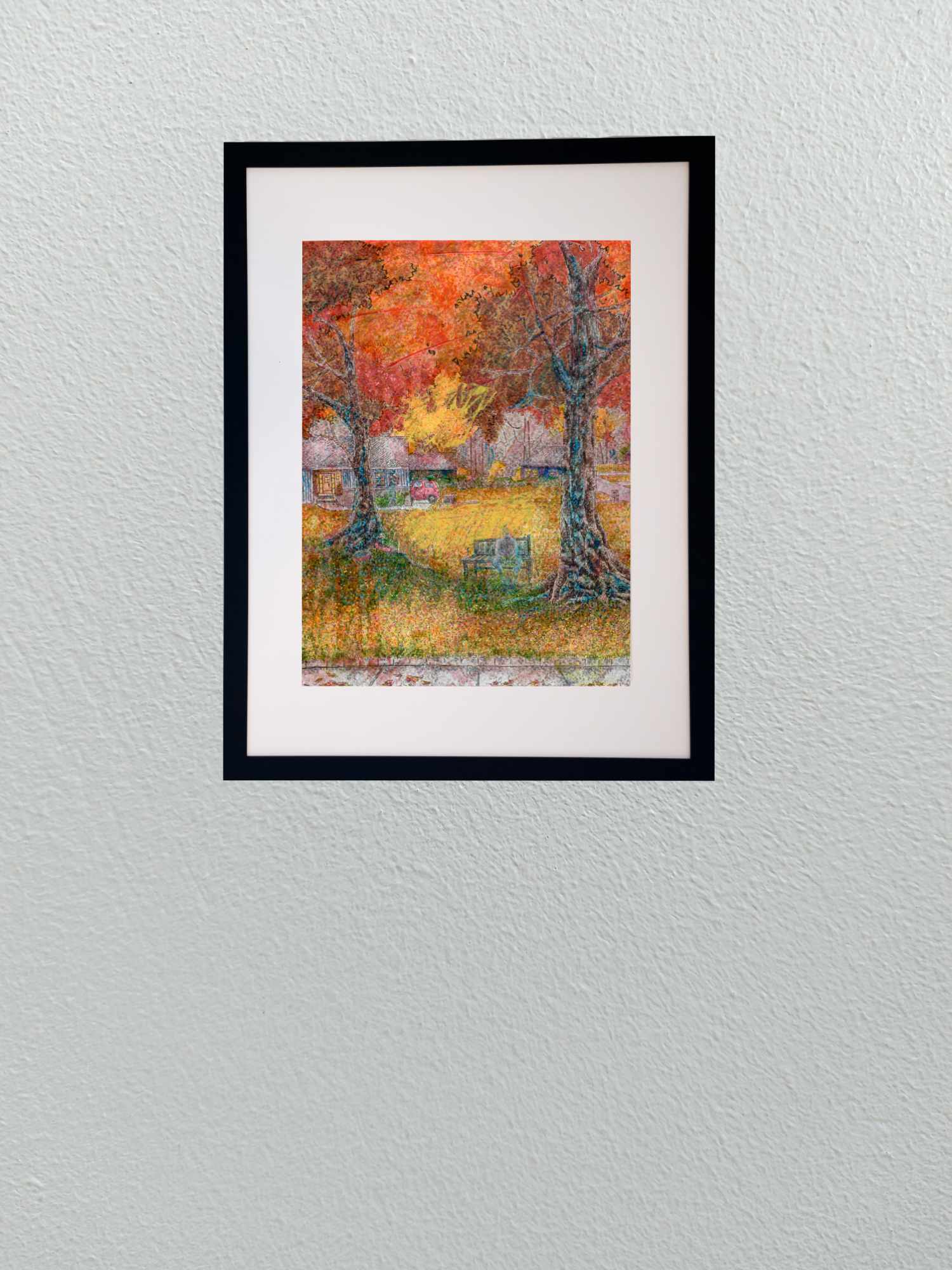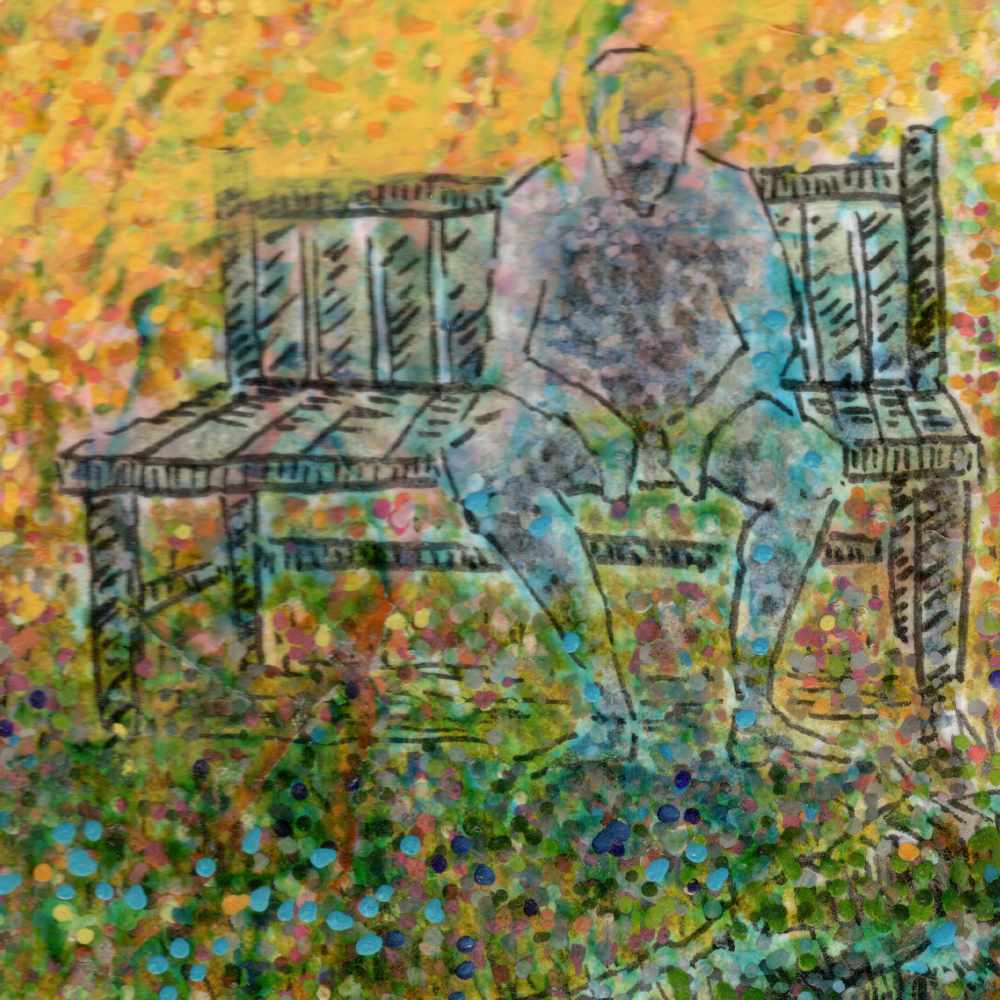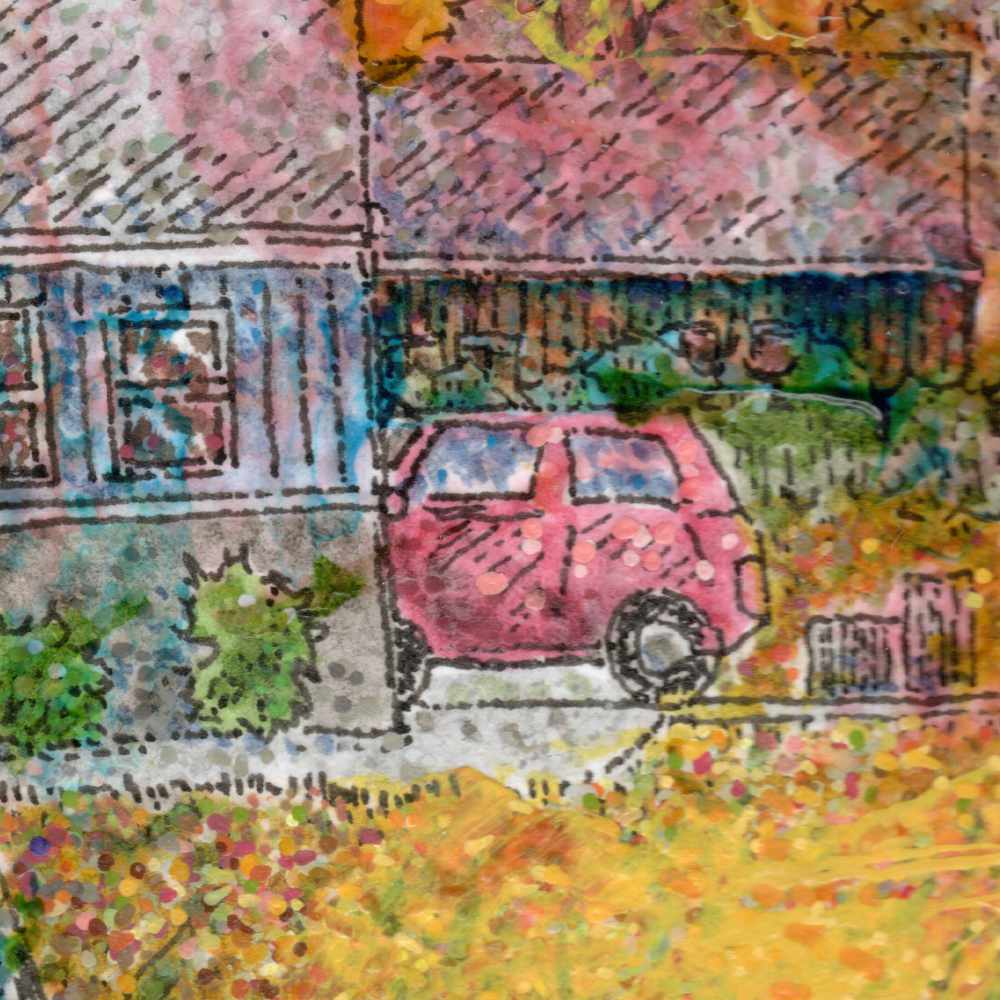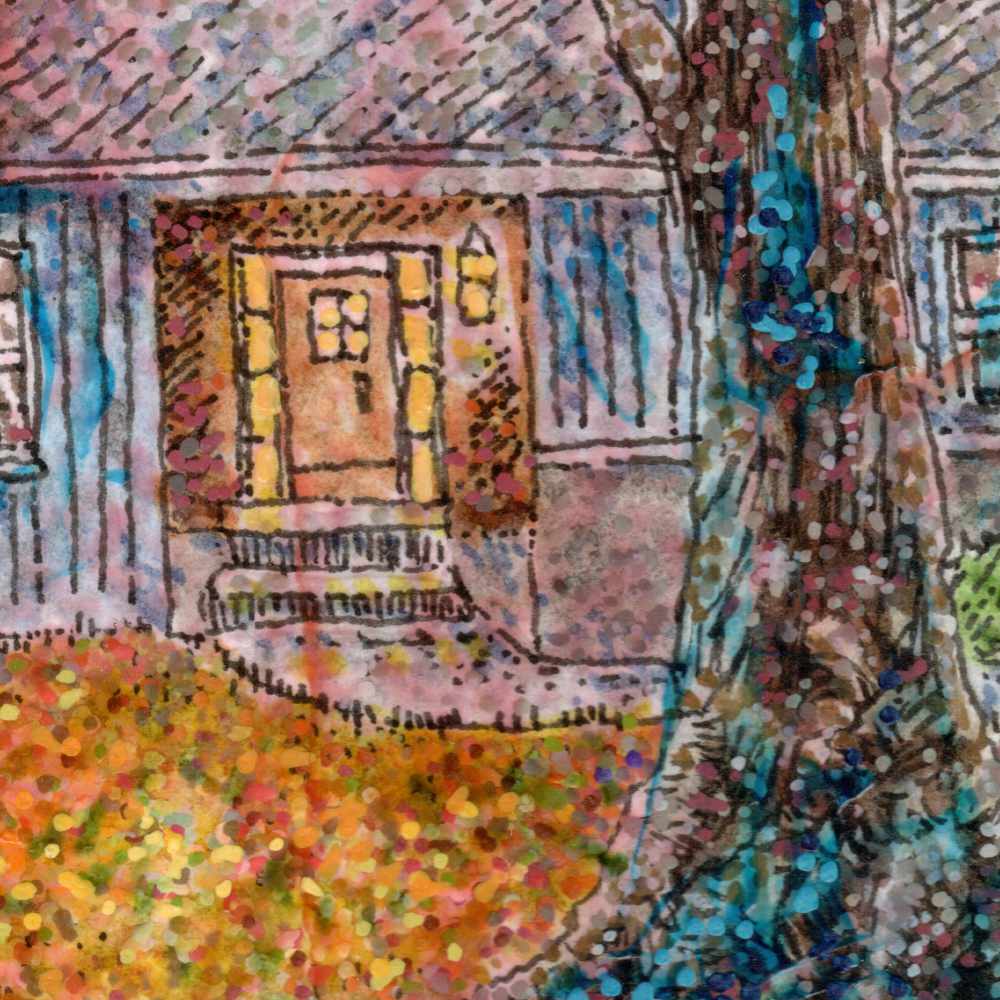
Tag: conceptual

  • Solitary Traverse

    Solitary Traverse

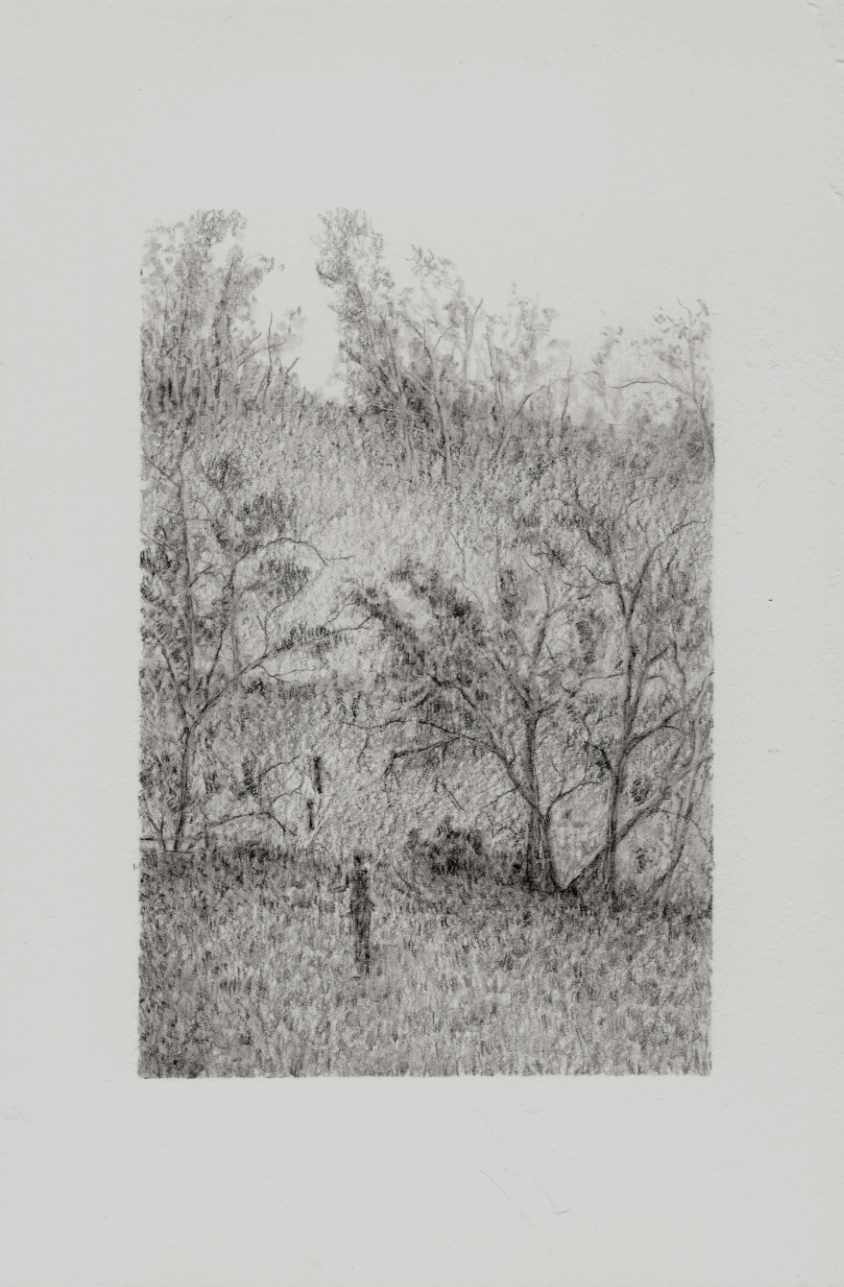
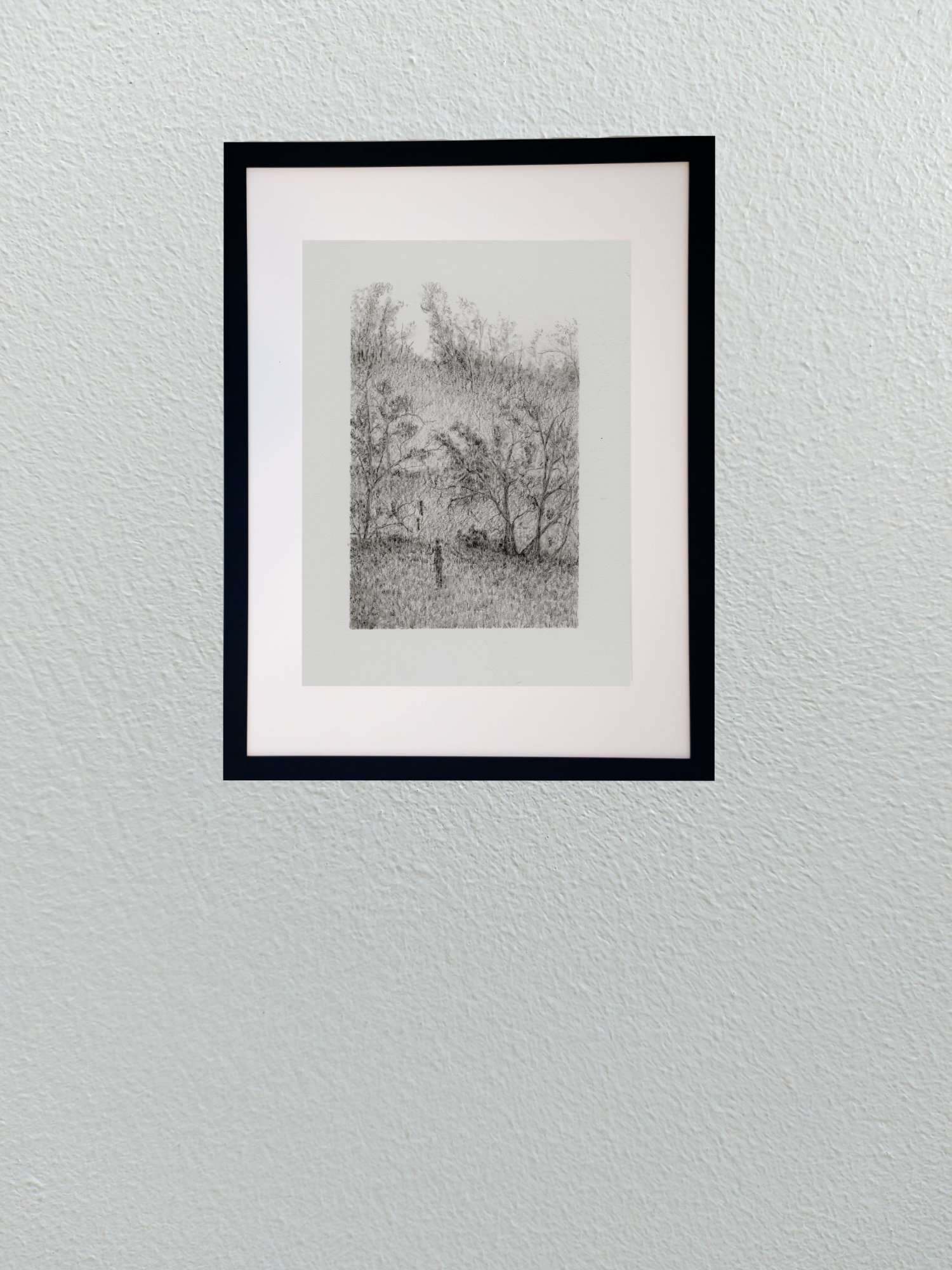
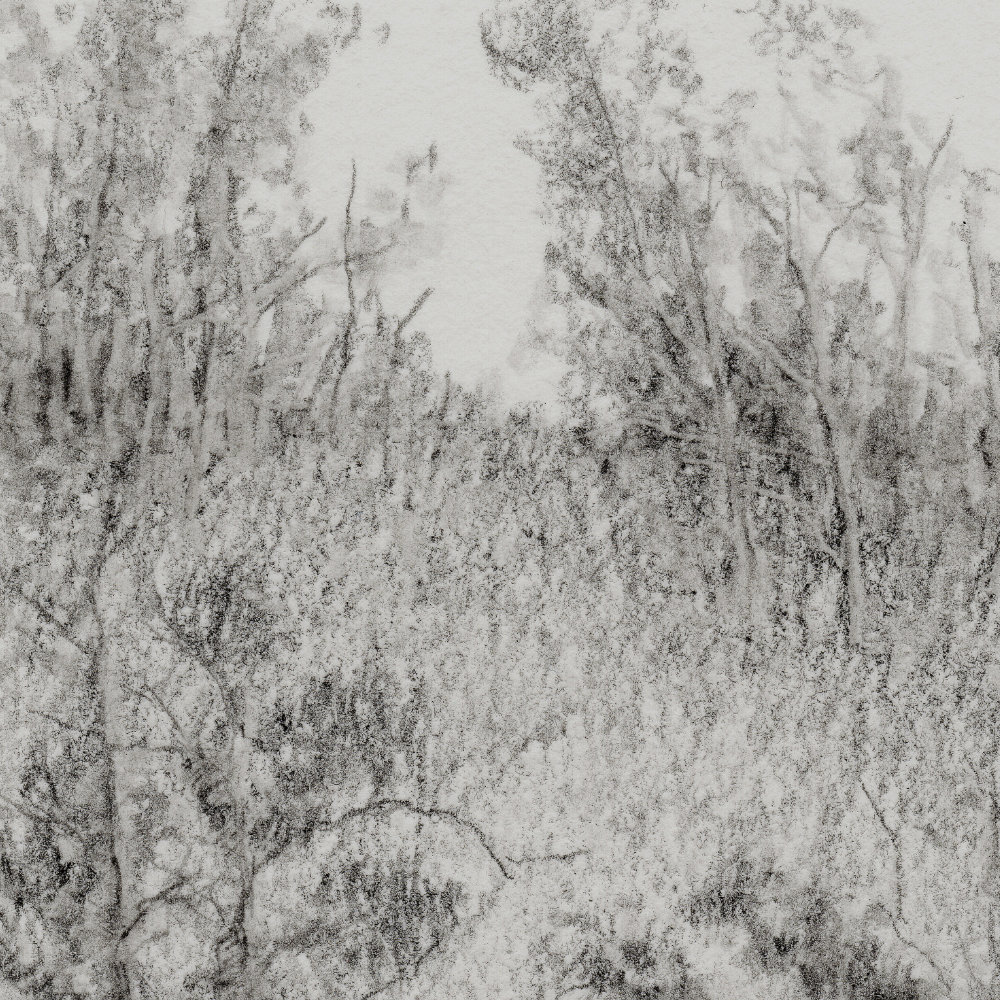
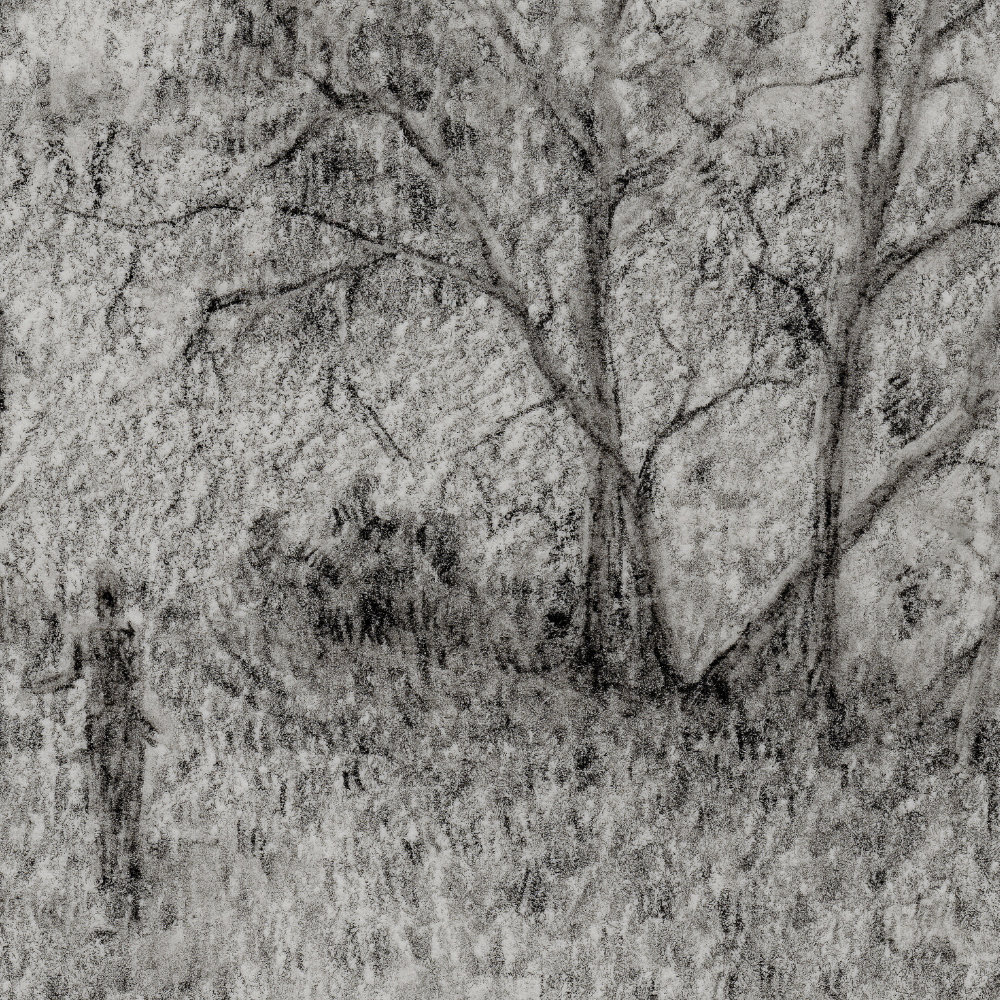
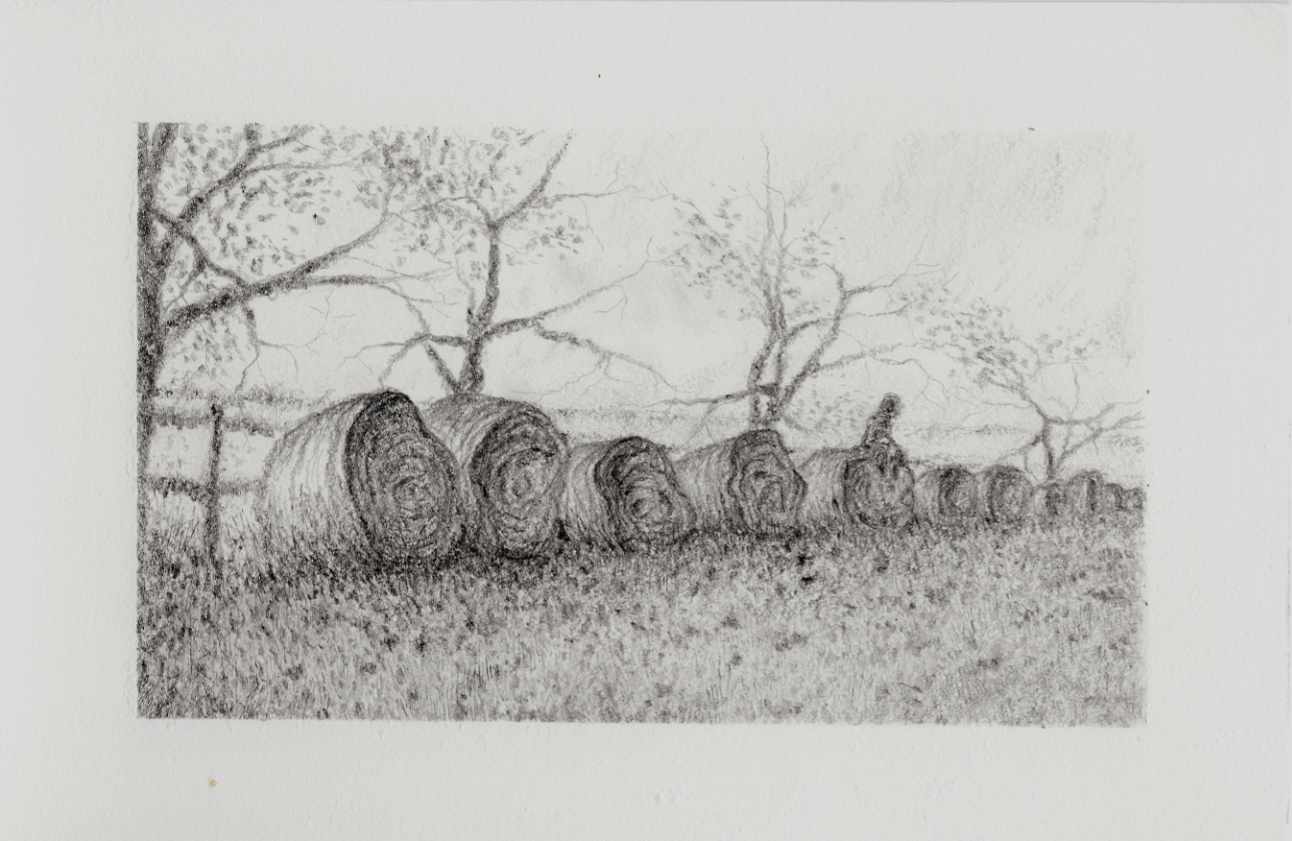
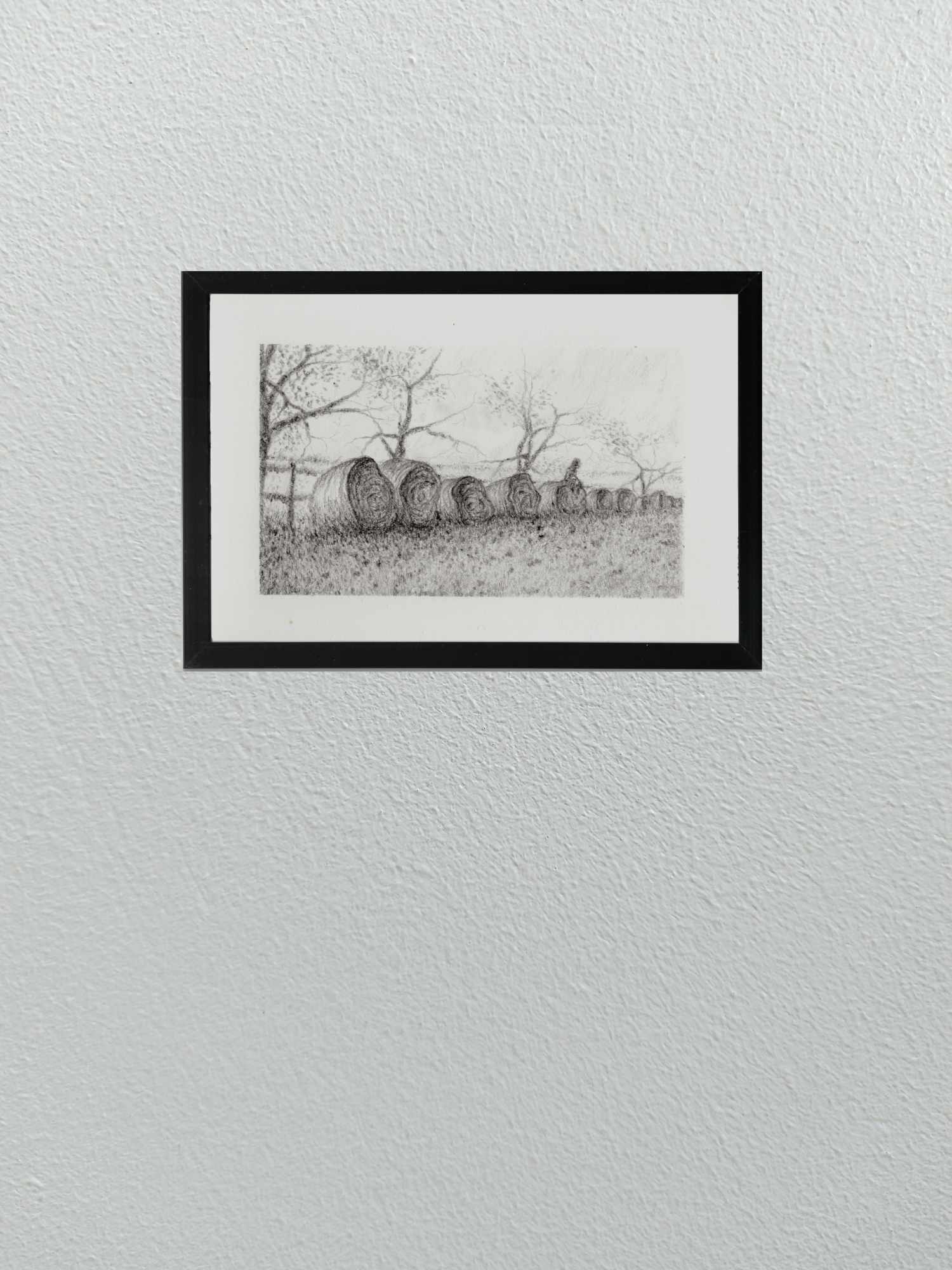
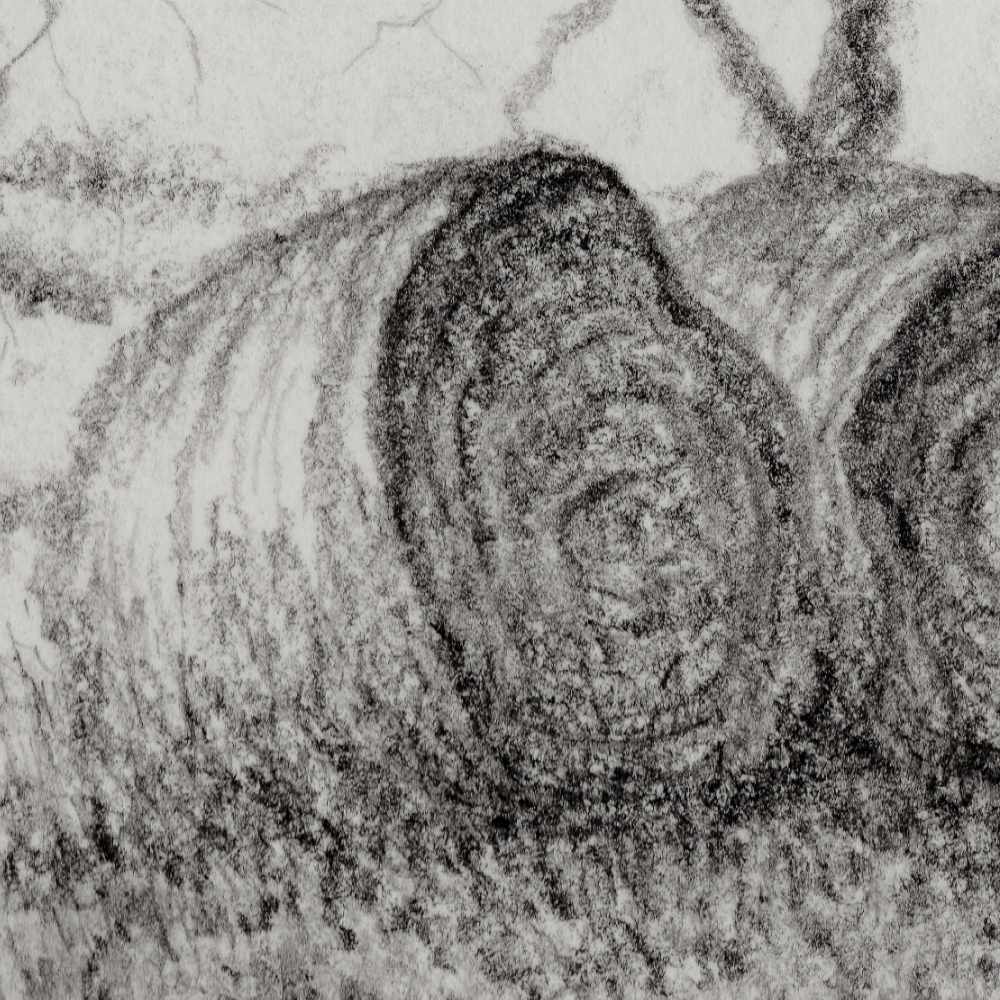
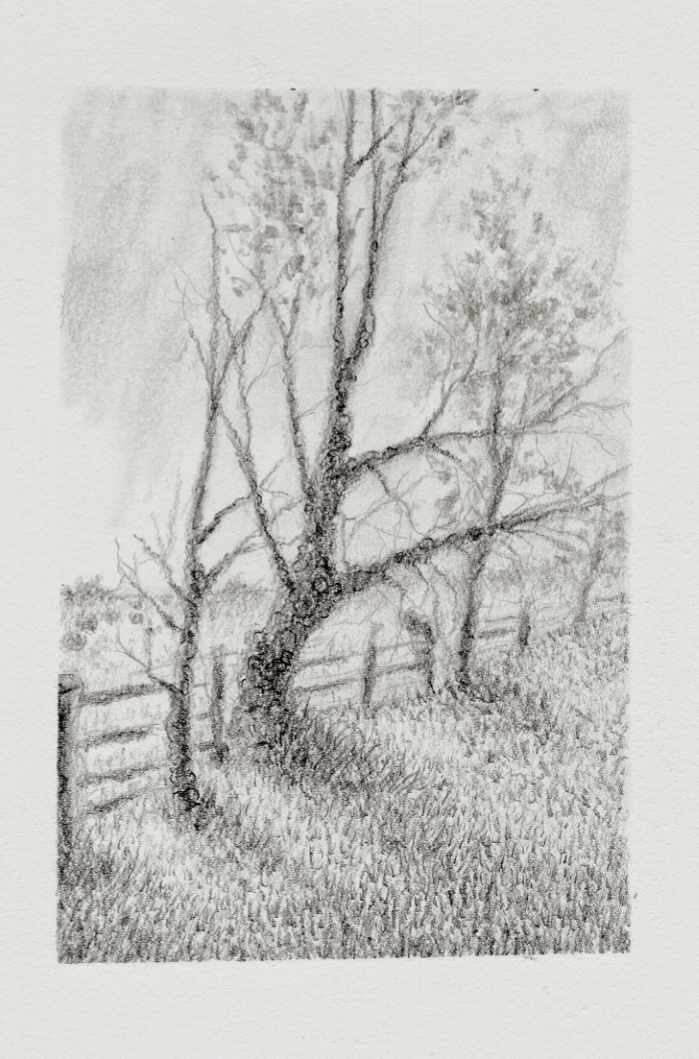
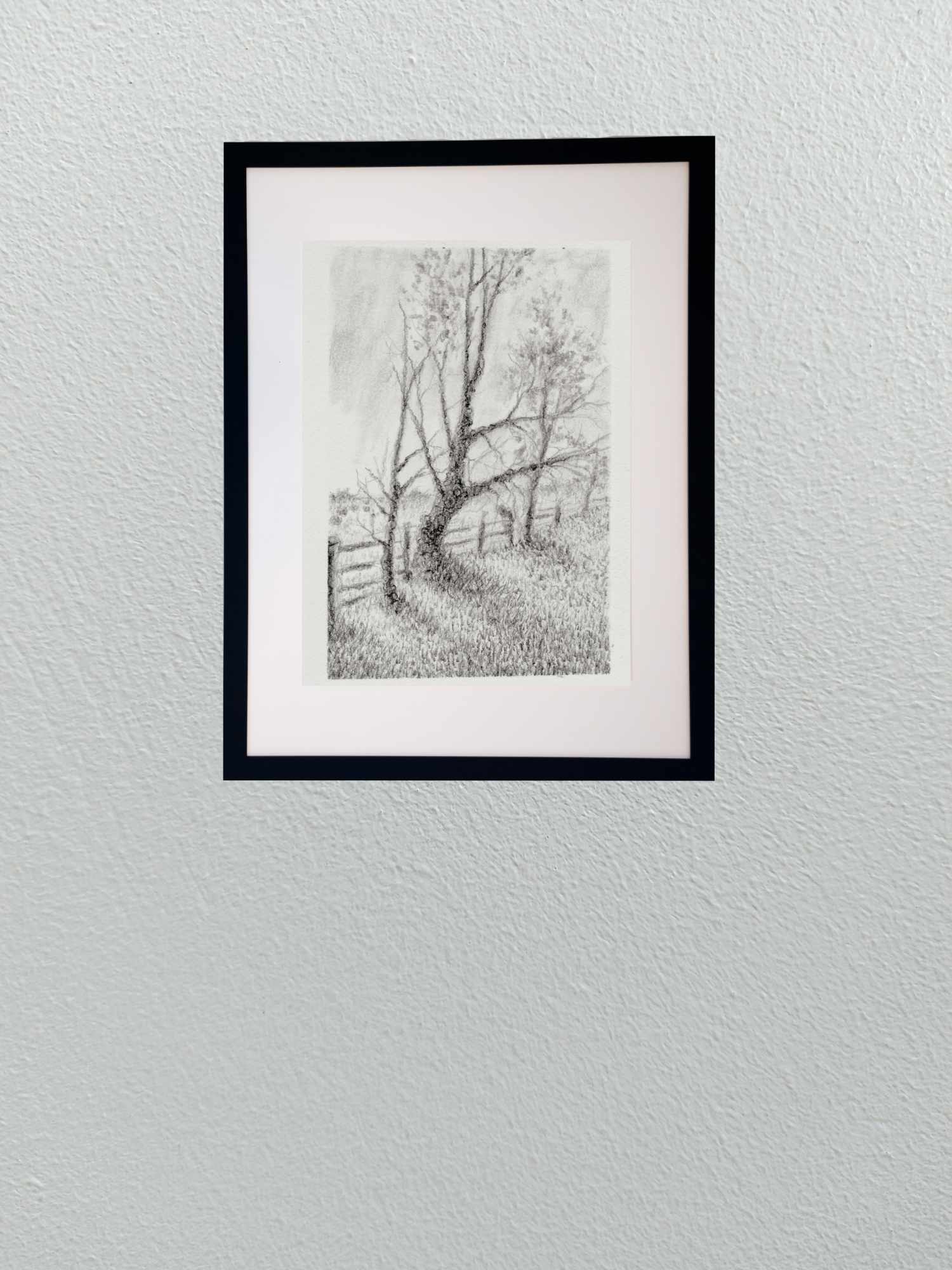
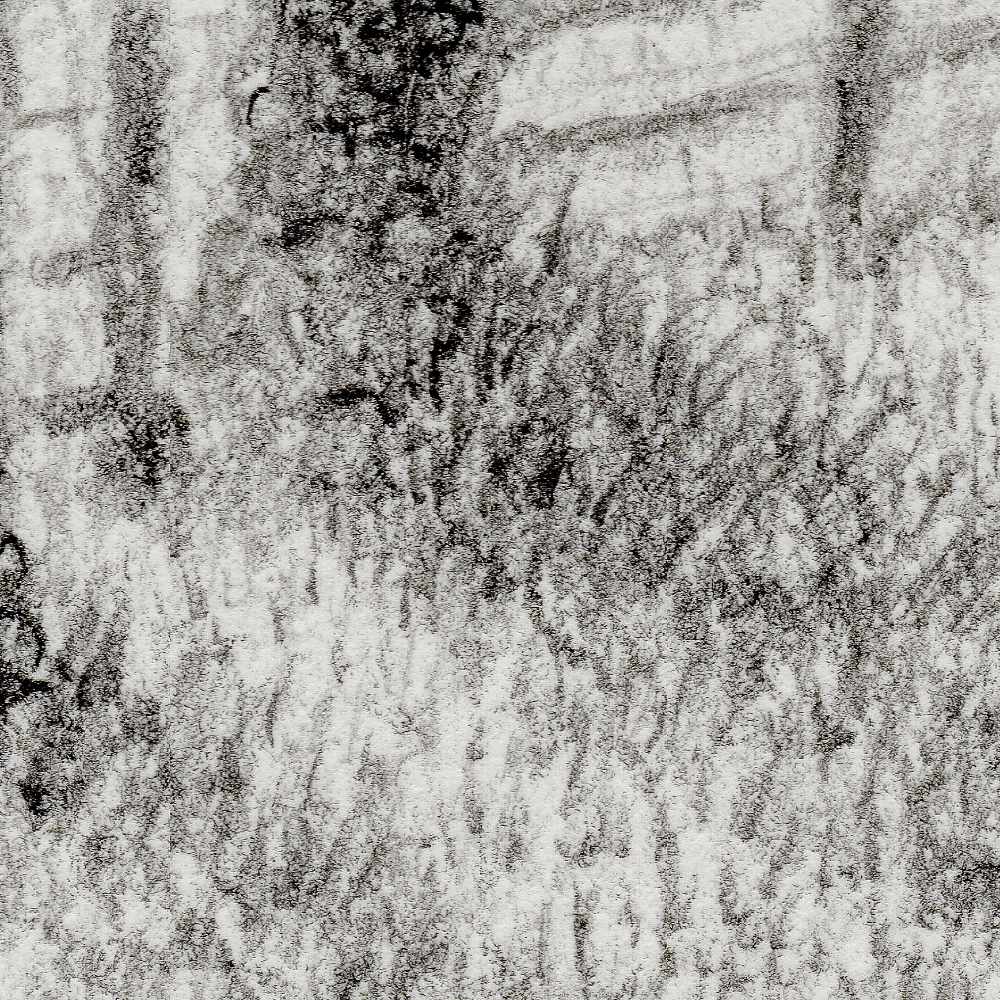
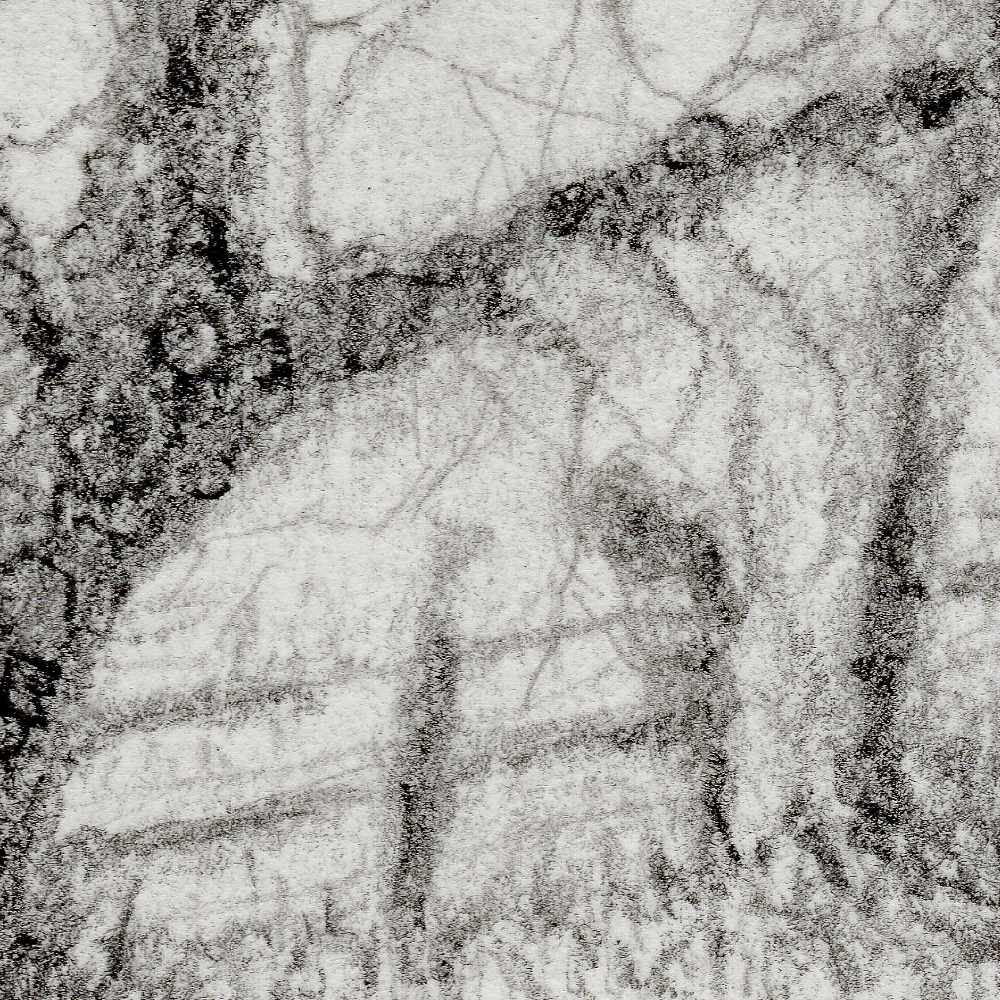
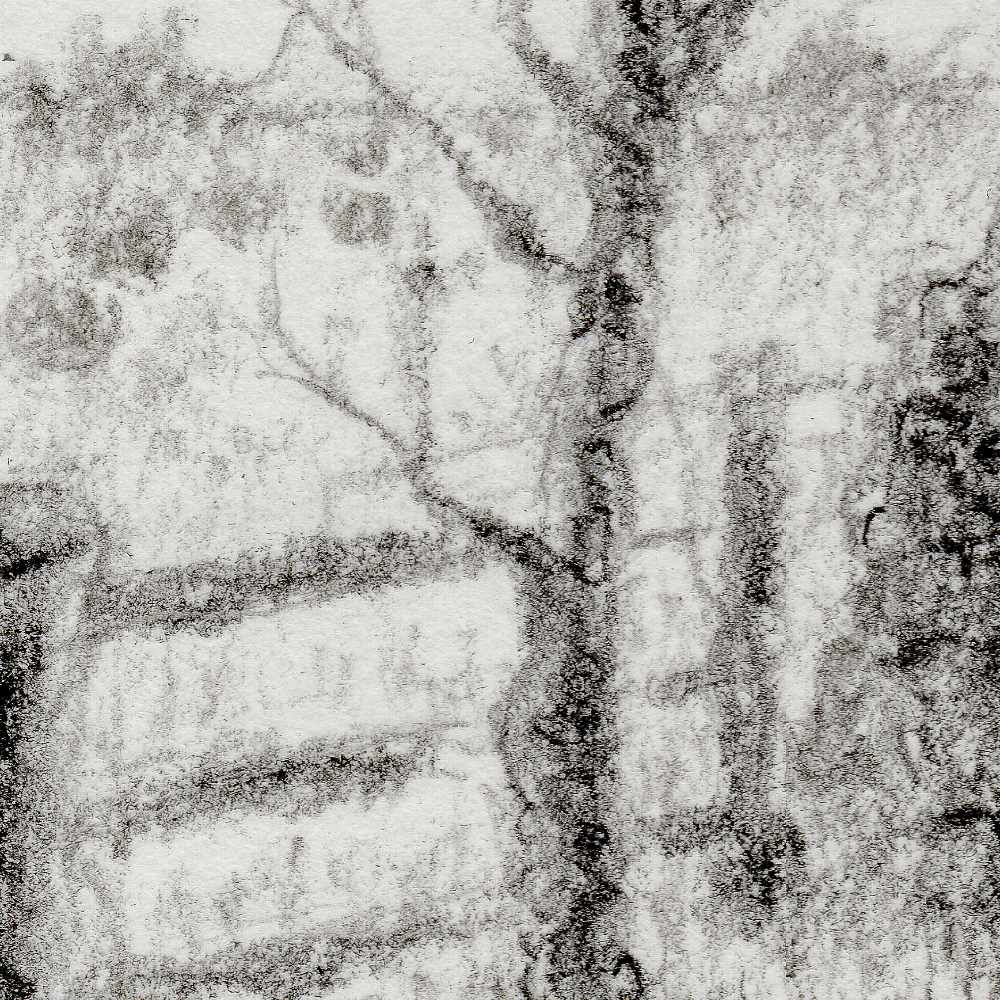
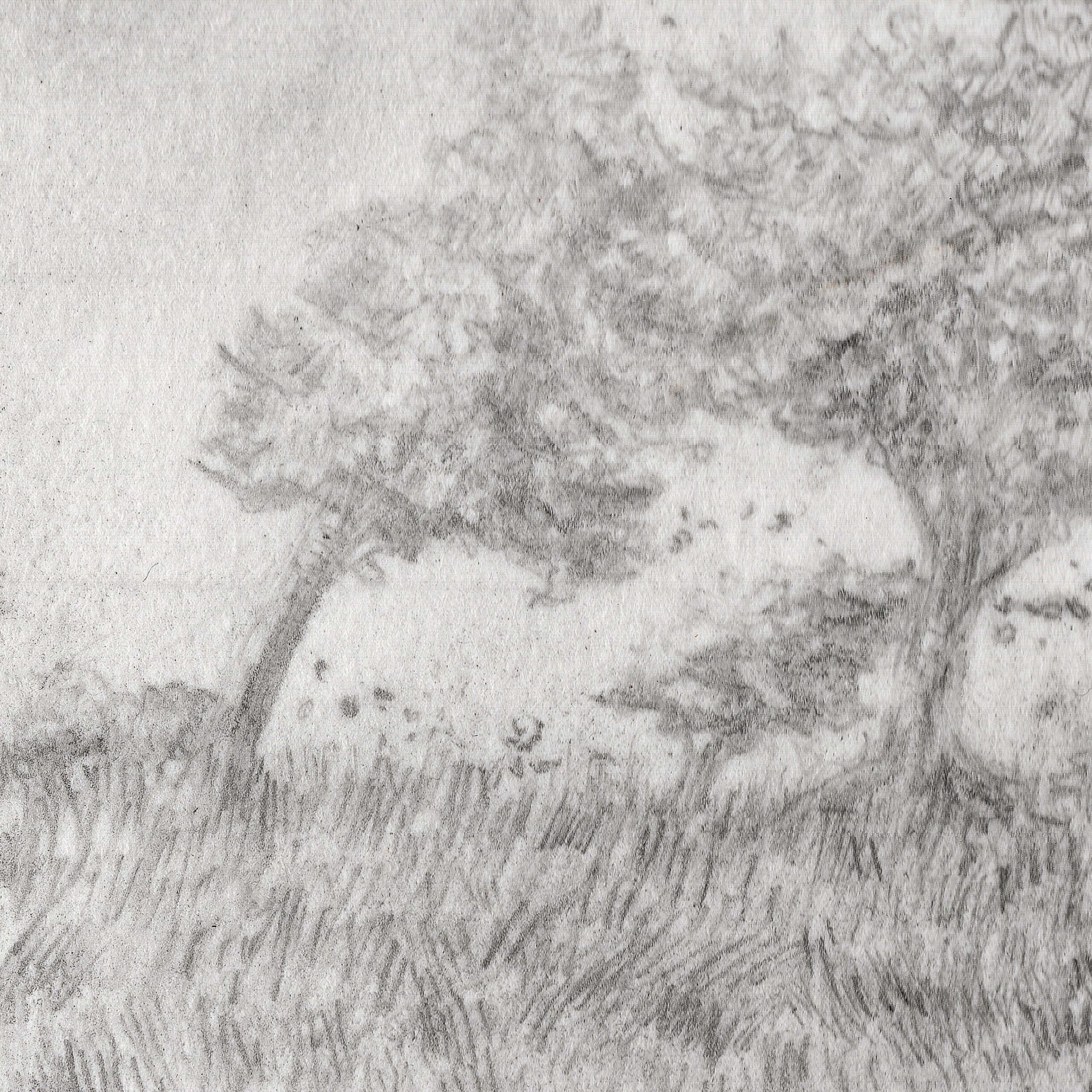
    This graphite drawing steps back into a quiet, atmospheric space, continuing my exploration of solitude, loss, and the unknown. At first glance, the composition presents a familiar rural vista: a weathered fence line tracing the curve of a hill, distant hay bales resting in the pasture, and a small cluster of bare trees leaning against the sky.

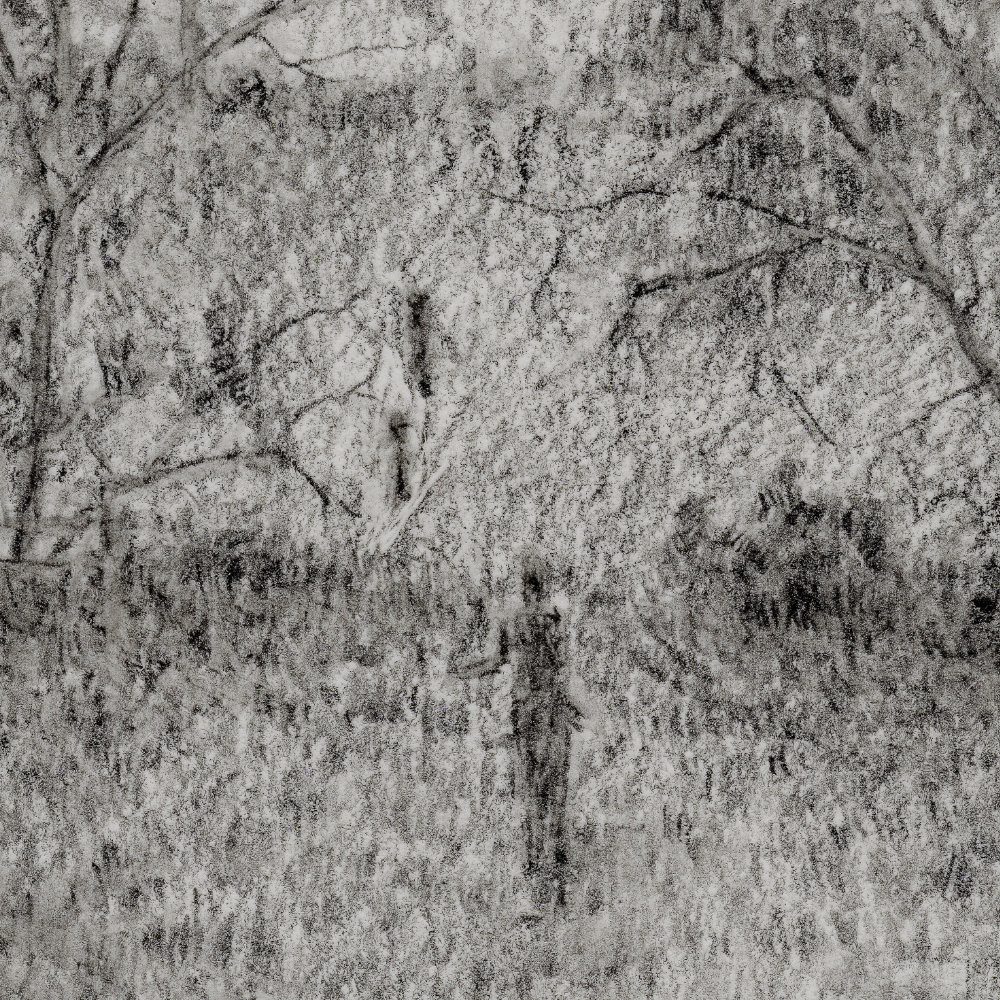
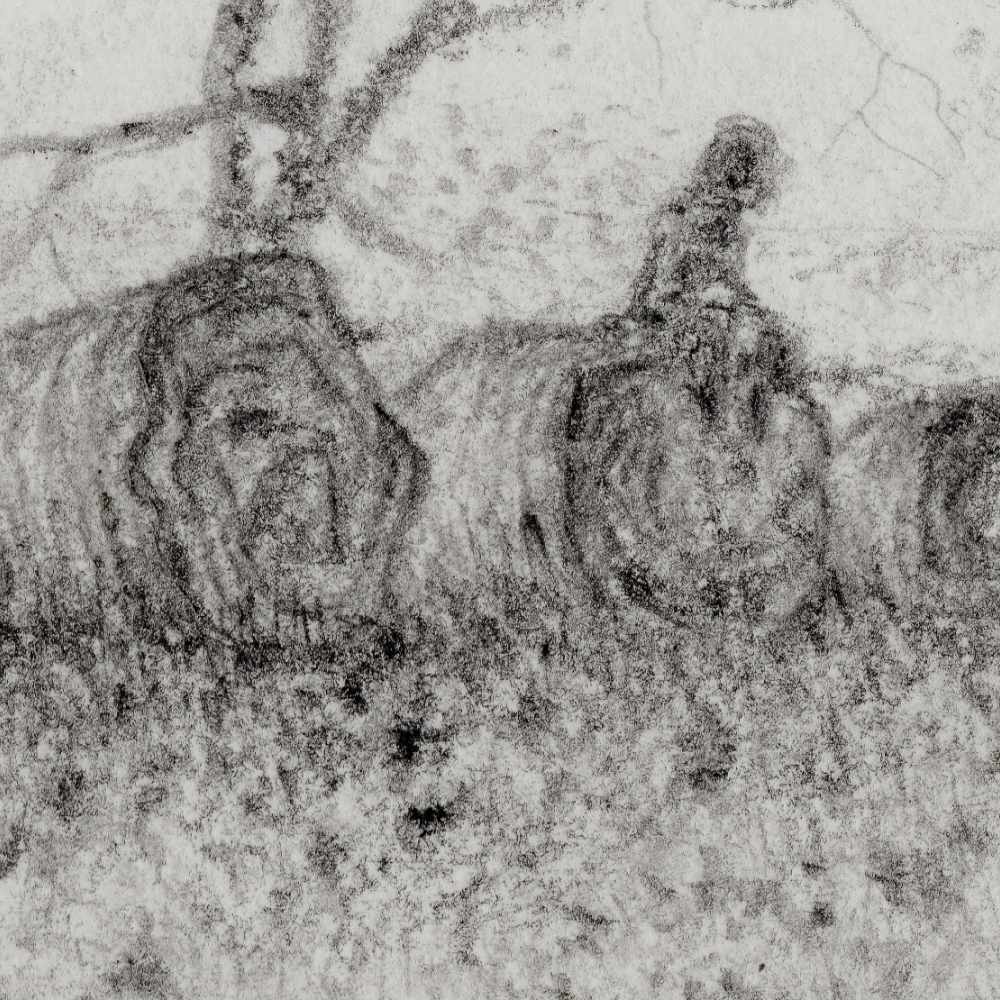
    Looking closer between the trunks reveals a faint, subtly shaded figure walking along the boundary. That quiet presence shifts the entire mood of the scene, turning a simple field study into a contemplative moment of transition. Is it a wanderer passing through, or an echo tied to these quiet acres? Leaving that narrative open allows the viewer to project their own sense of memory and stillness into the frame.

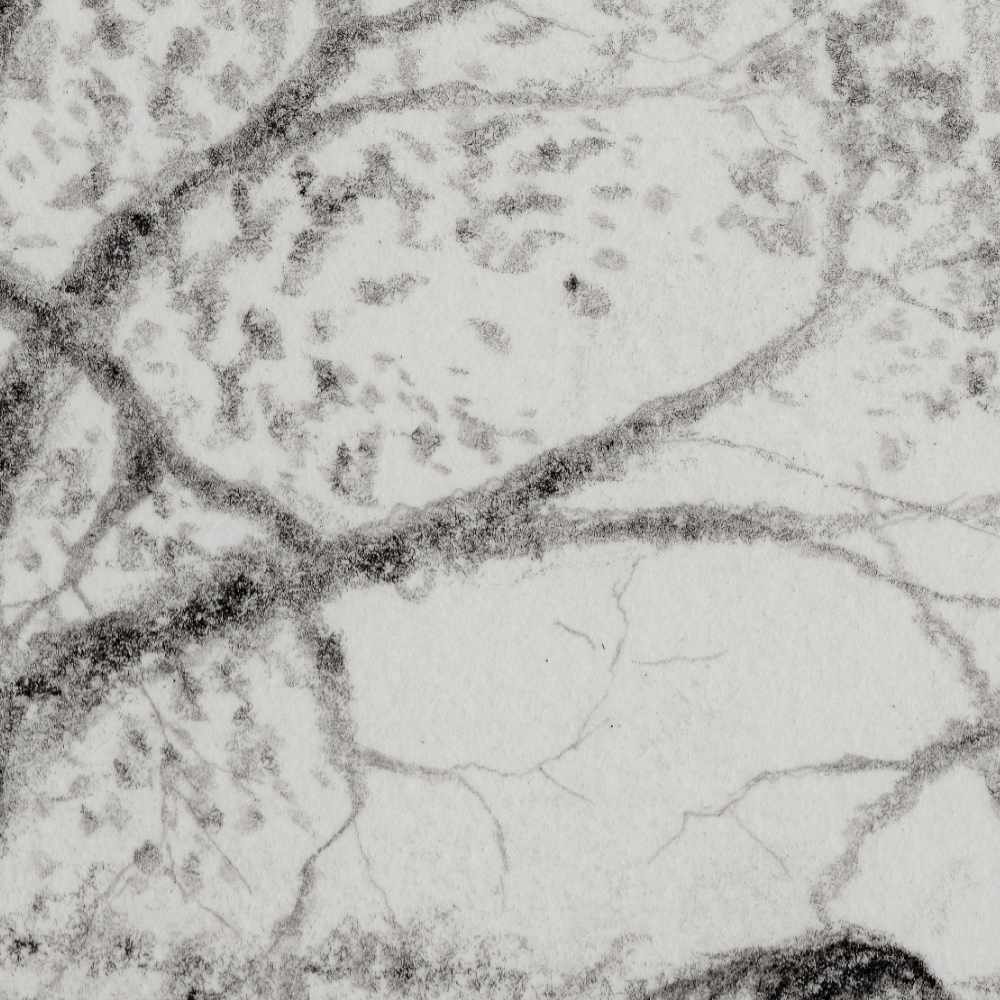
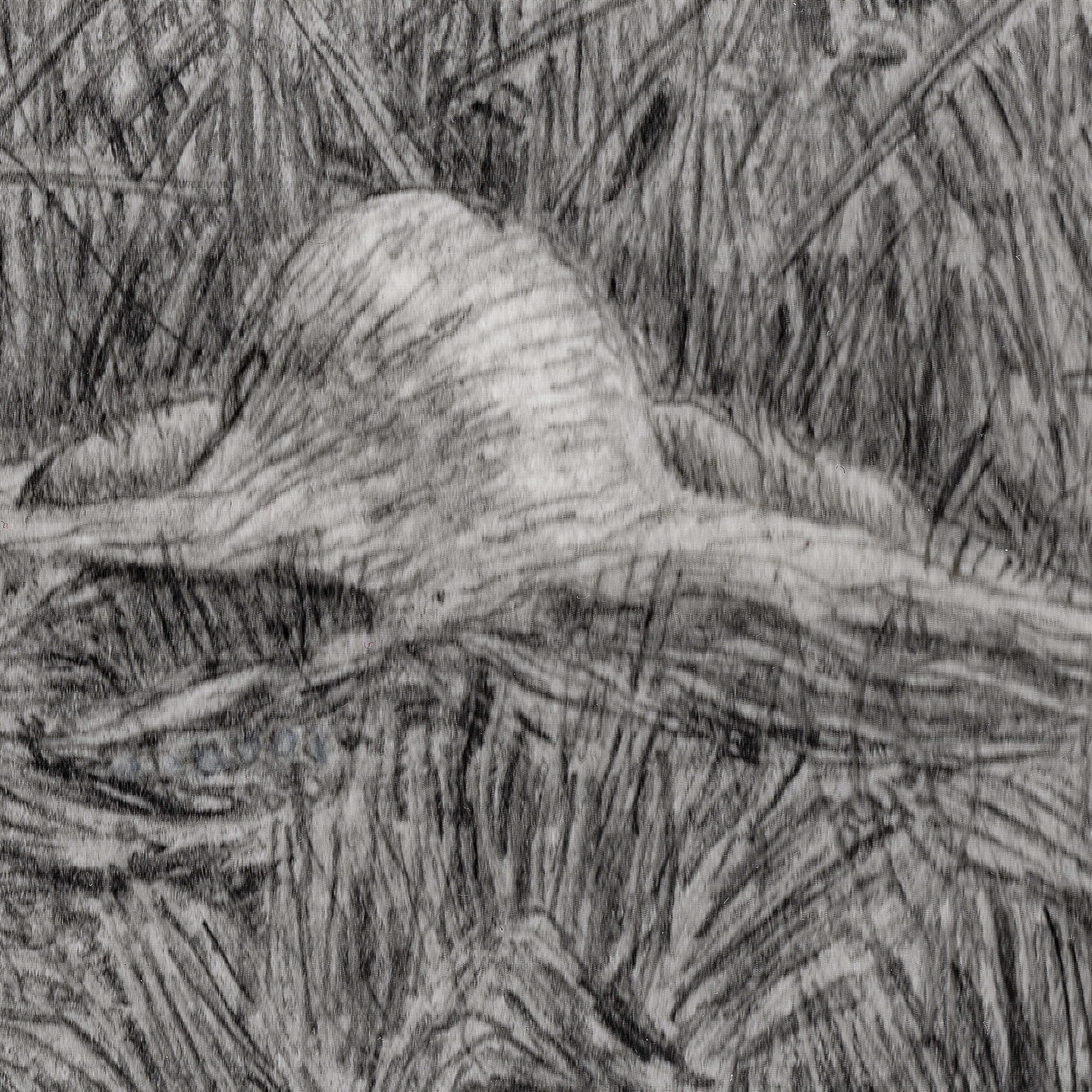
    Technically, the piece was completed on Strathmore heavyweight mixed media paper using Winsor & Newton medium graphite pencils. The pencils were a blind buy, but their soft, creamy graphite application laid down rich, dark values on the textured surface. The natural tooth of the heavyweight paper grabs the medium cleanly, creating a soft, stippled grain in the grass and sky while letting the darker graphite build dense, tactile fissures along the tree bark.


  • Bound Sentry

    Bound Sentry

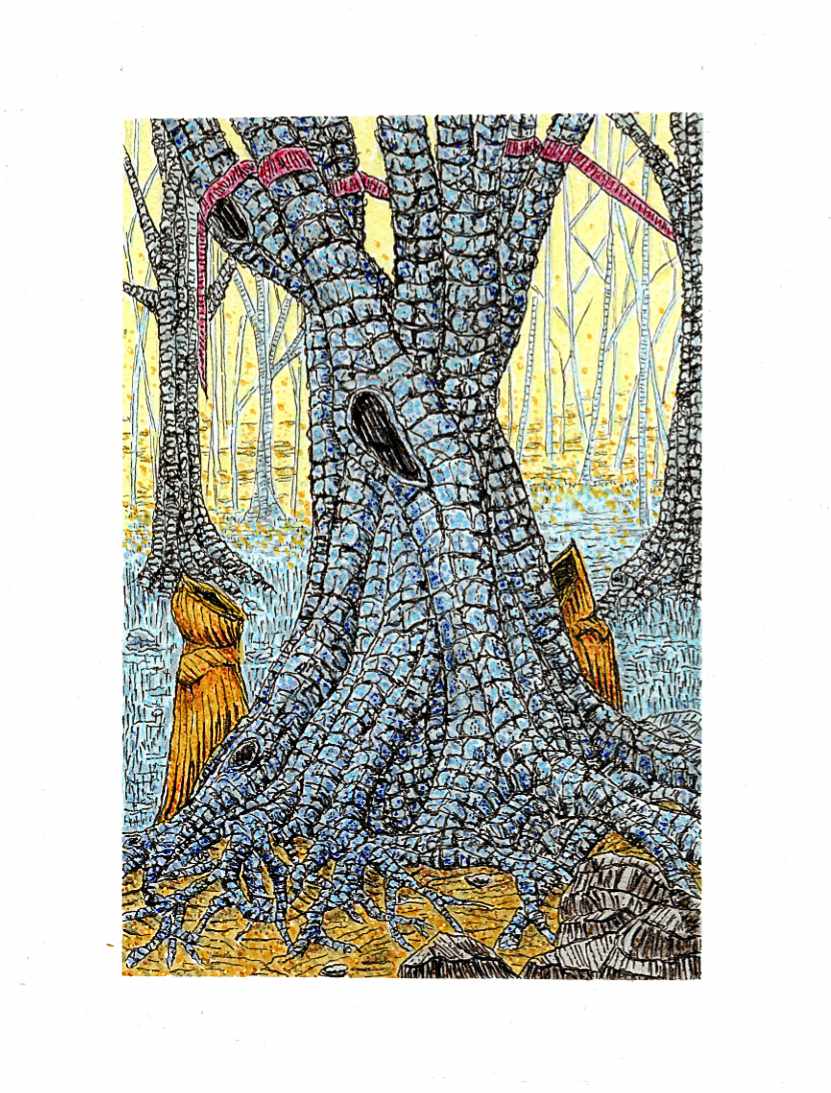
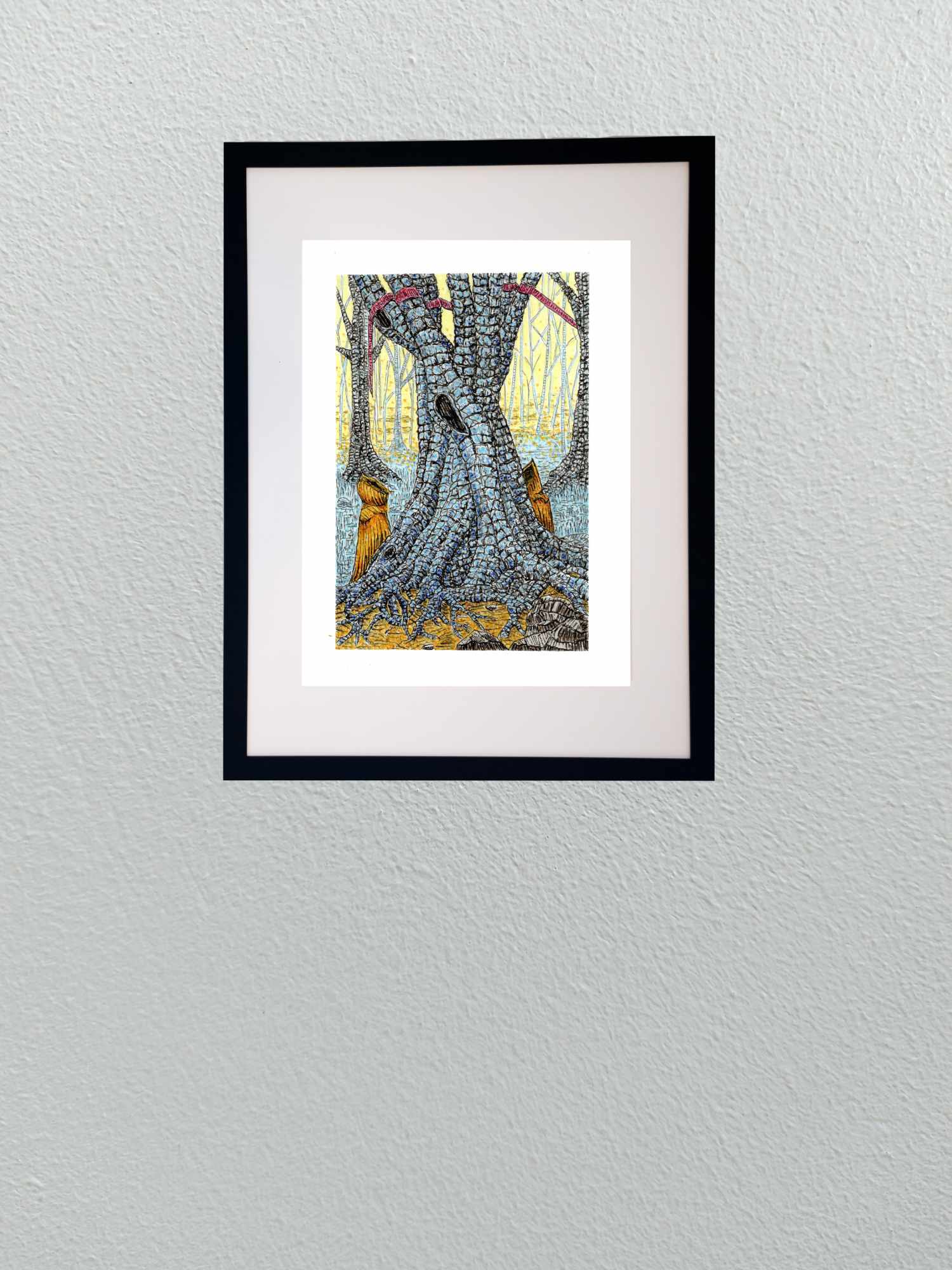
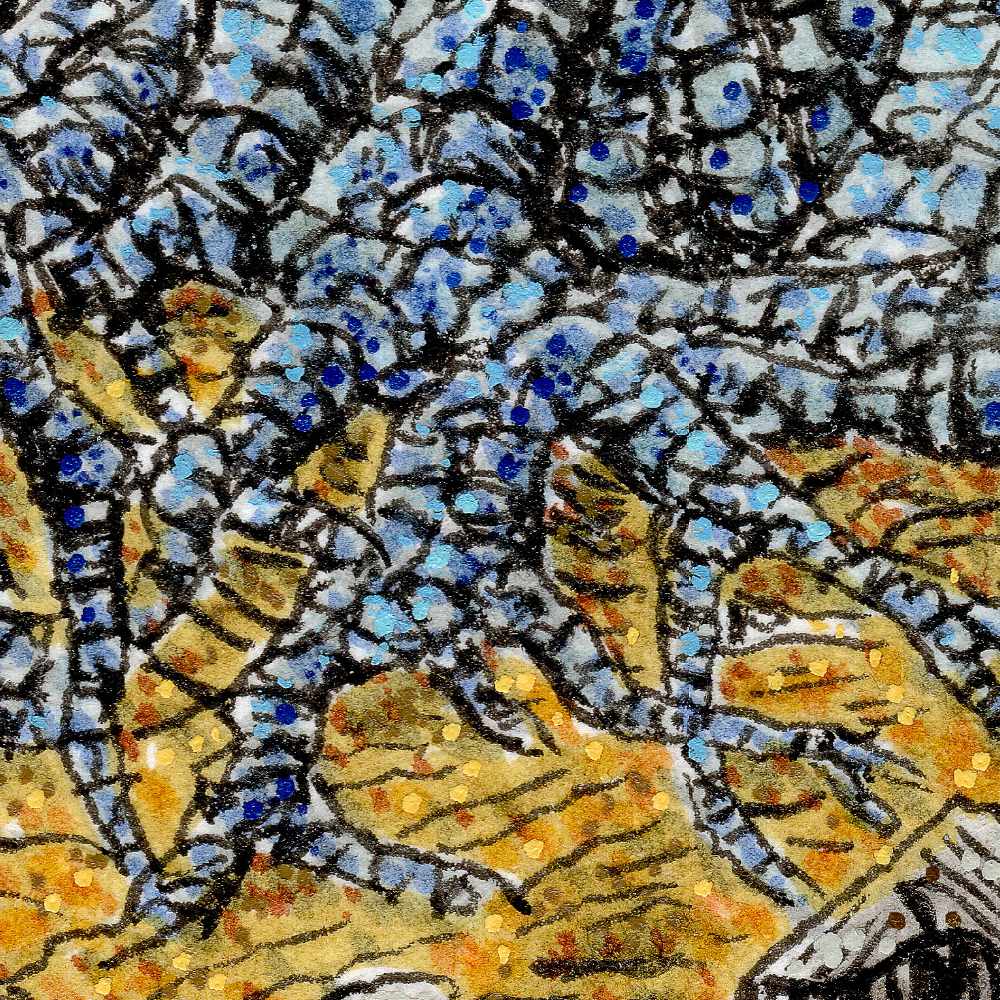
    This piece continues my exploration of folklore and the eerie quiet of deep woodland spaces. The composition centers on a massive, ancient tree whose trunk and sprawling root system dominate the foreground, breaking the forest floor like petrified muscle.

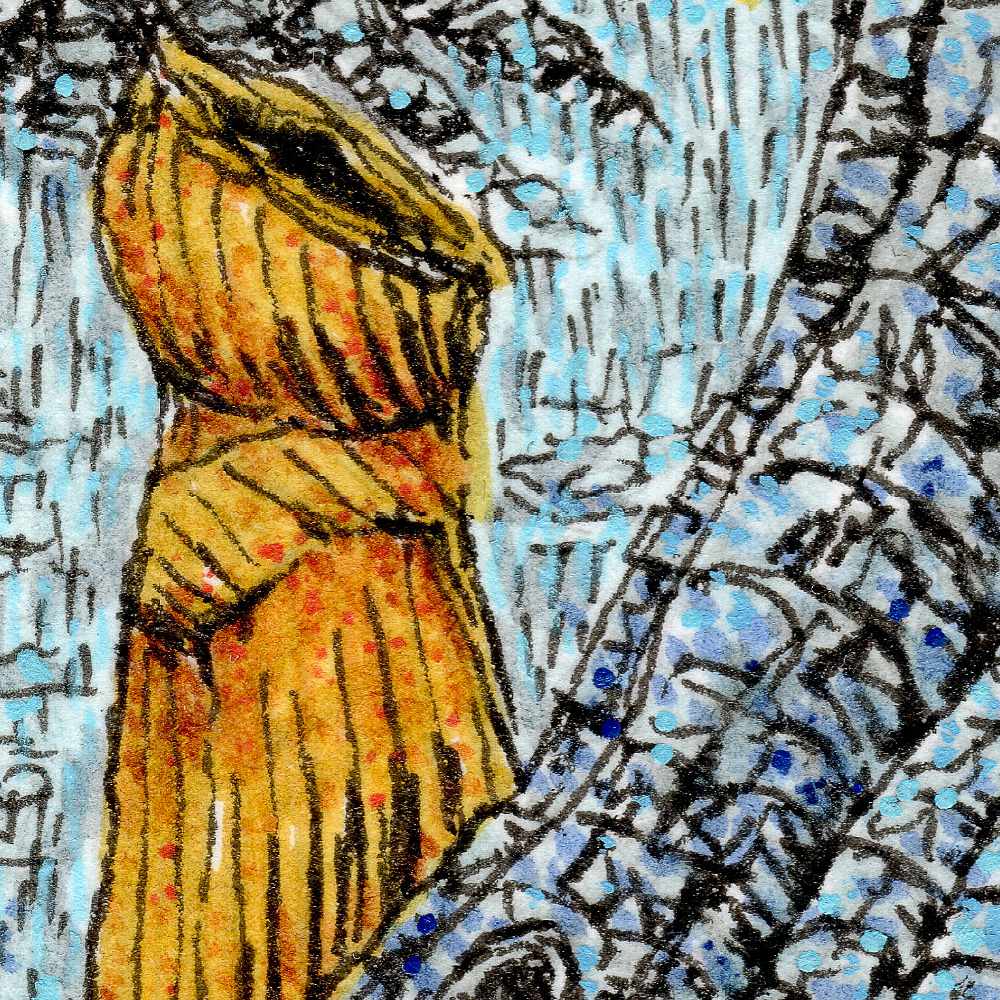
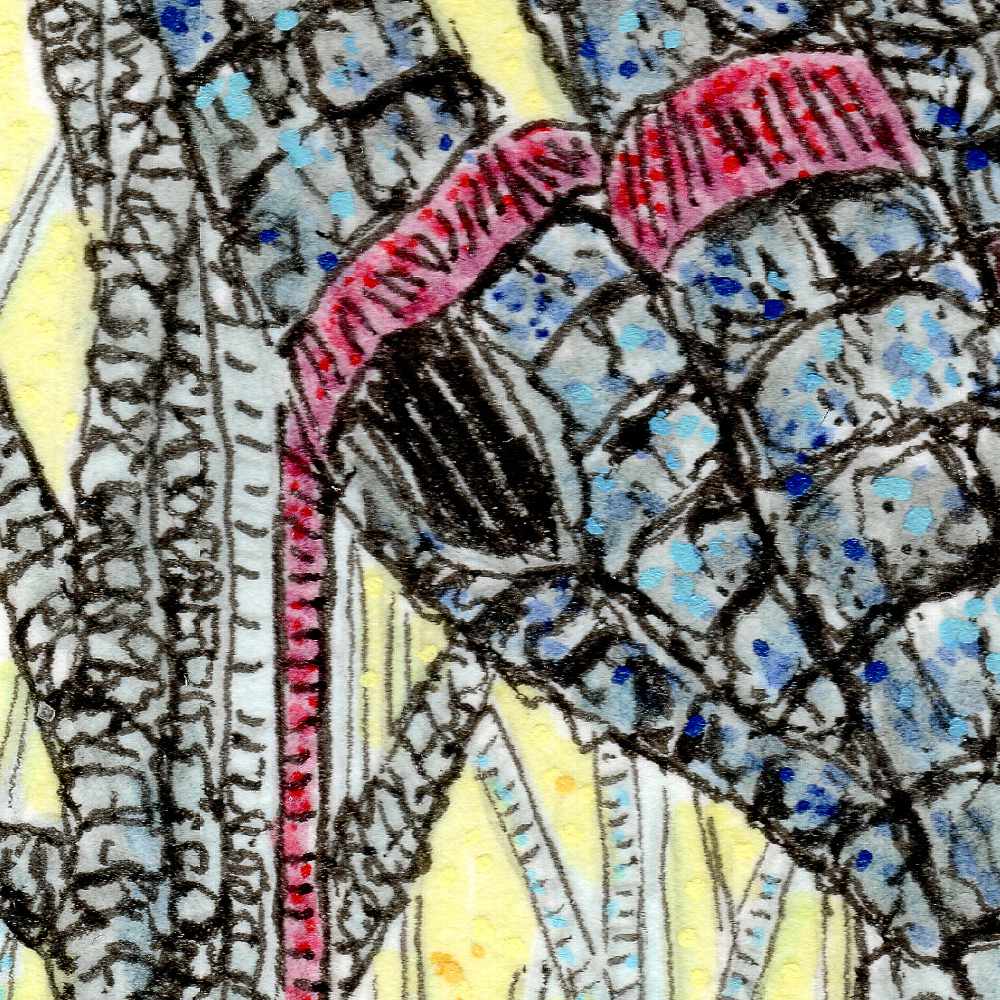
    Flanking the base of the roots are two hooded figures cloaked in deep ochre, standing motionless before the hollows of the trunk. High in the branches, the crimson ribbon appears once again, bound around the limbsโ€”a subtle, recurring marker that weaves through this series, hinting at an unseen presence or a quiet rite known only to those who wander these woods.

    Technically, this was completed on Strathmore heavyweight mixed media paper using Faber-Castell Pitt pens and Staedtler fine liners, with subtle pointillism applied via acrylic pens. I used the fine liners to construct the heavy, modular texture of the bark, mapping out dense, individual fissures across the trunk. Pitt pen washes established the cool blue-gray tones of the wood and the glowing yellow light filtering through the background trees. To bring extra vibration to the canopy and ground plane, I layered fine acrylic dots over the ink work, giving the ambient light an electric, atmospheric tooth.


  • Swamp Fugue

    Swamp Fugue

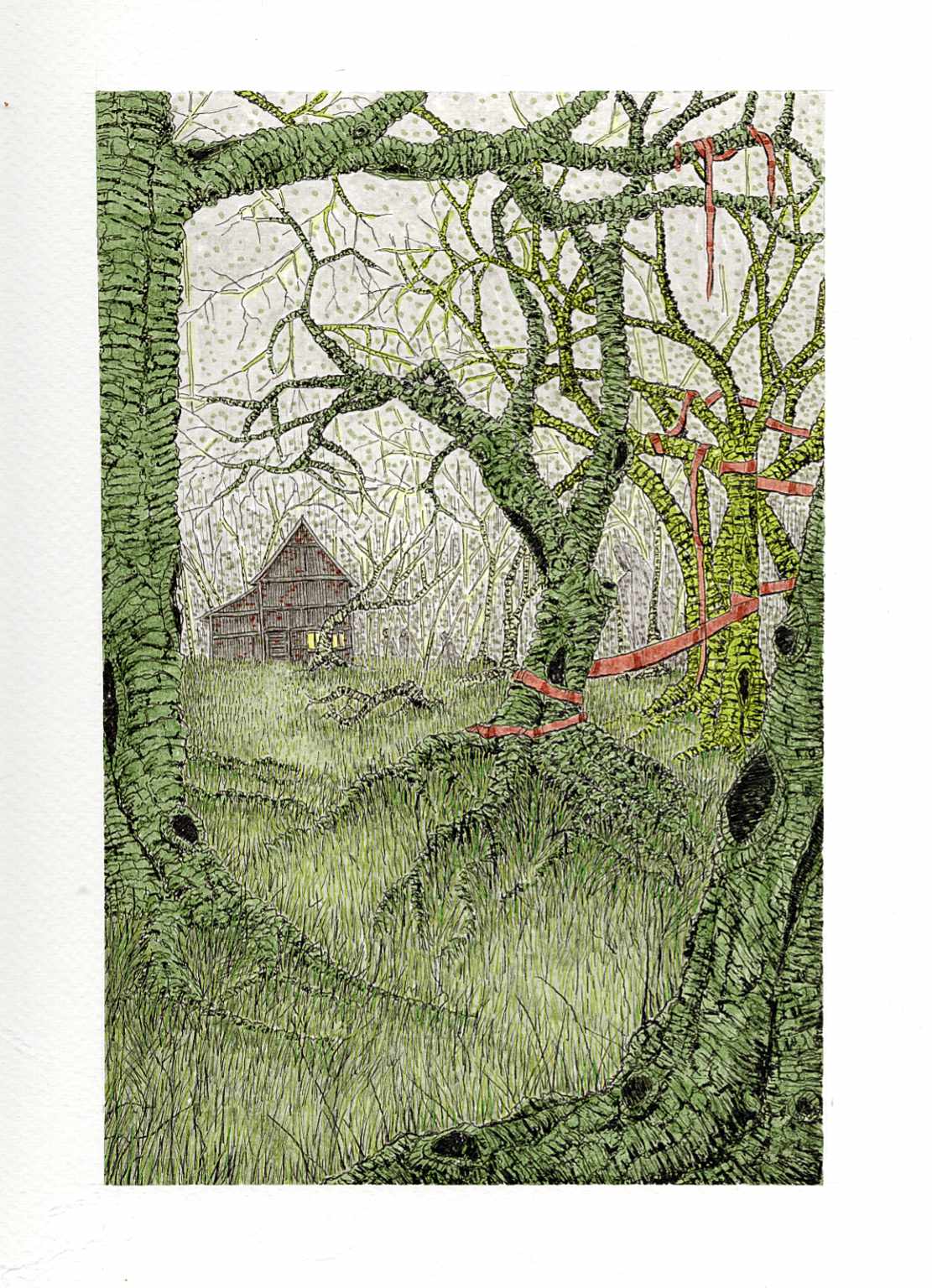
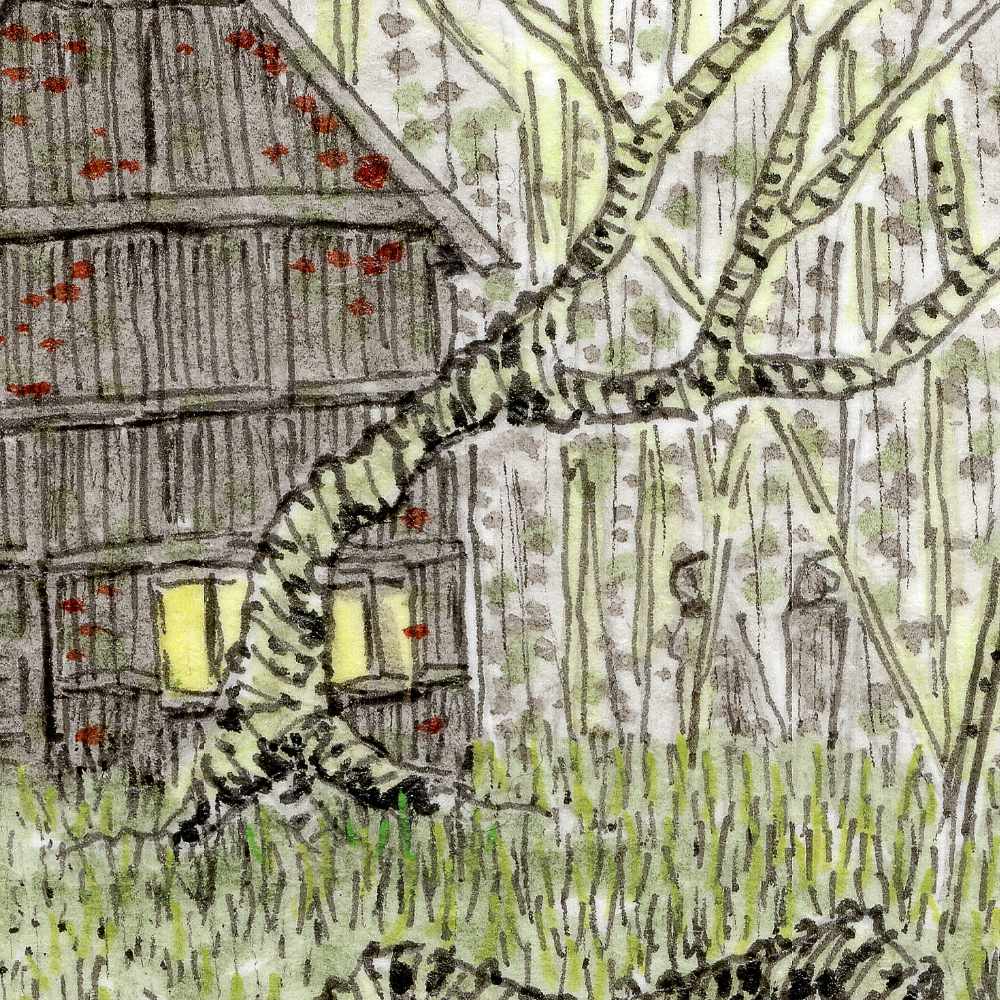
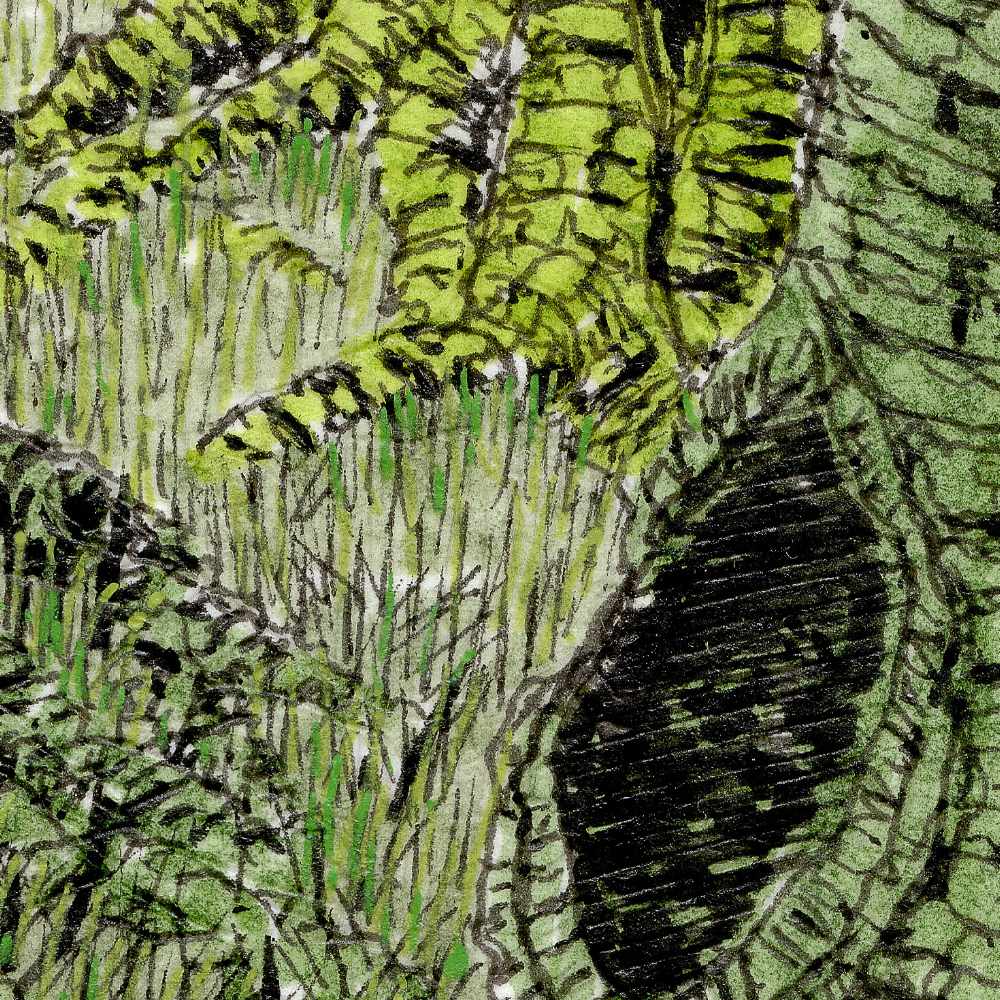
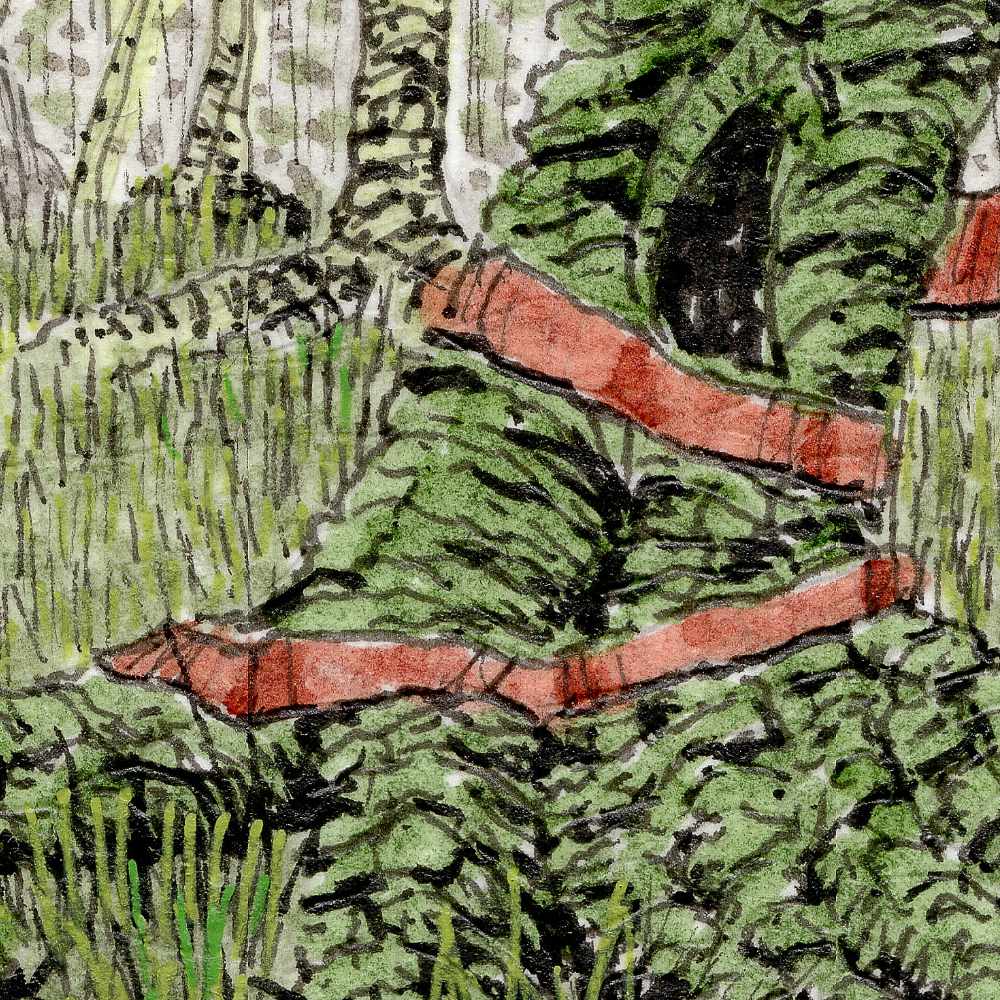
    Continuing my focus on folklore and eldritch horror within deep forest environments, this piece moves into a dense, swampy green fugue. The scene is framed by heavy, twisted trunksโ€”ancient, highly textured sentinels that act as a visual boundary looking out toward a distant clearing.

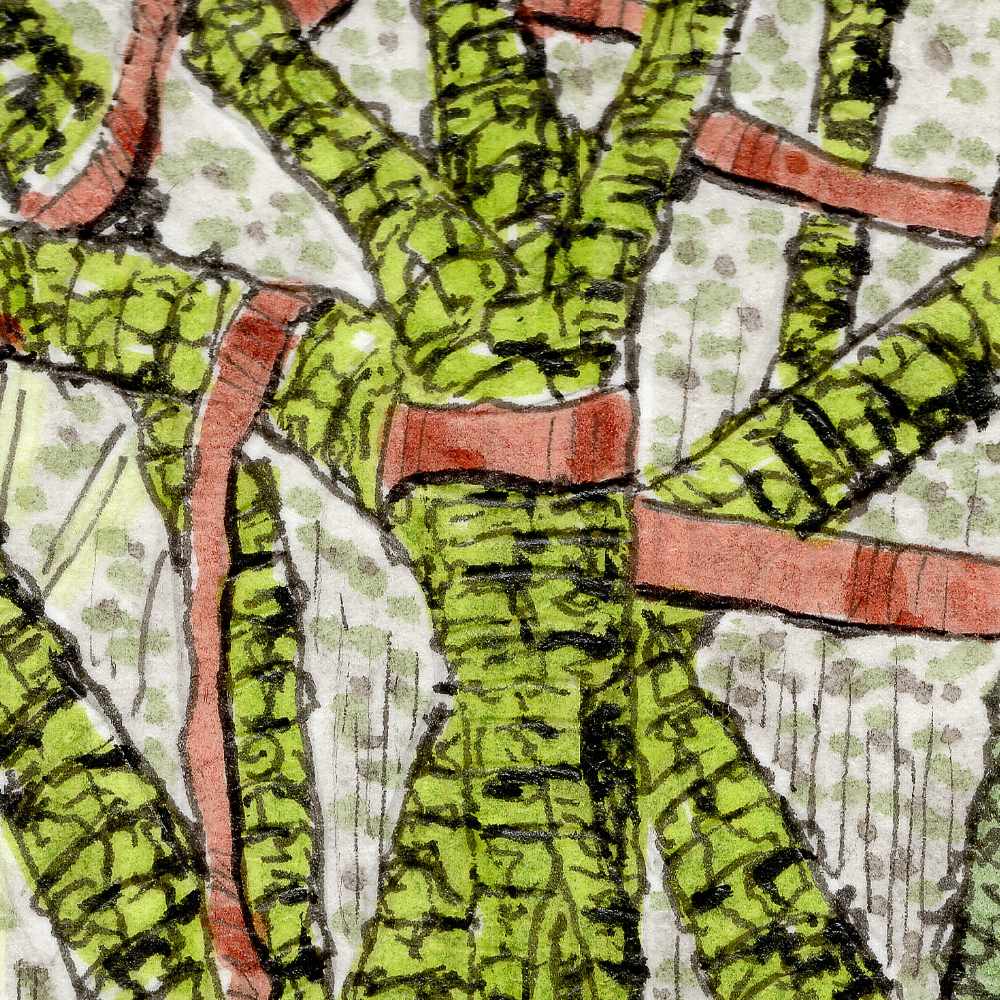
    Deep in the mist, a lit shack casts a warm, unsettling glow against the cool pale sky, drawing subtle, hooded figures through the woods toward whatever gathering awaits. Suspended in the midground, bound tightly around the branches of a gnarled tree, is a stark crimson ribbon. It is a deliberate, unnatural mark cutting through the wild green overgrowth. Whether it serves as a boundary, a remnant of some forgotten ritual, or a subtle signifier of the strange, ancient presences that drift through these woods, its true purpose is left unsaid.

    Technically, Swamp Fugue was worked on cold press paper using a combination of Faber-Castell Pitt pens, Staedtler fine liners, and Staedtler pigment pens. I used the fine liners to build the dense, organic contour lines that give the bark its heavy, ridged texture, while layering Pitt pen washes to establish the murky, moss-toned atmosphere. The fine stippling in the upper canopy allows the pale mist to hum with static, balancing the sharp, linear detail of the grass and foreground roots.


  • Amber Shadows

    Amber Shadows

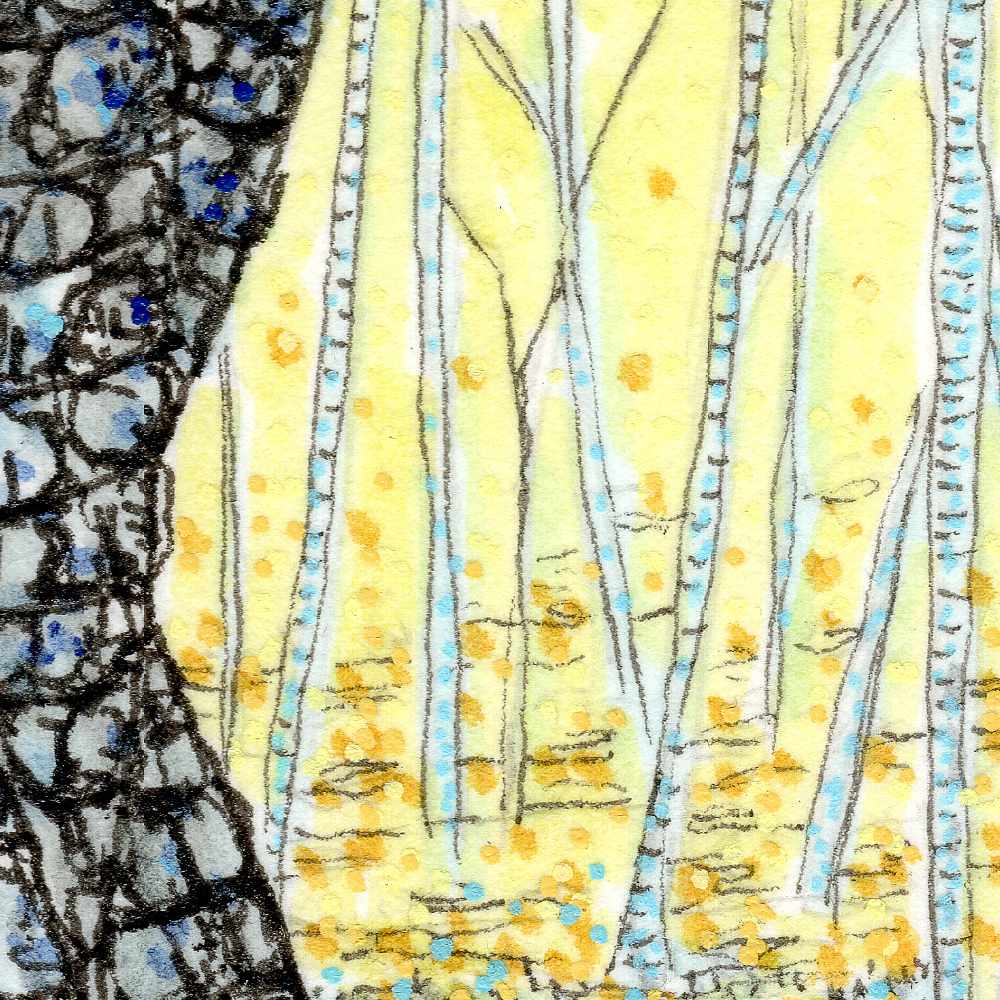
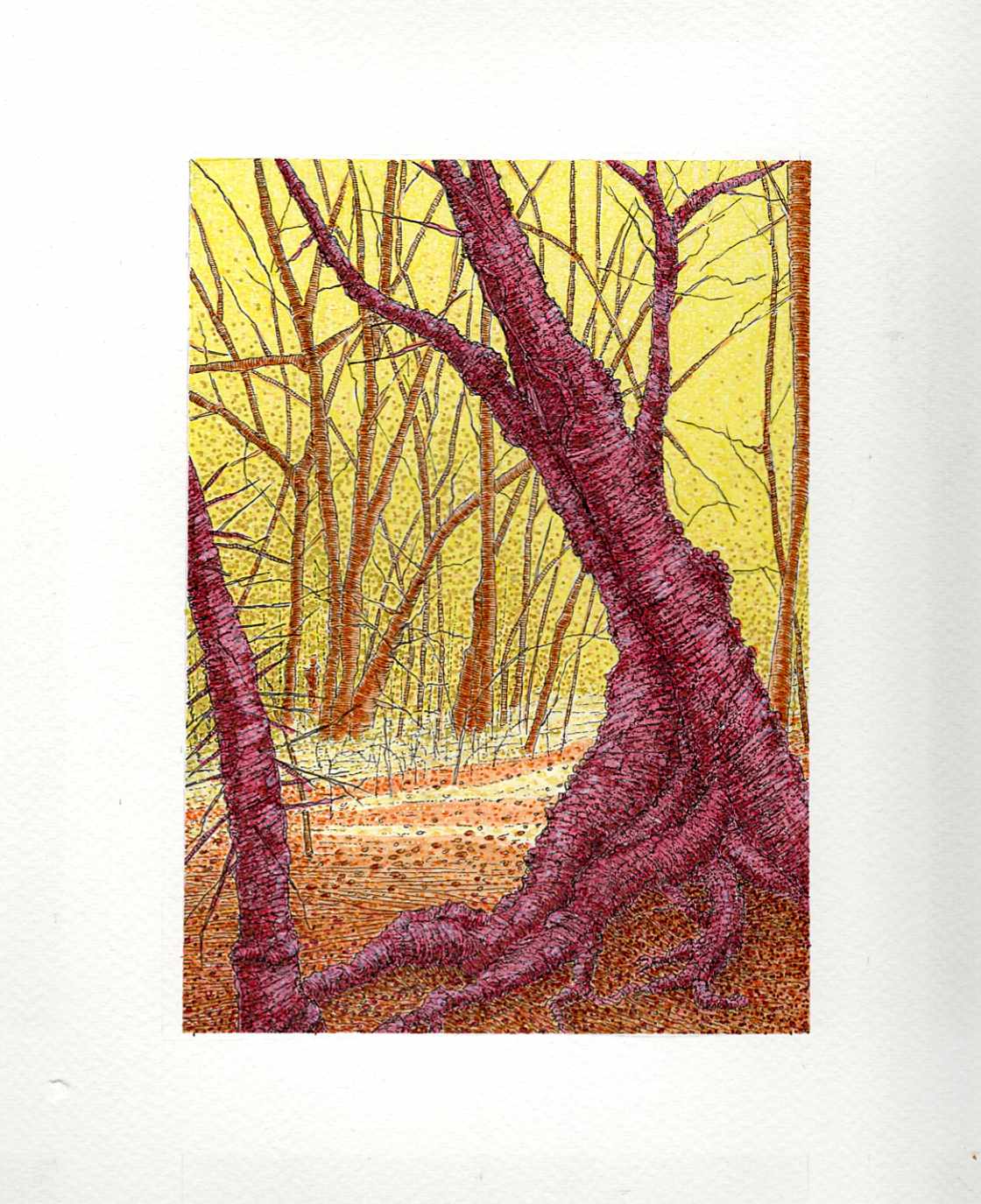
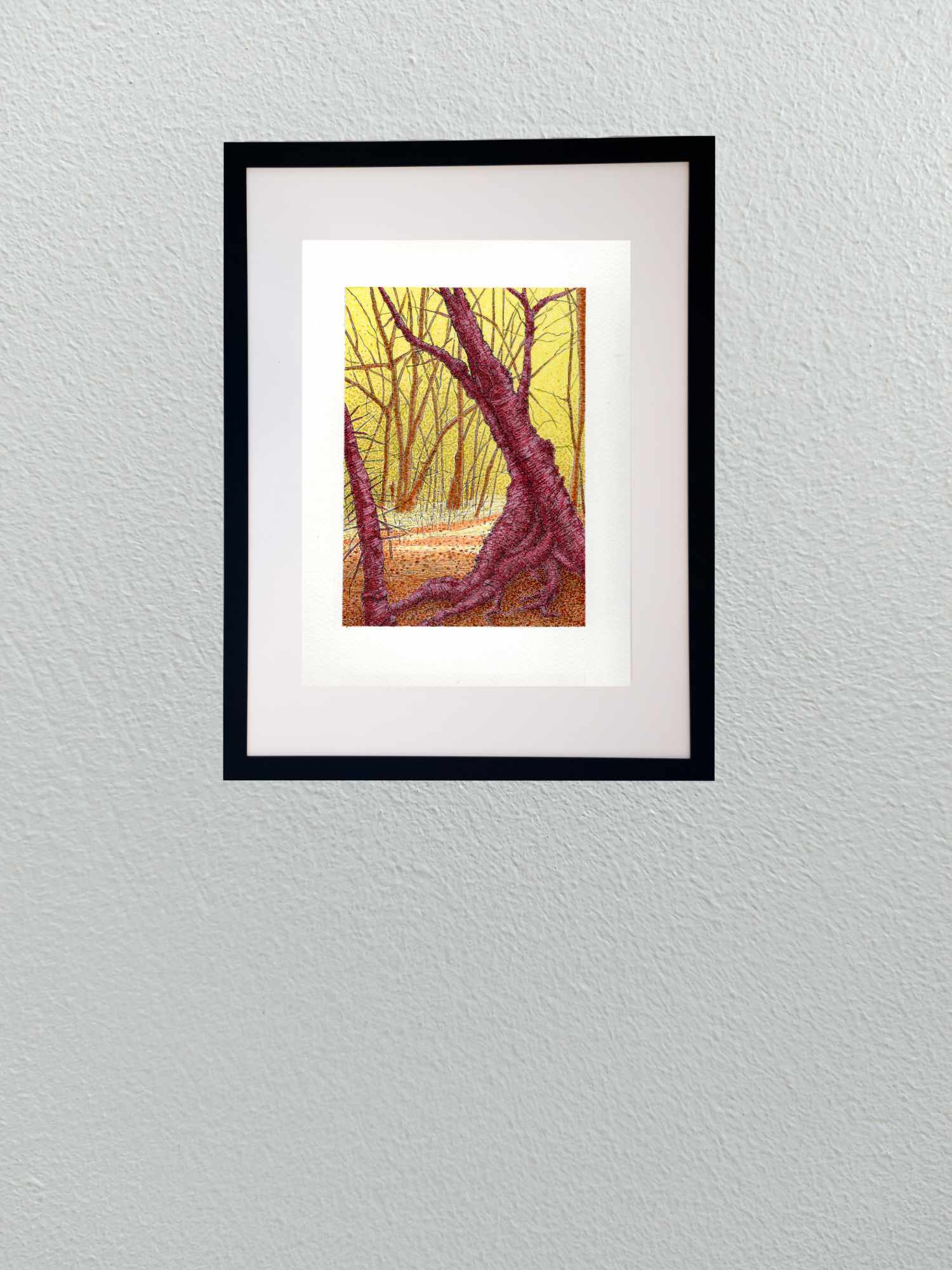
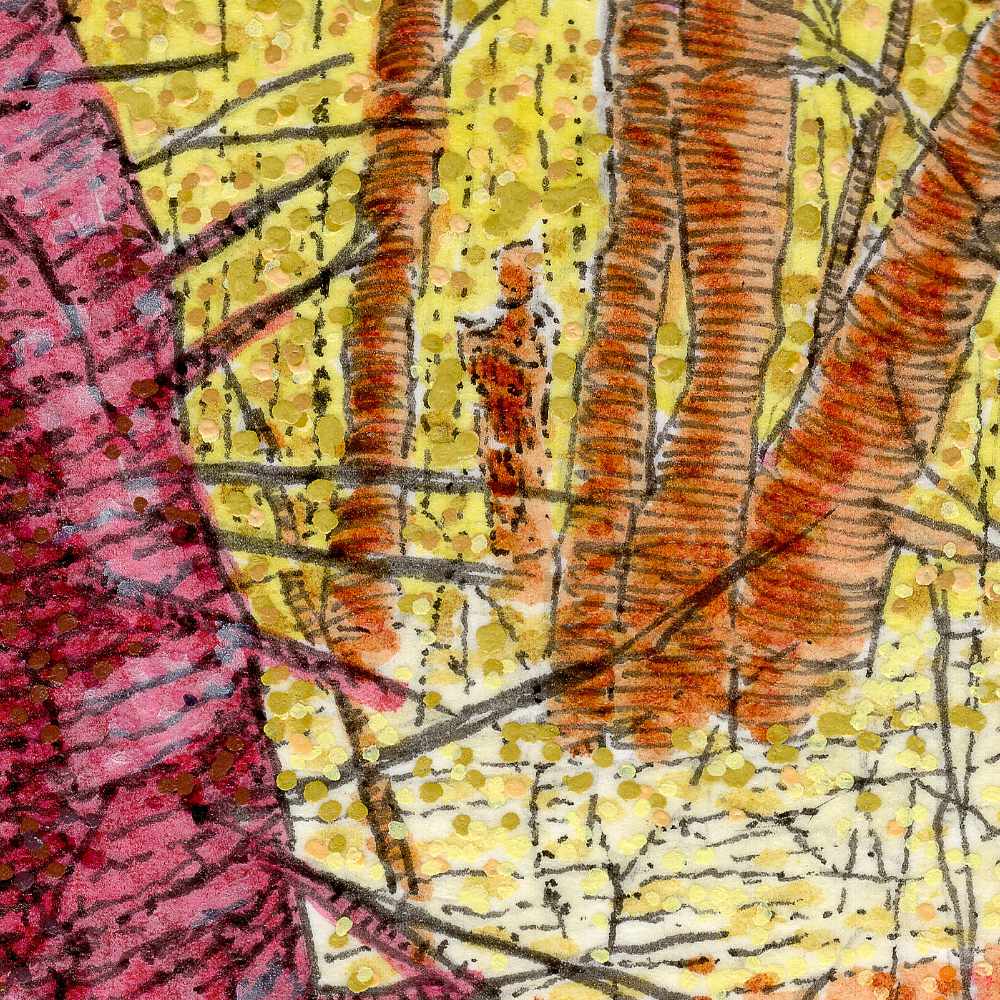
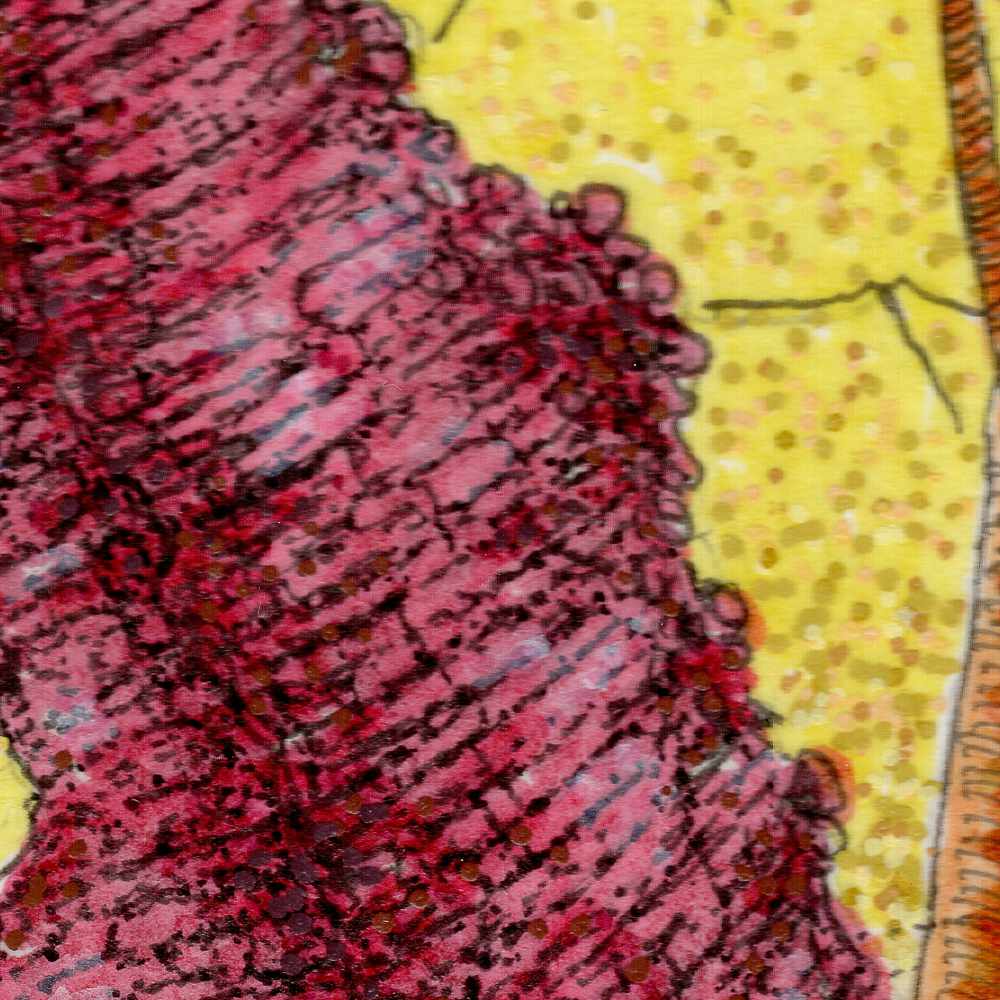
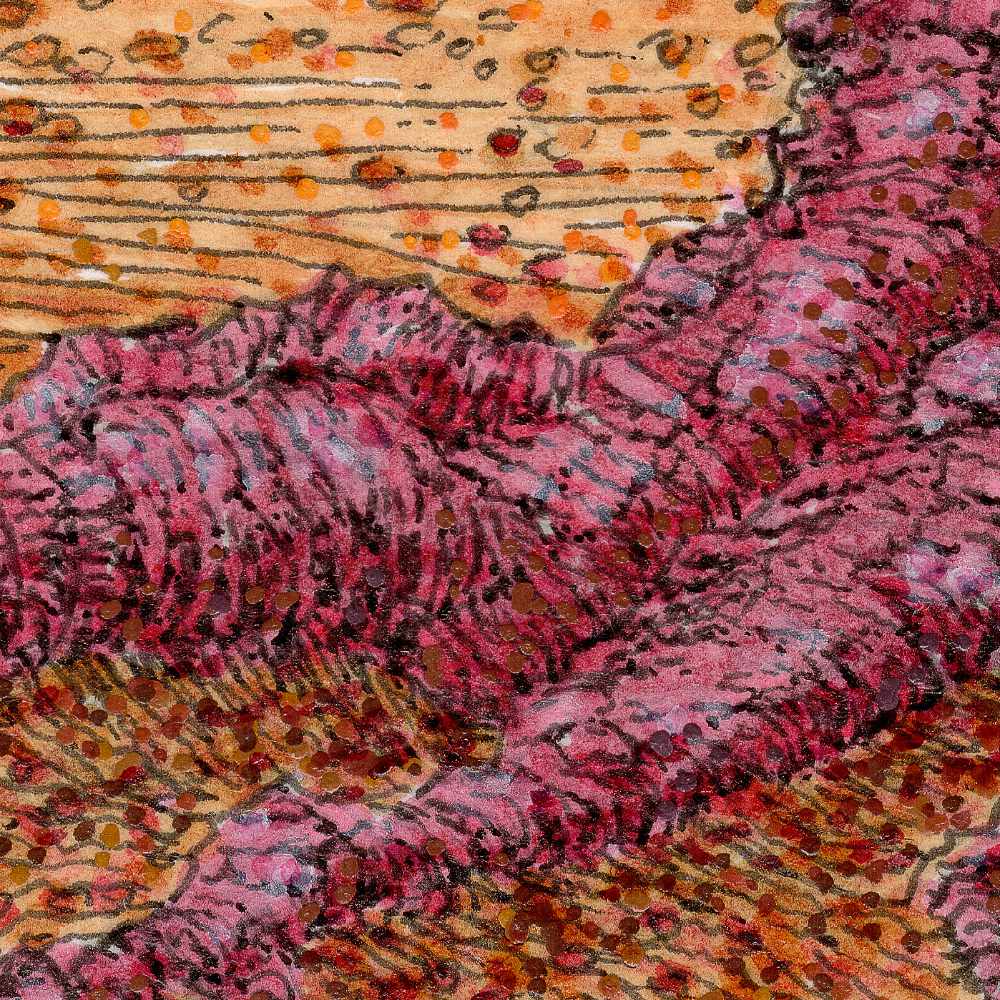
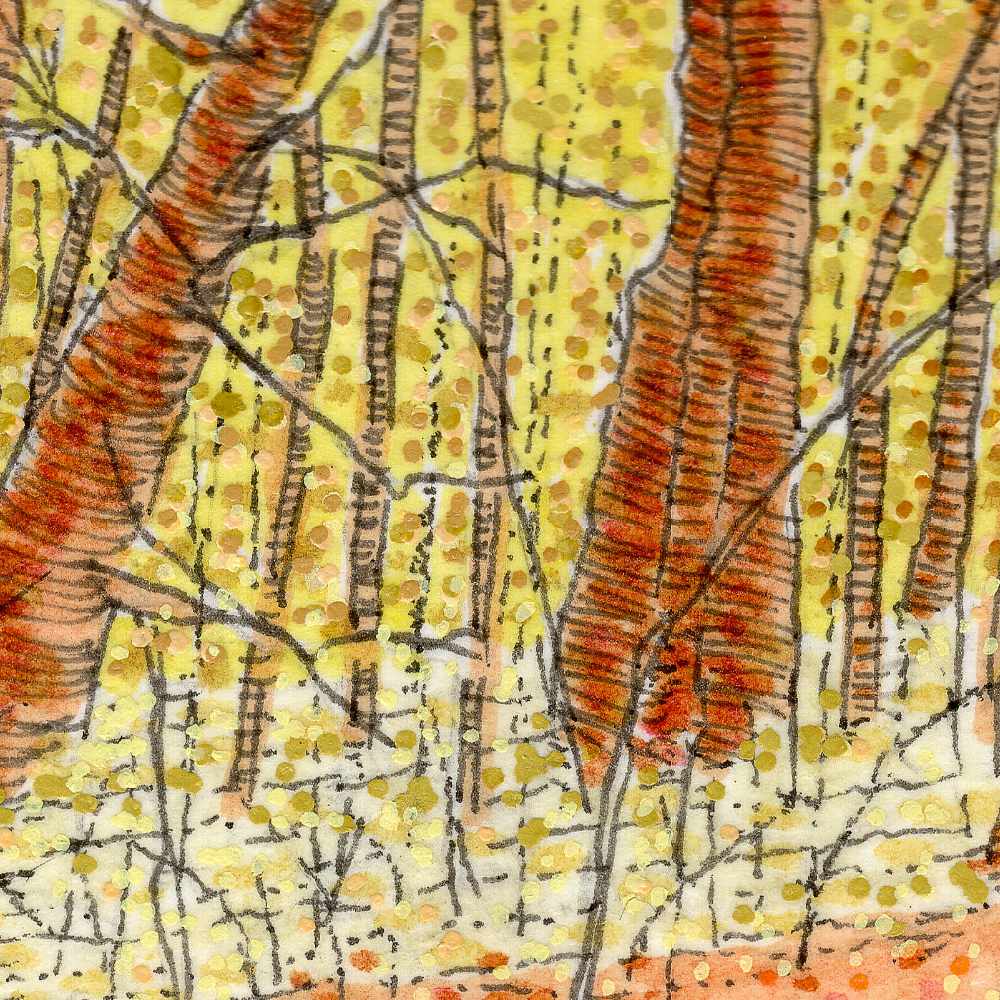
    In this latest piece, I wanted to step away from the cooler, muted tones of the deep woods and test what happens when you push a landscape into high-vibrancy territory. The goal was to capture an impression of folkloreโ€”that feeling of stepping into a stretch of woods where the light behaves strangely and the trees carry an ancient, deliberate presence. Across these recent folklore experiments, a common thread has begun to emerge: the quiet, mysterious presence of distant figures going about some unknown, ancient task just beyond the foreground.

    Technically, this was built on cold press paper using a multi-layered approach with Faber-Castell Pitt pens, Sakura fine liners, and bullet-tip acrylic pens.

    The process relied on layering different styles of mark-making to establish depth and tactile friction. I used tight ink strokes and heavy cross-hatching with the fine liners to map out the complex, muscular bark and gnarled root structure of the central trunk. The rich, vibrant color fields throughout the piece were applied directly with Pitt pens. To create the vibrating, atmospheric background, I layered fine, precise dots of pointillist texture over those washes using bullet-tip acrylic pens. The tooth of the cold press paper catches those opaque micro-dots, allowing the canopy to hum with an electric, golden light.

    Itโ€™s an exercise in narrative and structural contrastโ€”letting the rigid precision of ink linework clash against the soft, vibrating texture of a pointillist sky while hinting at a world moving quietly in the shadows.


  • Lumbering Bier

    Lumbering Bier

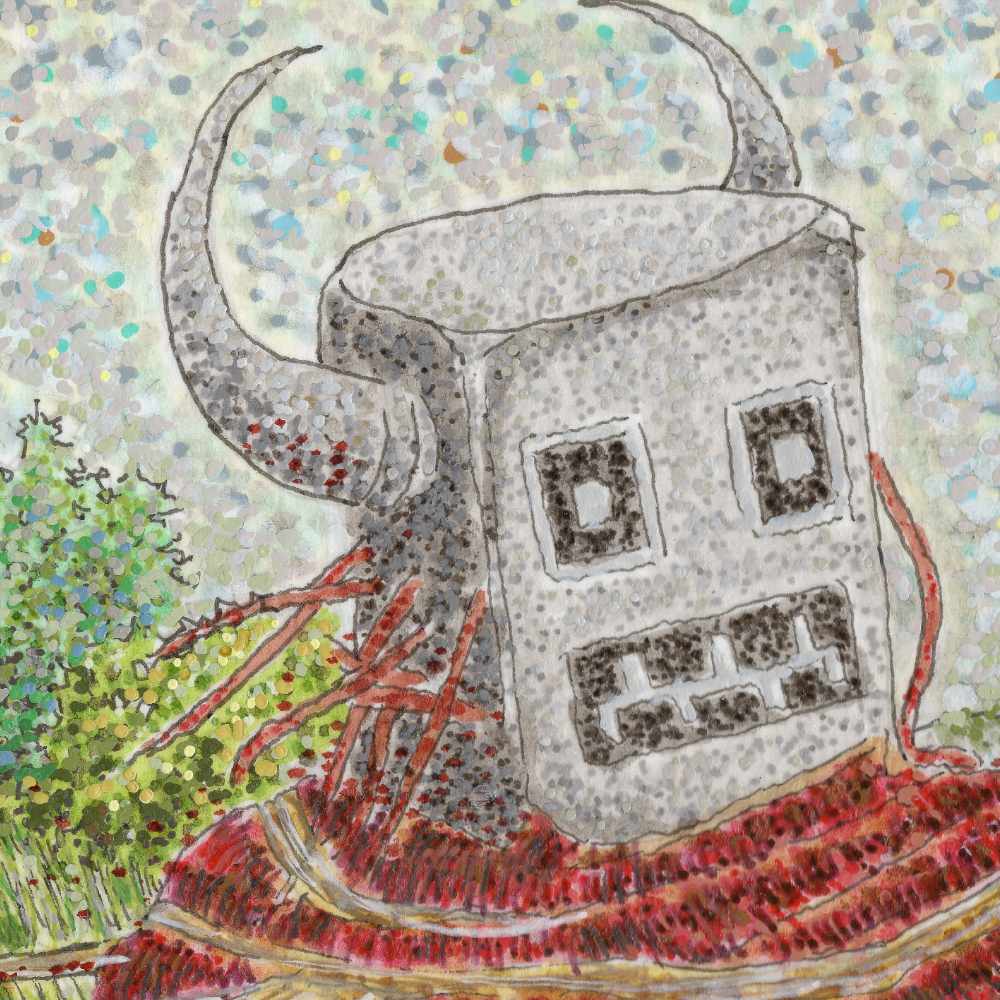
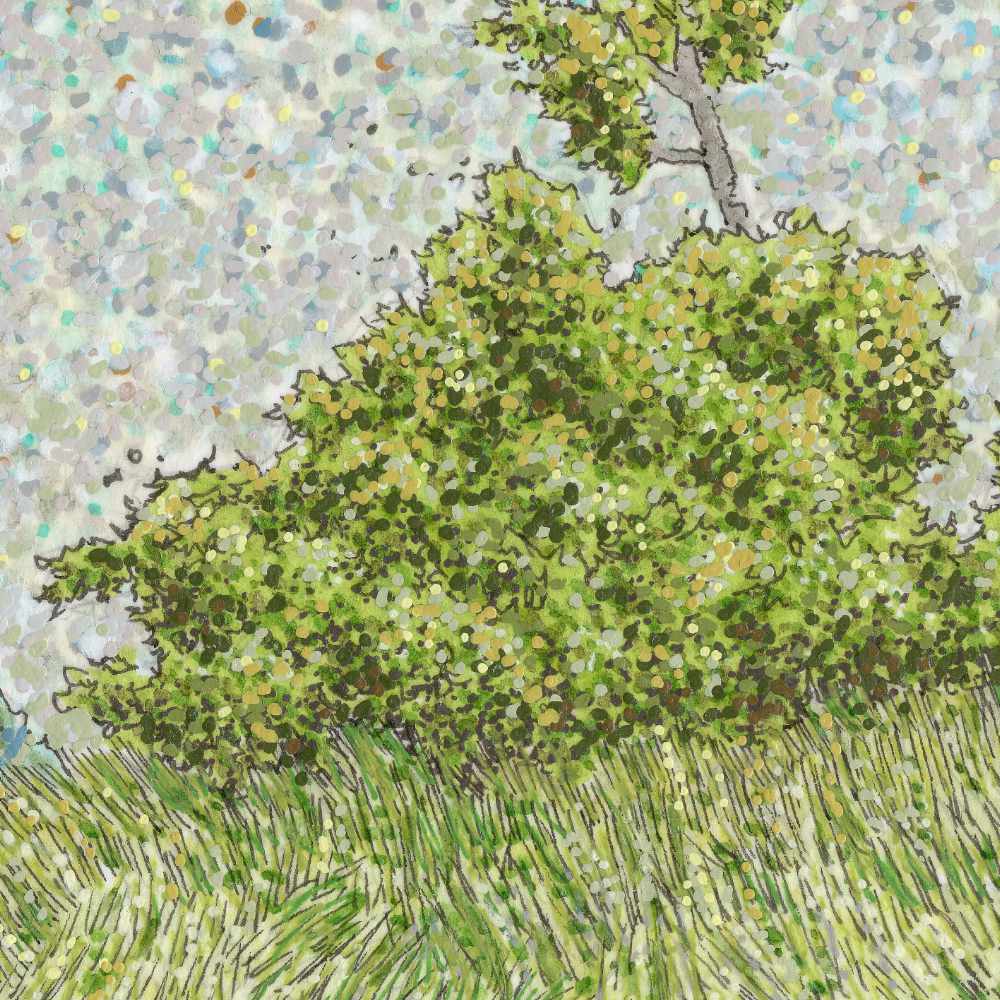
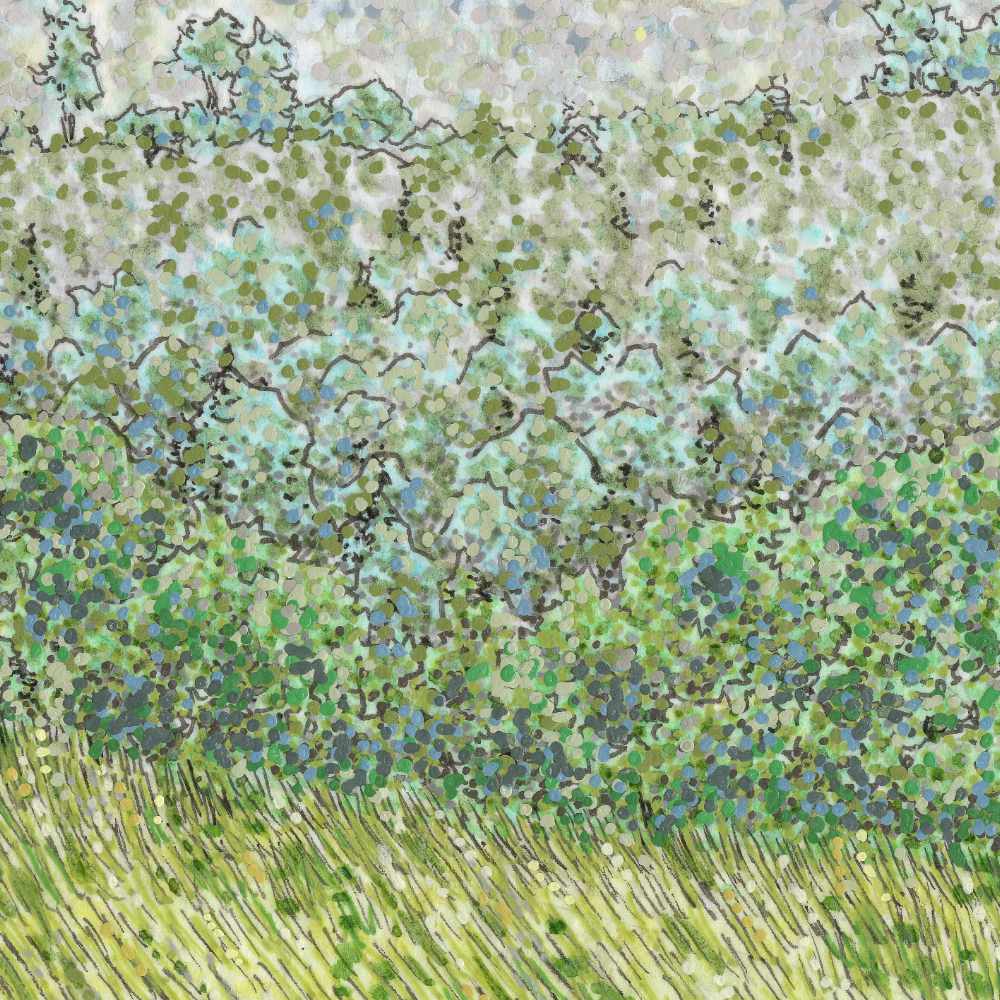
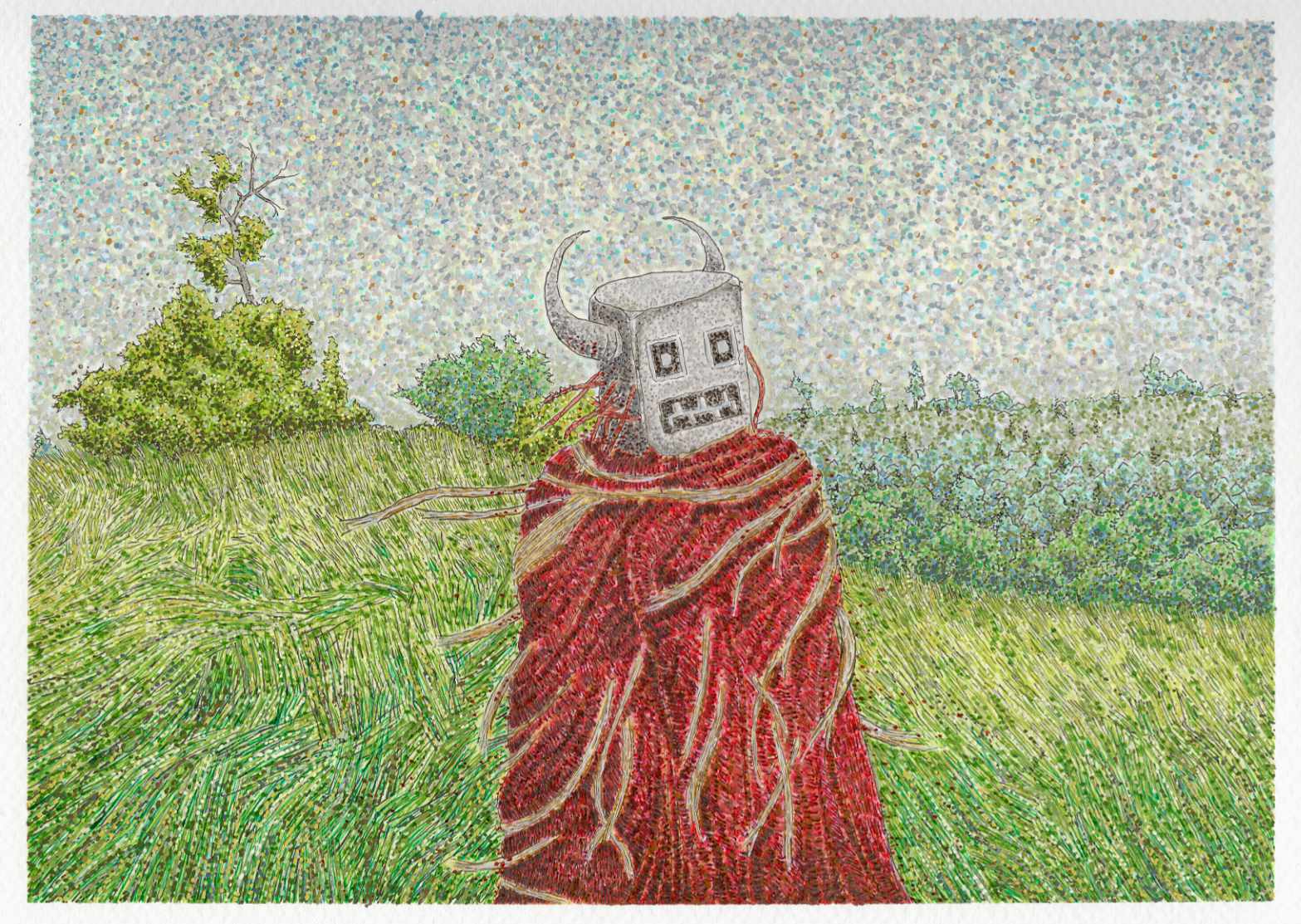
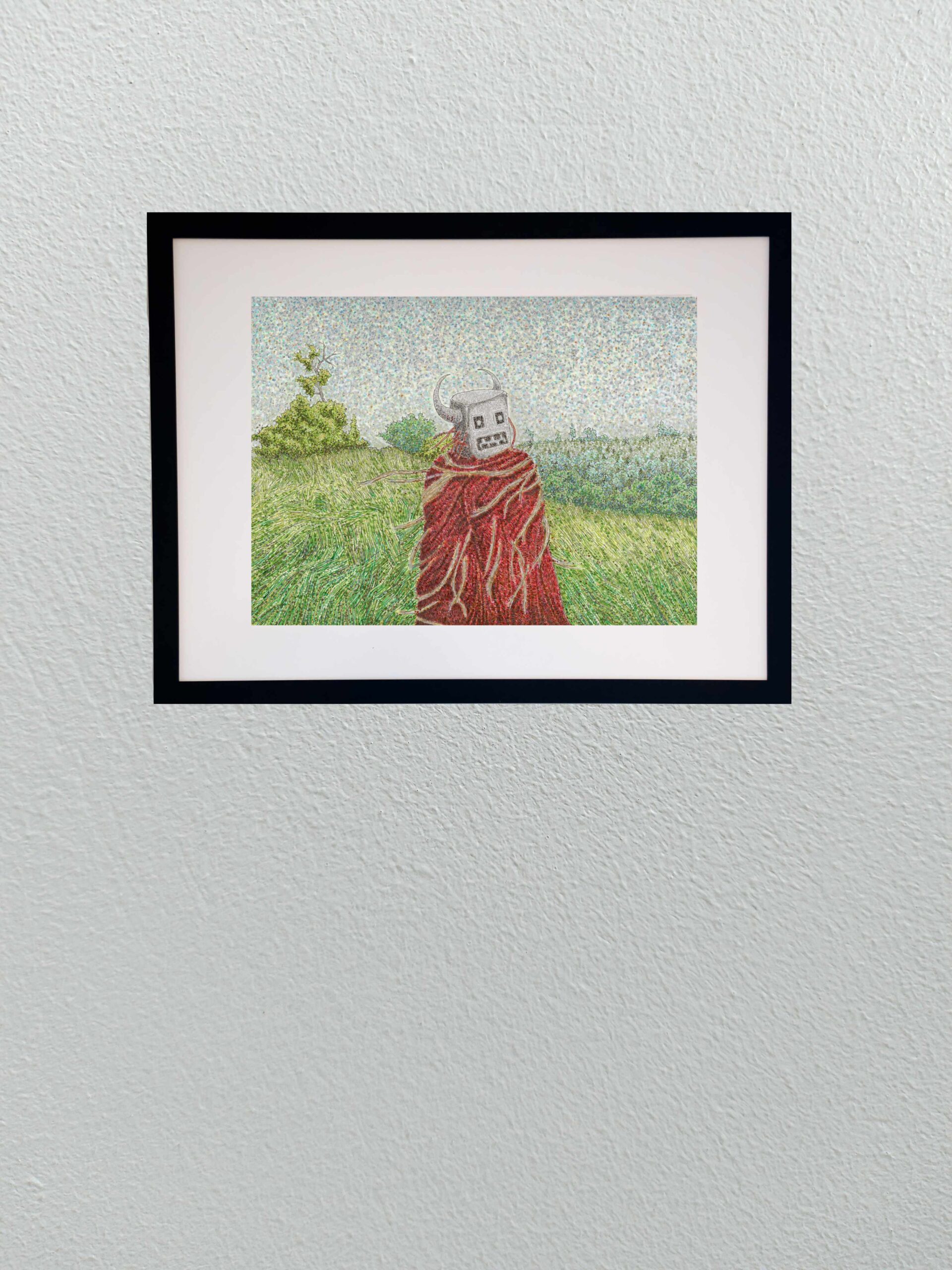
    In this second installment of the series, our ambiguous land deity is no longer a distant silhouette on a ridge line. Here, the entity is a massive, lumbering presence actively moving across a raw, windswept field. I wanted to shift the atmosphere to something highly kinetic, capturing the restless friction of an old god traversing its domain while the grass churns around it.

    Technically, expanding this world required a dense mixed-media approach on cold press paper to handle the sheer volume of texture. I built the environment using a layered blend of Faber-Castell Pitt pens, Staedtler pigment pens, acrylic brushes, and Sakura gel pens.

    The process itself was highly rhythmic. I used the fine precision of the Staedtler and Pitt pens to map out the intricate, flowing lines of the prairie grass, mimicking the paths of the wind cutting across the earth. For the figure itself, I wanted a stark architectural contrast; its blocky, horned head is built with textured gray tones, while its heavy cloak is a dense thatch of deep crimson lines interwoven with pale, root-like fibers. The sky is composed entirely of meticulous stipplingโ€”thousands of individual dots of ink and acrylic that create a vibrating, static-like atmosphere above the field. The tooth of the cold press paper catches these distinct mediums differently, keeping the individual marks crisp while allowing the colors to optically blend into a restless, living landscape.

    There is a solemn, ritualistic quality to this giant form moving through the elements, acting as an ancient shepherd of the wild, untamed acres.


  • Sedge Walking

    Sedge Walking

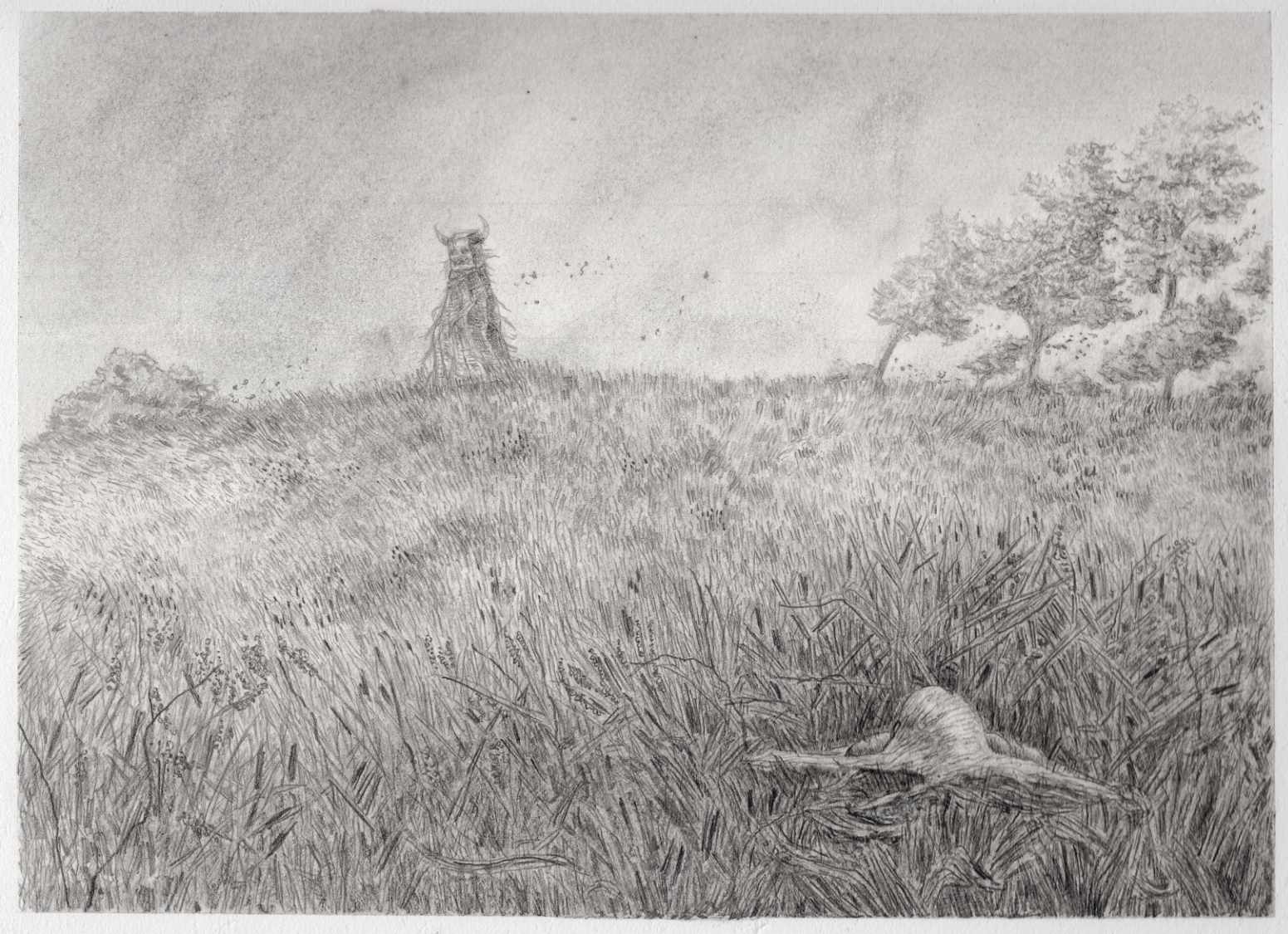
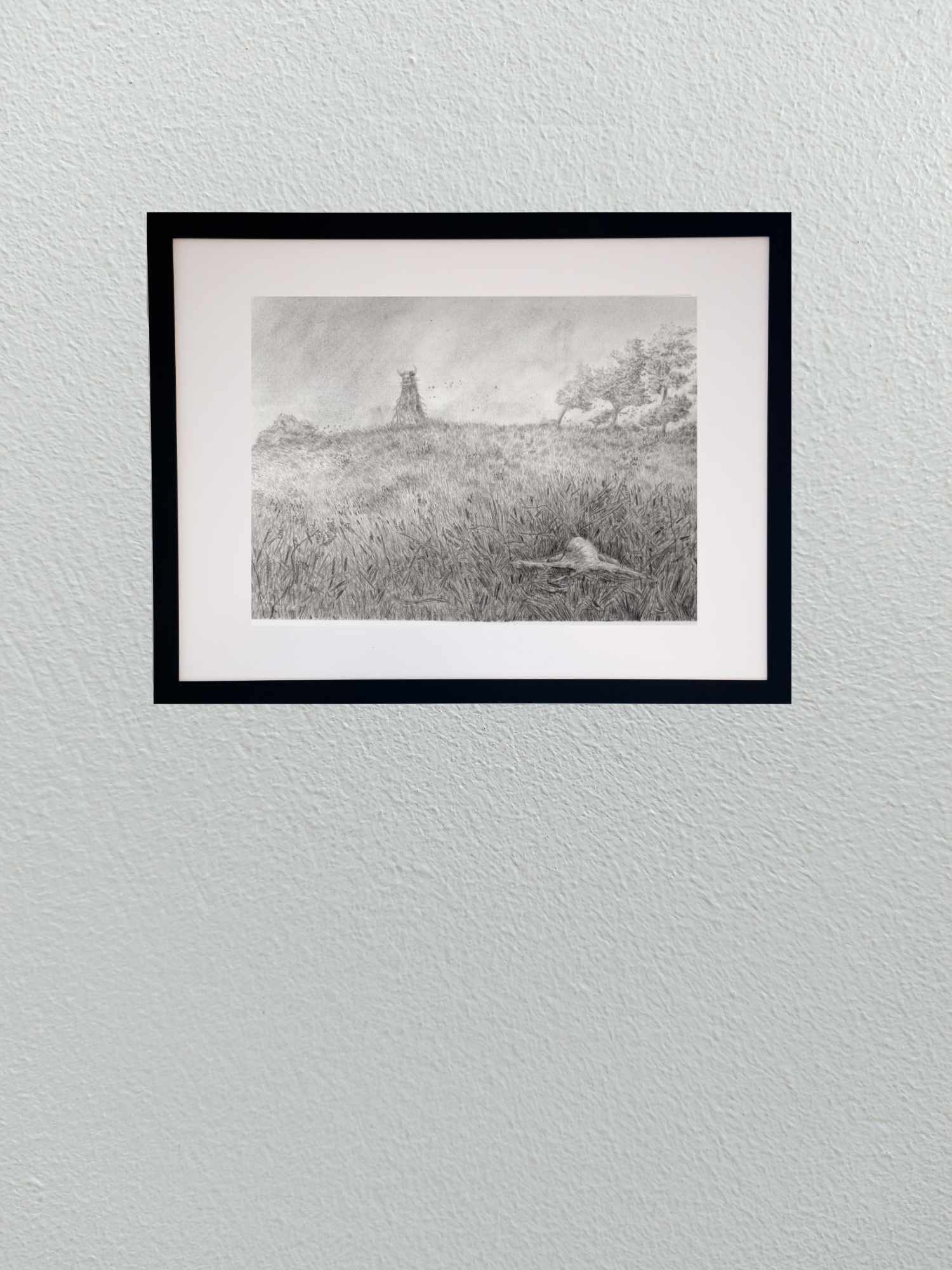
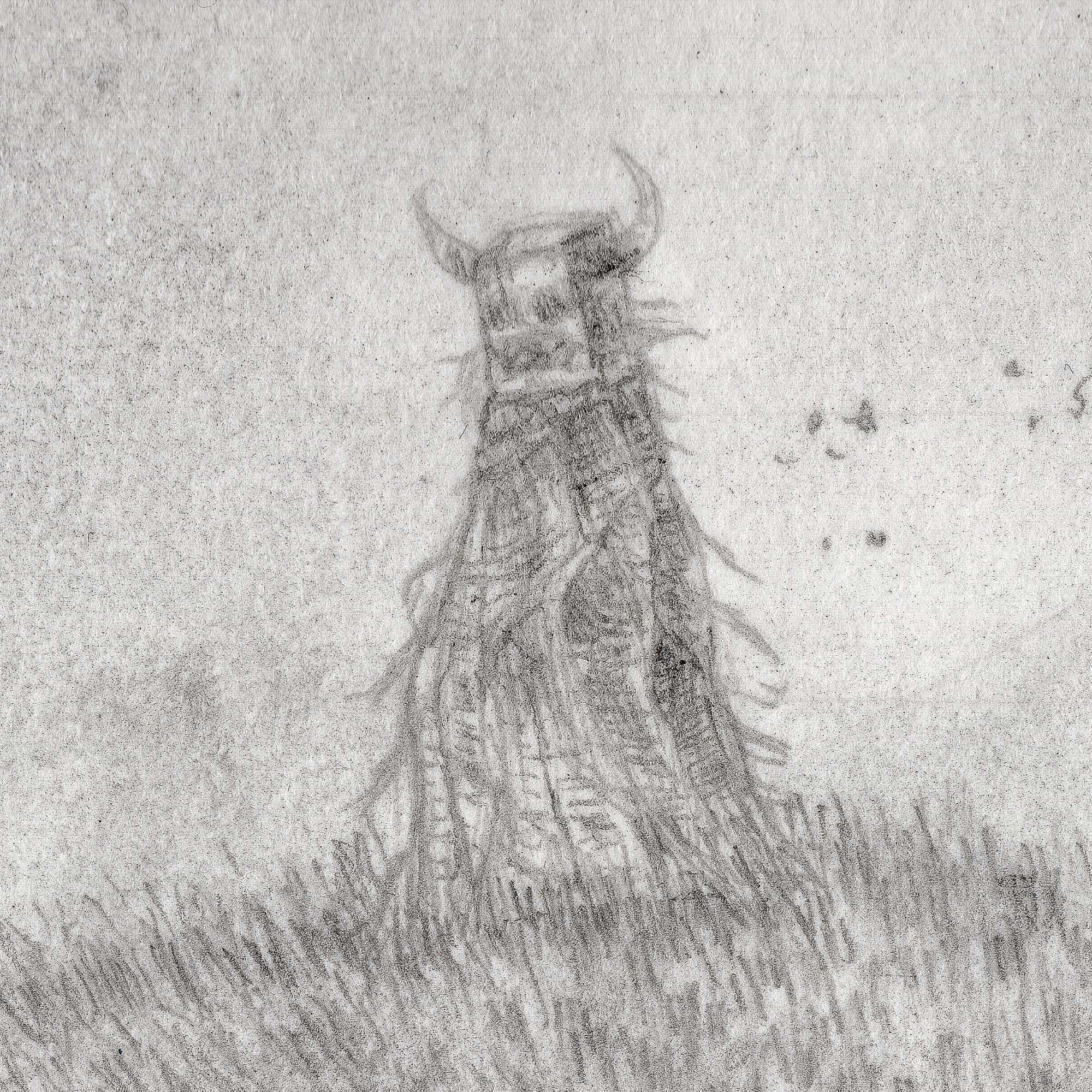
    This pencil sketch is the first concrete concept for a new direction I’m exploring. The series centers on the quiet, ancient presence that occupies our fields and prairies, using a recurring horned entity as a narrative anchor. I’ve been drawing inspiration from the looming, watchful nature of old-world land spirits like the Leshen, mixing that folklore with the indifferent vastness of our own open plains.

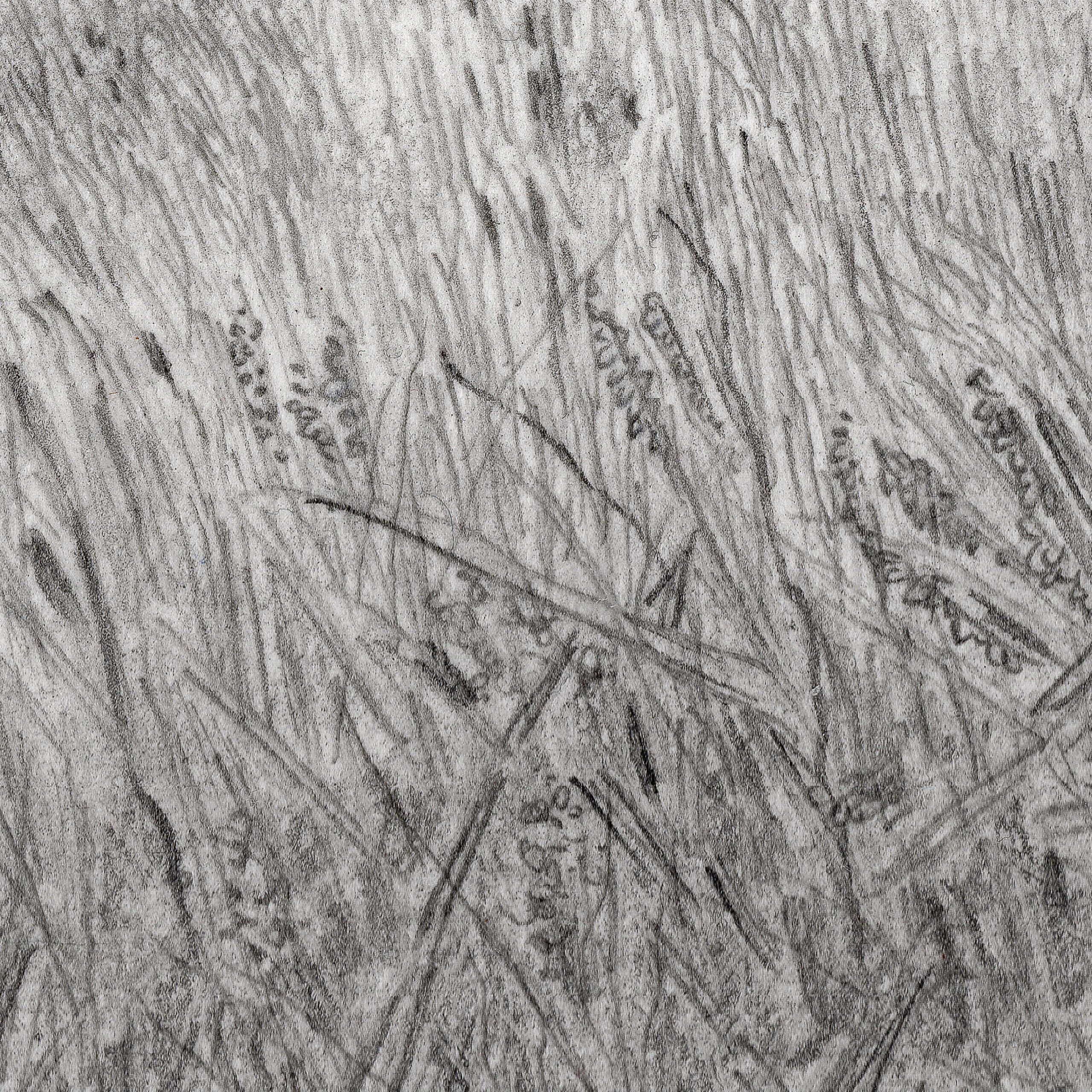
    With this specific piece, titled Sedge Walking, I wanted to play with a very quiet, localized scale of cosmic ambiguity. On first glance, you see the entity cresting the far ridge line, surveying the landscape. But if you look closer at the foreground, tangled and collapsed beneath the rough blades of the sedge, there is a second figure.

    By pulling that detail into the frame, the entire relationship shifts. It moves the work into a space of forlorn loss and raises questions I have no intention of answering cleanly. Is this ancient presence an active participant in this person’s quiet end, or is it merely a cosmic custodian performing the final, silent funeral rites for what the earth reclaims? Is it a protector, or an accountant taking a cold inventory of the decay?

    Technically, keeping this in pure pencil on cold press paper allowed me to focus entirely on the texture and the weight of the environment. The fine, dense linework builds the chaotic grain of the grass, burying the foreground figure in a way that forces the viewer to slow down and actually look for the story. Future pieces will continue to track this entityโ€”or the trailing remnants of its presenceโ€”through various field settings, establishing a running dialogue between the observer and the soil.


  • Frenetic Canopy

    Frenetic Canopy

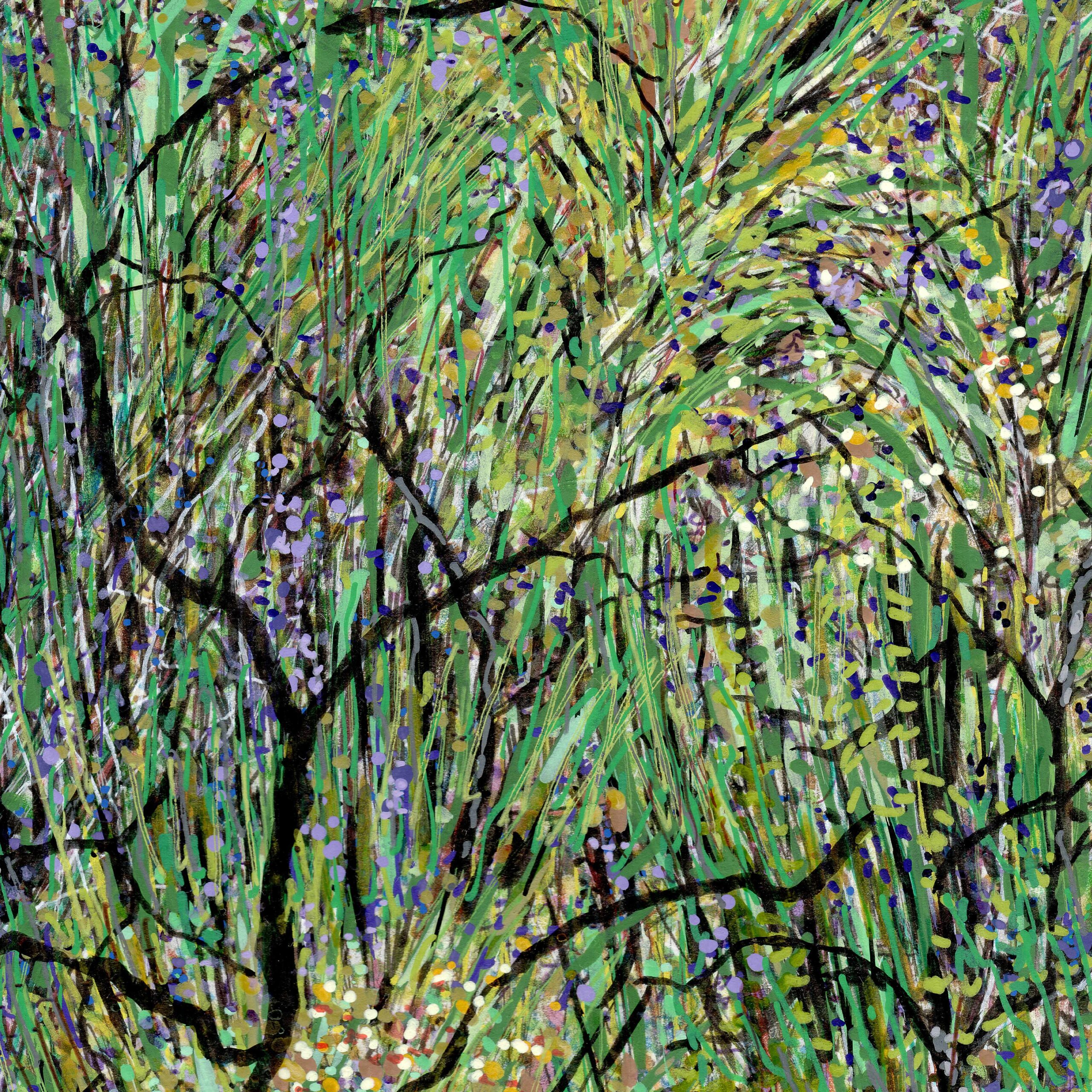
    I wanted to move away from the quiet, still qualities of a traditional landscape and focus entirely on energy. Nature is rarely static. It is constantly growing, decaying, and shifting. This piece was a deliberate experiment in capturing that hidden, frenetic activityโ€”making a forest look as though it is writhing and moving right in front of you.

    Technically, this required a dense orchestration of different tools and medium behaviors on smooth hot press paper. I built the surface using a heavy blend of Faber-Castell Pitt pens, Staedtler pigment pens, acrylic pens, and Sakura gel pens.

    The process was rhythmic and intense. I used the fine precision of the Staedtler pens to create an intricate web of overlapping, high-contrast lines for the undergrowth and the tree trunks. The fine, colorful lines slashing through the foliage were accomplished with Sakura gel pens, giving those bright accents a sharp, clean edge. Instead of blending colors smoothly, I relied on rapid dashes and tight clusters of stippling with the acrylic and Pitt pens. By placing contrasting tones directly side-by-sideโ€”the electric greens against the deep purples and warm ochresโ€”the canopy begins to optically vibrate.

    It is a chaotic way to build a landscape, but letting the marks layer over one another without correcting the friction gives the piece its pulse. It records the grit and the constant motion of the woods rather than a sanitized portrait of them.


  • A Fragment of Departure

    A Fragment of Departure

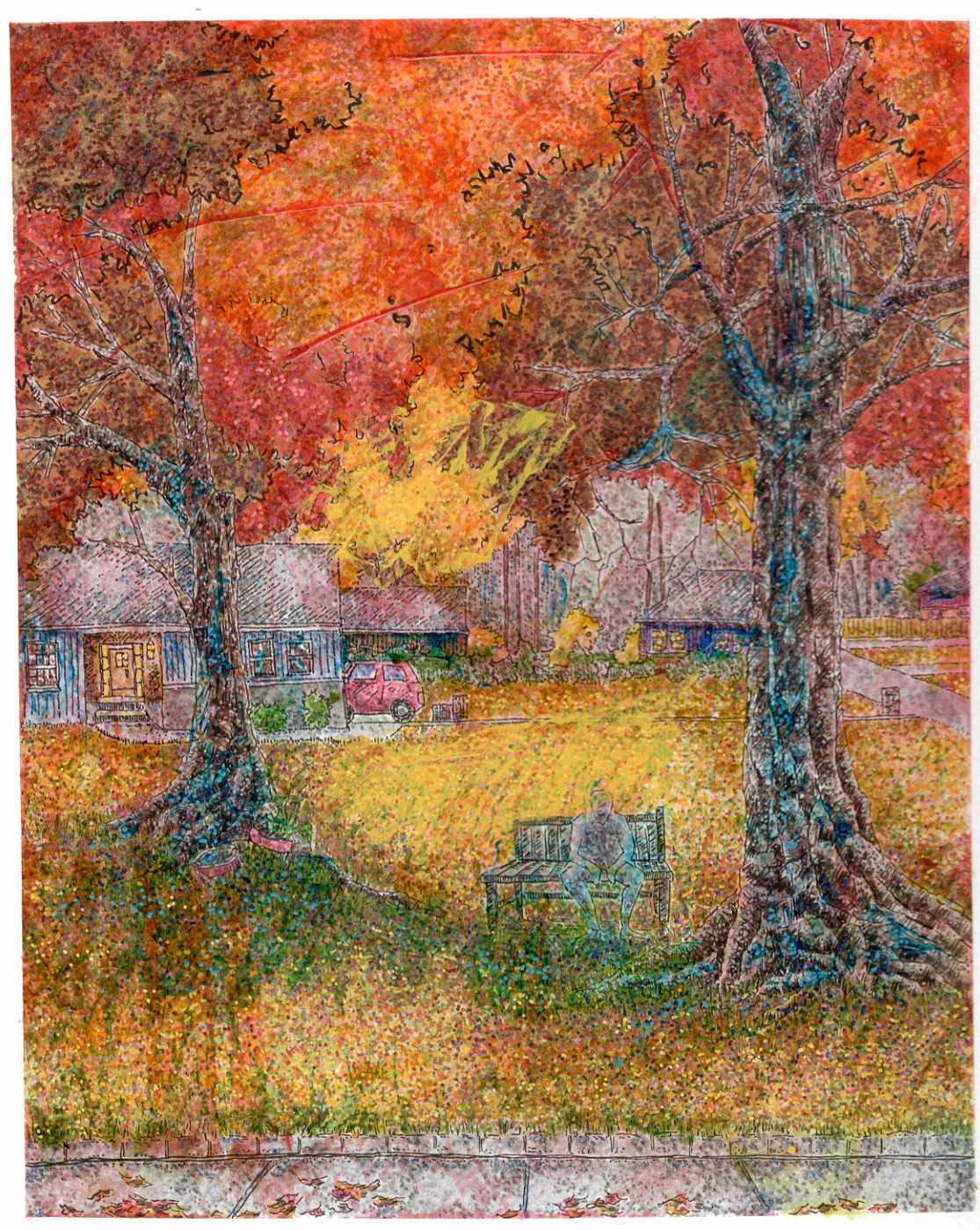
    I wanted this piece to feel like a fragment of a larger, untold story. It is composed from the exact vantage point of an unknown observer looking through the brush, watching two figures stand at a crossroads on a path. You are witnessing a fleeting, high-stakes moment, but the context is deliberately stripped away. Is one figure looking back because they finally spotted you? Are they standing forlornly as someone else prepares to disappear into the heavy tree line? Or are they simply frozen in a moment of sharp indecision? Leaving those questions unanswered is the entire point; it forces the viewer to fill in the blanks.

    To build this sense of atmospheric suspense, I used a complex multi-medium approach on hot press paper. I started with an India ink wash to establish the deep, heavy values and the overall mood of the environment. From there, I used a mix of Pigma pens and Pitt pens to layer the finer, sharper architectural lines of the massive tree trunks and the dense foliage. I relied heavily on stippling in the canopy, using rapid dots of vibrant purple and green to make the air itself feel like it is vibrating. Finally, I used a white gel pen to pull out the stark, sharp highlightsโ€”catching the light on the foreground rocks, cattails, and the edges of the figures to create a punchy contrast against the dark background wash. By blending the fluid ink with the rigid precision of the pens, the process itself becomes a balance of control and chaos, keeping the image grounded in texture while letting the narrative remain completely elusive.

  • The Yellow Hat

    The Yellow Hat

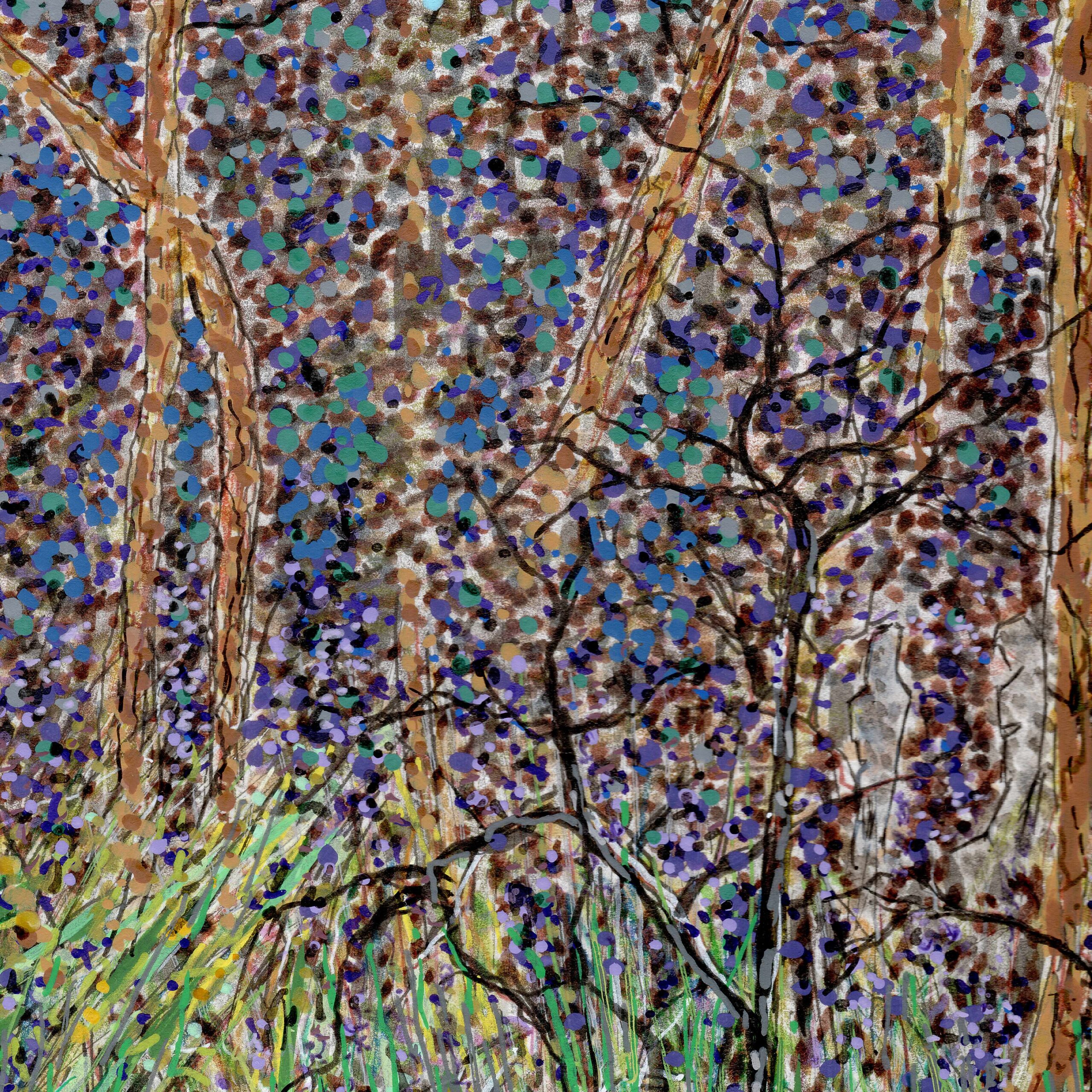
    Today I am sharing a new multi-media piece that continues to push the boundaries of my recent experiments with pointillism, but with a distinct narrative twist.
    This piece, based on an older photograph of a dense tree line and brush, relies on a highly textured mix of India ink, acrylic pens, and Pigma fine liners. To capture the thick, almost claustrophobic atmosphere of the undergrowth, I combined sharp, vertical scratches for the tall grass with heavy, vibrating dots of color. The optical mixing of the bright yellows and oranges in the foreground against the deep, heavy purples and blacks of the background gives the entire scene a buzzing, nocturnal energy.

    But this isn’t just a landscape study. If you look closely at the middle-right side of the composition, tucked away in the tall grass, there is a cloaked figure wearing a wide-brimmed yellow hat.

    I rendered this figure using the exact same pointillist and linework techniques as the surrounding environment, perfectly camouflaging them into the brush. Much of my work centers around the idea of being a “quiet observer” in rural, forgotten spaces. With this piece, I wanted to flip that dynamic. It introduces a subtle, eerie, Southern Gothic narrativeโ€”a reminder that when you are out observing the quiet edges of the world, sometimes you are also being observed.


  • The Yellow Patio

    The Yellow Patio

    Today I am sharing a new graphic piece titled “The Yellow Patio.” The title is intentionally a bit on the noseโ€”an ironic nod to a cheerful early spring setting that actually masks the heavier, psychological weight of the scene.

    Based on a reference photo of a small bistro area, this piece gave me the opportunity to lean heavily into a Synthetist, graphic style of color blocking. The composition is built entirely on the boundary between light and dark, inside and outside. To translate the intense feeling of that boundary, I used deep, unnatural blues and heavy purples to anchor the foreground shadows, which perfectly frame the harsh, acidic, vibrating yellow of the sunlight hitting the concrete floor.

    This piece ties directly into the theme of the “quiet observer” that runs through much of my work. By placing the viewer firmly within the cold shadow, looking out past the empty iron chairs toward a lone, distant figure beyond the fence, it creates a distinct sense of isolation and voyeurism. Itโ€™s a moment of being entirely separated from the warmth and the outside world, suspended in bold, flat color.

    Technical Details:

    • 9×12 140lb hot press
    • Sakura fine liners
    • India ink