Tag: pitt

  • Frenetic Canopy

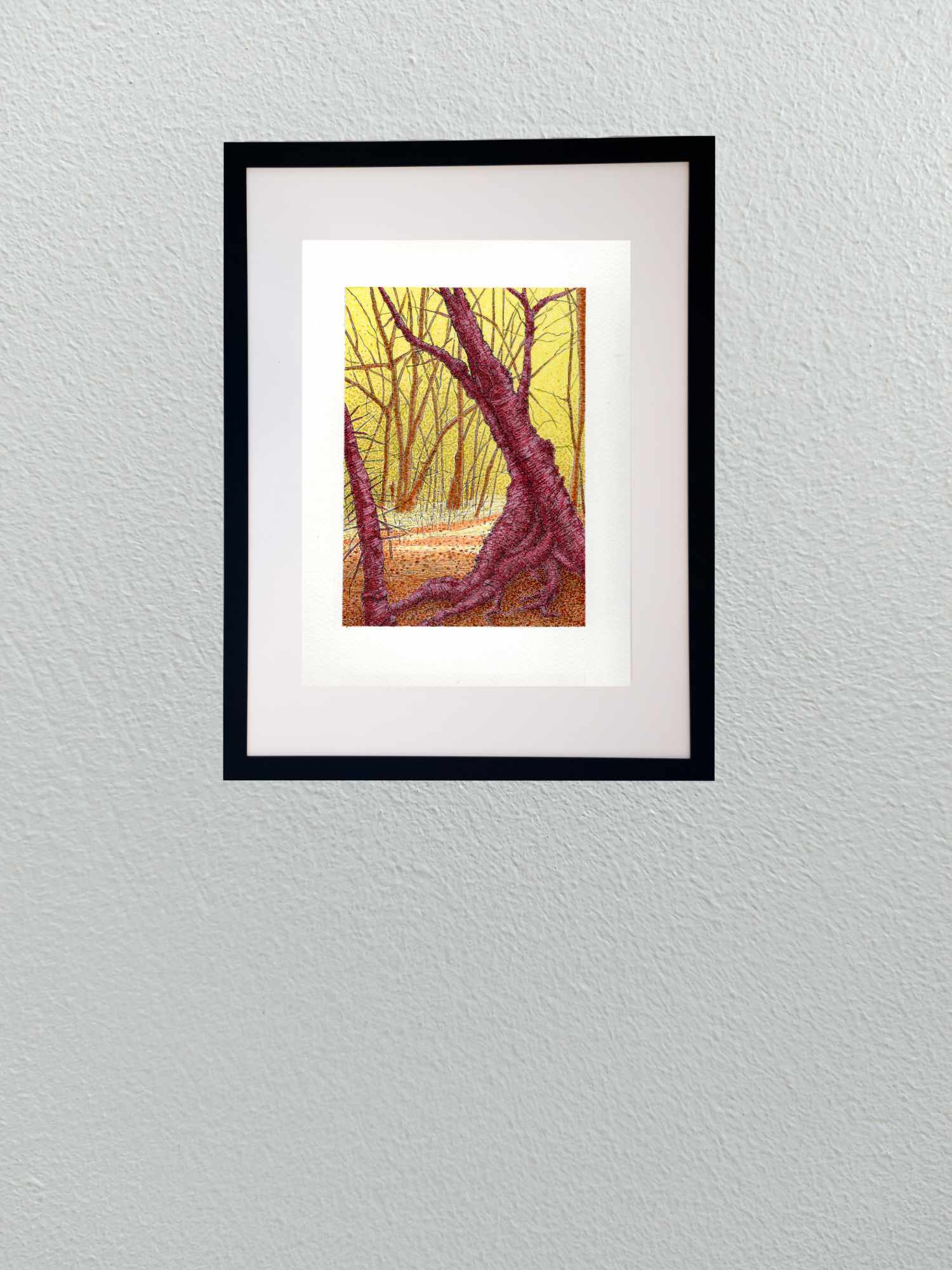
    Frenetic Canopy

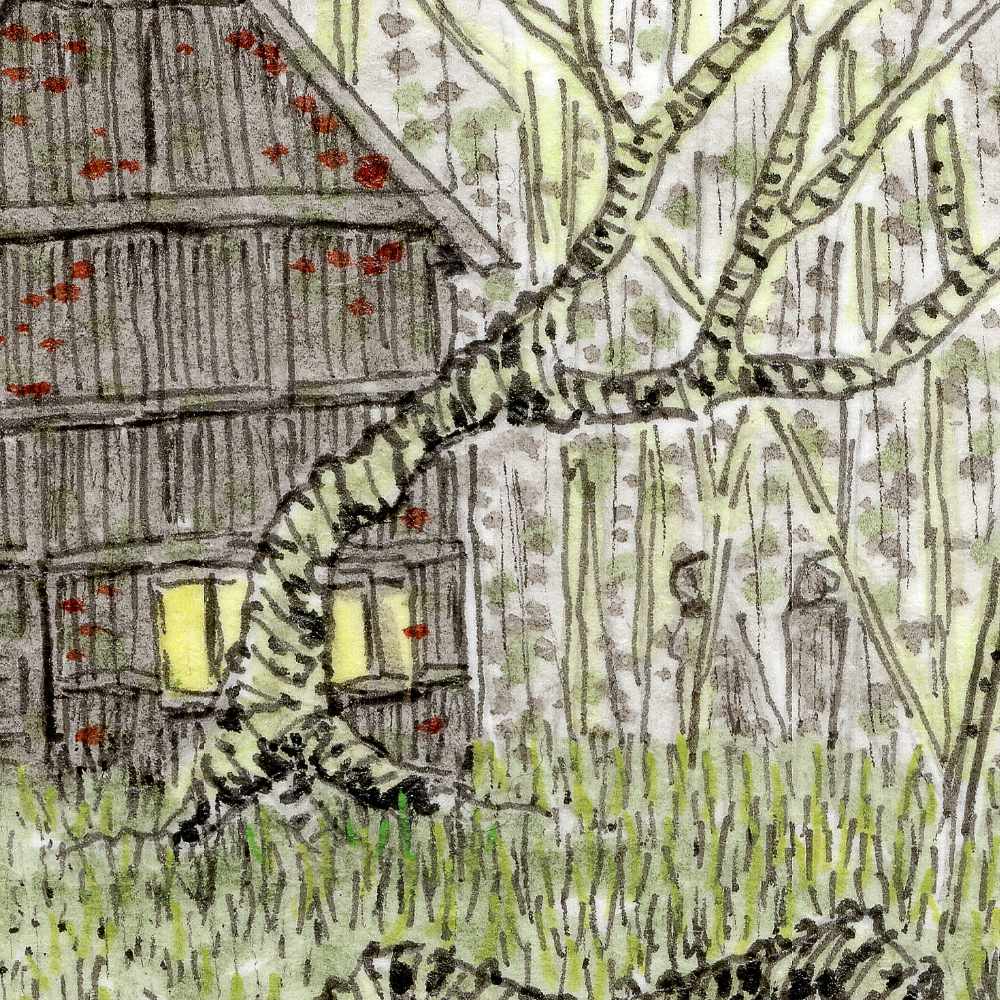
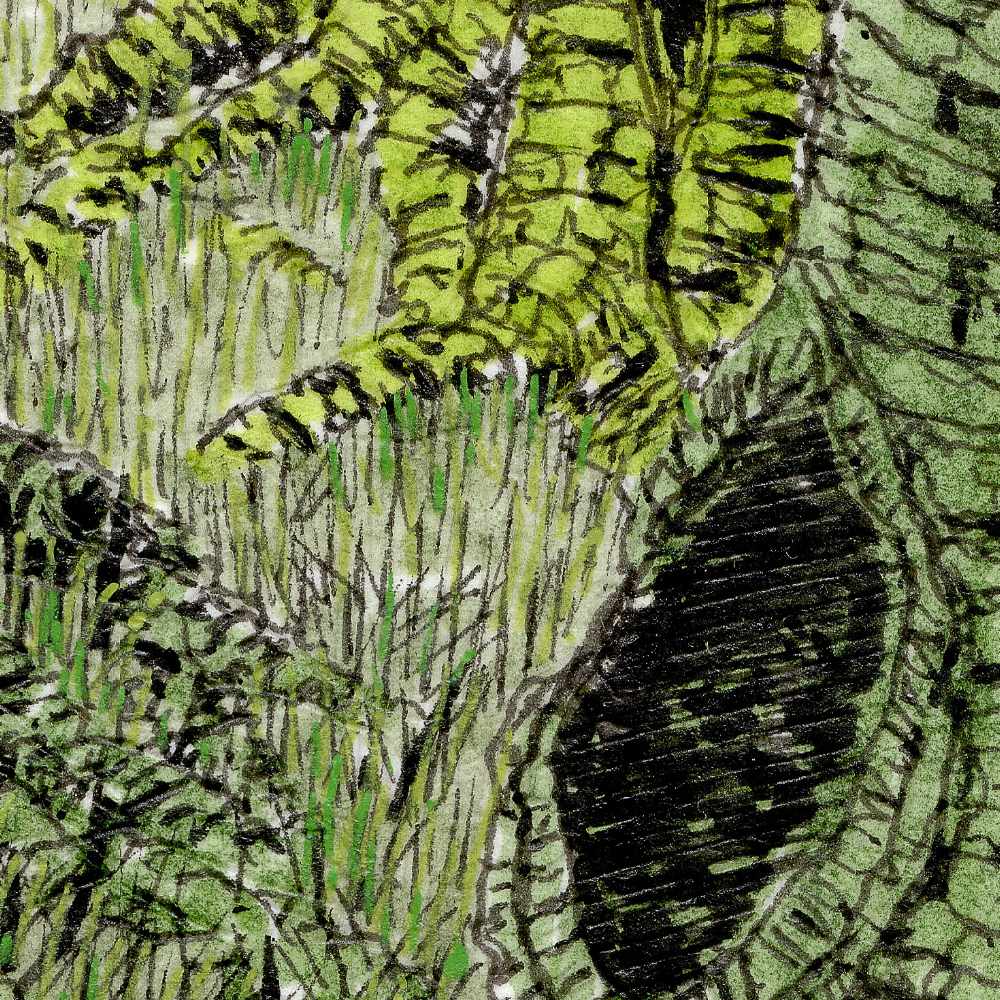
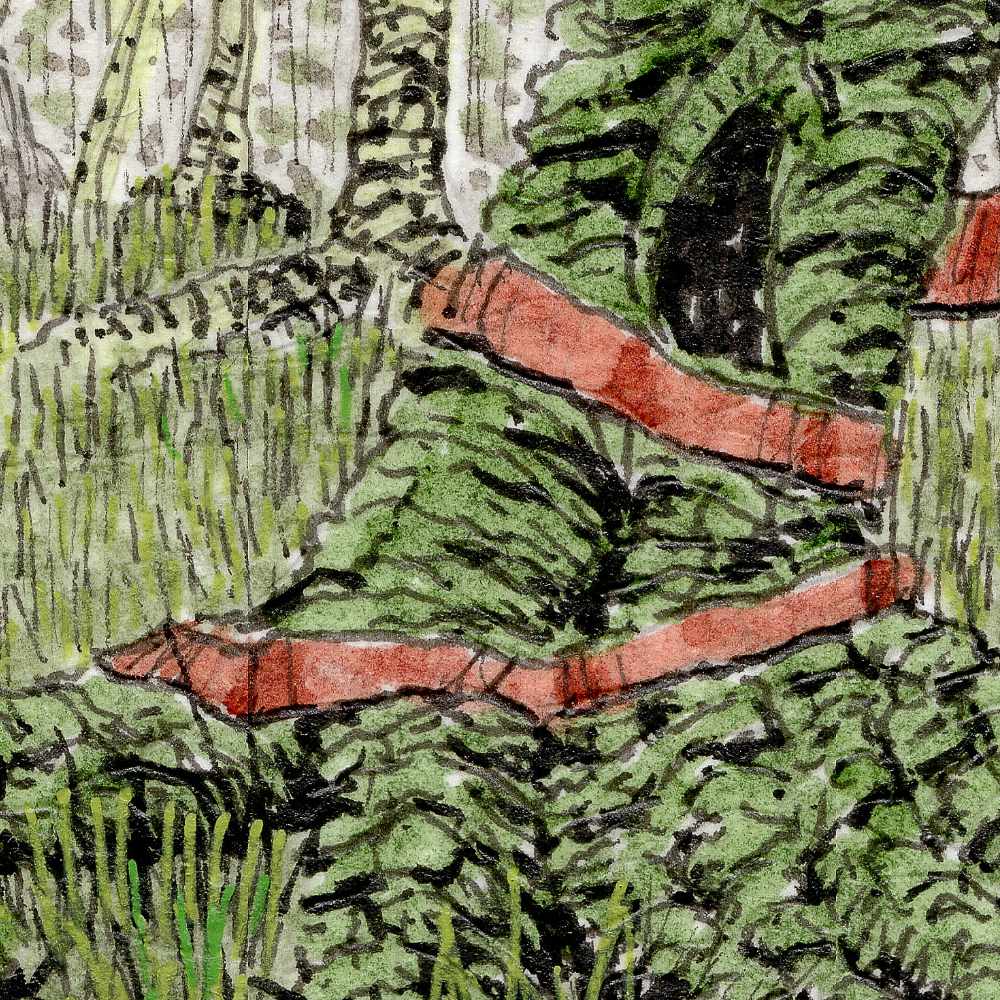
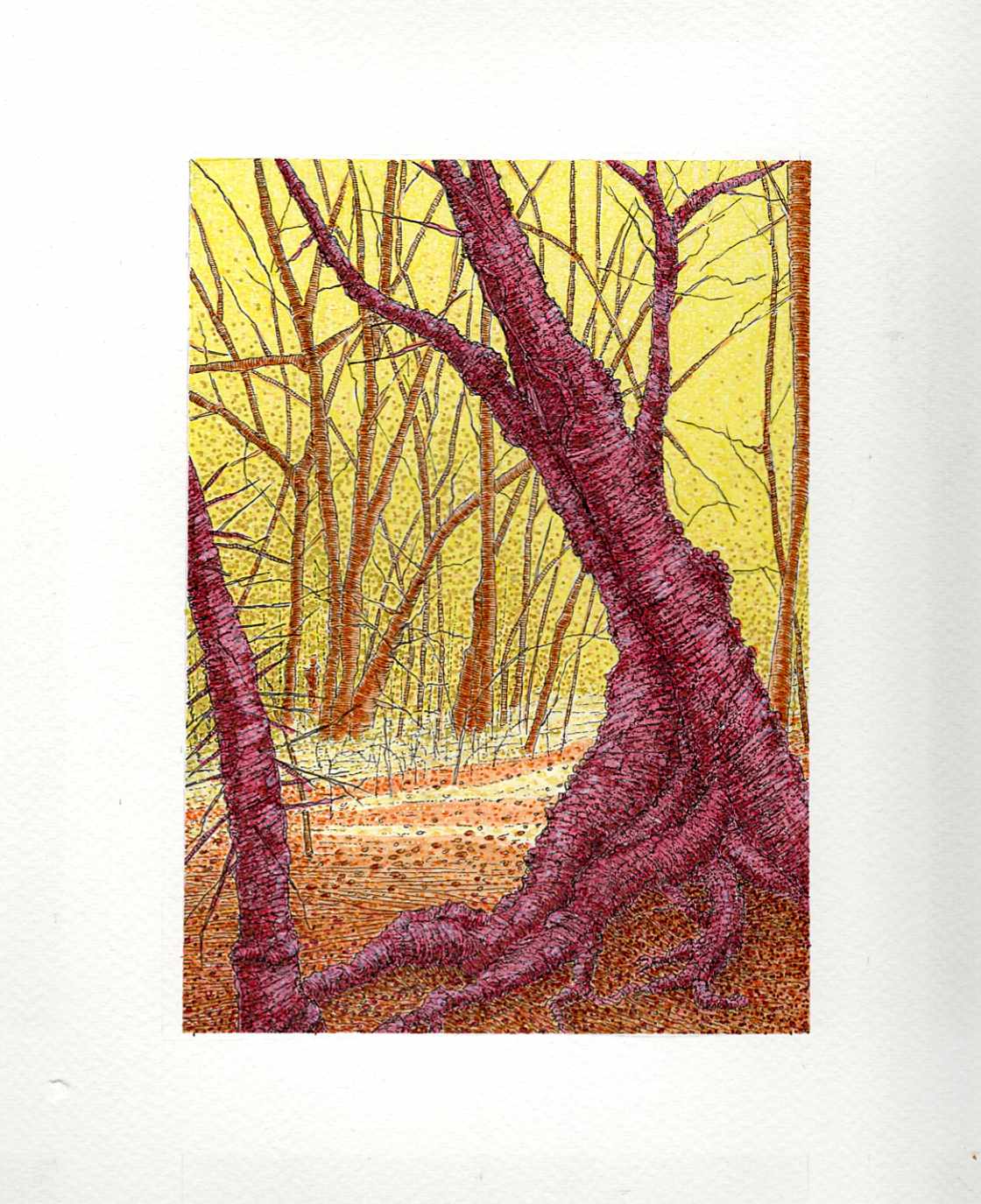
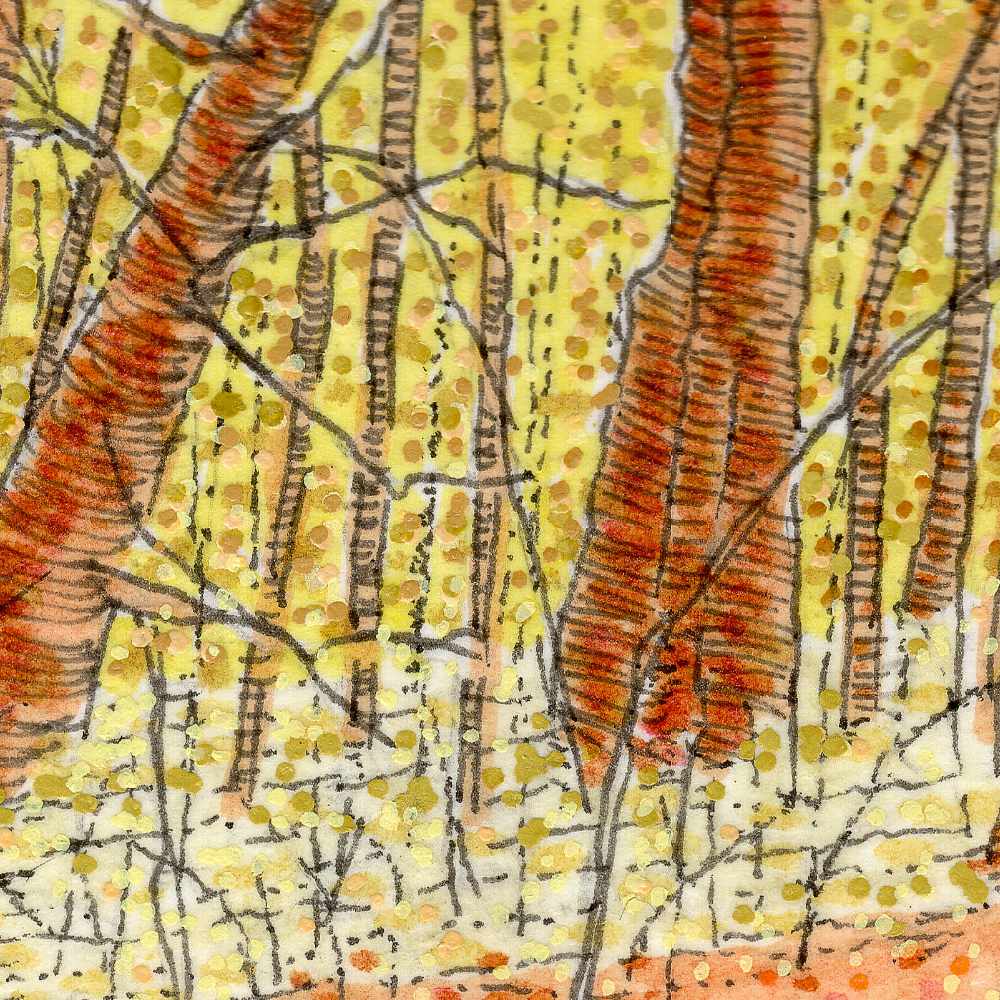
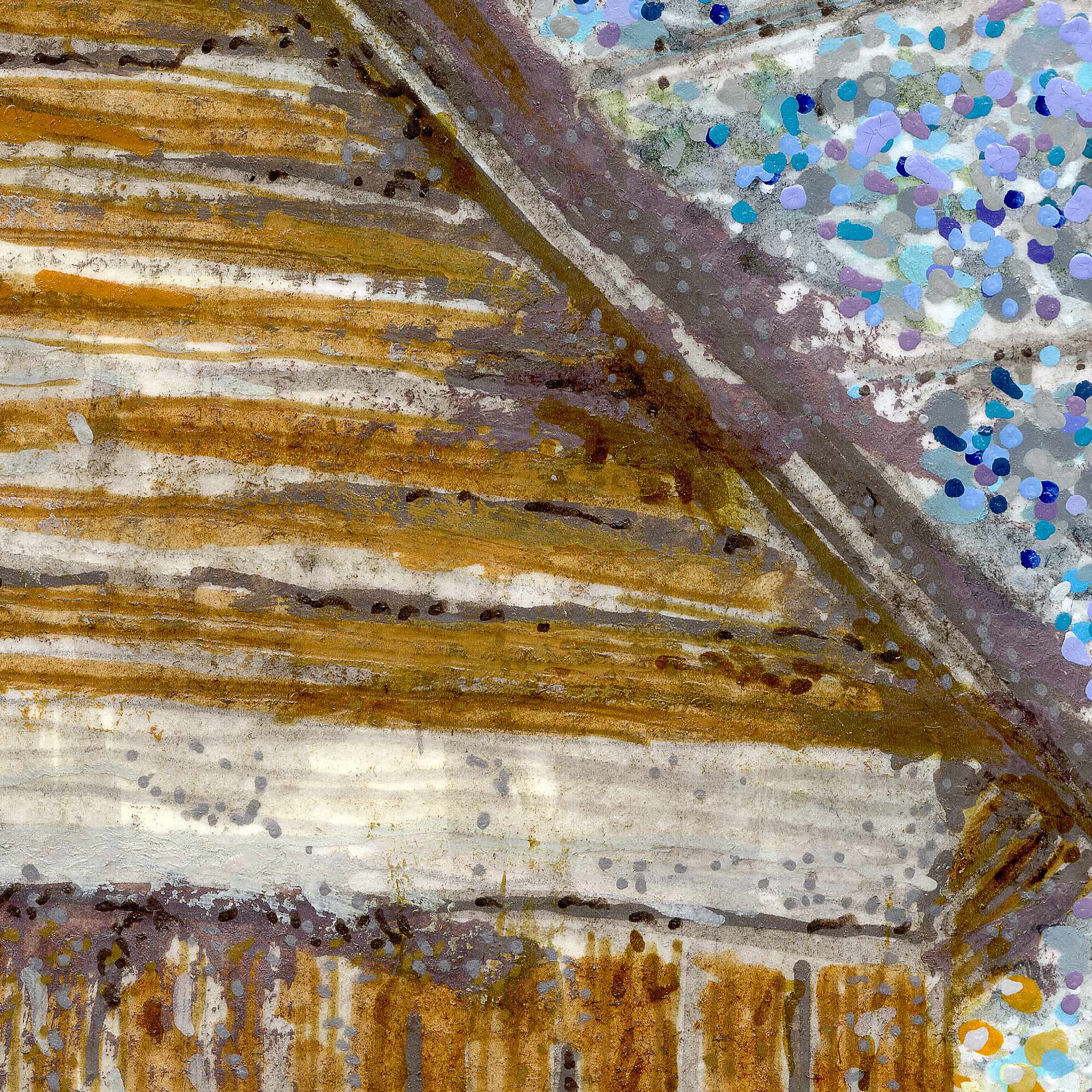
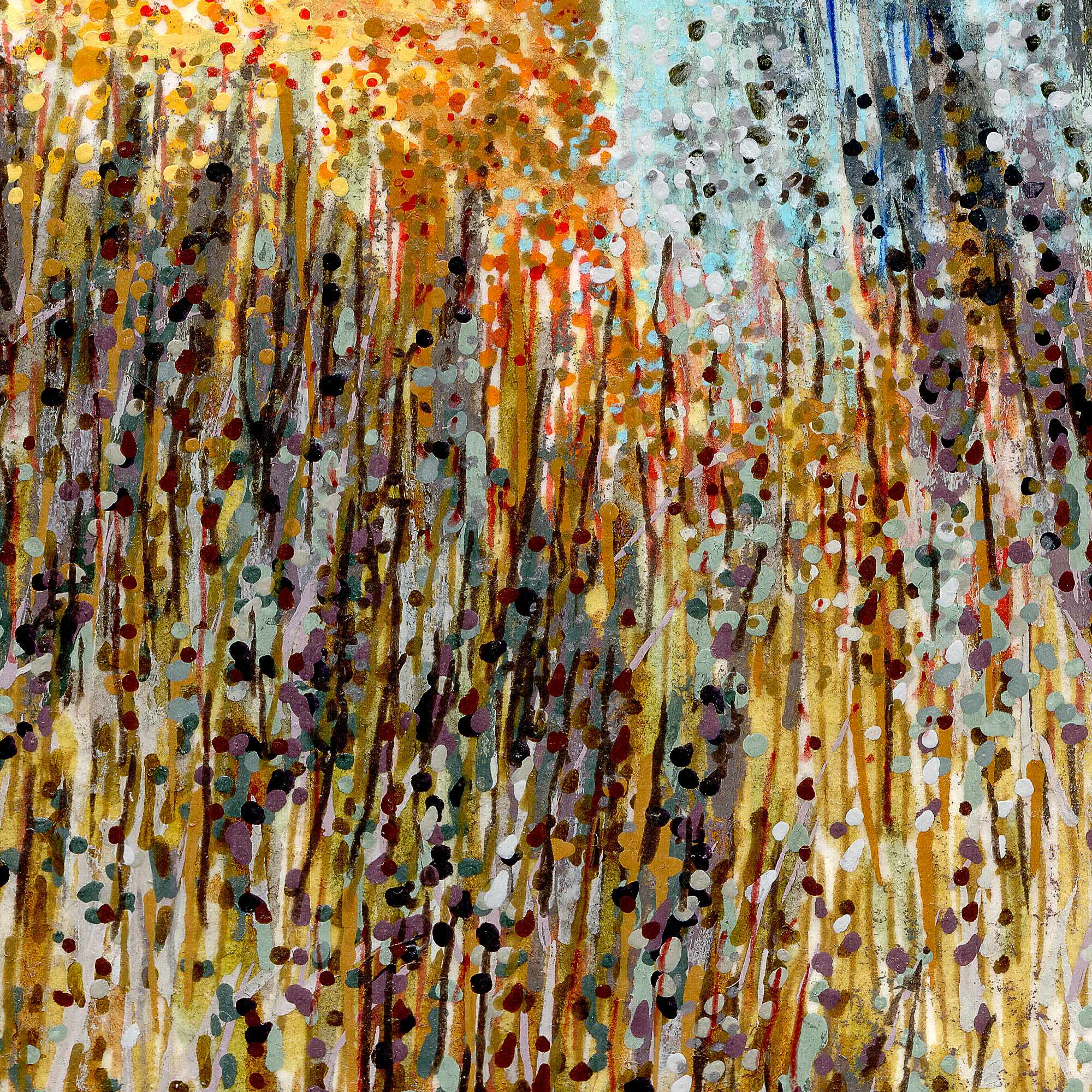
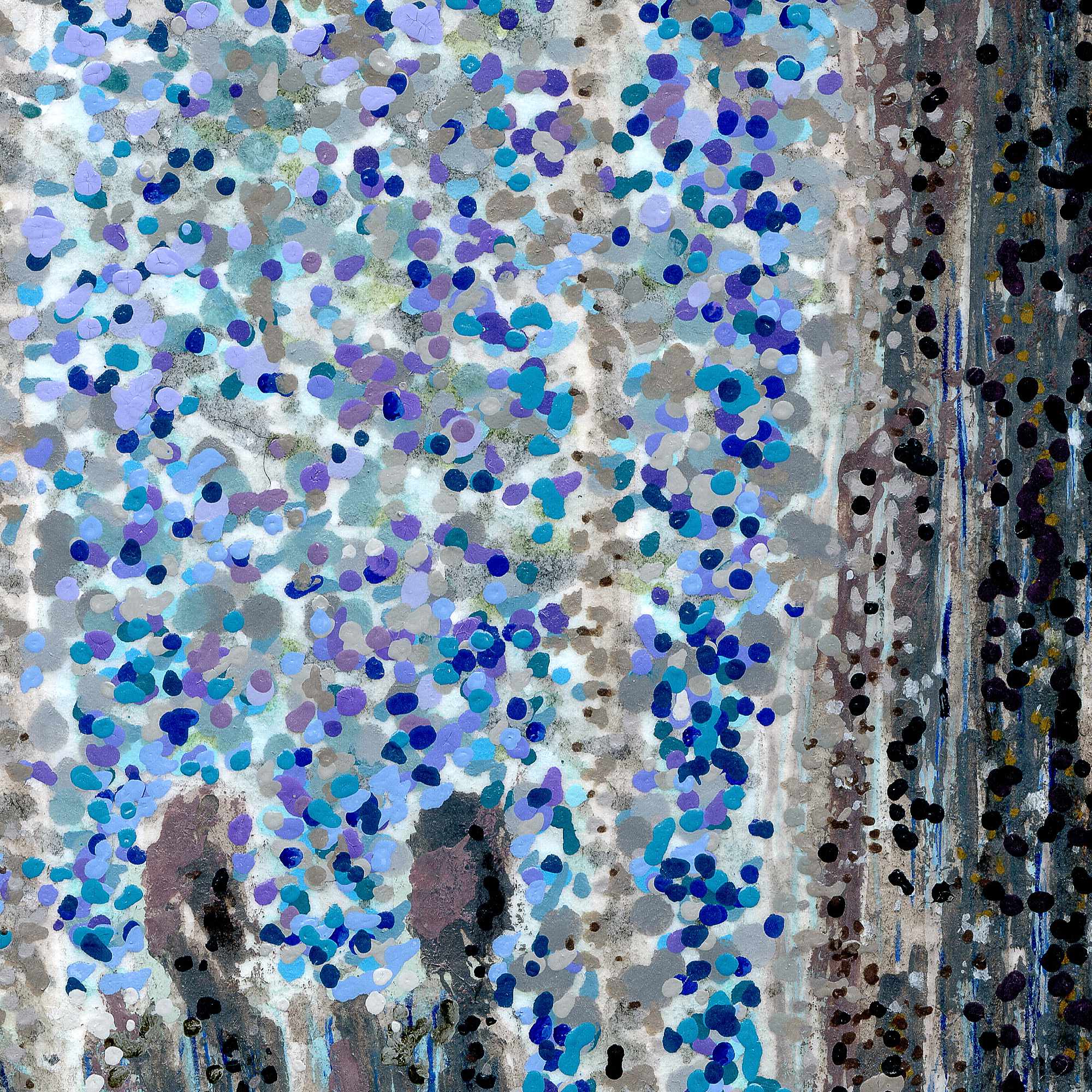
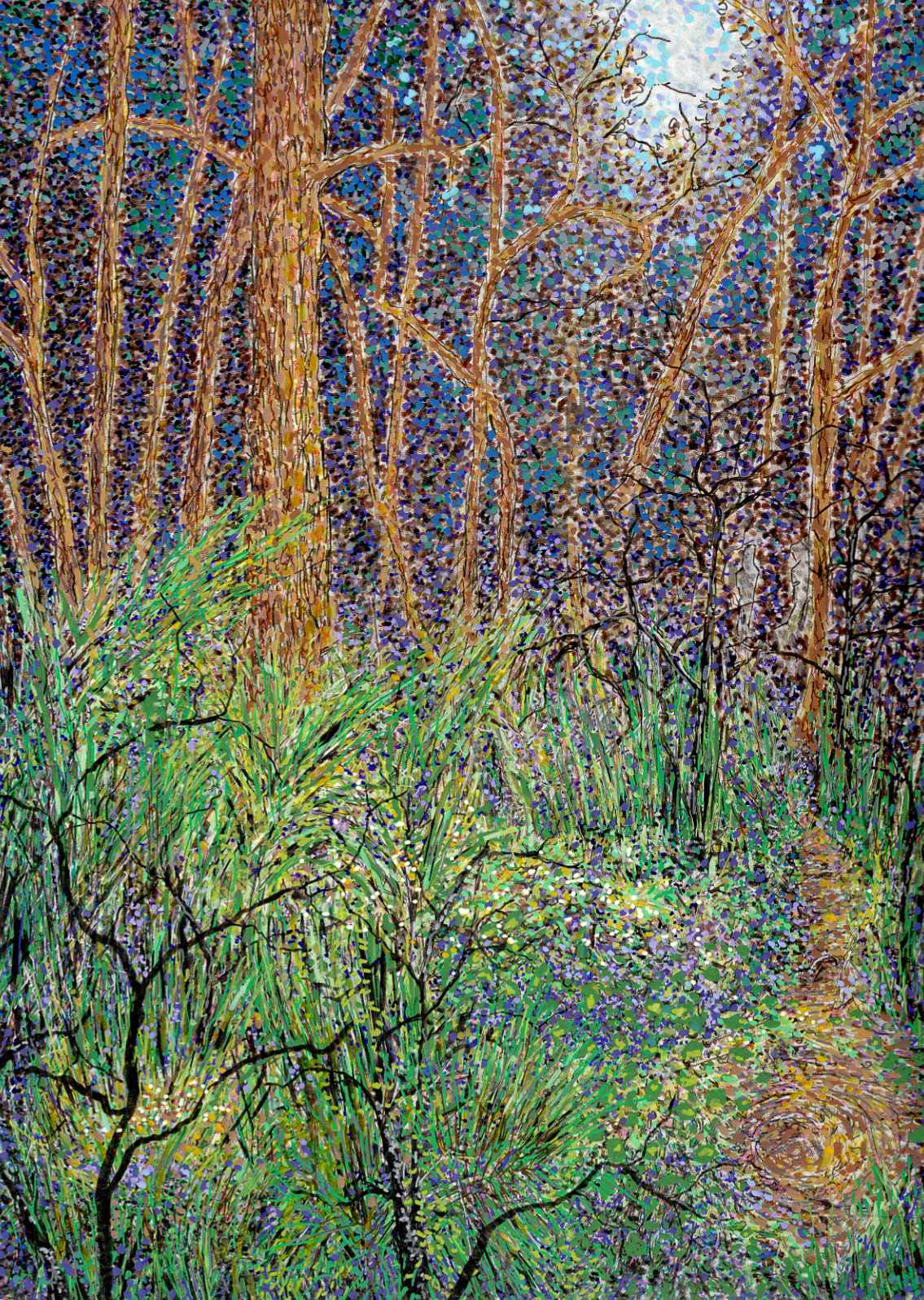
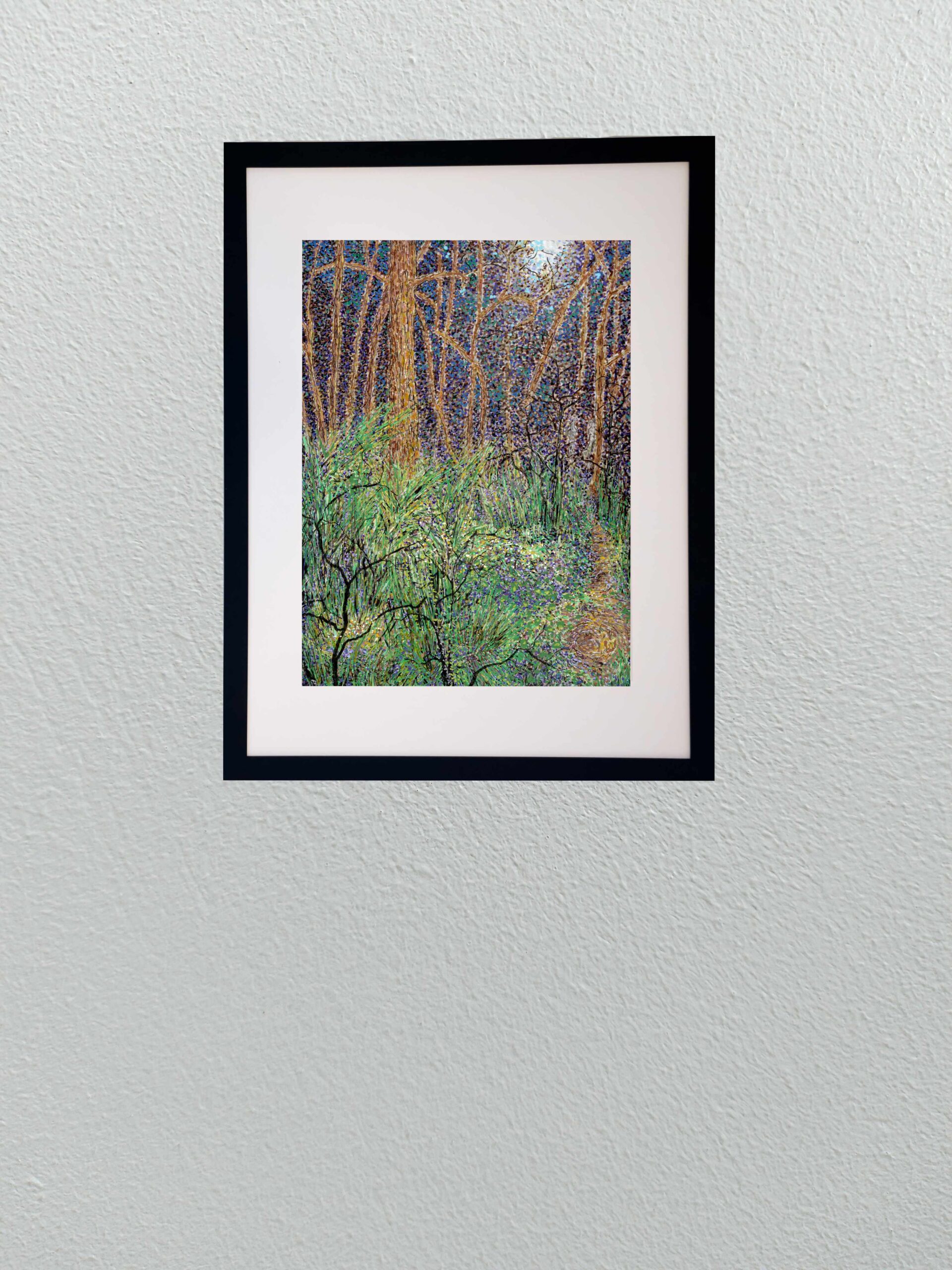
    I wanted to move away from the quiet, still qualities of a traditional landscape and focus entirely on energy. Nature is rarely static. It is constantly growing, decaying, and shifting. This piece was a deliberate experiment in capturing that hidden, frenetic activityโ€”making a forest look as though it is writhing and moving right in front of you.

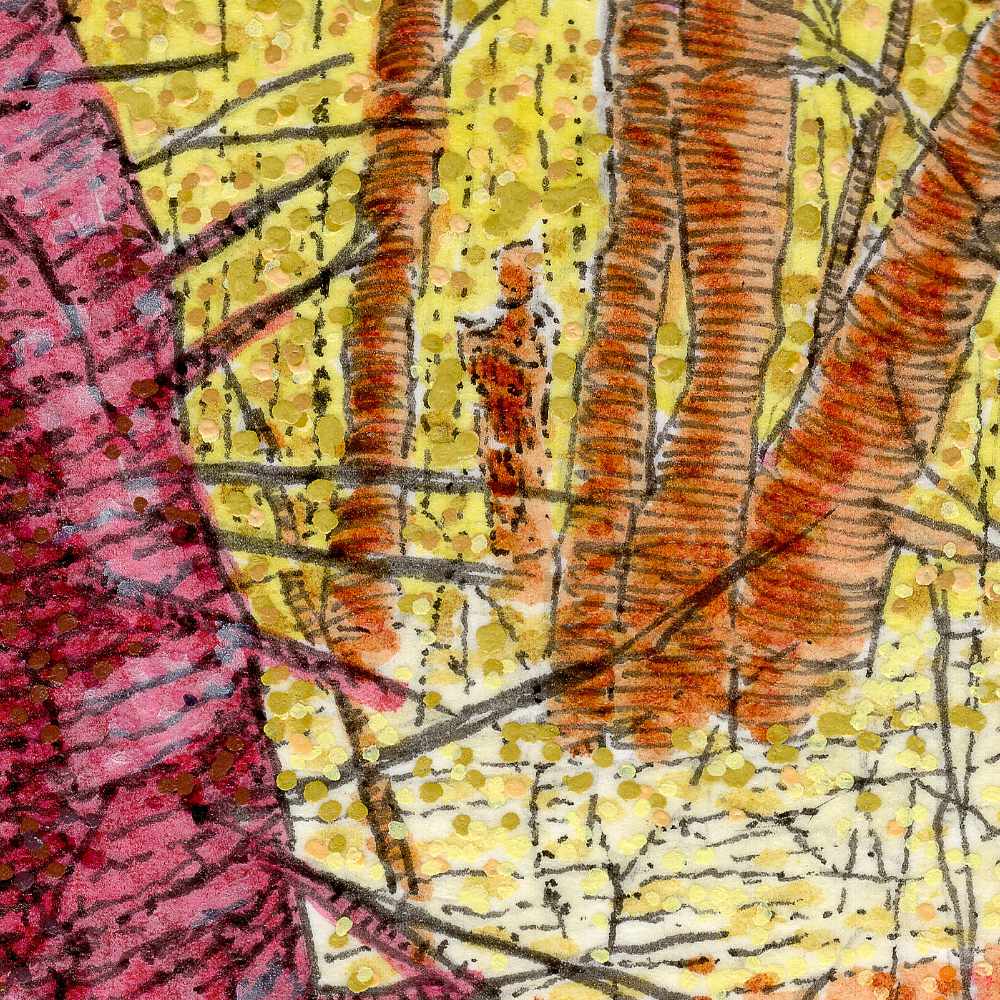
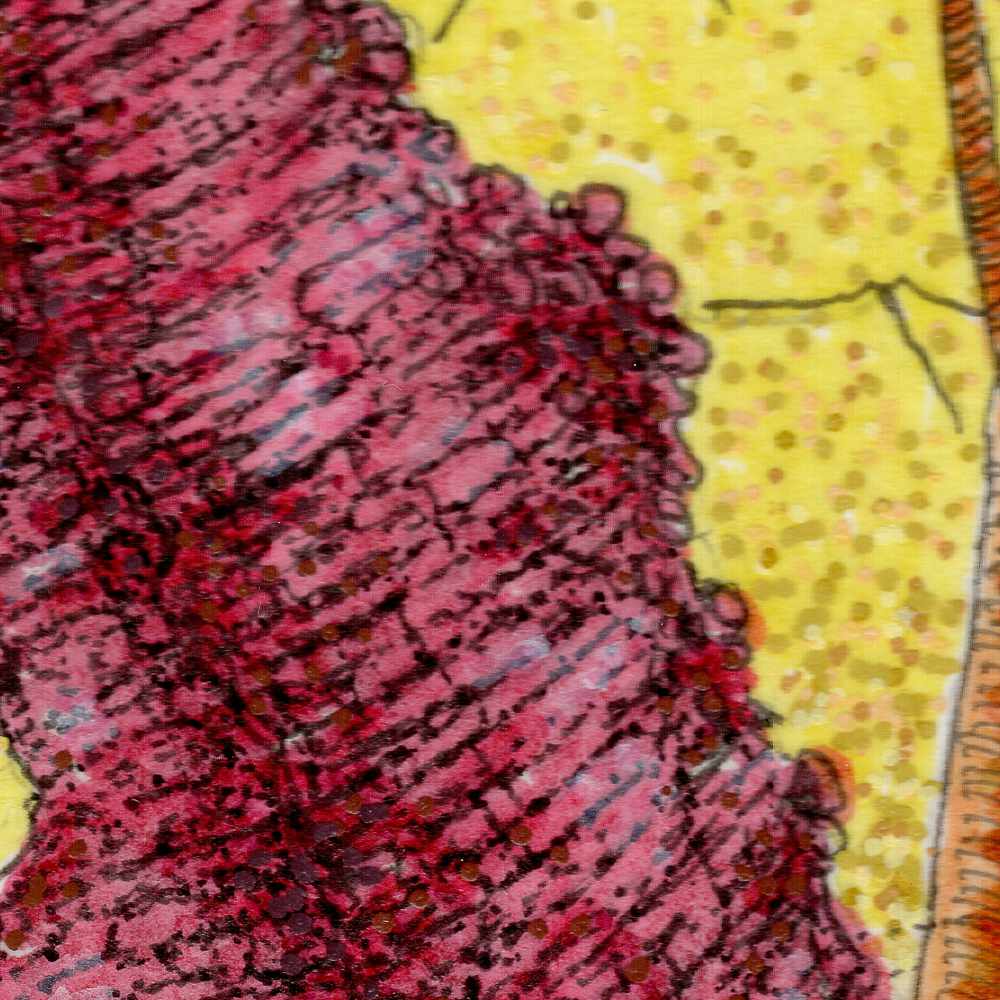
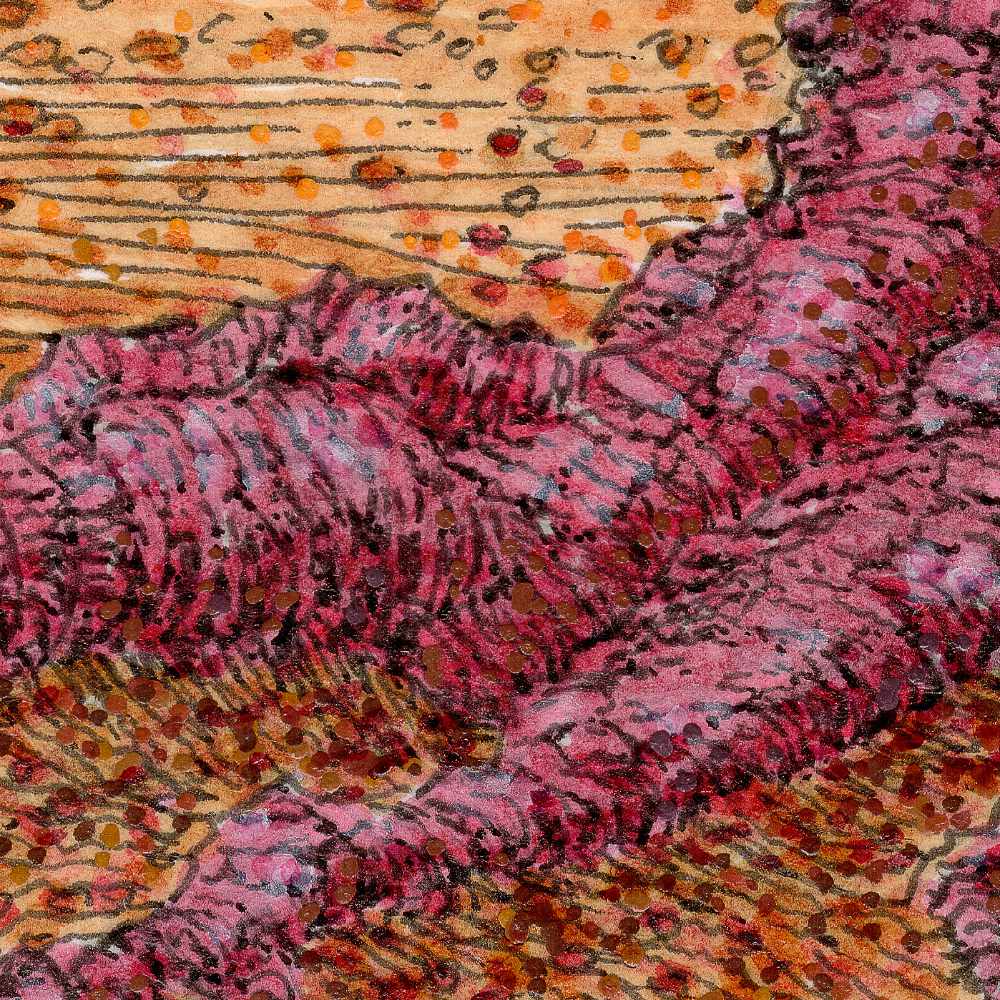
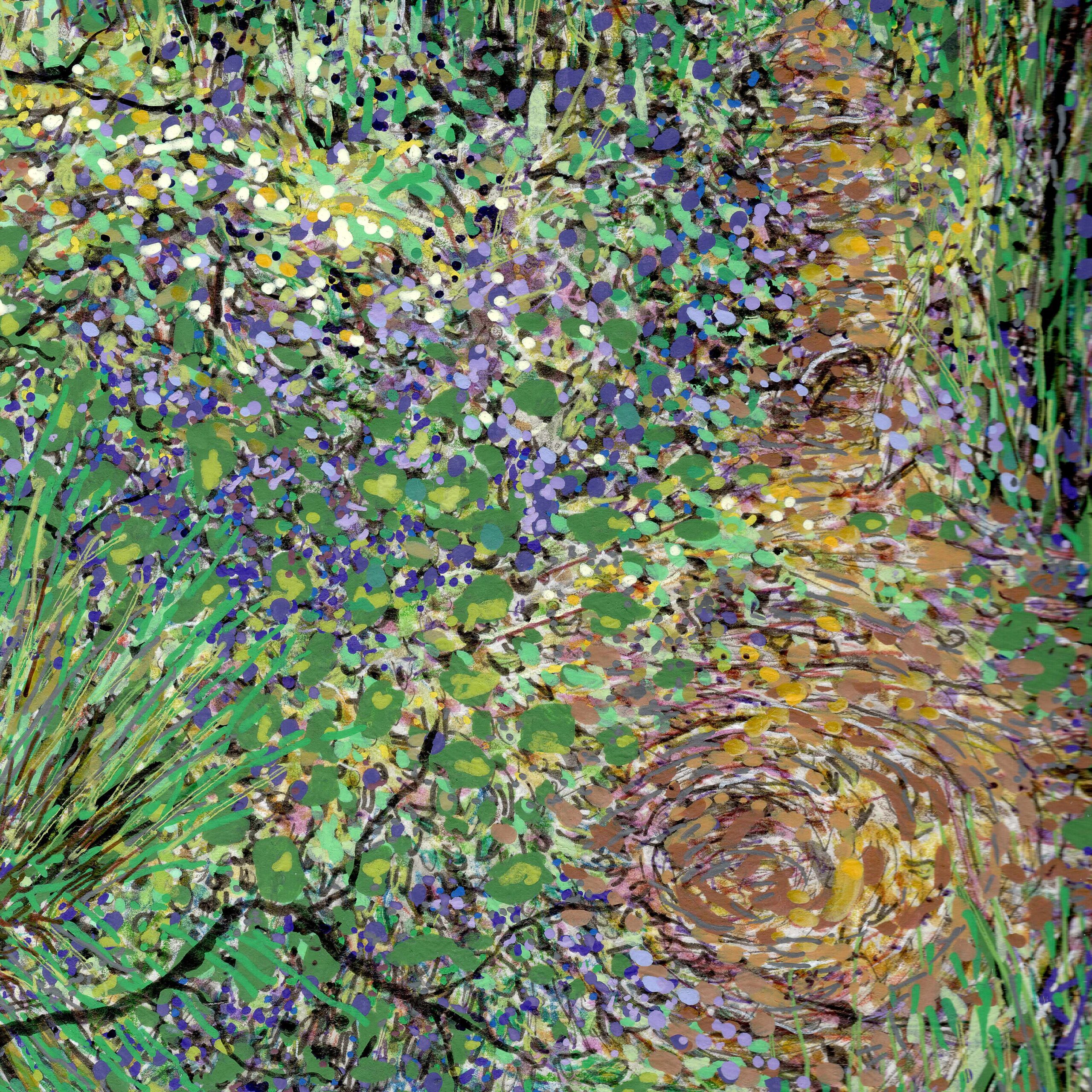
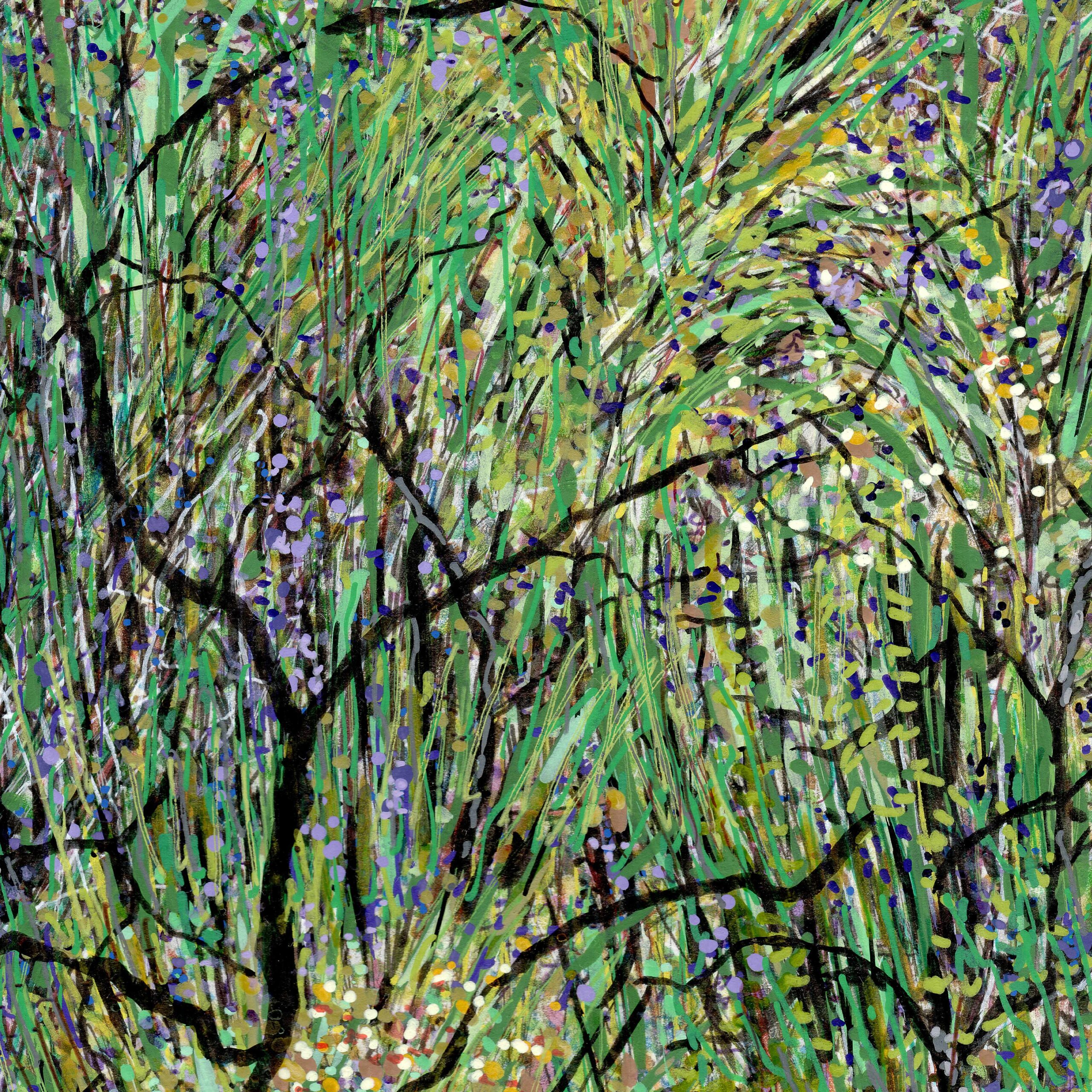
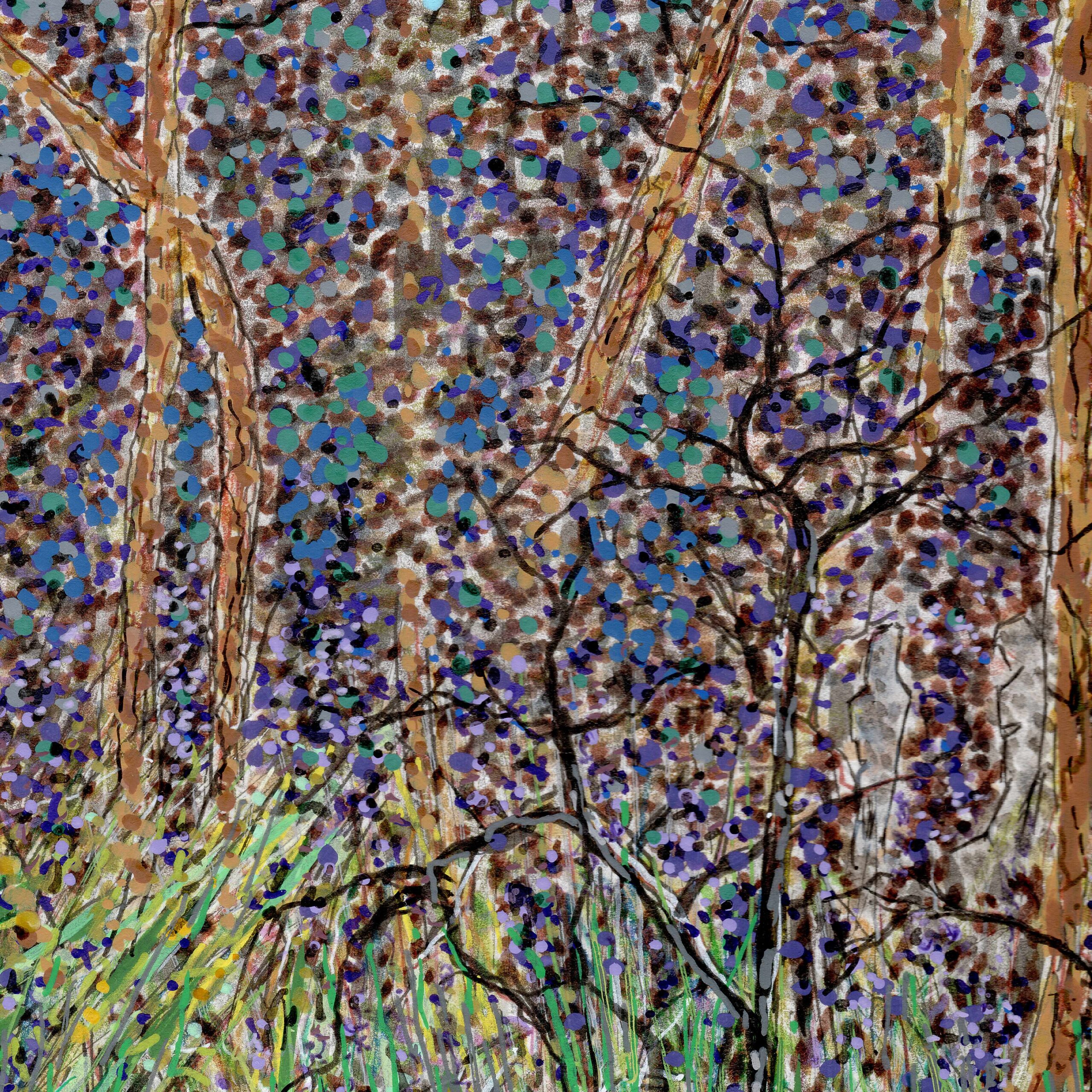
    Technically, this required a dense orchestration of different tools and medium behaviors on smooth hot press paper. I built the surface using a heavy blend of Faber-Castell Pitt pens, Staedtler pigment pens, acrylic pens, and Sakura gel pens.

    The process was rhythmic and intense. I used the fine precision of the Staedtler pens to create an intricate web of overlapping, high-contrast lines for the undergrowth and the tree trunks. The fine, colorful lines slashing through the foliage were accomplished with Sakura gel pens, giving those bright accents a sharp, clean edge. Instead of blending colors smoothly, I relied on rapid dashes and tight clusters of stippling with the acrylic and Pitt pens. By placing contrasting tones directly side-by-sideโ€”the electric greens against the deep purples and warm ochresโ€”the canopy begins to optically vibrate.

    It is a chaotic way to build a landscape, but letting the marks layer over one another without correcting the friction gives the piece its pulse. It records the grit and the constant motion of the woods rather than a sanitized portrait of them.


  • Sells Mill: Late Winter Light

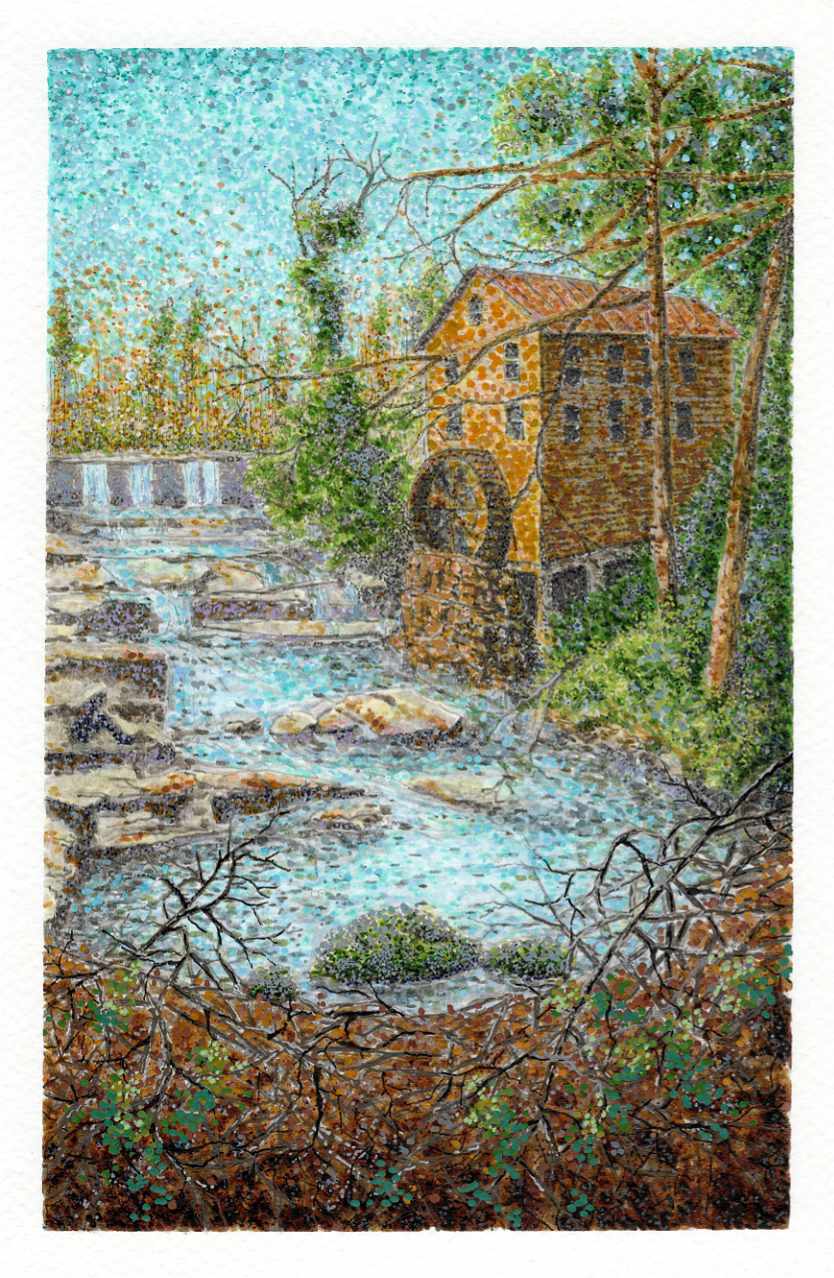
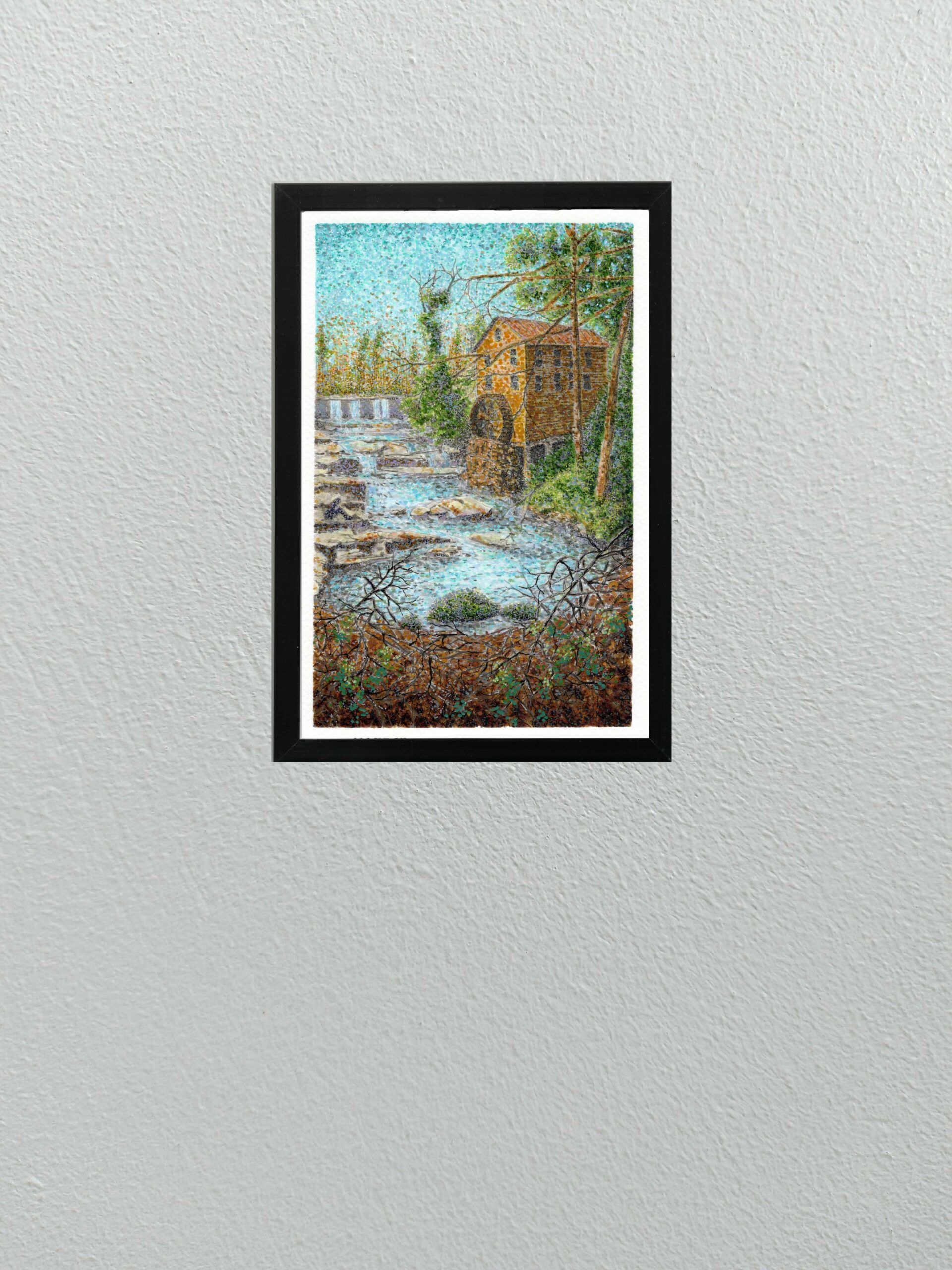
    Sells Mill: Late Winter Light

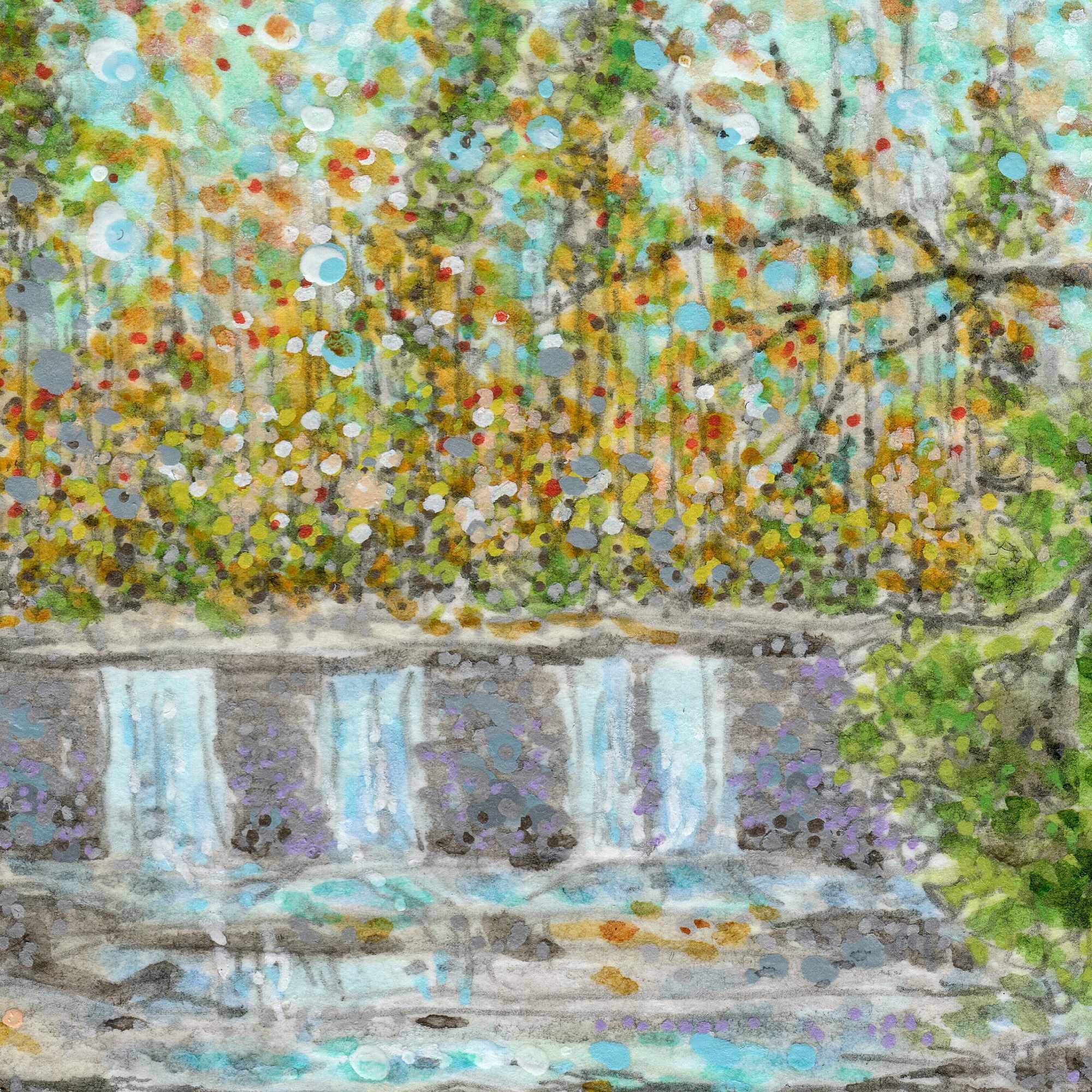
    here is a brief window at the end of winter where the landscape feels entirely transitional. The trees are still bare, but the light changes, catching the water and the earth differently. This study of Sells Mill was an attempt to record that specific, shifting energy.

    Technically, Iโ€™ve continued to explore the boundaries of my mixed-media approach on cold press paper. I used a combination of Faber-Castell Pitt pens, acrylic pens, and Sakura pens to build the scene layer by layer.

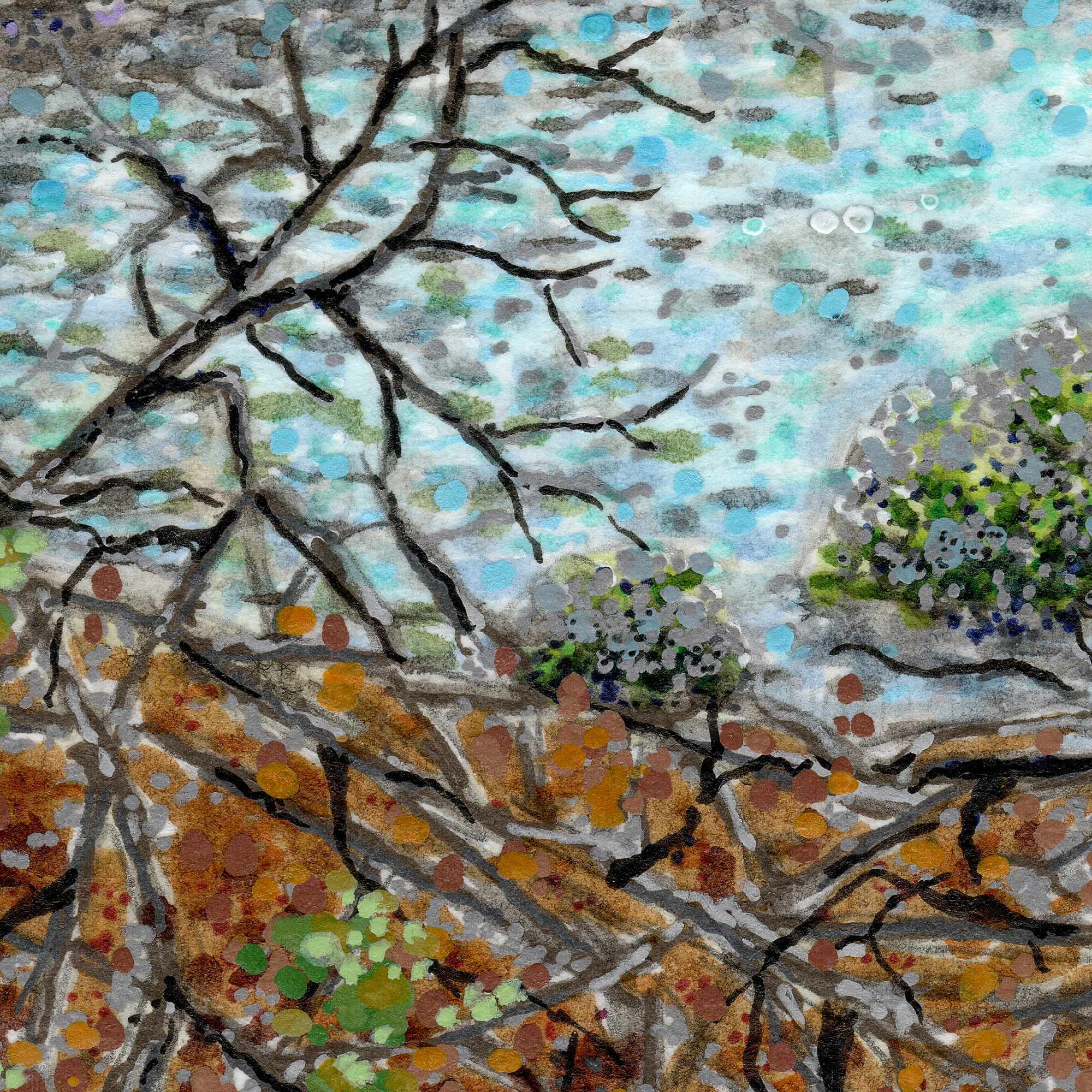
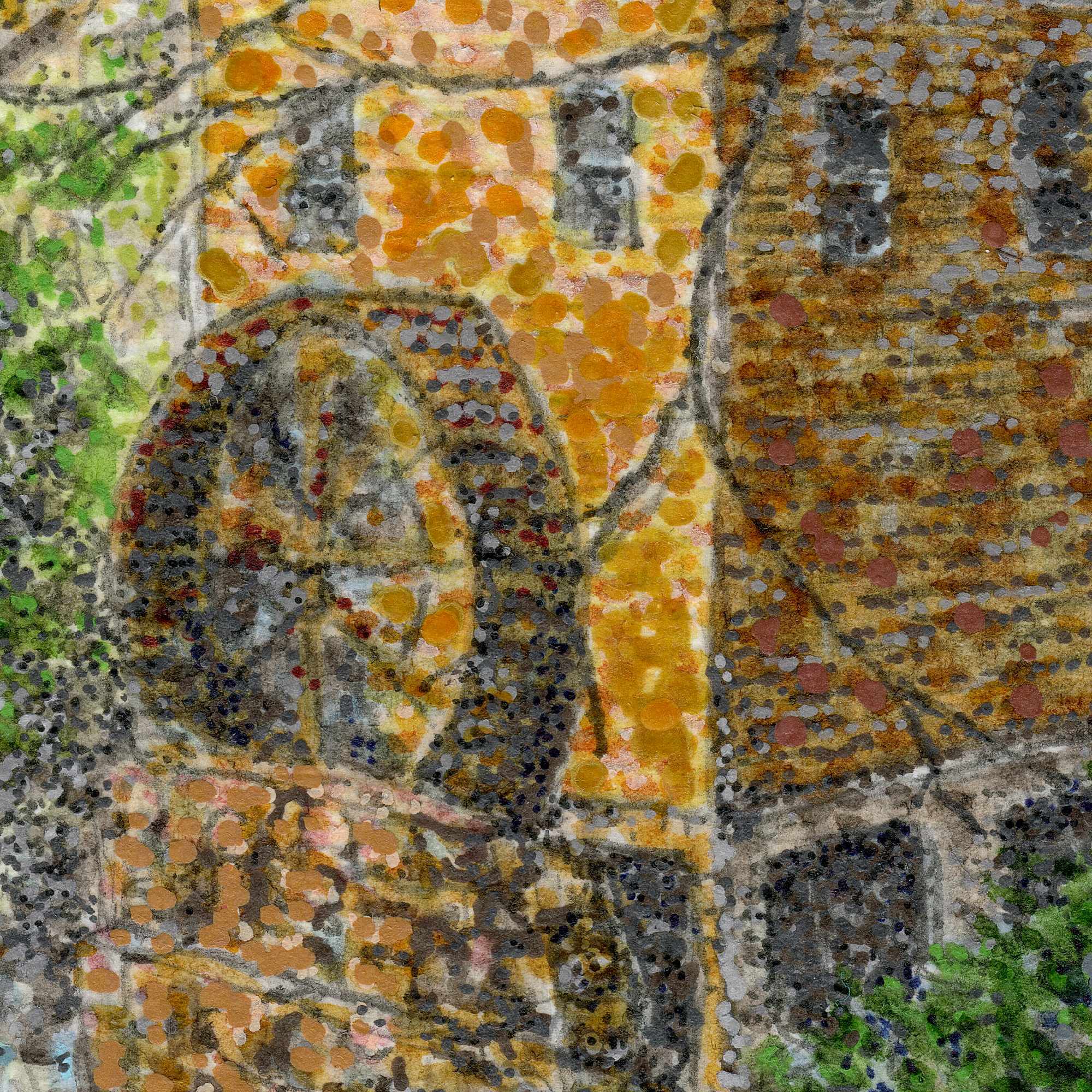
    The process is a deliberate balance between structured architecture and organic chaos. I used the fine precision of the Sakura and Pitt pens to draft the rigid lines of the historic mill and the dense, tangled thicket of branches in the foreground. For the sky, the water, and the stone faรงade, I leaned heavily into a pointillist technique. By applying thousands of individual dots of ink and acrylic, the surface begins to vibrateโ€”allowing the cool blues of the late winter sky and the rushing stream to catch a sense of movement.

    The paperโ€™s tooth works as a quiet partner here, holding the pigments exactly where they land but allowing the sheer volume of marks to optically blend. Itโ€™s a slow, rhythmic way to work that captures the texture of a place without forcing it into a sterile, perfect drawing.


  • A Fragment of Departure

    A Fragment of Departure

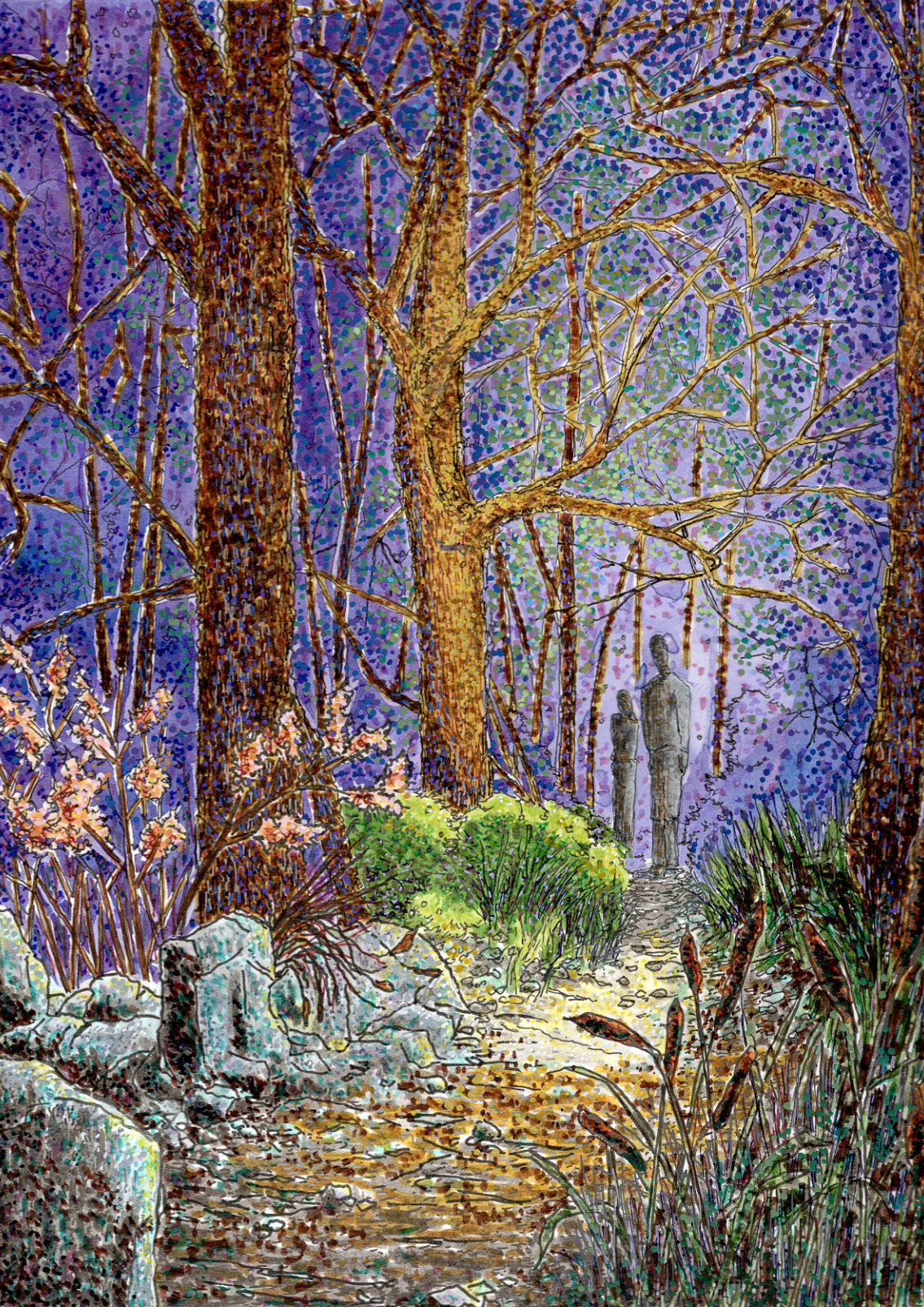
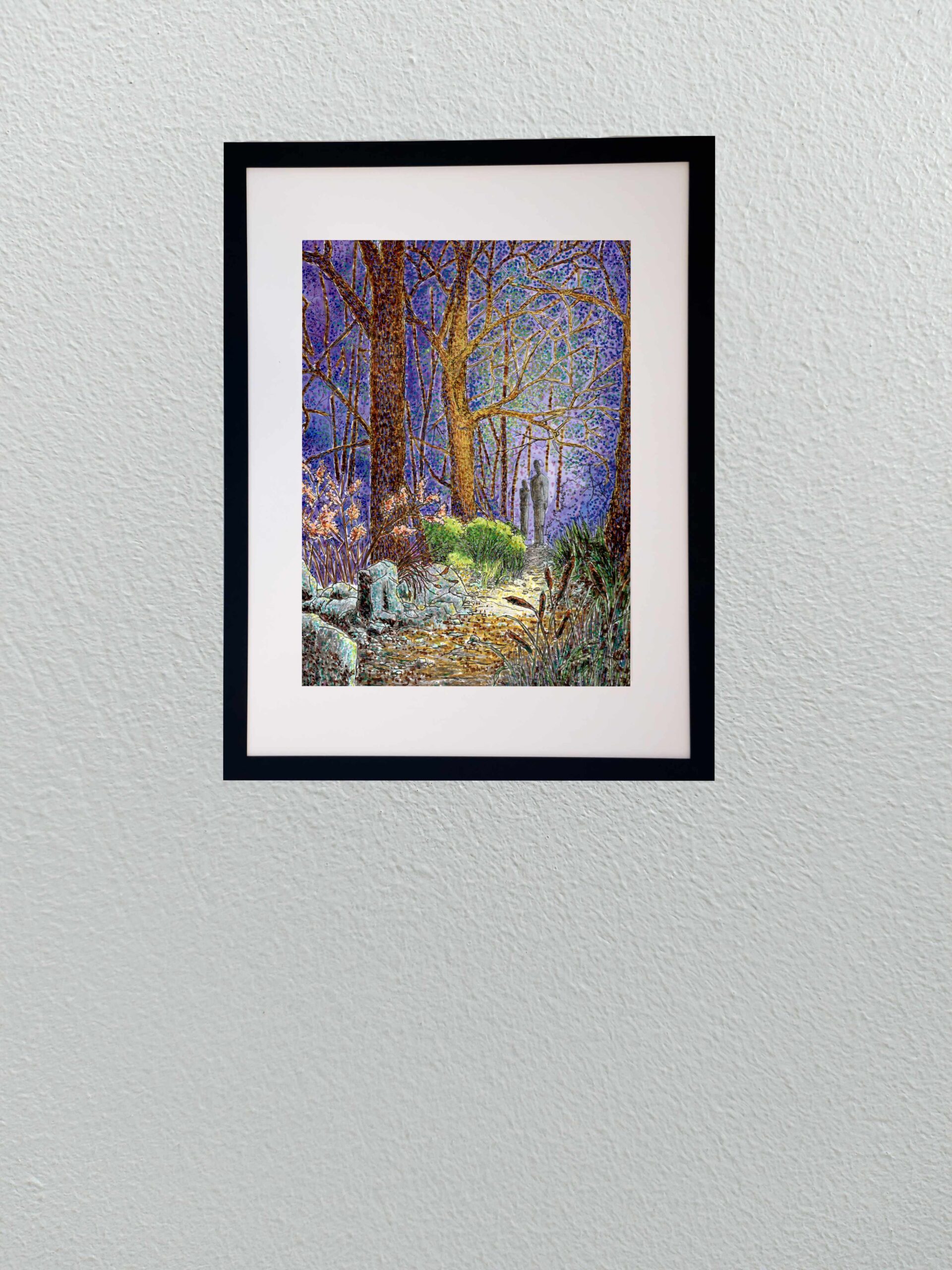
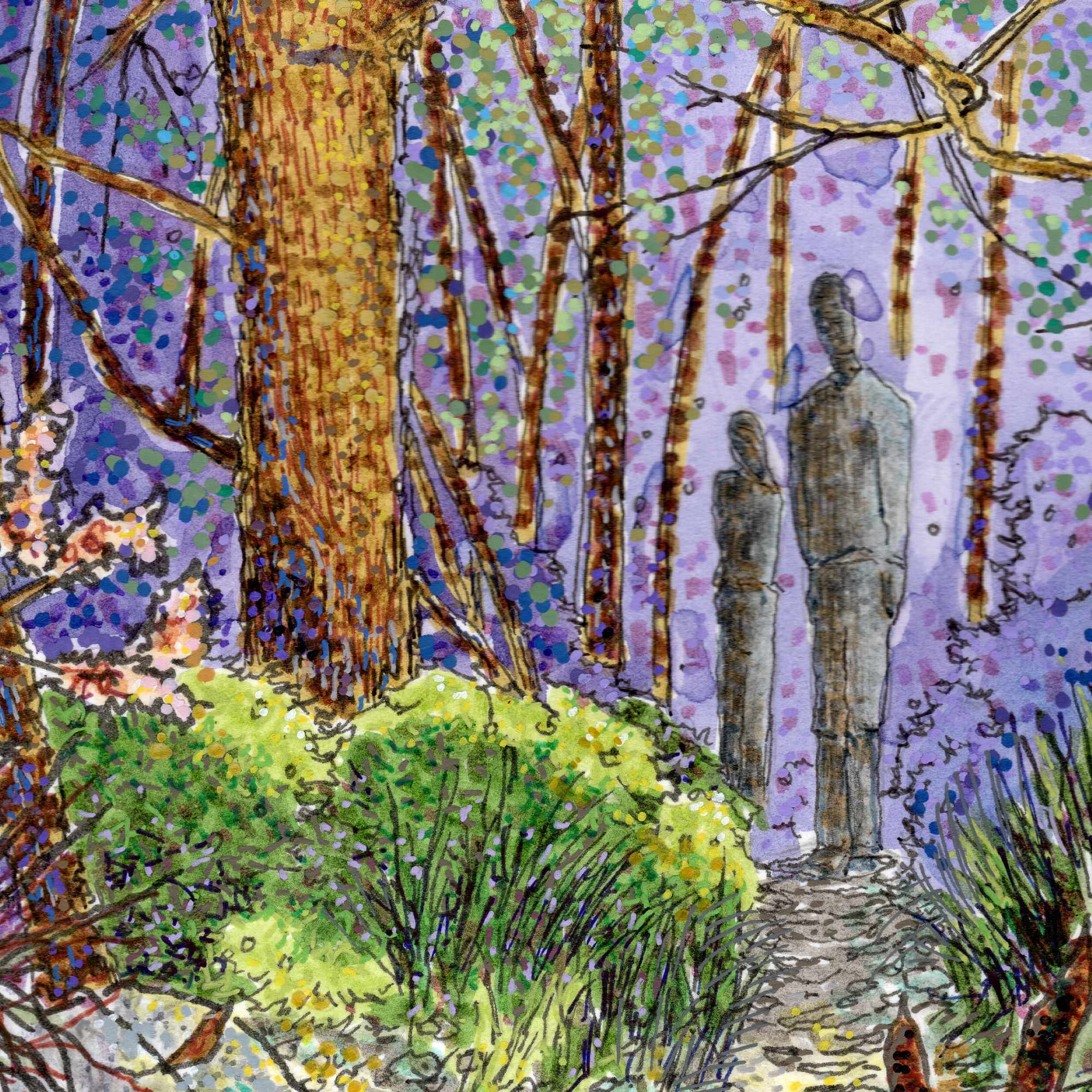
    I wanted this piece to feel like a fragment of a larger, untold story. It is composed from the exact vantage point of an unknown observer looking through the brush, watching two figures stand at a crossroads on a path. You are witnessing a fleeting, high-stakes moment, but the context is deliberately stripped away. Is one figure looking back because they finally spotted you? Are they standing forlornly as someone else prepares to disappear into the heavy tree line? Or are they simply frozen in a moment of sharp indecision? Leaving those questions unanswered is the entire point; it forces the viewer to fill in the blanks.

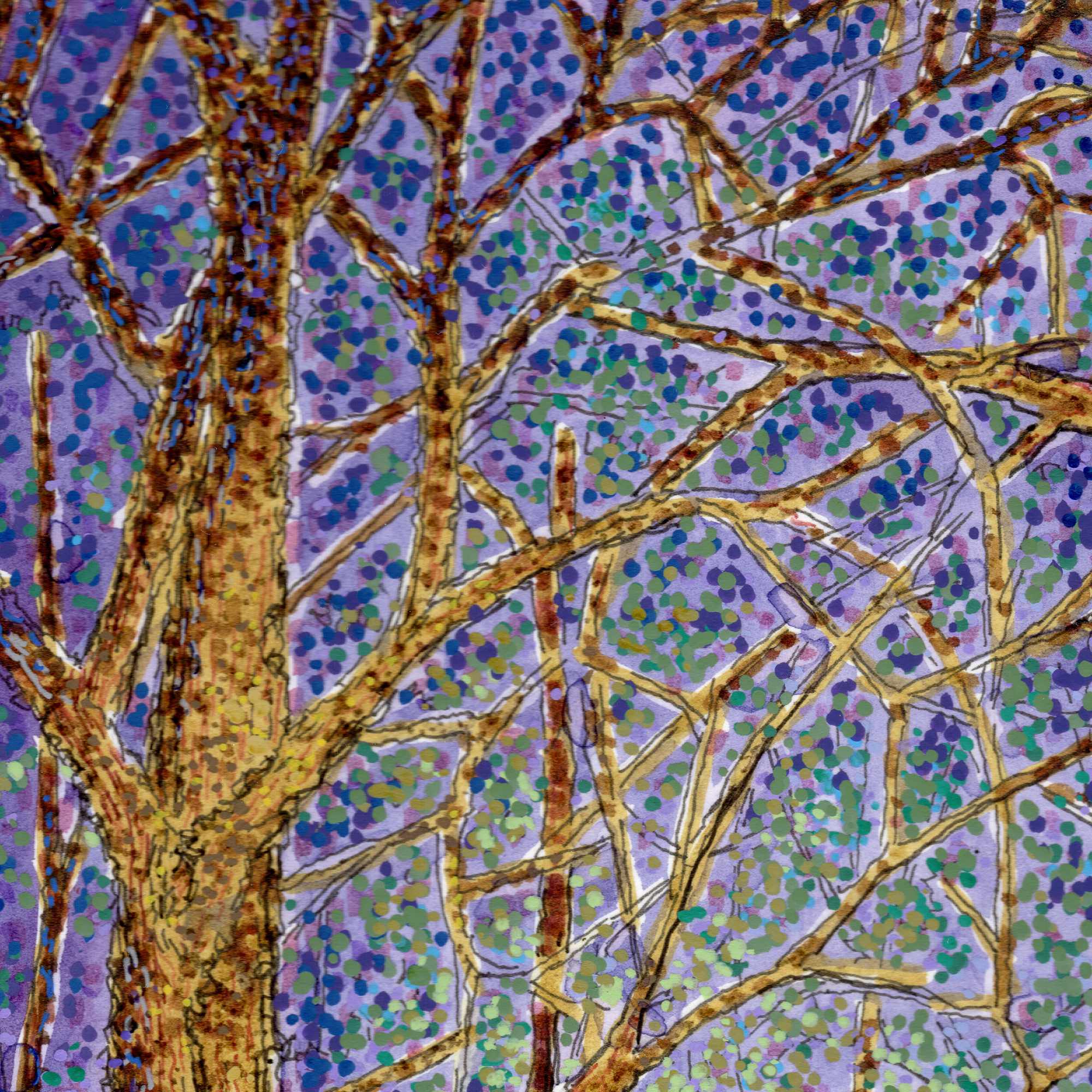
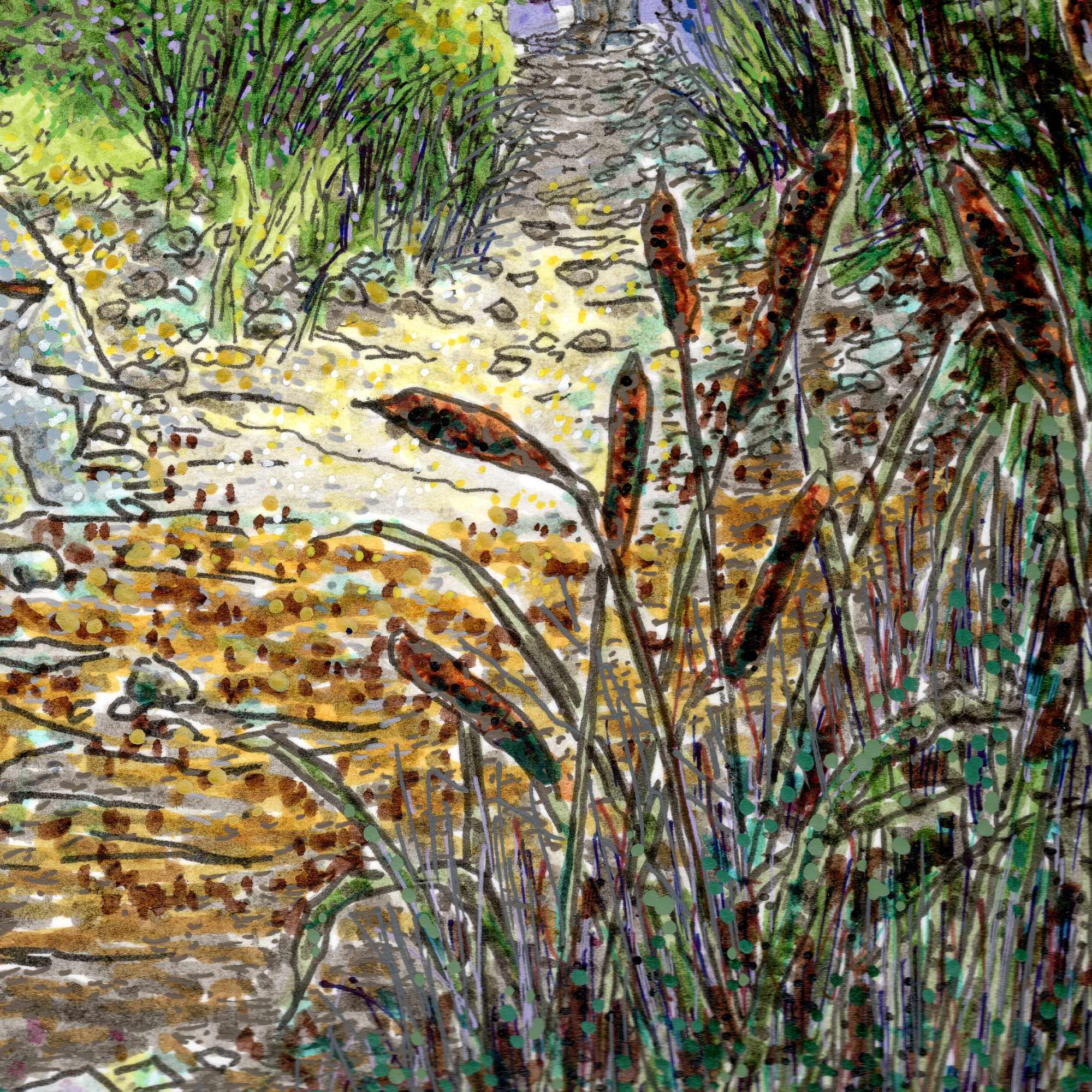
    To build this sense of atmospheric suspense, I used a complex multi-medium approach on hot press paper. I started with an India ink wash to establish the deep, heavy values and the overall mood of the environment. From there, I used a mix of Pigma pens and Pitt pens to layer the finer, sharper architectural lines of the massive tree trunks and the dense foliage. I relied heavily on stippling in the canopy, using rapid dots of vibrant purple and green to make the air itself feel like it is vibrating. Finally, I used a white gel pen to pull out the stark, sharp highlightsโ€”catching the light on the foreground rocks, cattails, and the edges of the figures to create a punchy contrast against the dark background wash. By blending the fluid ink with the rigid precision of the pens, the process itself becomes a balance of control and chaos, keeping the image grounded in texture while letting the narrative remain completely elusive.


  • The Yellow Hat

    The Yellow Hat

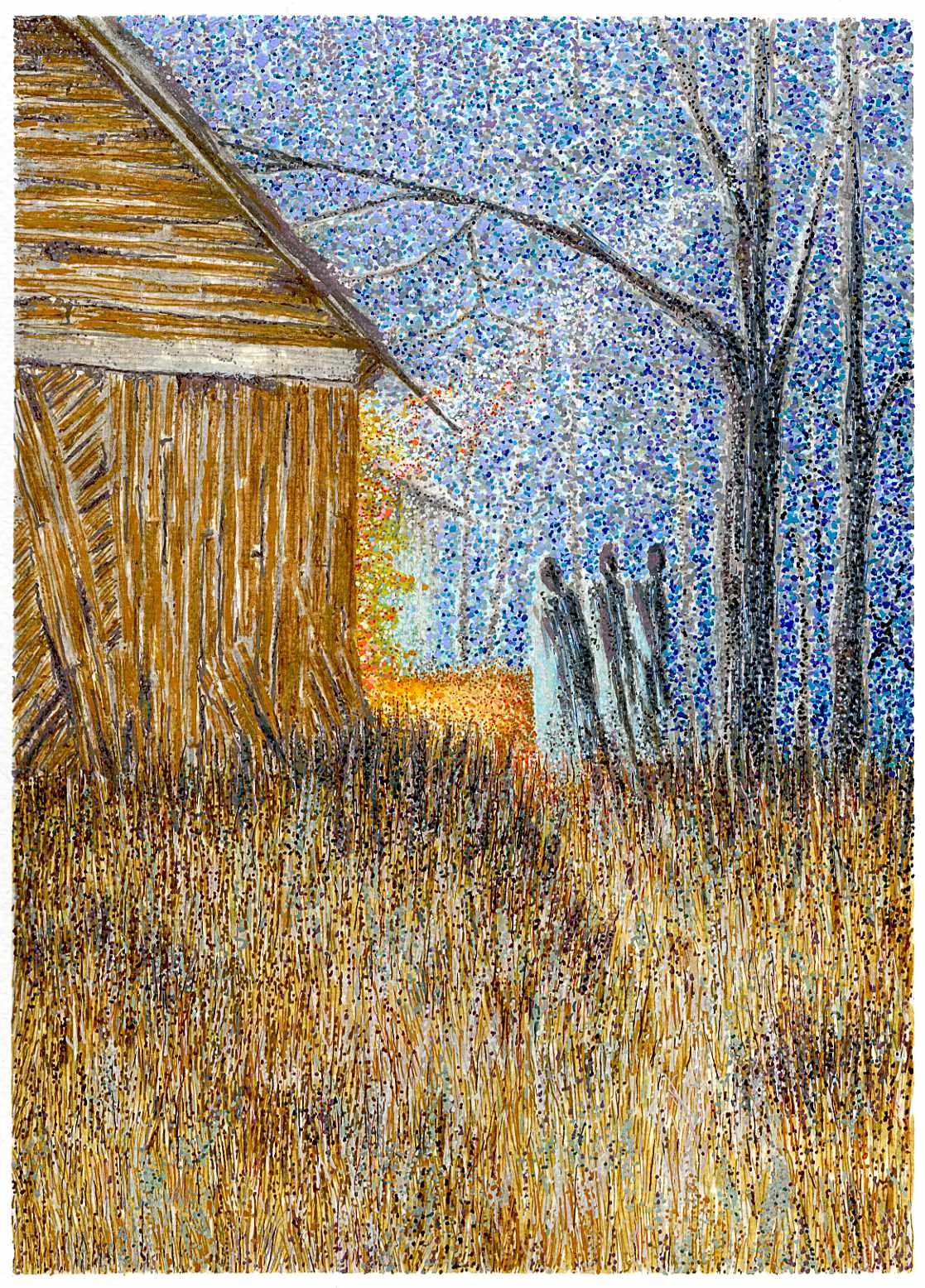
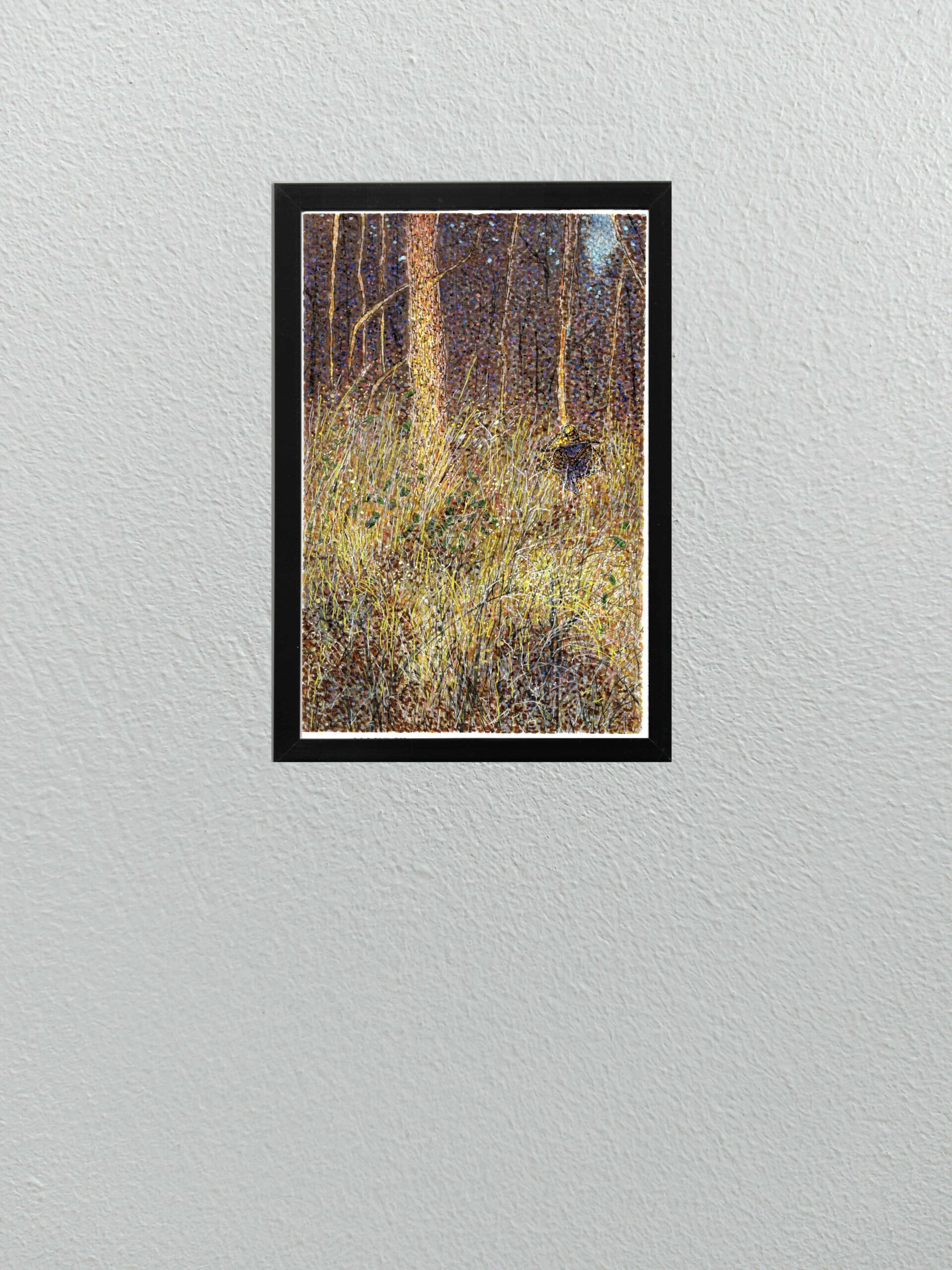
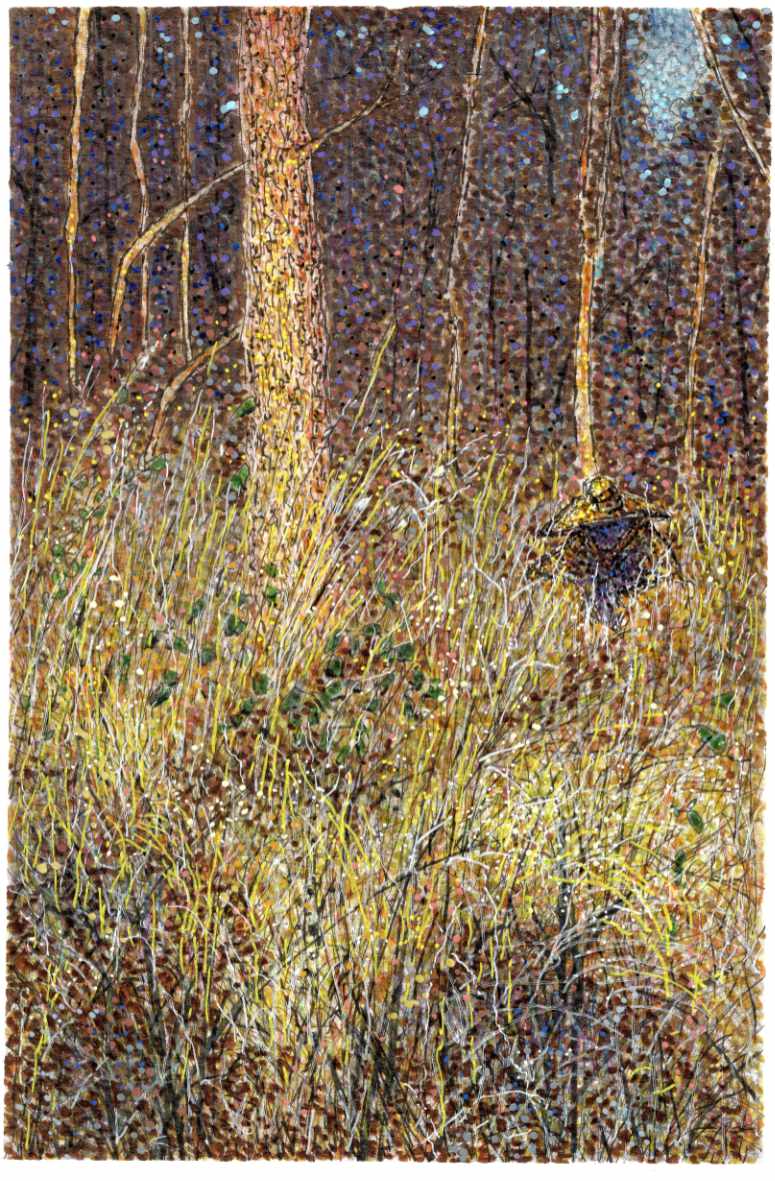
    Today I am sharing a new multi-media piece that continues to push the boundaries of my recent experiments with pointillism, but with a distinct narrative twist.

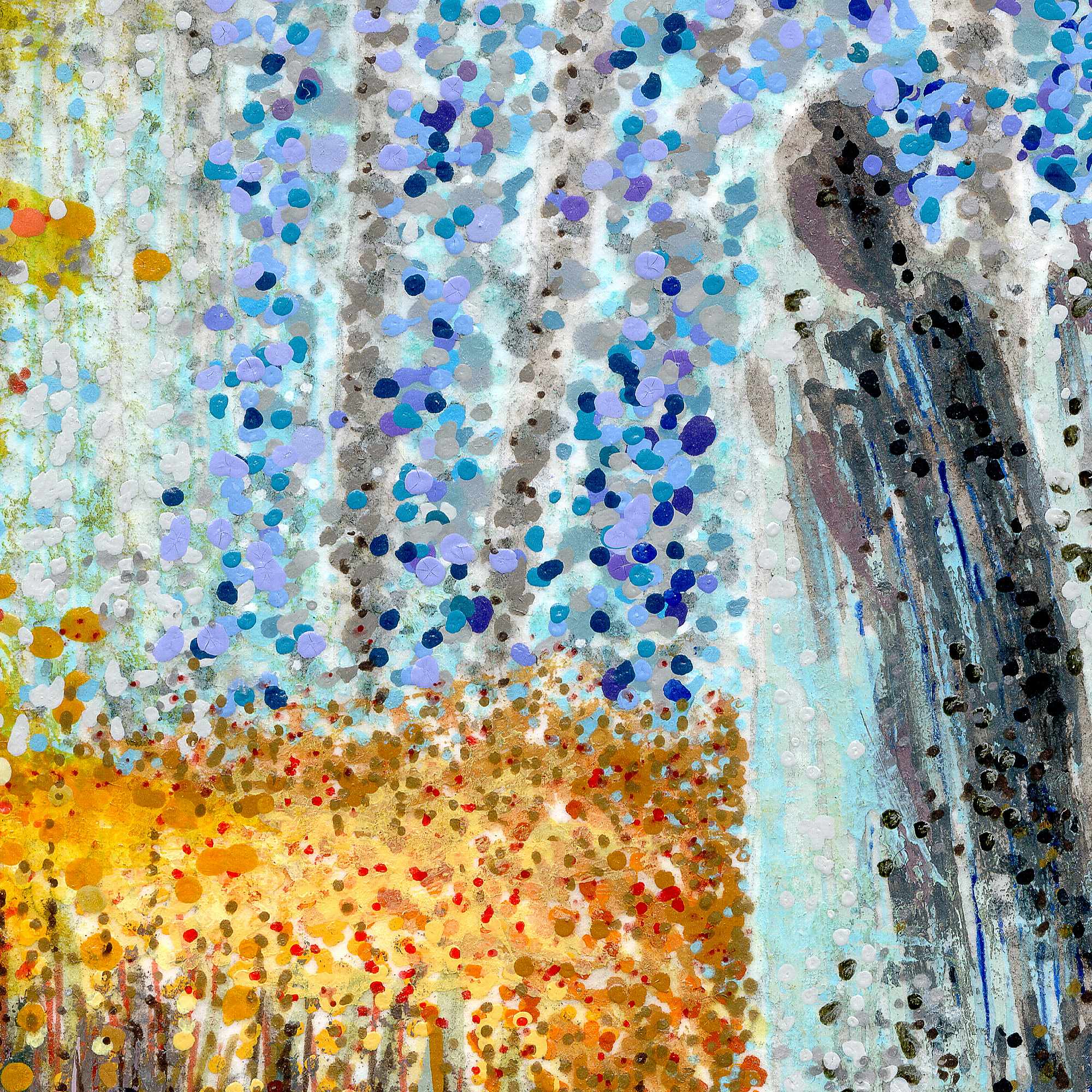
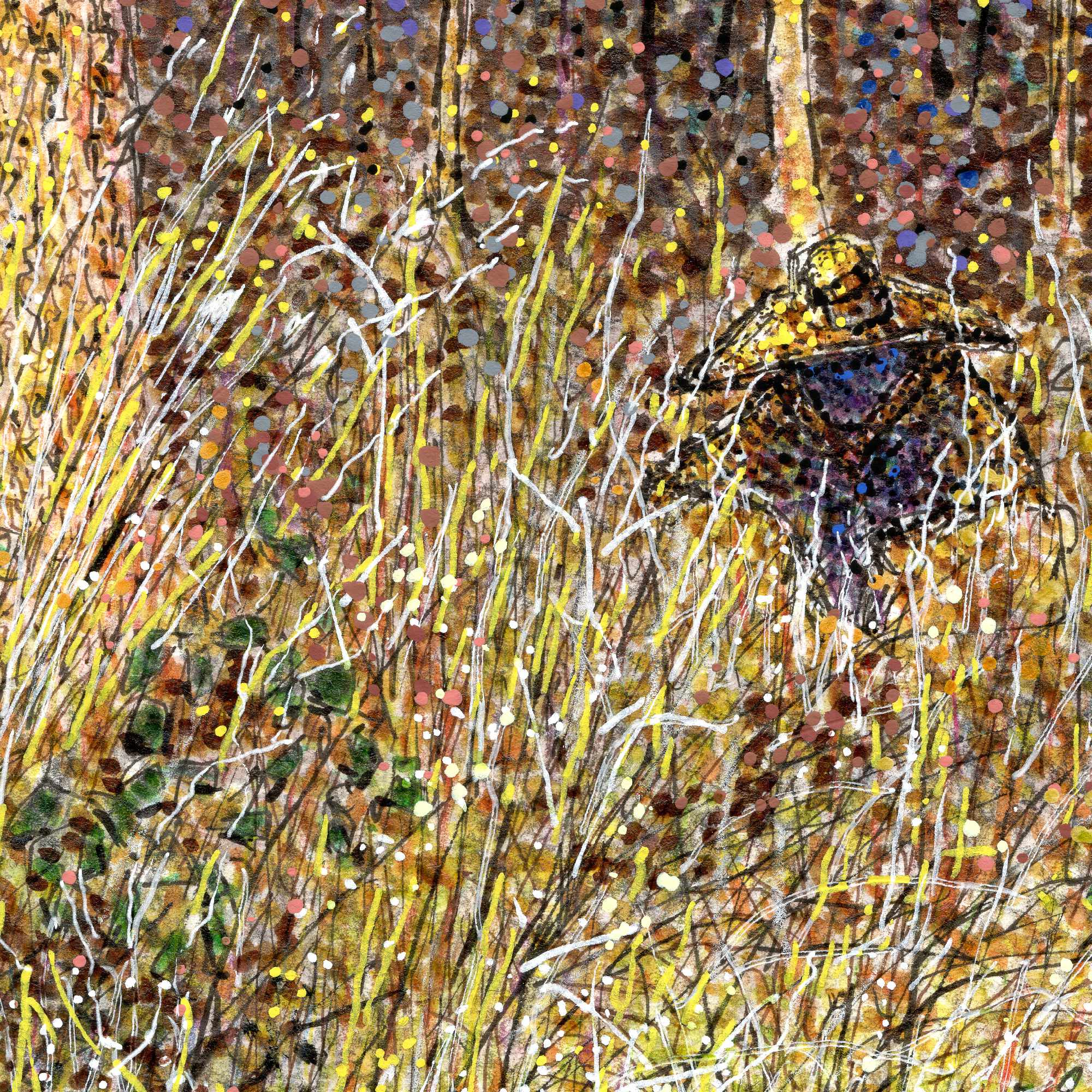
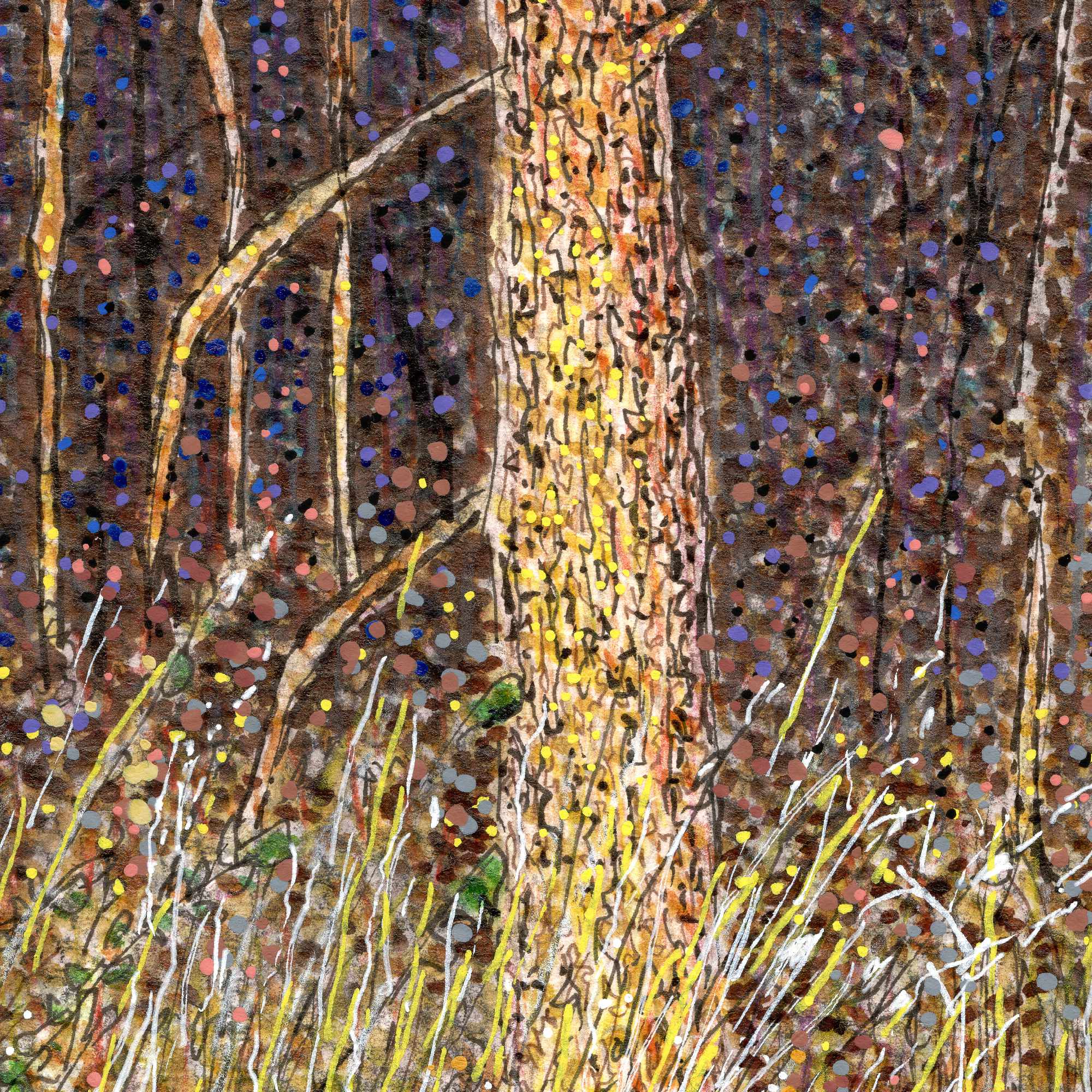
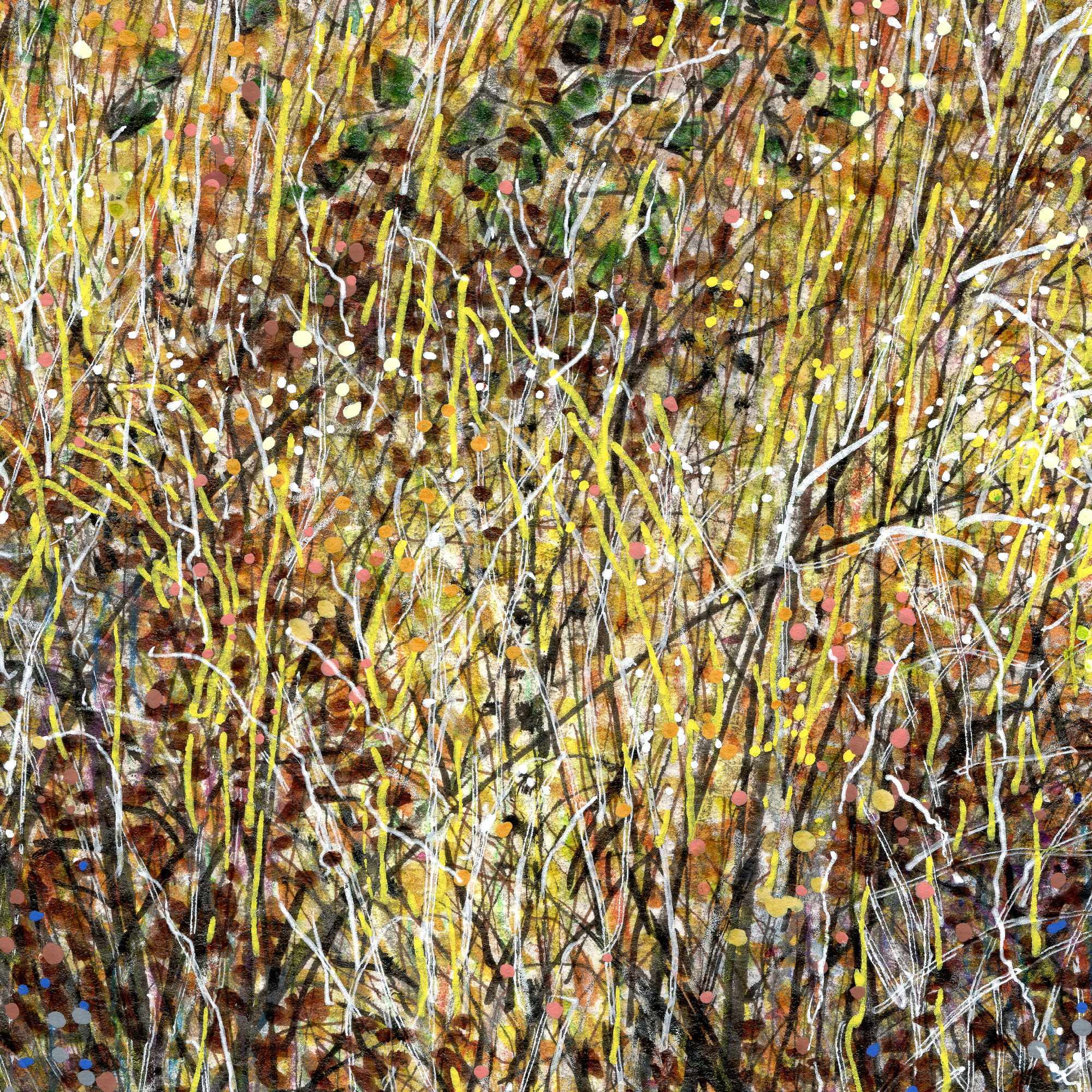
    This piece, based on an older photograph of a dense tree line and brush, relies on a highly textured mix of India ink, acrylic pens, and Pigma fine liners. To capture the thick, almost claustrophobic atmosphere of the undergrowth, I combined sharp, vertical scratches for the tall grass with heavy, vibrating dots of color. The optical mixing of the bright yellows and oranges in the foreground against the deep, heavy purples and blacks of the background gives the entire scene a buzzing, nocturnal energy.

    But this isn’t just a landscape study. If you look closely at the middle-right side of the composition, tucked away in the tall grass, there is a cloaked figure wearing a wide-brimmed yellow hat.

    I rendered this figure using the exact same pointillist and linework techniques as the surrounding environment, perfectly camouflaging them into the brush. Much of my work centers around the idea of being a “quiet observer” in rural, forgotten spaces. With this piece, I wanted to flip that dynamic. It introduces a subtle, eerie, Southern Gothic narrativeโ€”a reminder that when you are out observing the quiet edges of the world, sometimes you are also being observed.


  • Spring Vetch

    Spring Vetch

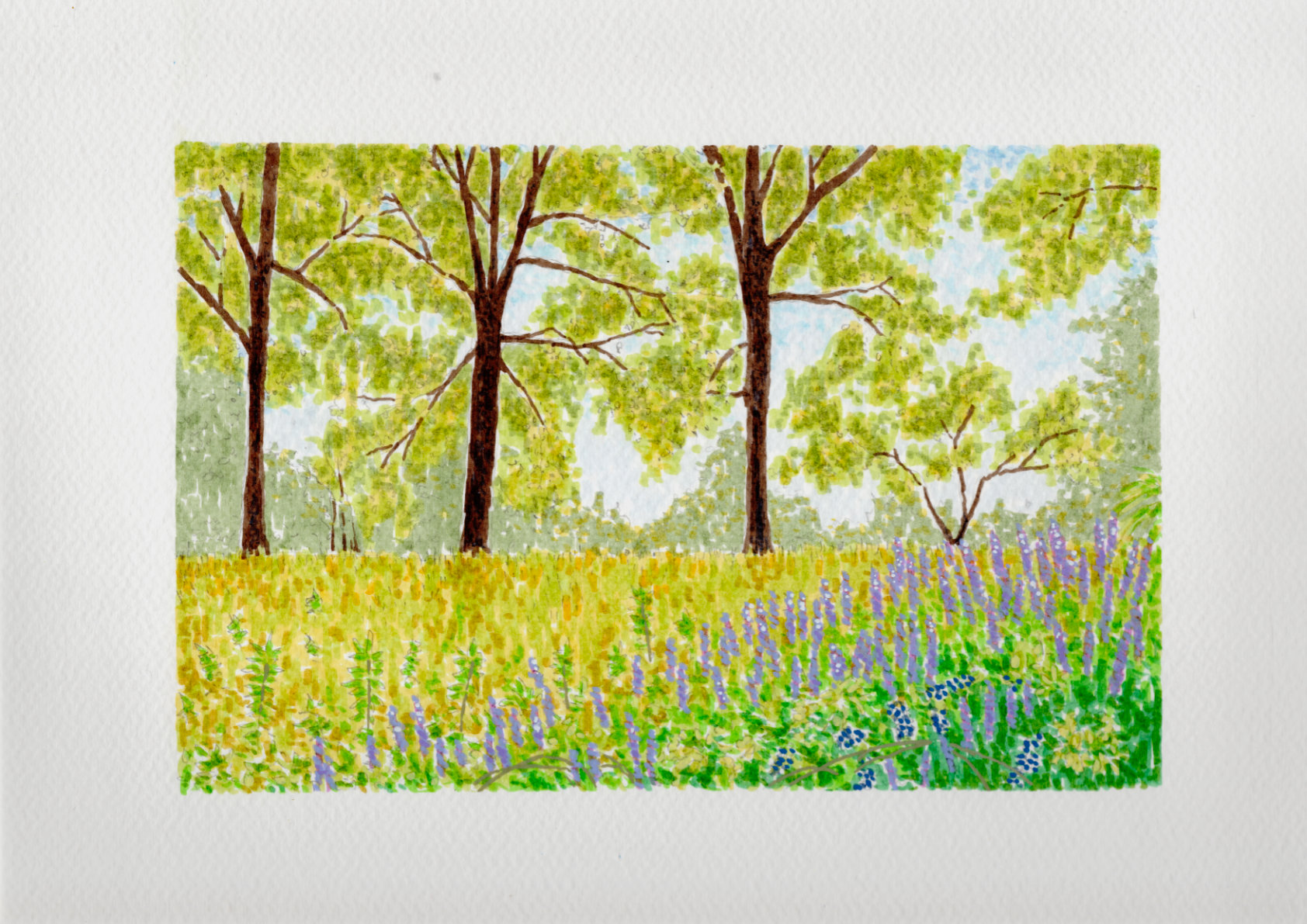
    This study captures a spring field in Georgia, where the greens and yellows feel like they arrived overnight. I used India ink to build the colors in layers, following an Impressionist approach where the depth emerges slowly through repeated marks rather than solid lines. Against that translucent ink, I used acrylics sparingly as a solid, opaque counterpoint.

    I applied them specifically to the purple vetch in the foreground and a few select leaves to give the eye a place to land. The cold press paper captures and holds the ink exactly where I want it, keeping the pigment in place while allowing just the smallest edges to blend into the tooth. Itโ€™s a fast, rhythmic way to work that records the spirit of the place without getting bogged down in every individual blade of grass.
    Technical Details:

    • 8×10 140lb cold press
    • Sakura Pigma pens
    • Faber-Castell Pitt pens
    • Acrylic swipe
  • The Reader and the Statue

    The Reader and the Statue

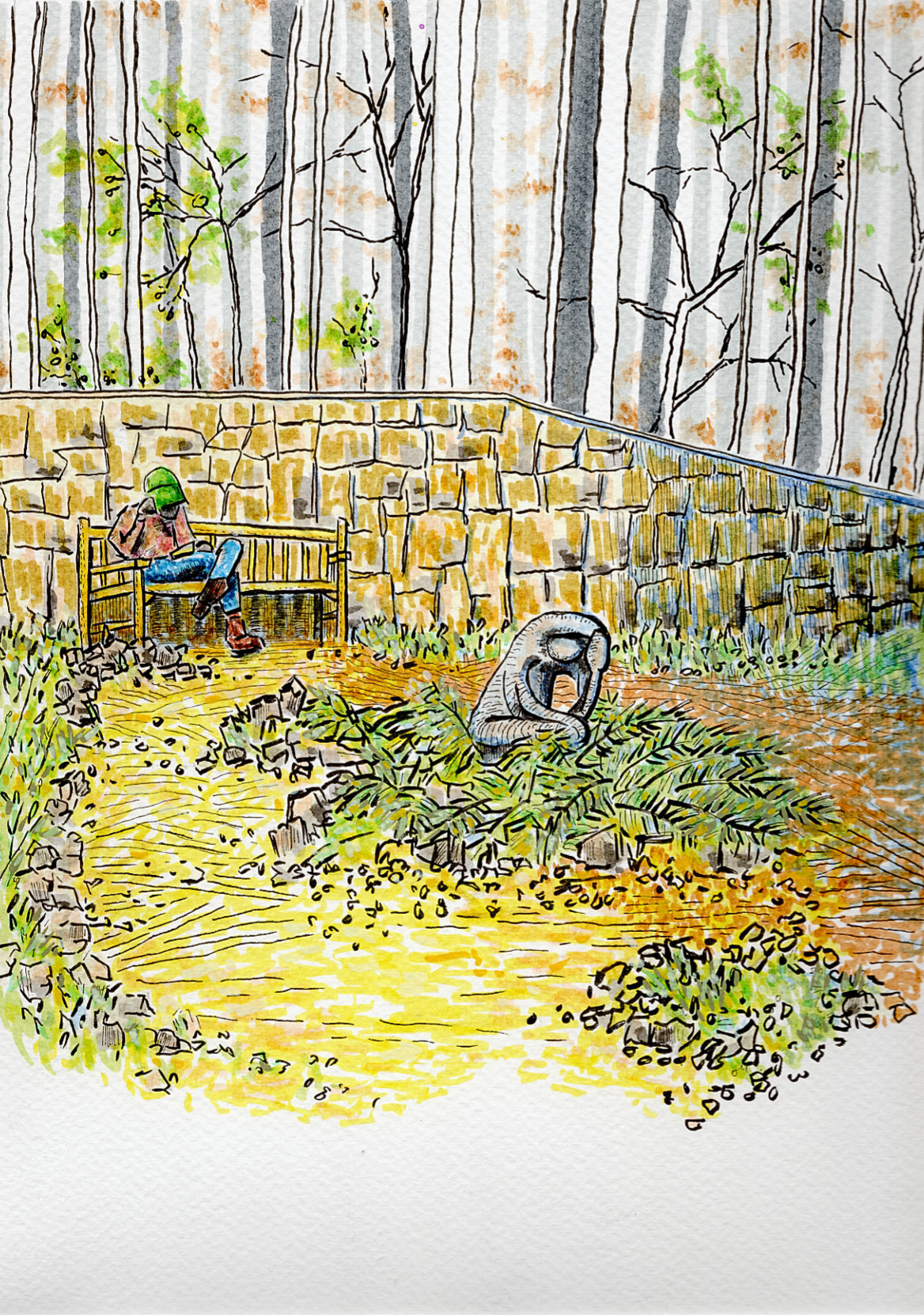
    Iโ€™m sharing a new piece today, built from a reference photo I took on a cool spring afternoon at the Georgia State Botanical Gardens in Athens.

    Walking through the grounds, I was immediately drawn to the relationship between these two figuresโ€”a man reading on a bench and a nearby sculpture. I loved the accidental, imitative gestures; both the living man and the stone figure seemed equally invested in their quiet activities. The contrast between the fleeting stillness of the reader and the permanent stillness of the stone was a dynamic I wanted to capture on paper.

    For this piece, I wanted the technique to reflect the atmosphere of that afternoon. Instead of rigid, heavy linework, I relied on quick dashes and the natural, expressive tendency of India ink. My goal was to give the illustration a whimsical and impressionistic sensation, capturing the feeling of the garden rather than just mapping out its exact details.

    To balance that loose, kinetic energy, I brought in acrylic ink very sparingly. It was used just to provide some opaque grounding in a few sparse locations across the piece, anchoring the expressive ink lines and giving the composition a bit of weight.

    Itโ€™s a quick study of a quiet momentโ€”where life and art happened to be doing the exact same thing.

    Technical Details:

    • 9×12 140lb cold press
    • Faber-Castell Pitt pens
    • Shuttle Art paint pens
    • Staedtler Pigment Liner
  • Snow Day in North Georgia

    Snow Day in North Georgia

    Iโ€™m sharing another new piece today, this one capturing a completely different kind of stillness. Based on a cold, snowy day up in North Georgia, it depicts a few figures standing right in the middle of an iced-over road.

    There is a very specific kind of quiet that happens when it snows heavily around hereโ€”the cars stop, the world slows down, and suddenly the middle of the street becomes a place to just stand and take it all in. I wanted to capture that rare, communal pause.

    To get the atmosphere right, I used the same technique as my recent Botanical Gardens piece. I relied on the expressive, fast nature of India ink, using quick dashes rather than rigid lines. This approach gives the illustration a whimsical, impressionistic sensation that mimics the raw, biting energy of a freezing winter afternoon. The scratchy ink work was perfect for mapping out the bare, shivering trees and the heavy tire tracks carved into the ice.

    Just like the last piece, I used acrylic ink very sparingly to provide some opaque grounding. The bright hits of color on the winter coats and the deep, rusty reds in the background tree line help anchor the composition, allowing the white of the cold press paper to do the heavy lifting for the snow.

    Itโ€™s a quick snapshot of a rare winter moment, frozen in ink.

    Technical Details:

    • 9×12 140lb cold press
    • Faber-Castell Pitt pens
    • Shuttle Art paint pens
    • Staedtler Pigment Liner

  • Small stream at Little Mulberry

    Small stream at Little Mulberry

    This illustration comes from a reference photo I took years ago during a hike. Iโ€™ve always loved how the water in this small stream cuts through the heavy rocks and fallen debris.

    To capture the richness of the season, I used pen and ink for the structure, but relied on an acrylic wipe and india inks for the color. I feel this perfectly mimics the texture of mossy stones and the deep, rusty tones of autumn leaves on the forest floor. A permanent record of a fleeting season.

    Technical Details:

    • 6×9 140lb cold press
    • Sakura Pigma pens
    • Faber-Castell Pitt pens
    • Acrylic swipe
  • Hidden Falls

    Hidden Falls

    This hidden waterfall in North Georgia was difficult to find when I photographed it years ago, and today, itโ€™s impossible to reach. It exists now only in memory and in this illustration.
    Technical Details:

    • 6×9 140lb cold press
    • Sakura Pigma pens
    • Faber-Castell Pitt pens
    • Acrylic swipe
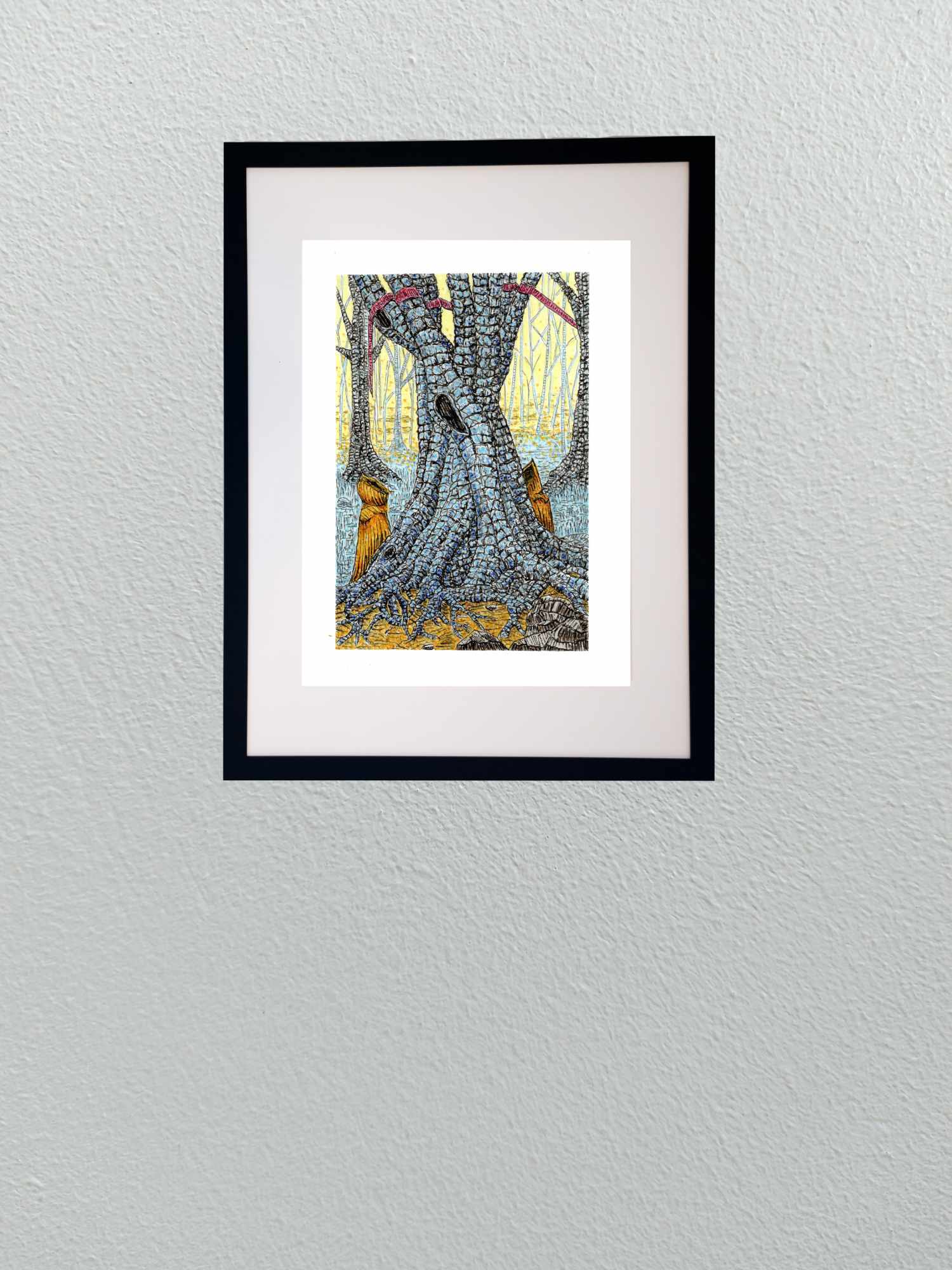
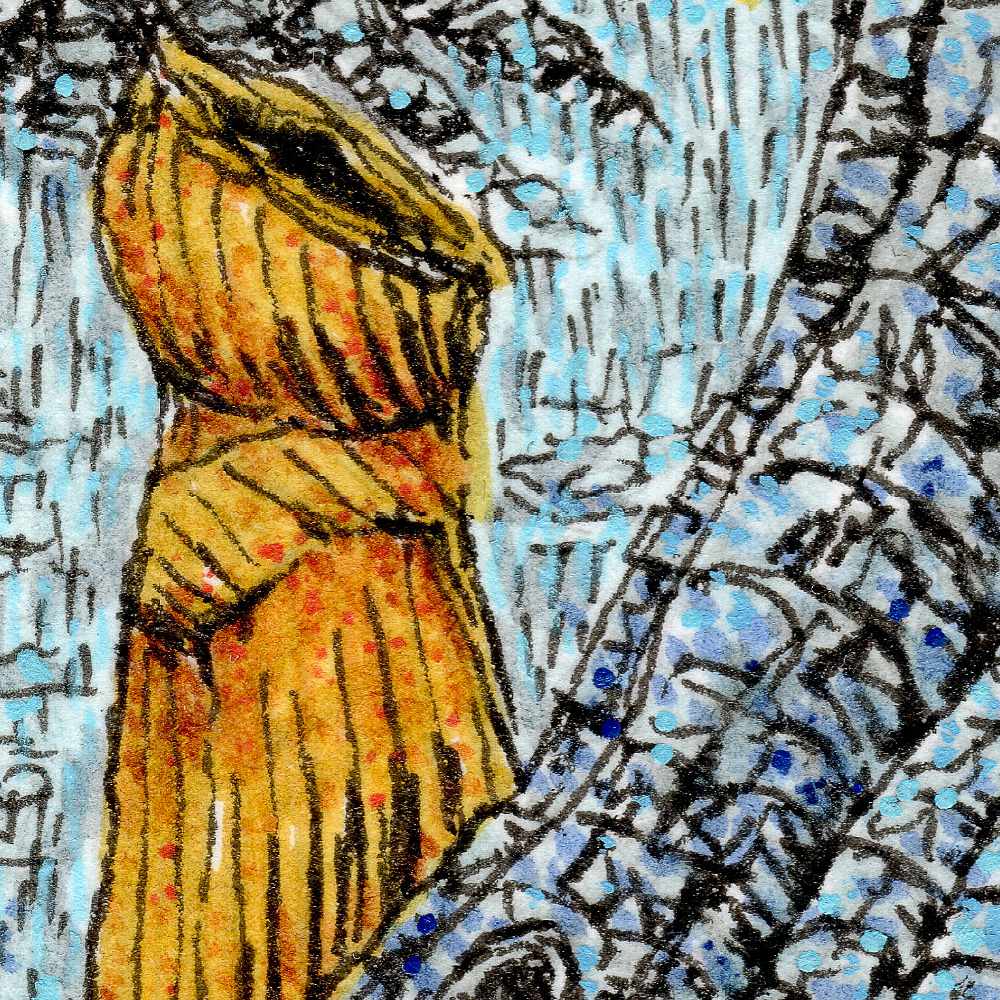
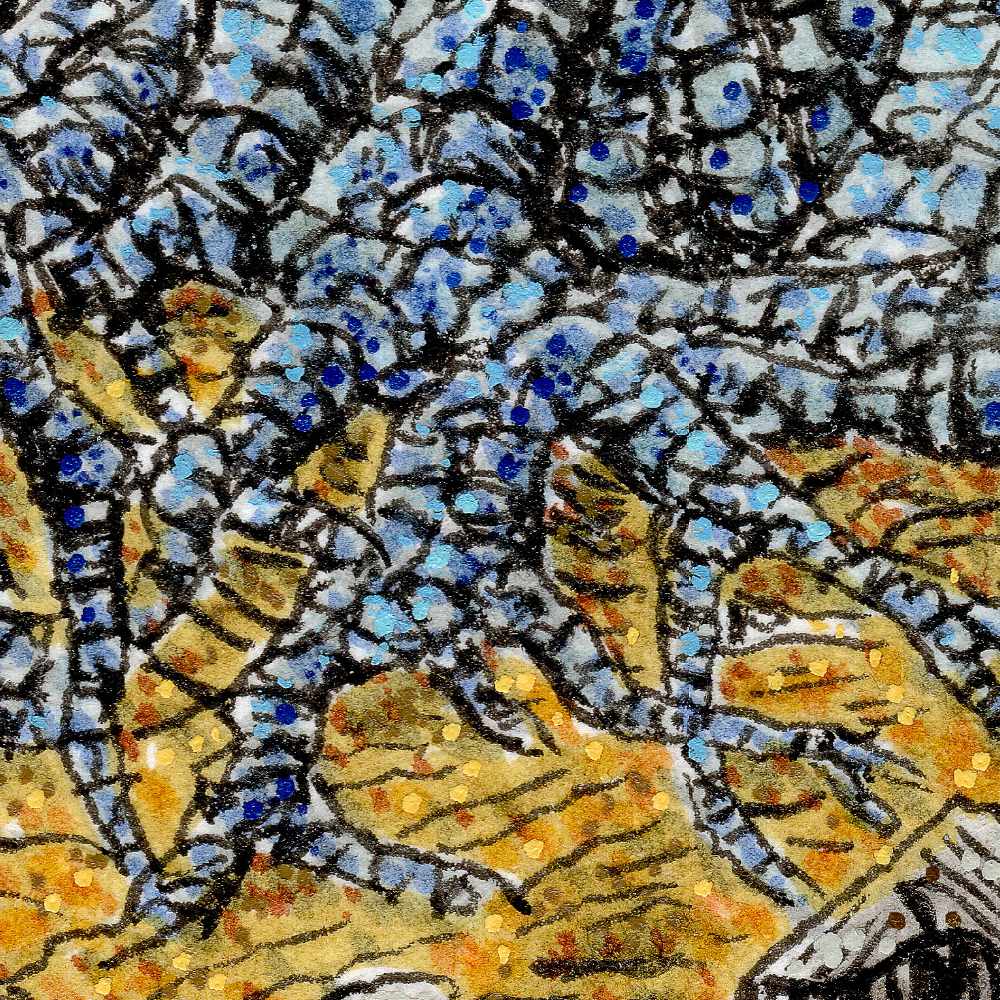
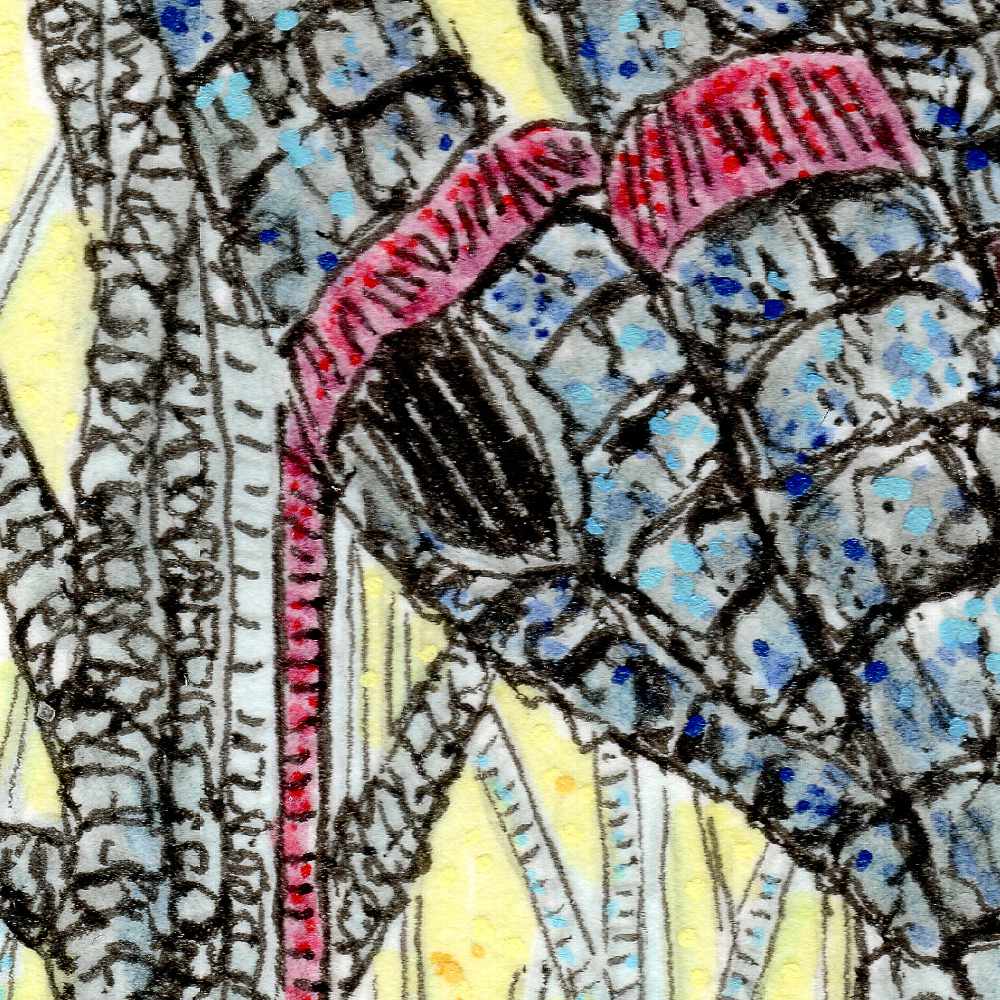
  • Illustration of Dragon Tree

    Illustration of Dragon Tree

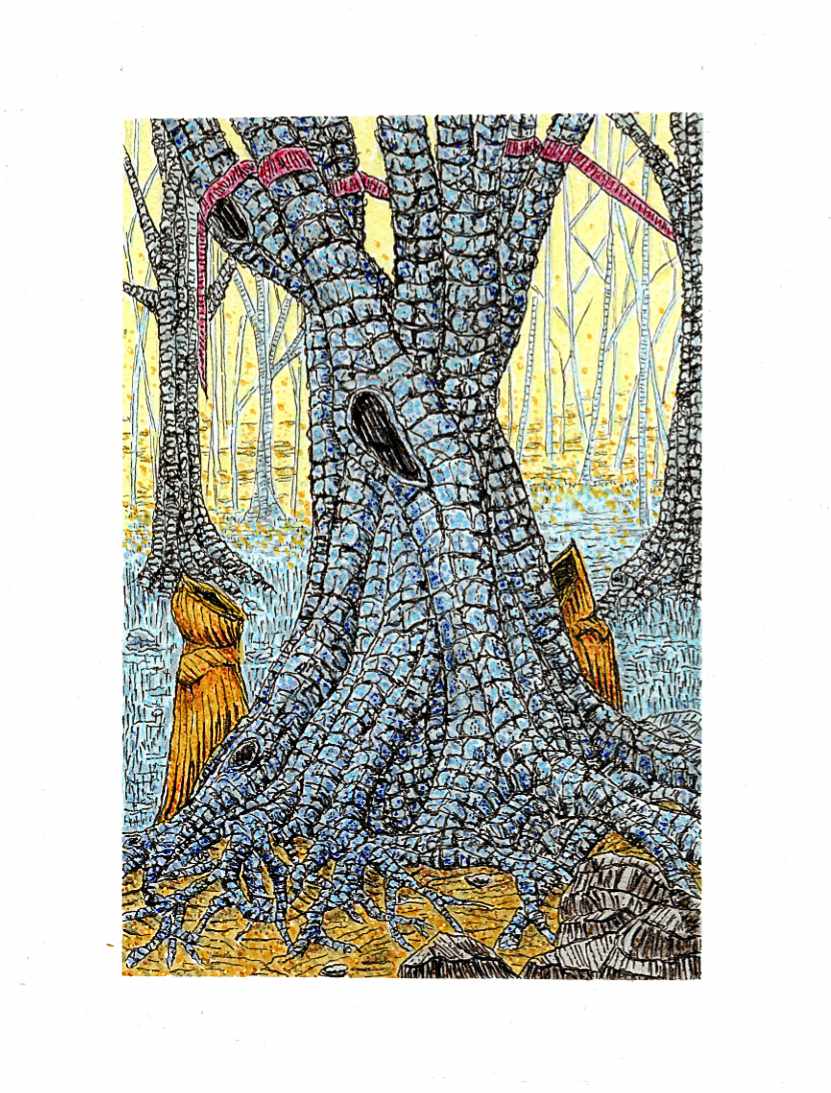
    Illustration of Dragon Tree

    Technical Details:

    • 9×12 140lb hot press
    • Sakura Pigma pens
    • Faber-Castell Pitt pens