Tag: trees

  • Solitary Traverse

    Solitary Traverse

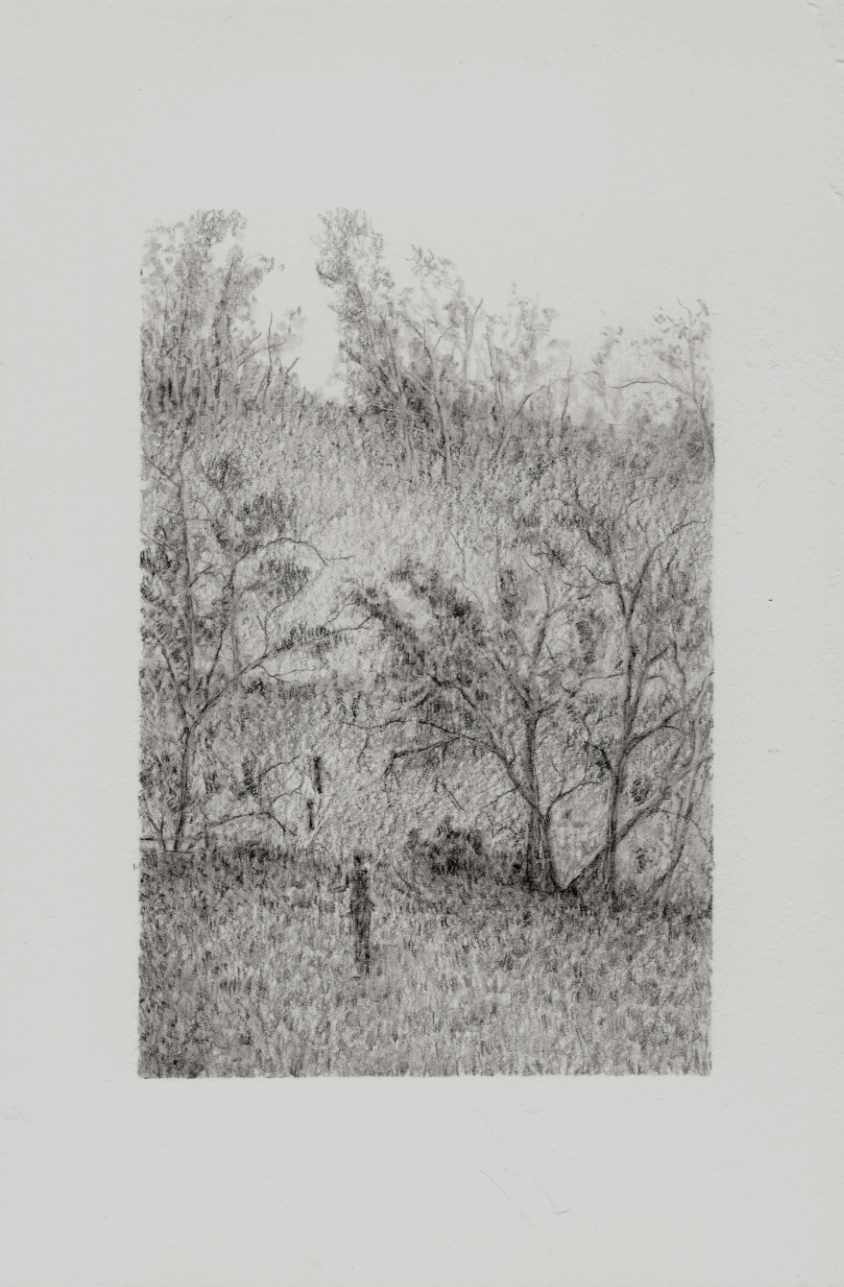
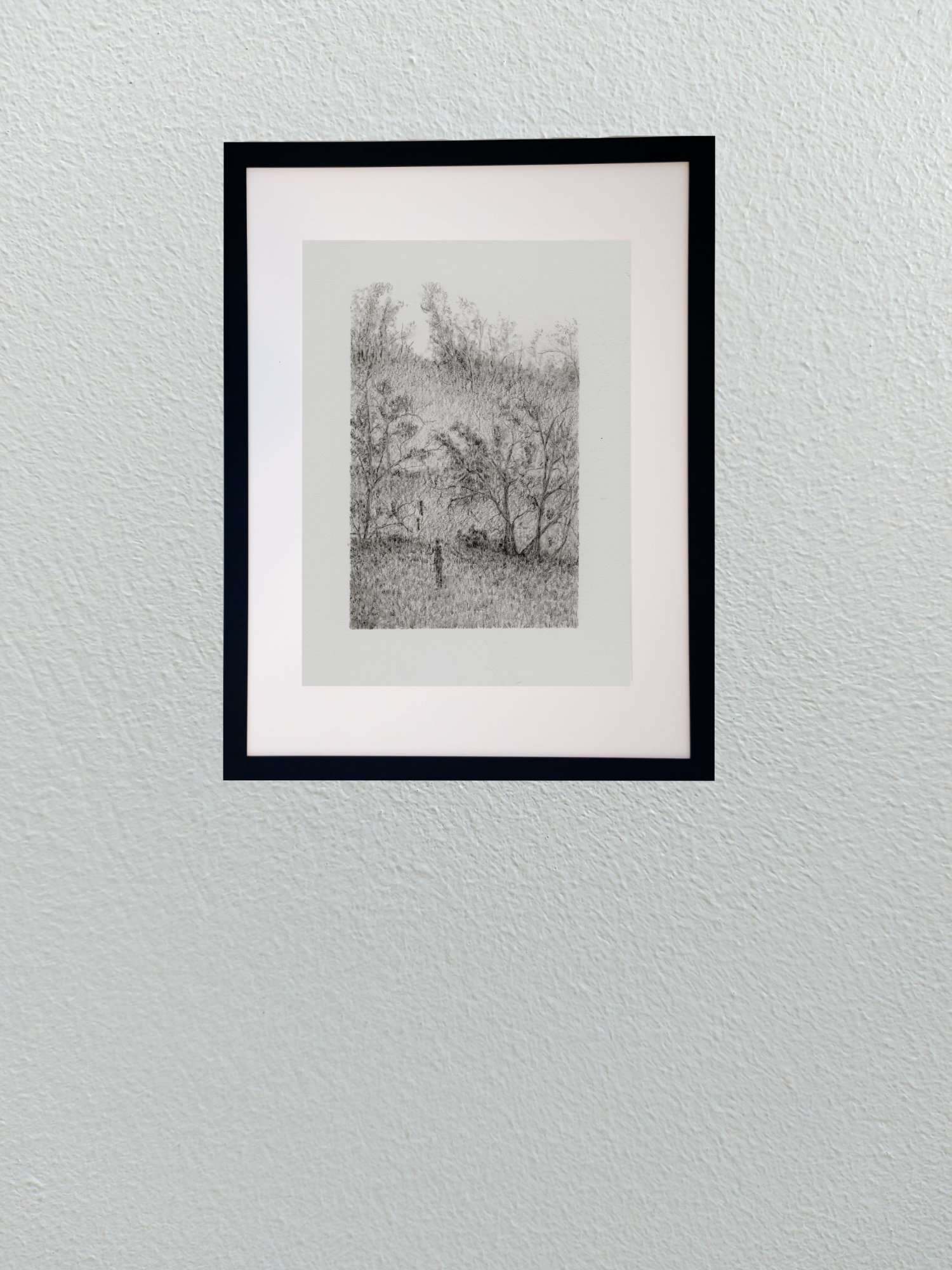
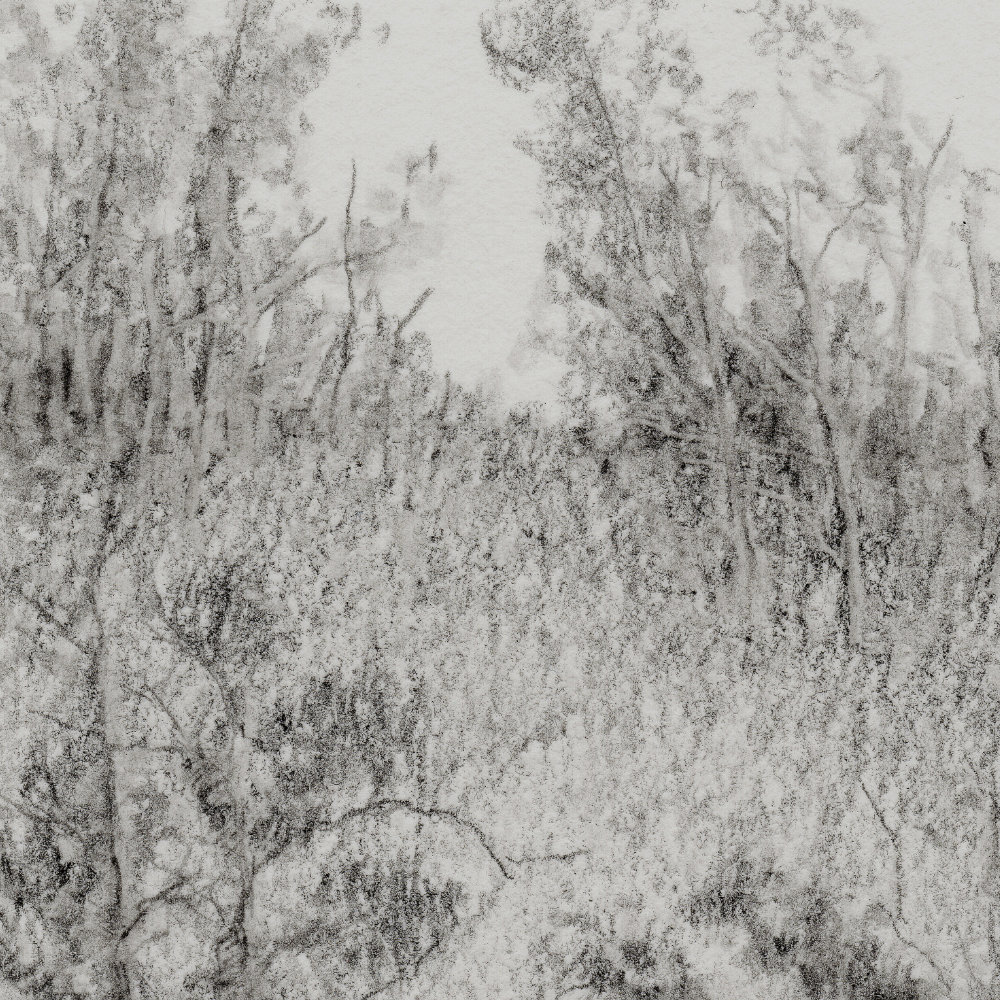
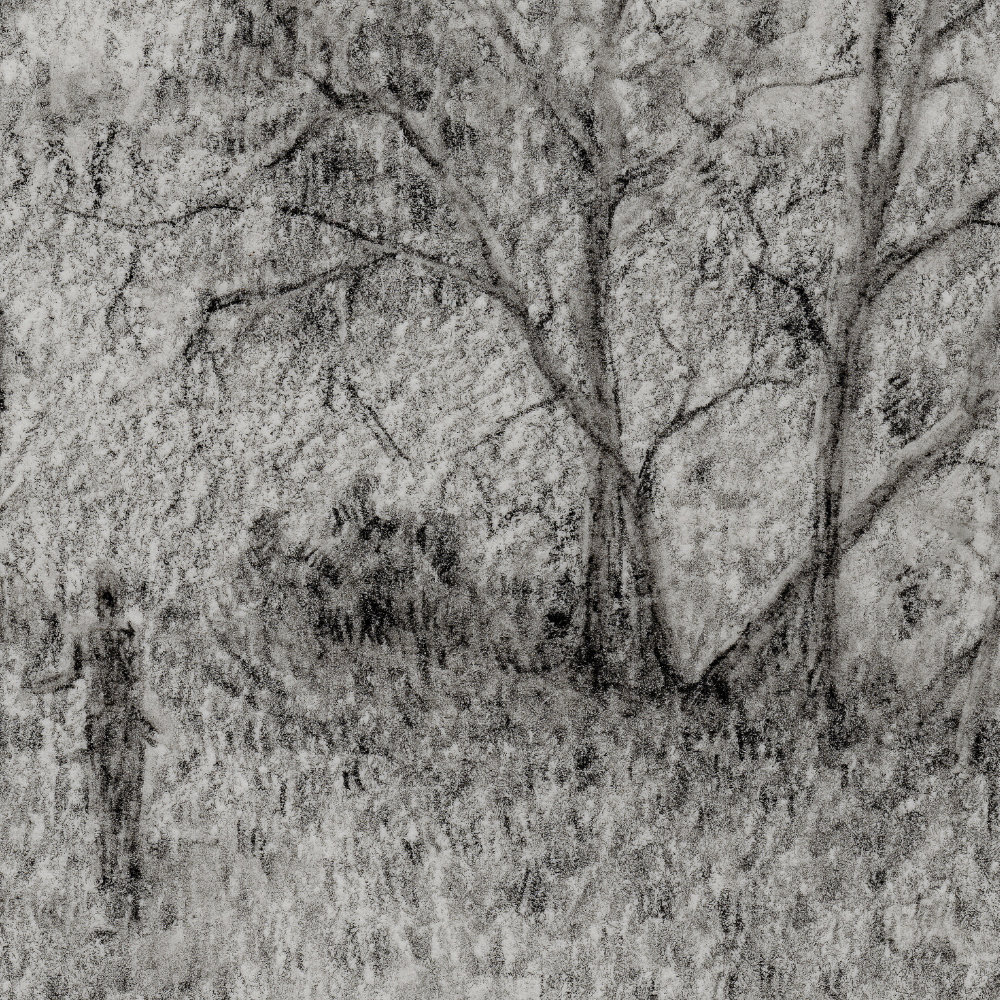
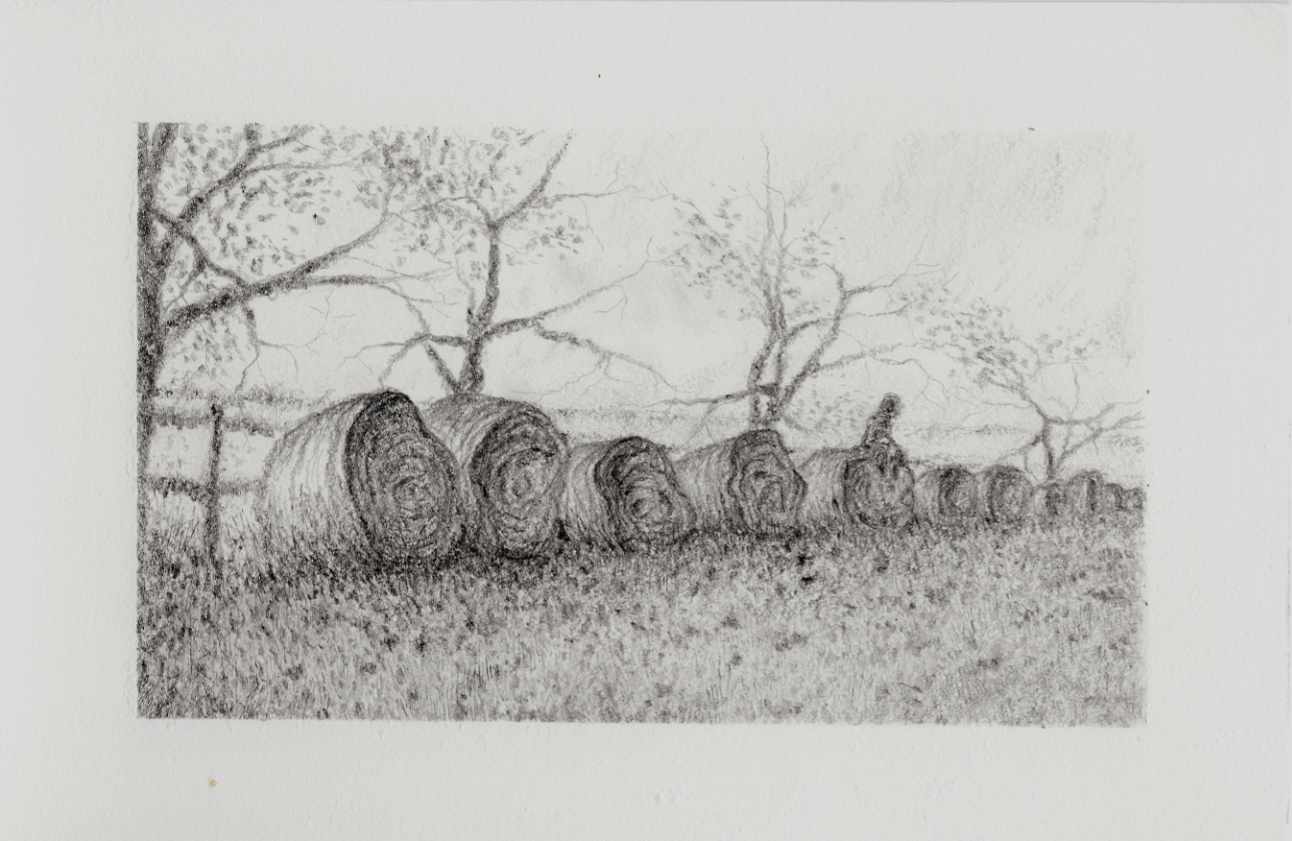
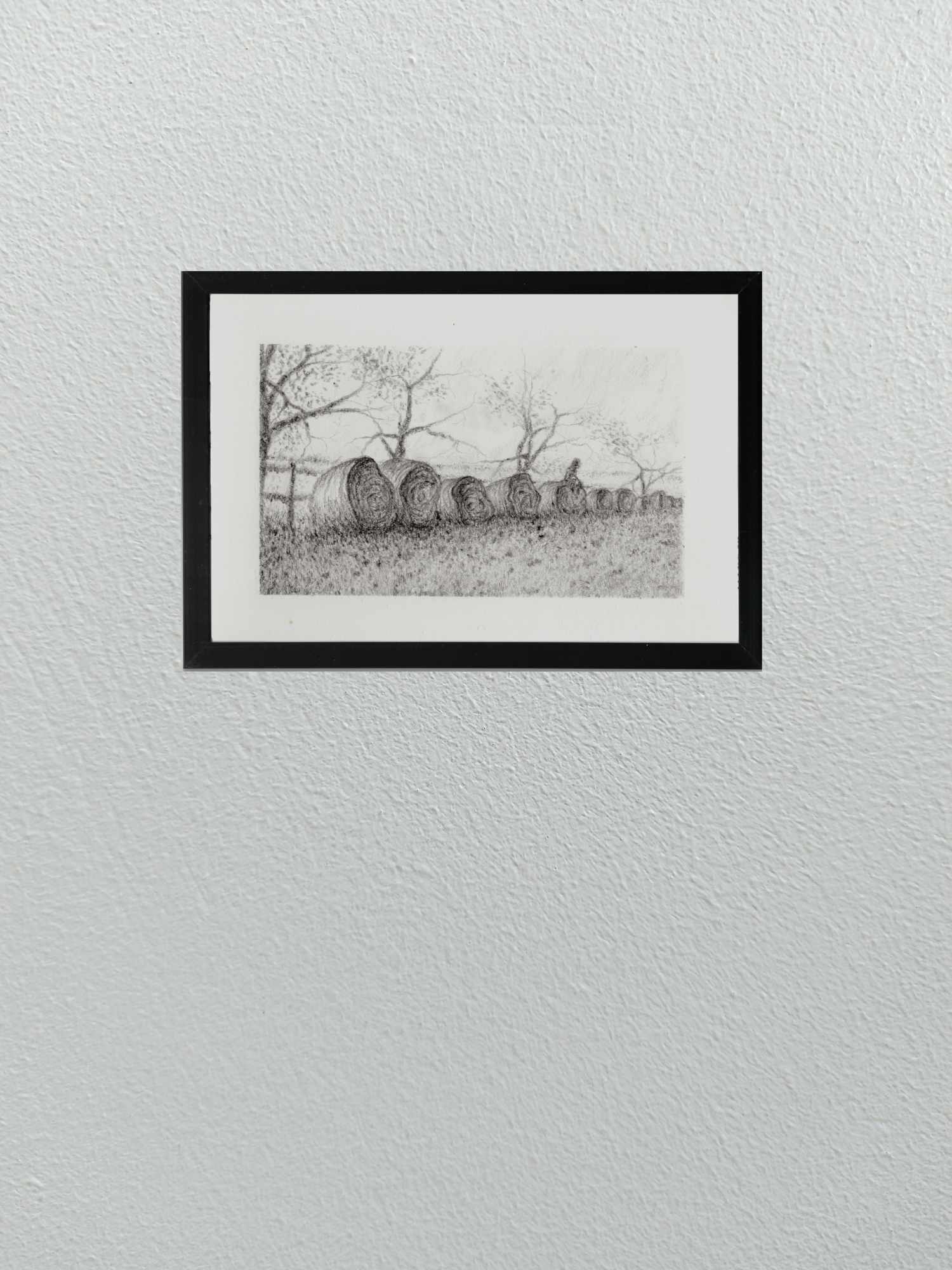
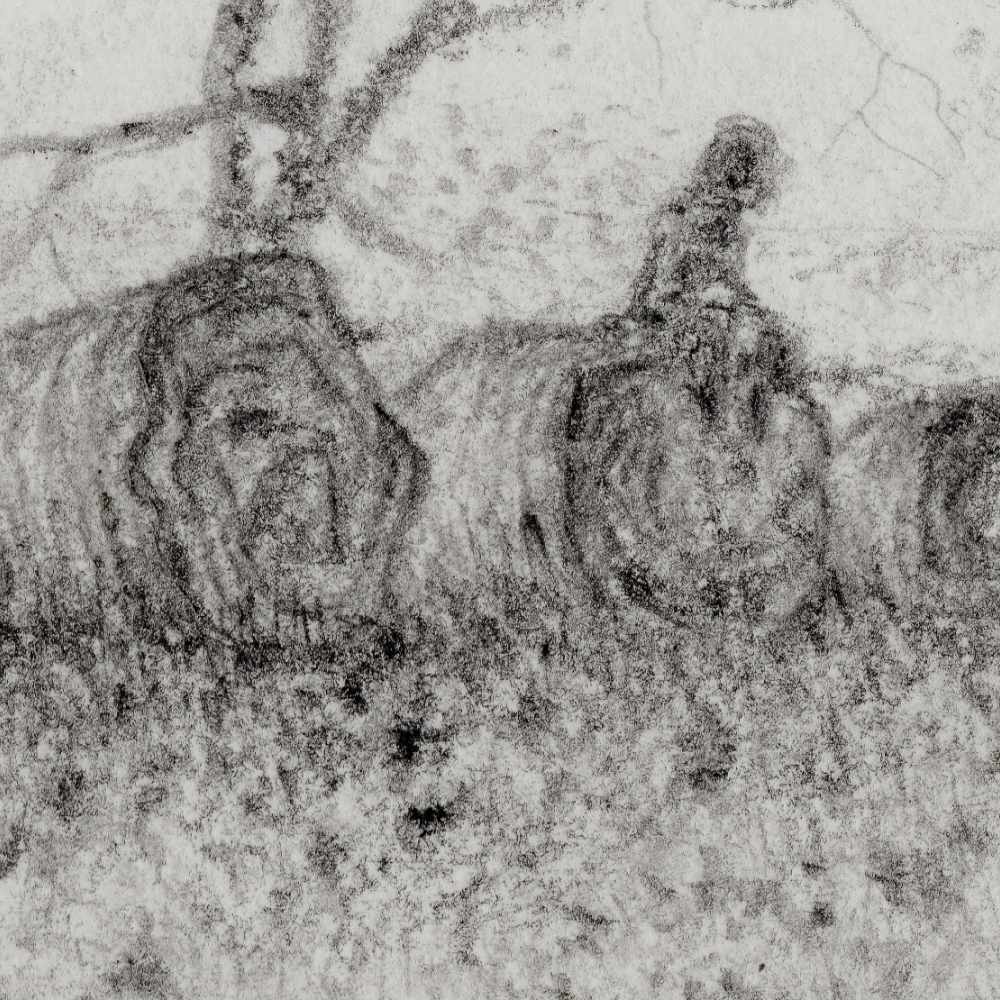
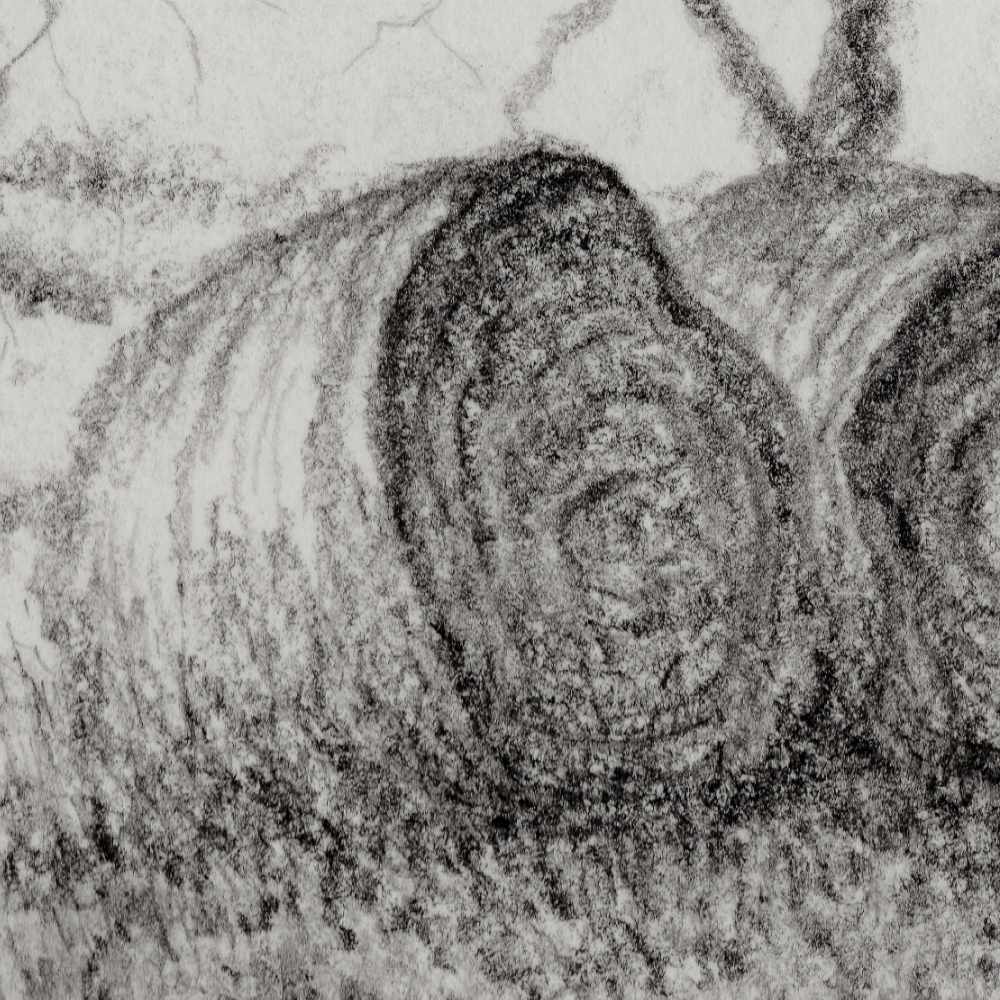
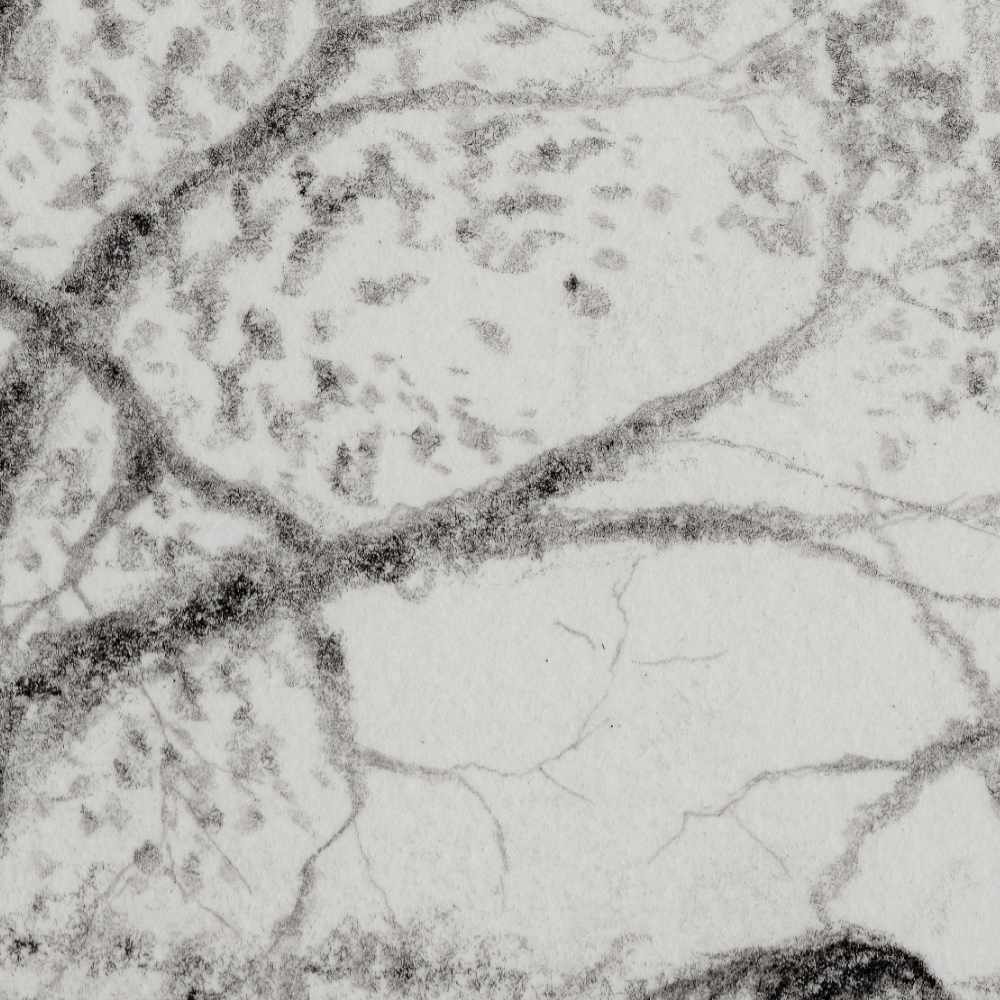
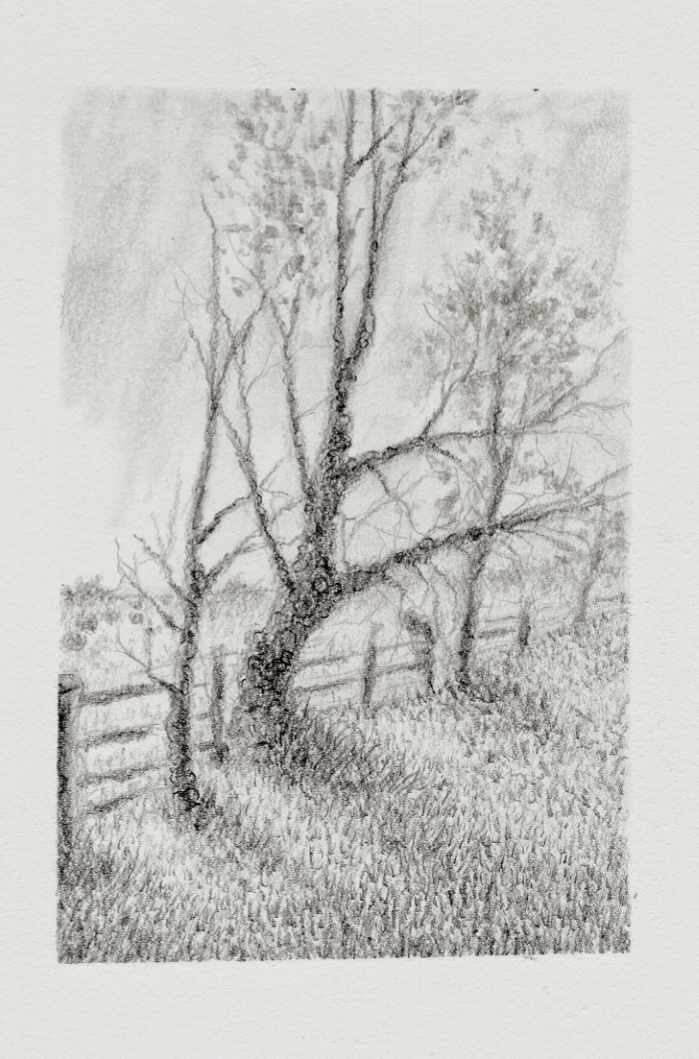
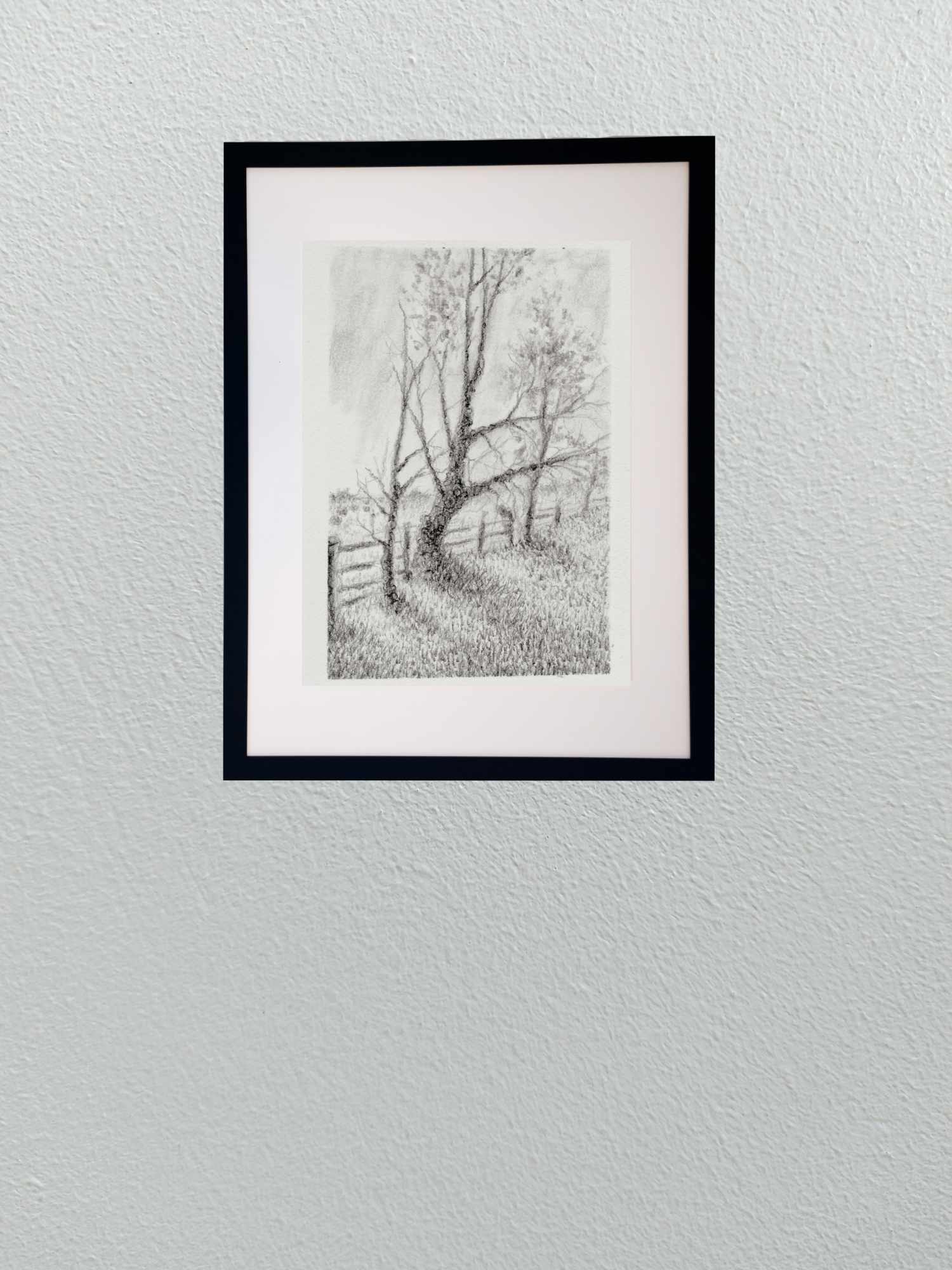
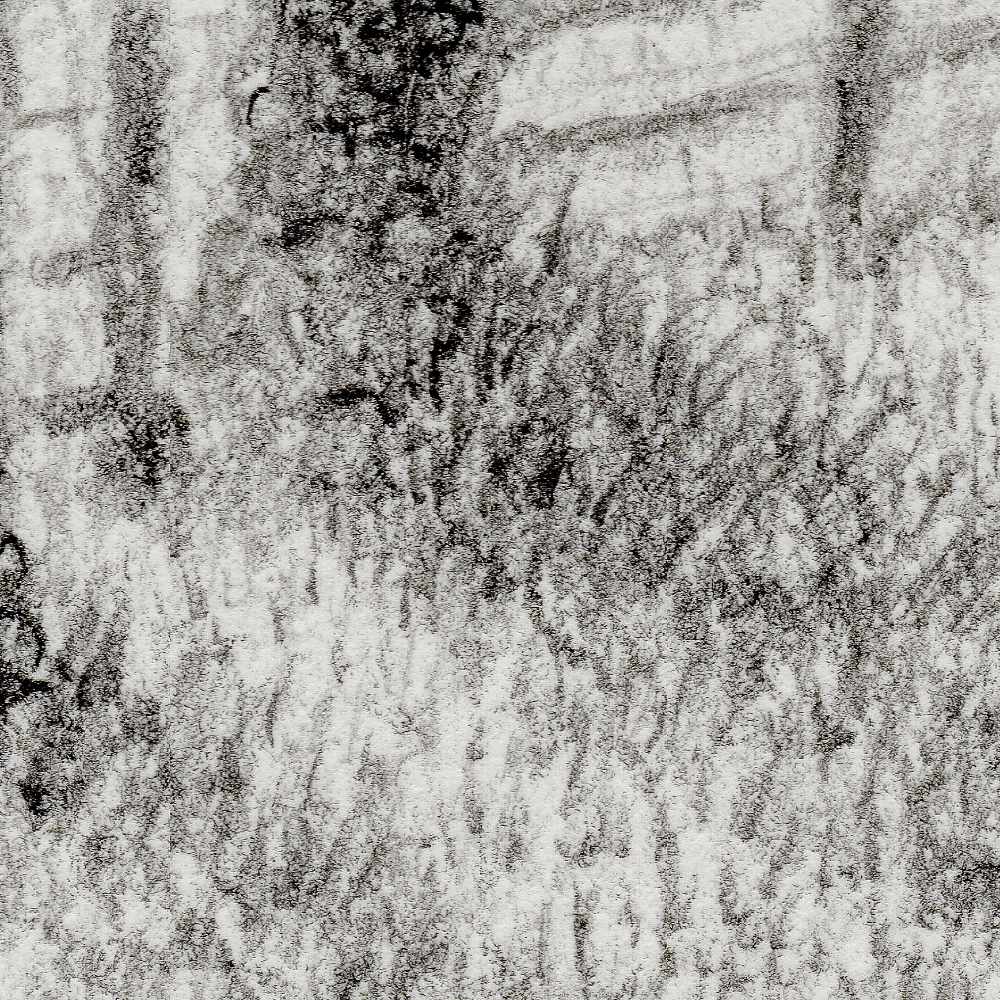
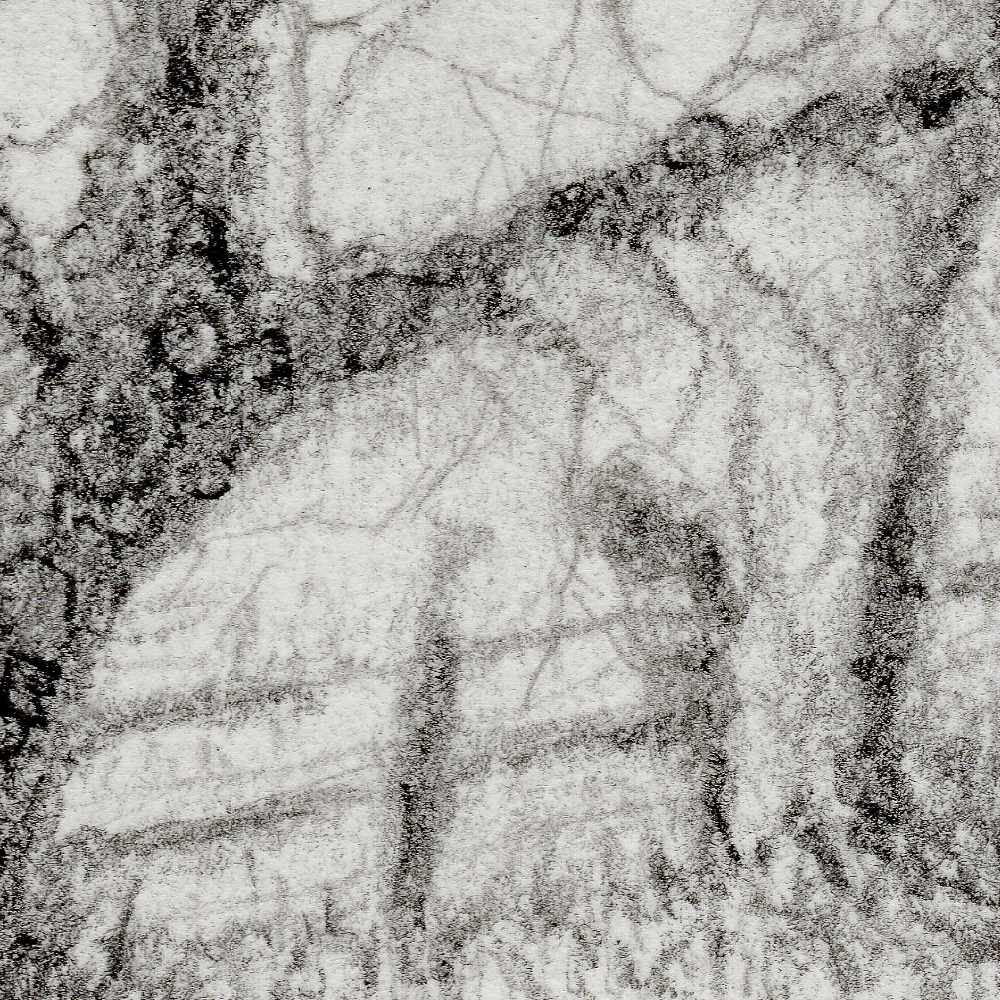
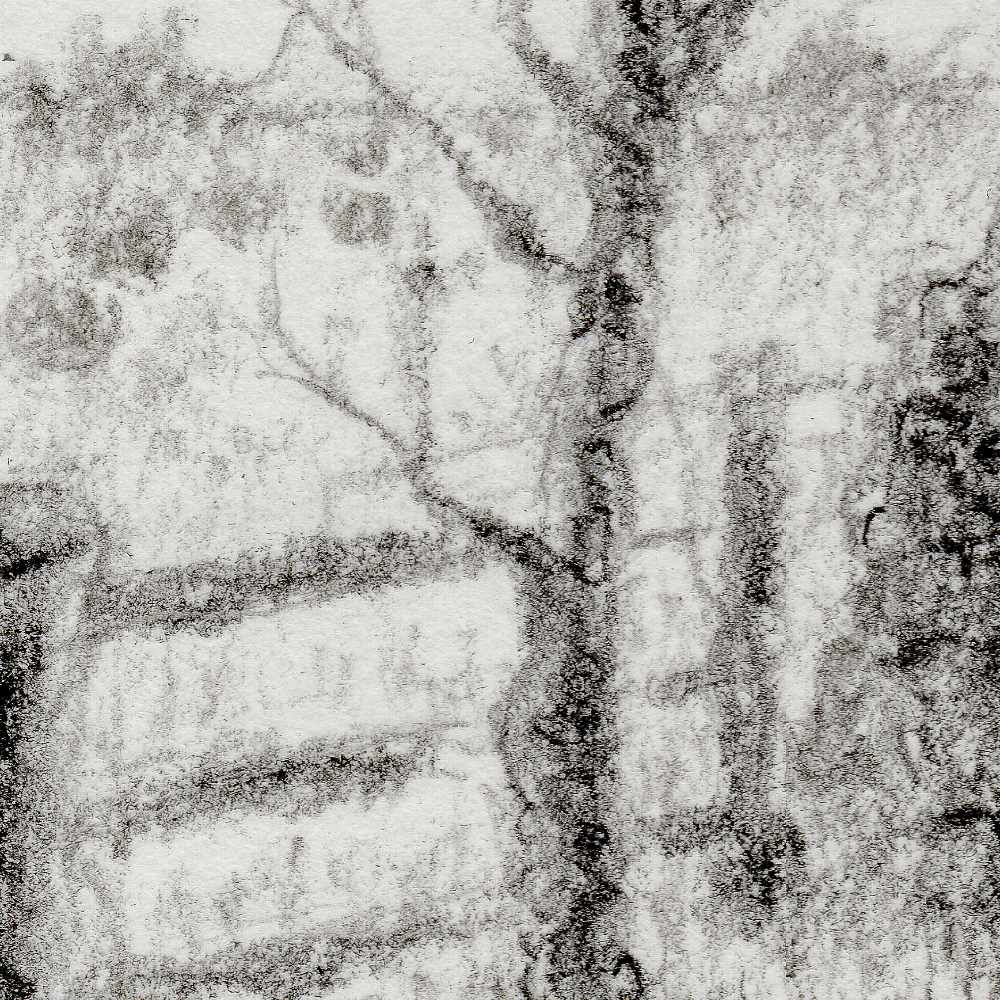
    This graphite drawing steps back into a quiet, atmospheric space, continuing my exploration of solitude, loss, and the unknown. At first glance, the composition presents a familiar rural vista: a weathered fence line tracing the curve of a hill, distant hay bales resting in the pasture, and a small cluster of bare trees leaning against the sky.

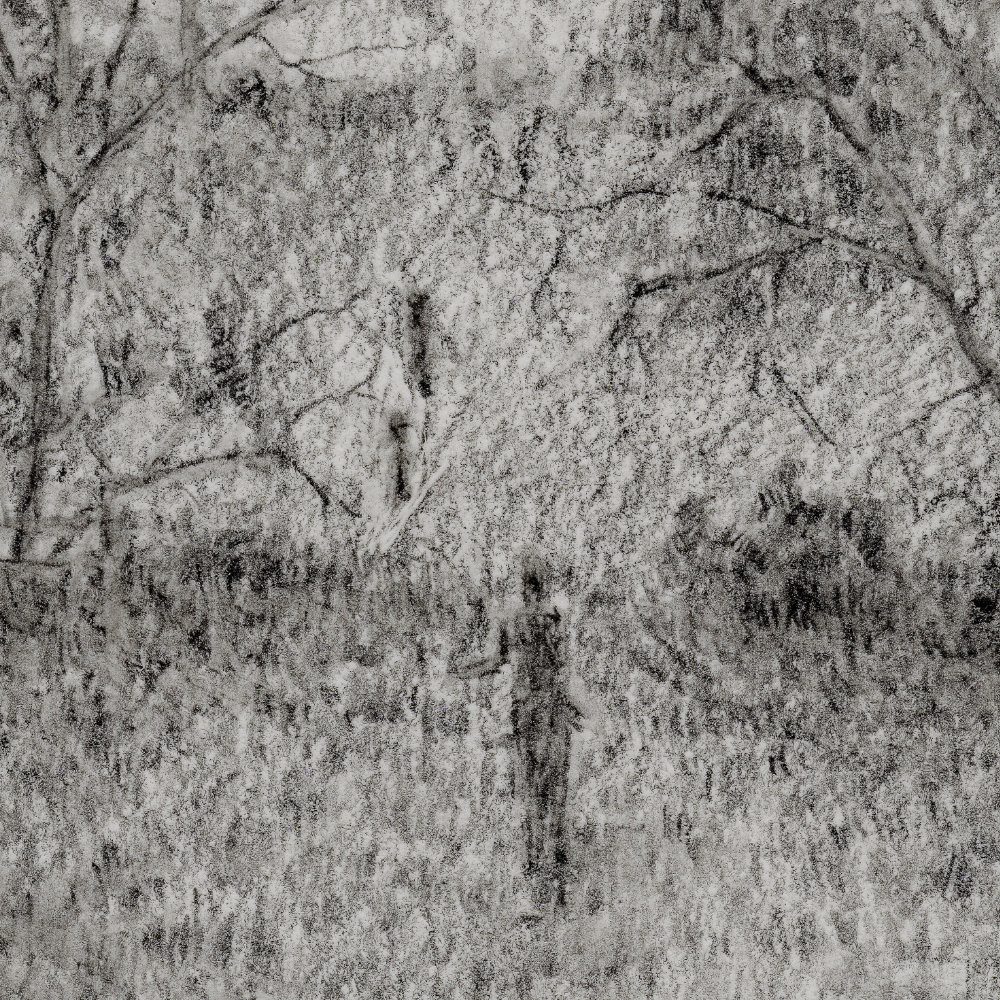
    Looking closer between the trunks reveals a faint, subtly shaded figure walking along the boundary. That quiet presence shifts the entire mood of the scene, turning a simple field study into a contemplative moment of transition. Is it a wanderer passing through, or an echo tied to these quiet acres? Leaving that narrative open allows the viewer to project their own sense of memory and stillness into the frame.

    Technically, the piece was completed on Strathmore heavyweight mixed media paper using Winsor & Newton medium graphite pencils. The pencils were a blind buy, but their soft, creamy graphite application laid down rich, dark values on the textured surface. The natural tooth of the heavyweight paper grabs the medium cleanly, creating a soft, stippled grain in the grass and sky while letting the darker graphite build dense, tactile fissures along the tree bark.


  • Bound Sentry

    Bound Sentry

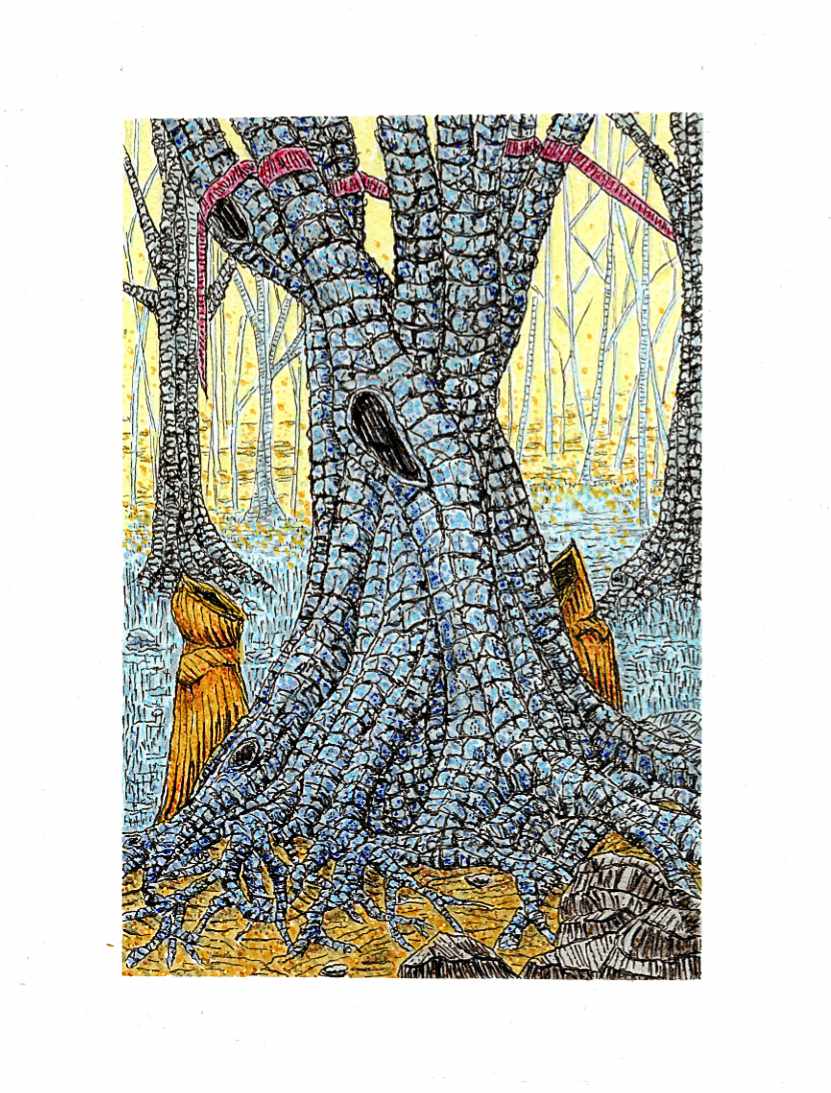
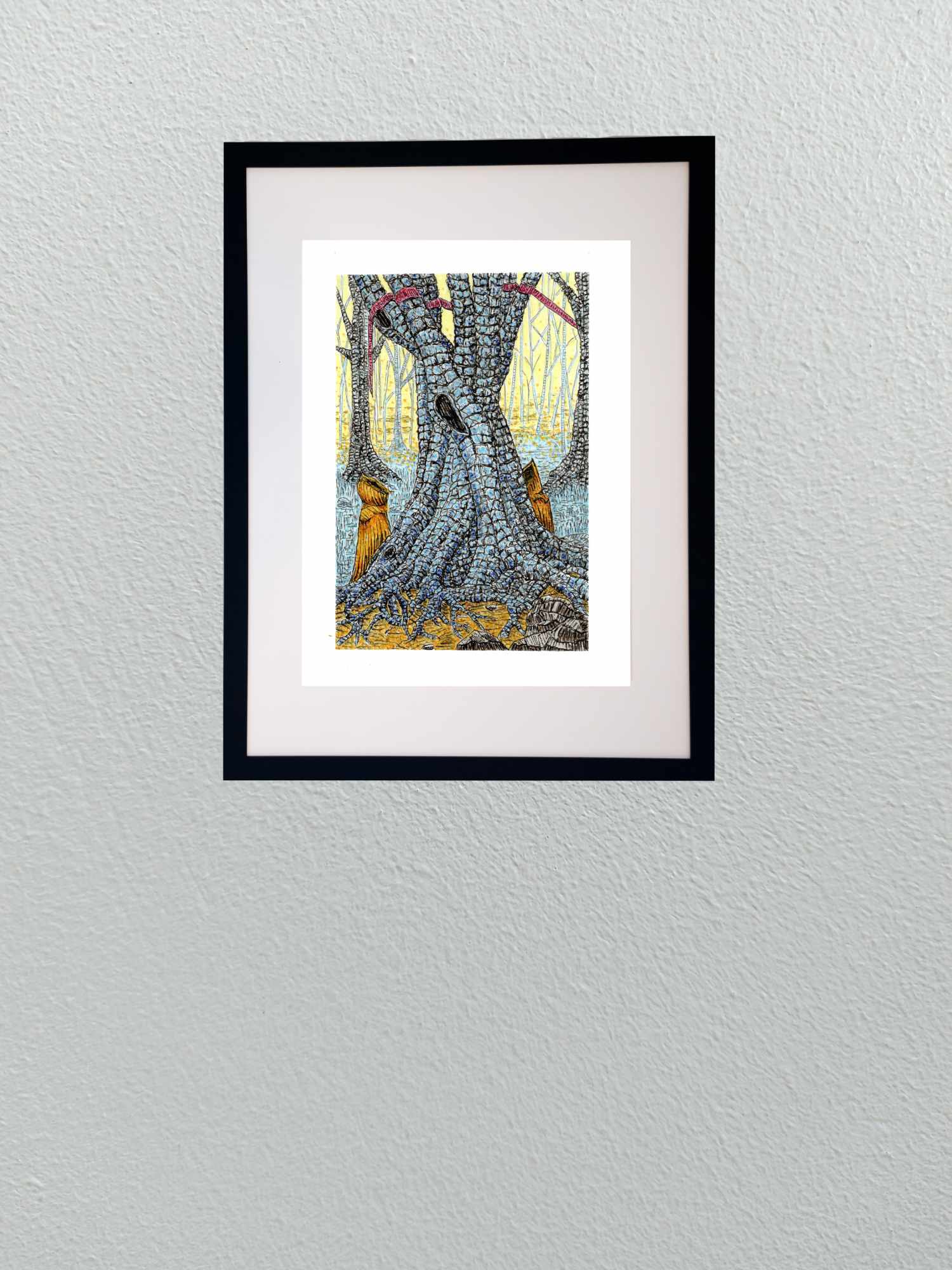
    This piece continues my exploration of folklore and the eerie quiet of deep woodland spaces. The composition centers on a massive, ancient tree whose trunk and sprawling root system dominate the foreground, breaking the forest floor like petrified muscle.

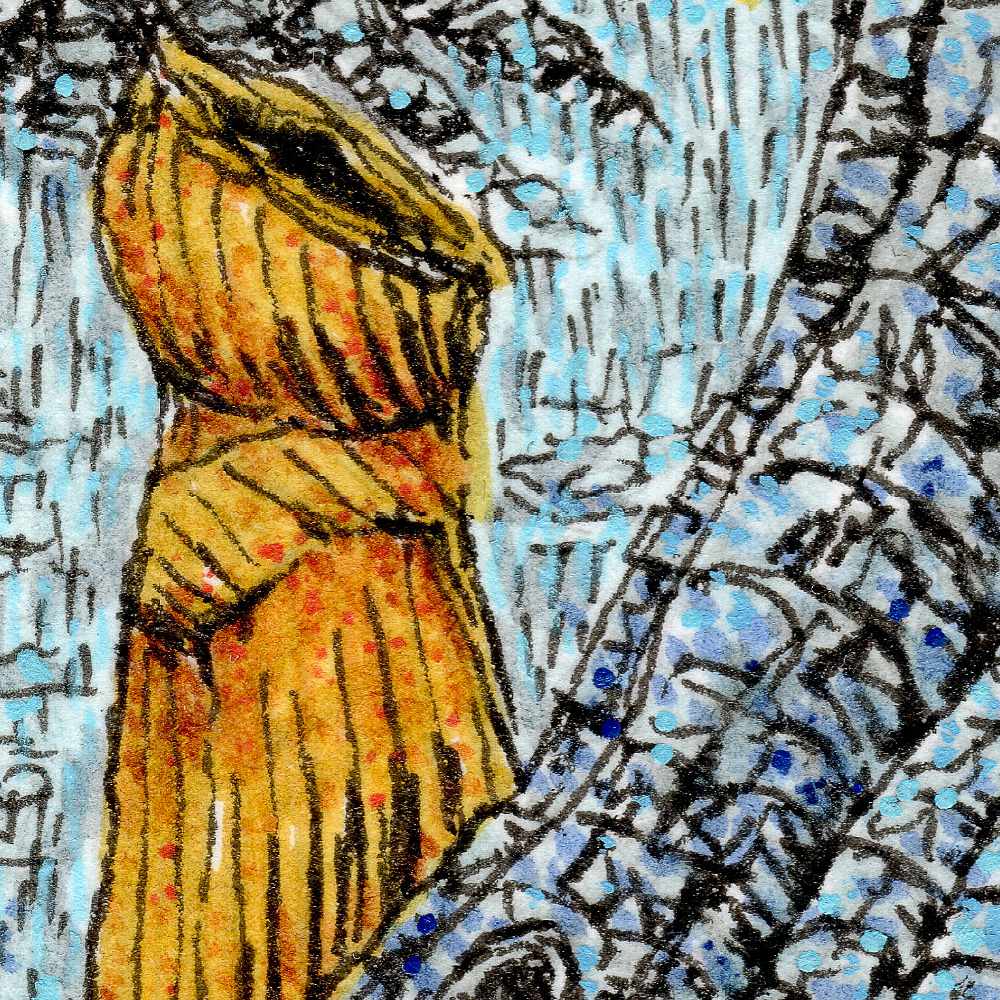
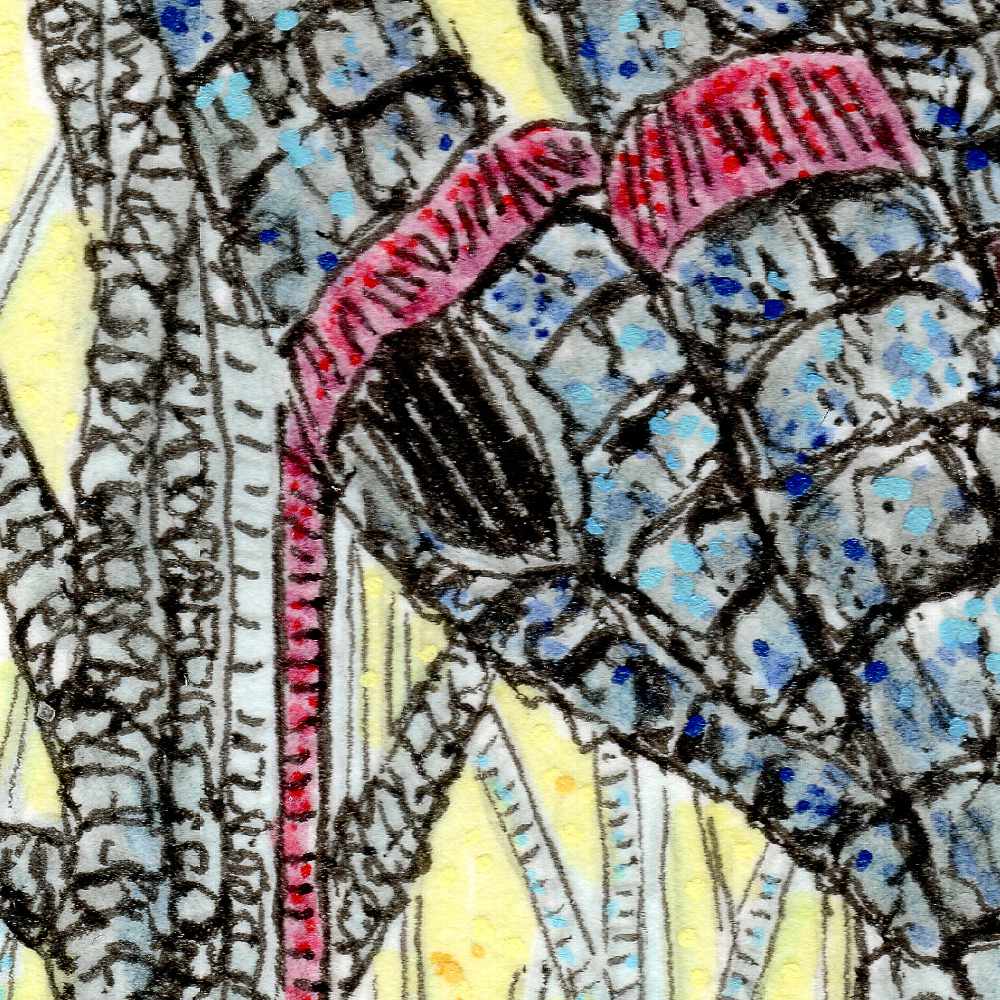
    Flanking the base of the roots are two hooded figures cloaked in deep ochre, standing motionless before the hollows of the trunk. High in the branches, the crimson ribbon appears once again, bound around the limbsโ€”a subtle, recurring marker that weaves through this series, hinting at an unseen presence or a quiet rite known only to those who wander these woods.

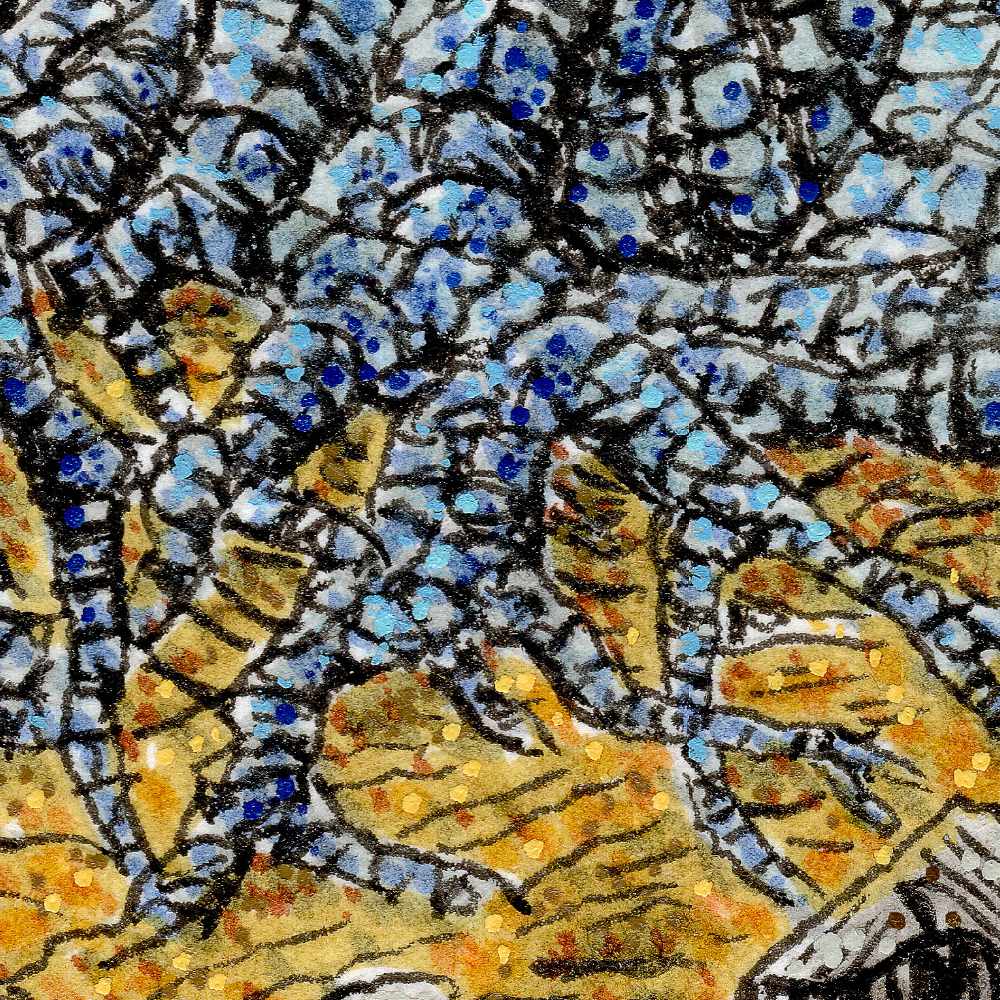
    Technically, this was completed on Strathmore heavyweight mixed media paper using Faber-Castell Pitt pens and Staedtler fine liners, with subtle pointillism applied via acrylic pens. I used the fine liners to construct the heavy, modular texture of the bark, mapping out dense, individual fissures across the trunk. Pitt pen washes established the cool blue-gray tones of the wood and the glowing yellow light filtering through the background trees. To bring extra vibration to the canopy and ground plane, I layered fine acrylic dots over the ink work, giving the ambient light an electric, atmospheric tooth.


  • Swamp Fugue

    Swamp Fugue

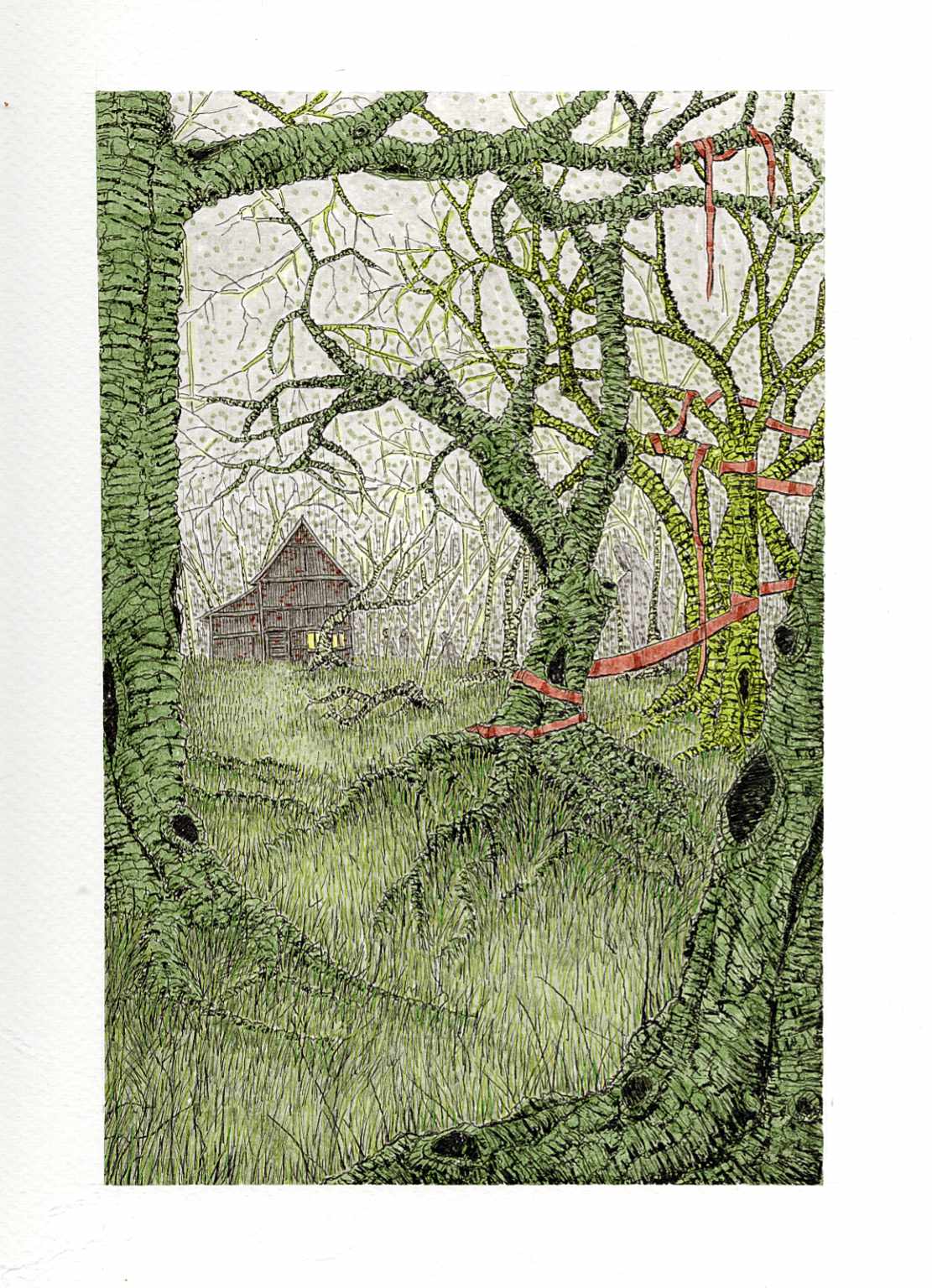
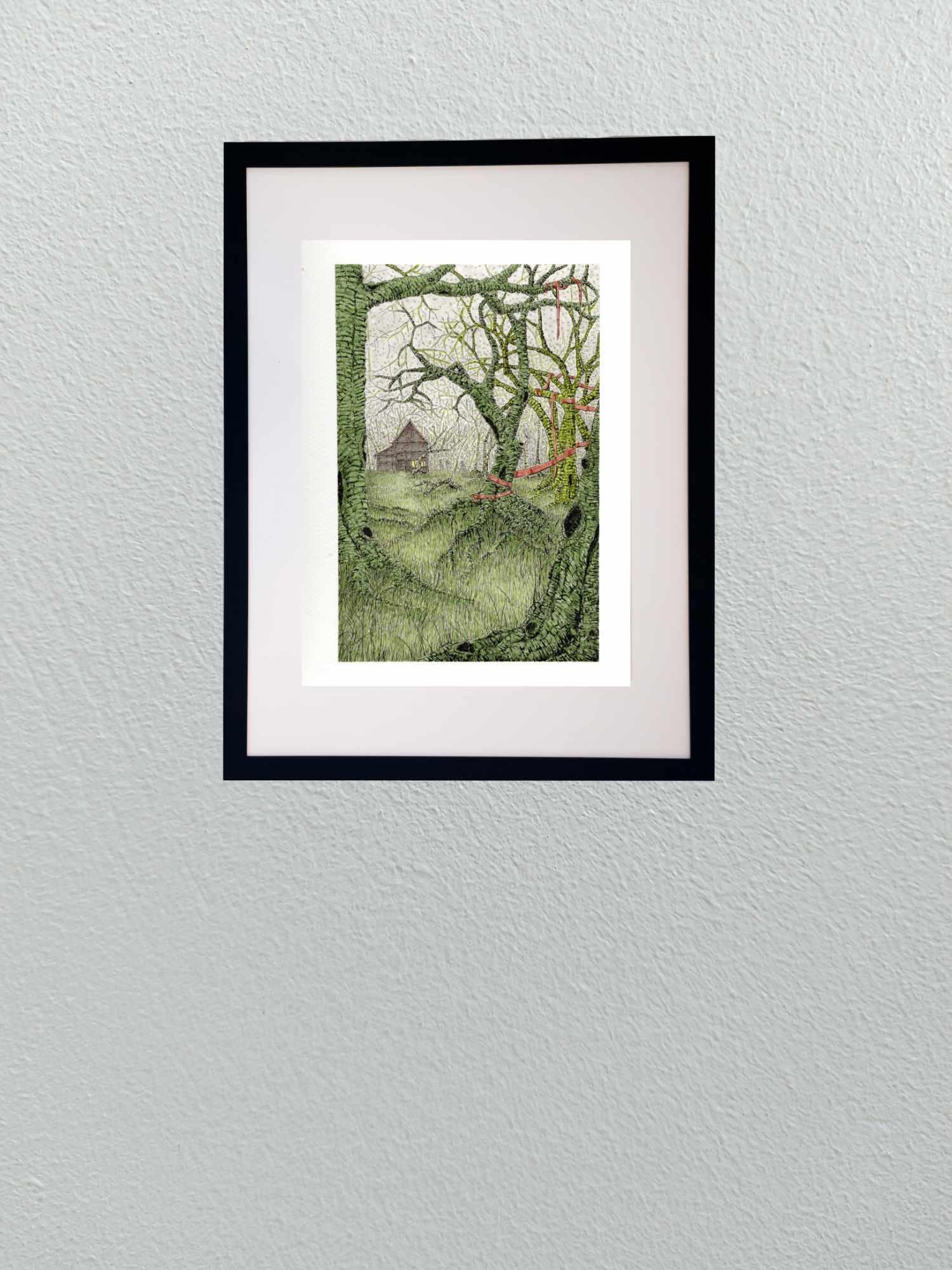
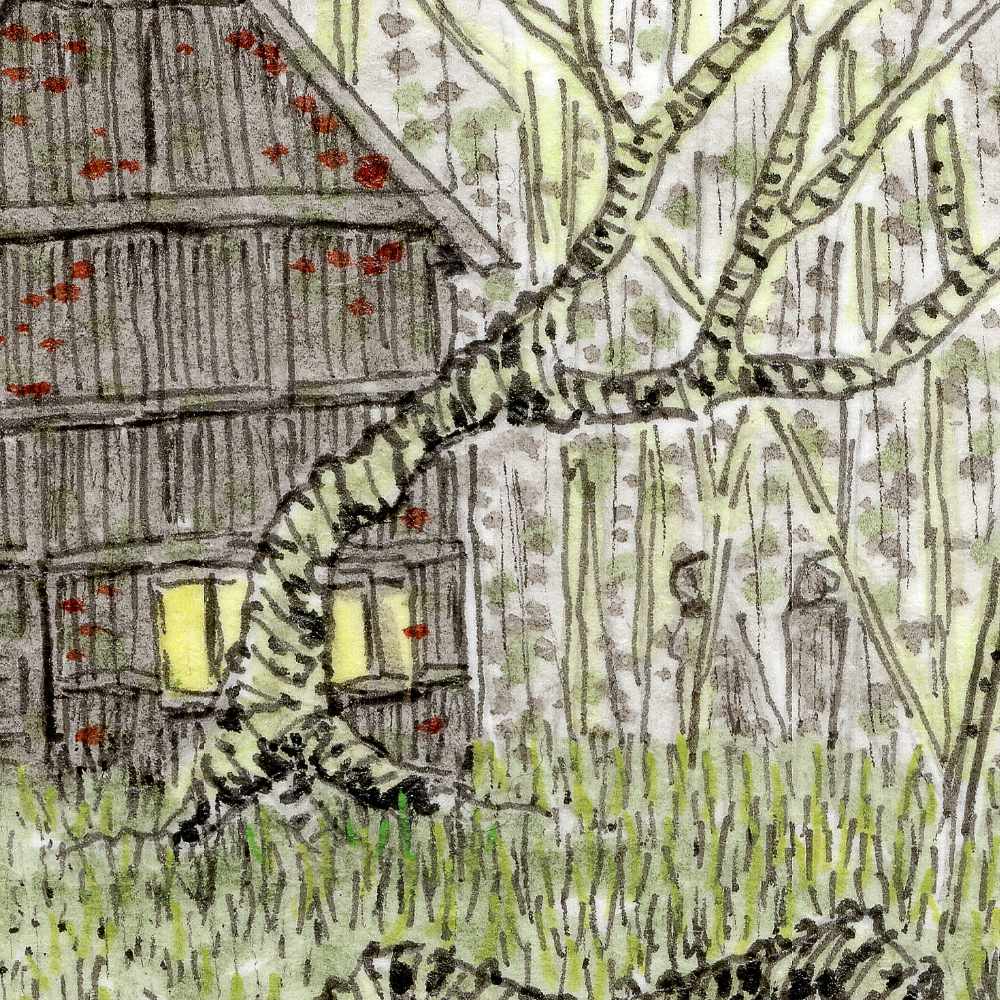
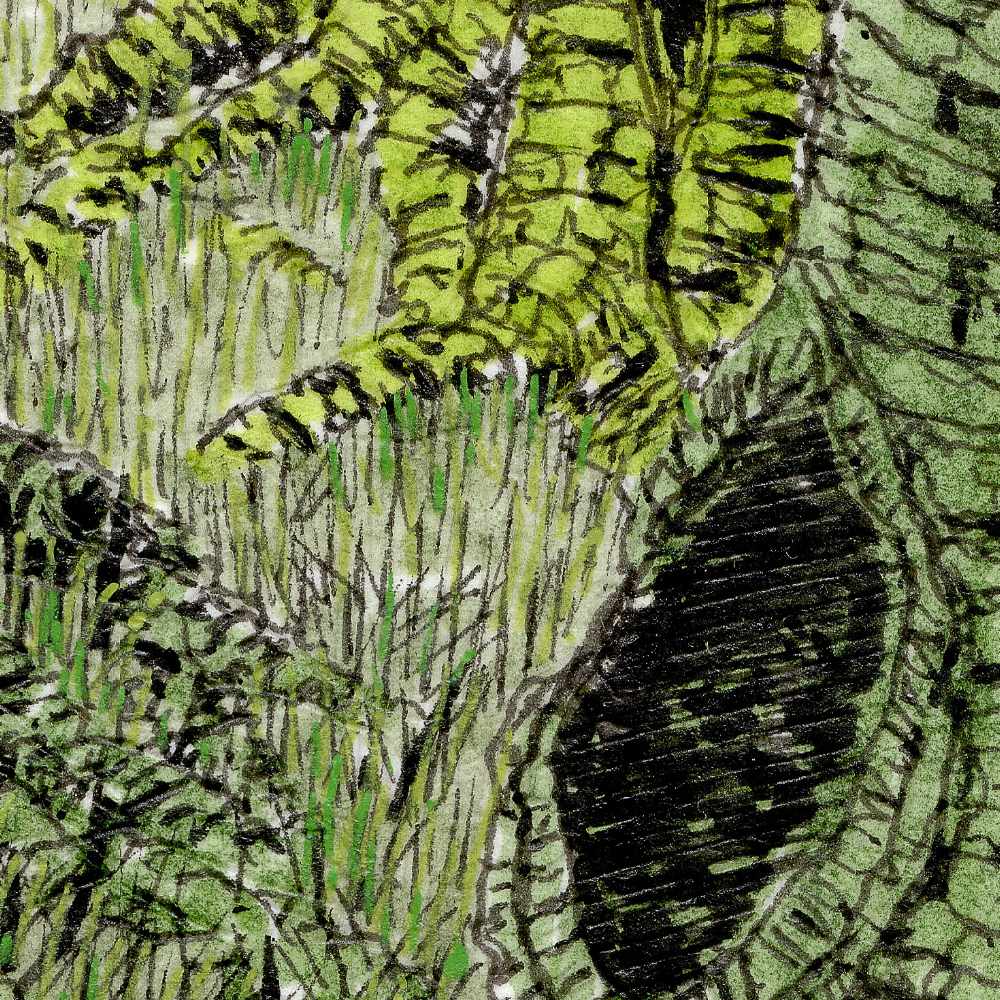
    Continuing my focus on folklore and eldritch horror within deep forest environments, this piece moves into a dense, swampy green fugue. The scene is framed by heavy, twisted trunksโ€”ancient, highly textured sentinels that act as a visual boundary looking out toward a distant clearing.

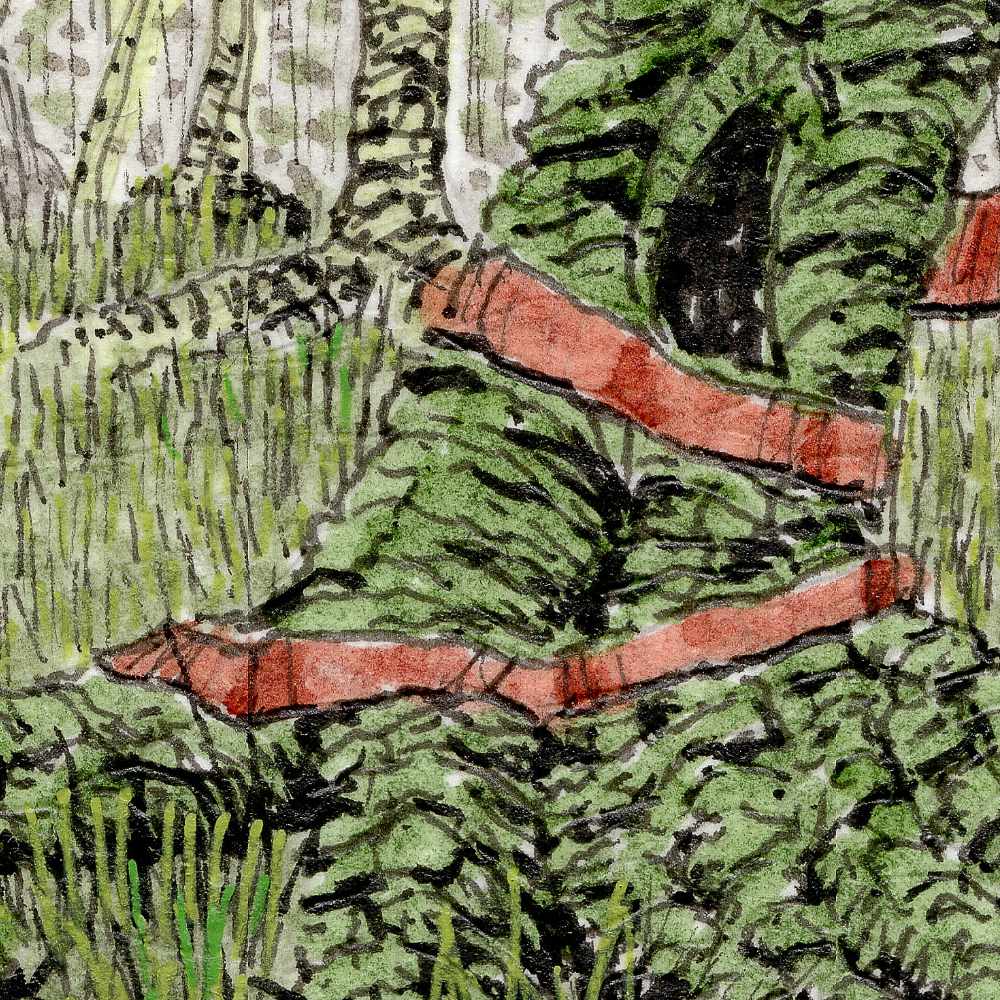
    Deep in the mist, a lit shack casts a warm, unsettling glow against the cool pale sky, drawing subtle, hooded figures through the woods toward whatever gathering awaits. Suspended in the midground, bound tightly around the branches of a gnarled tree, is a stark crimson ribbon. It is a deliberate, unnatural mark cutting through the wild green overgrowth. Whether it serves as a boundary, a remnant of some forgotten ritual, or a subtle signifier of the strange, ancient presences that drift through these woods, its true purpose is left unsaid.

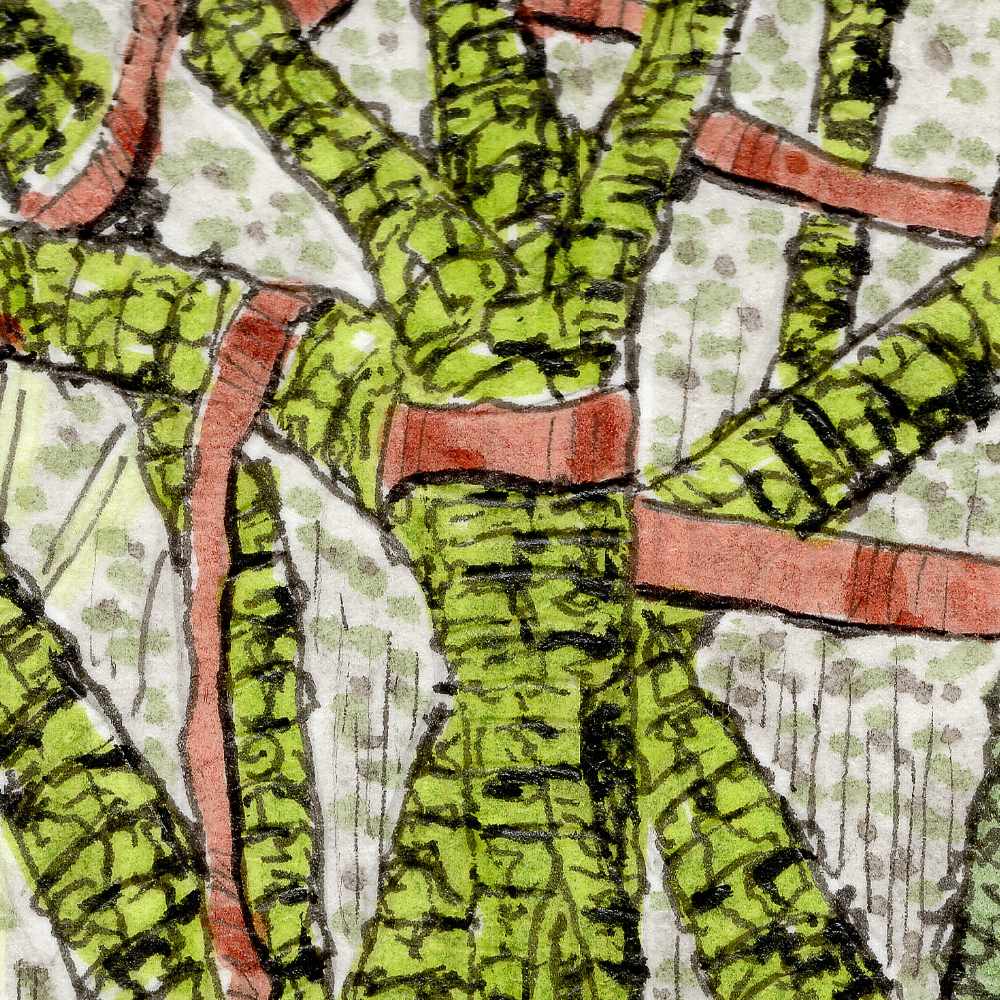
    Technically, Swamp Fugue was worked on cold press paper using a combination of Faber-Castell Pitt pens, Staedtler fine liners, and Staedtler pigment pens. I used the fine liners to build the dense, organic contour lines that give the bark its heavy, ridged texture, while layering Pitt pen washes to establish the murky, moss-toned atmosphere. The fine stippling in the upper canopy allows the pale mist to hum with static, balancing the sharp, linear detail of the grass and foreground roots.


  • Amber Shadows

    Amber Shadows

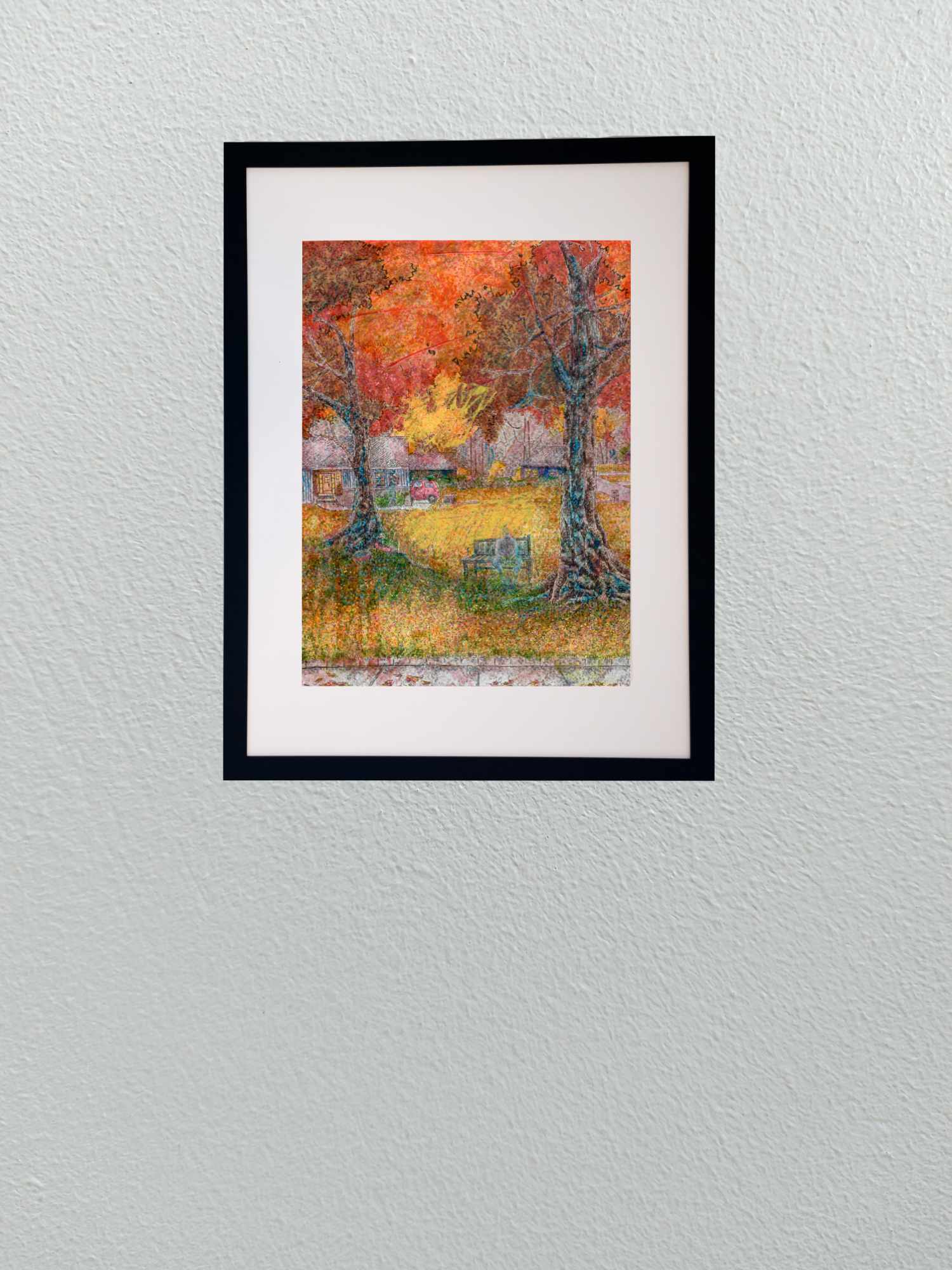
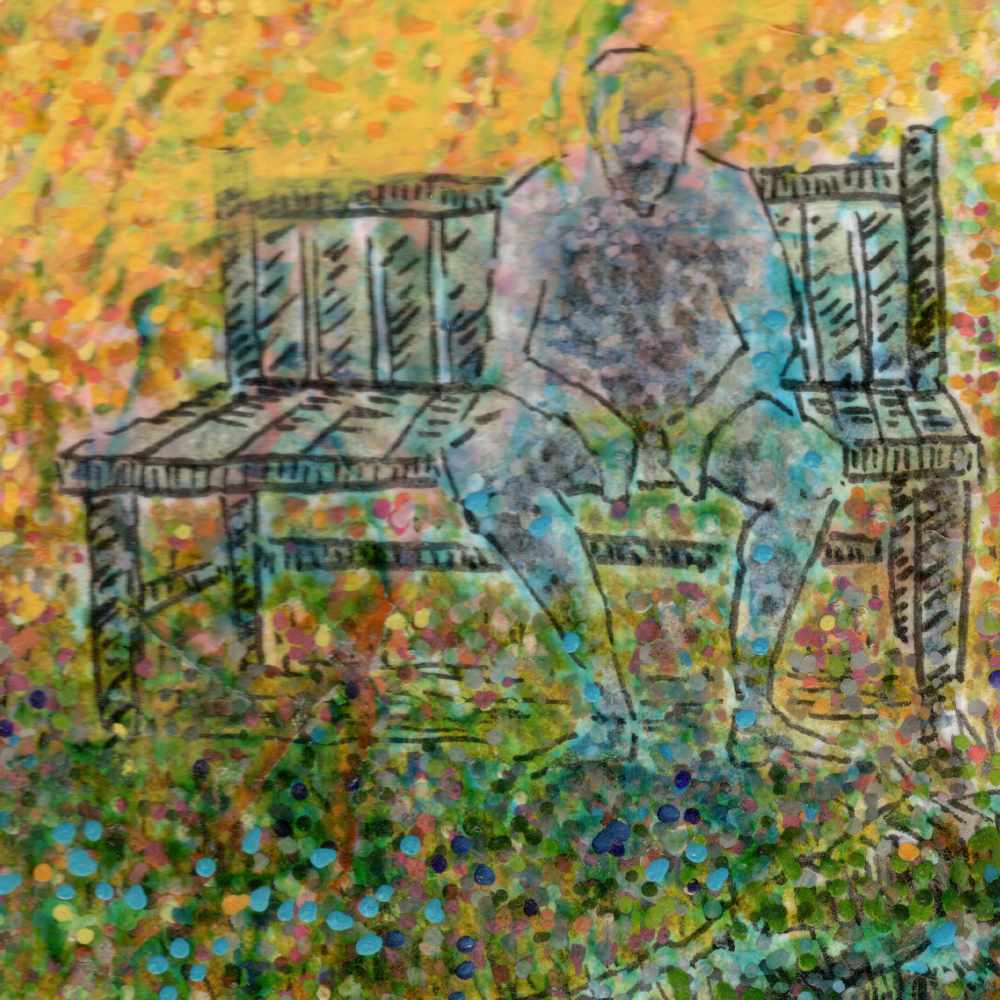
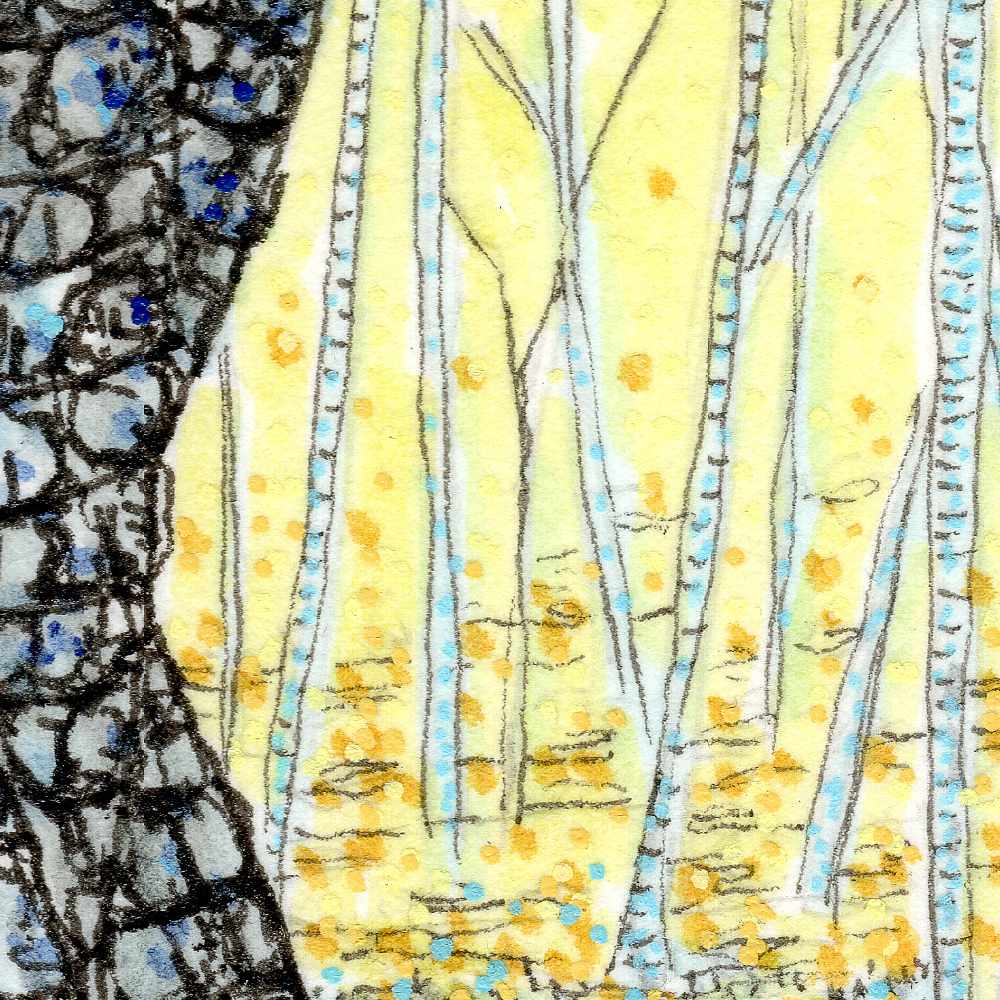
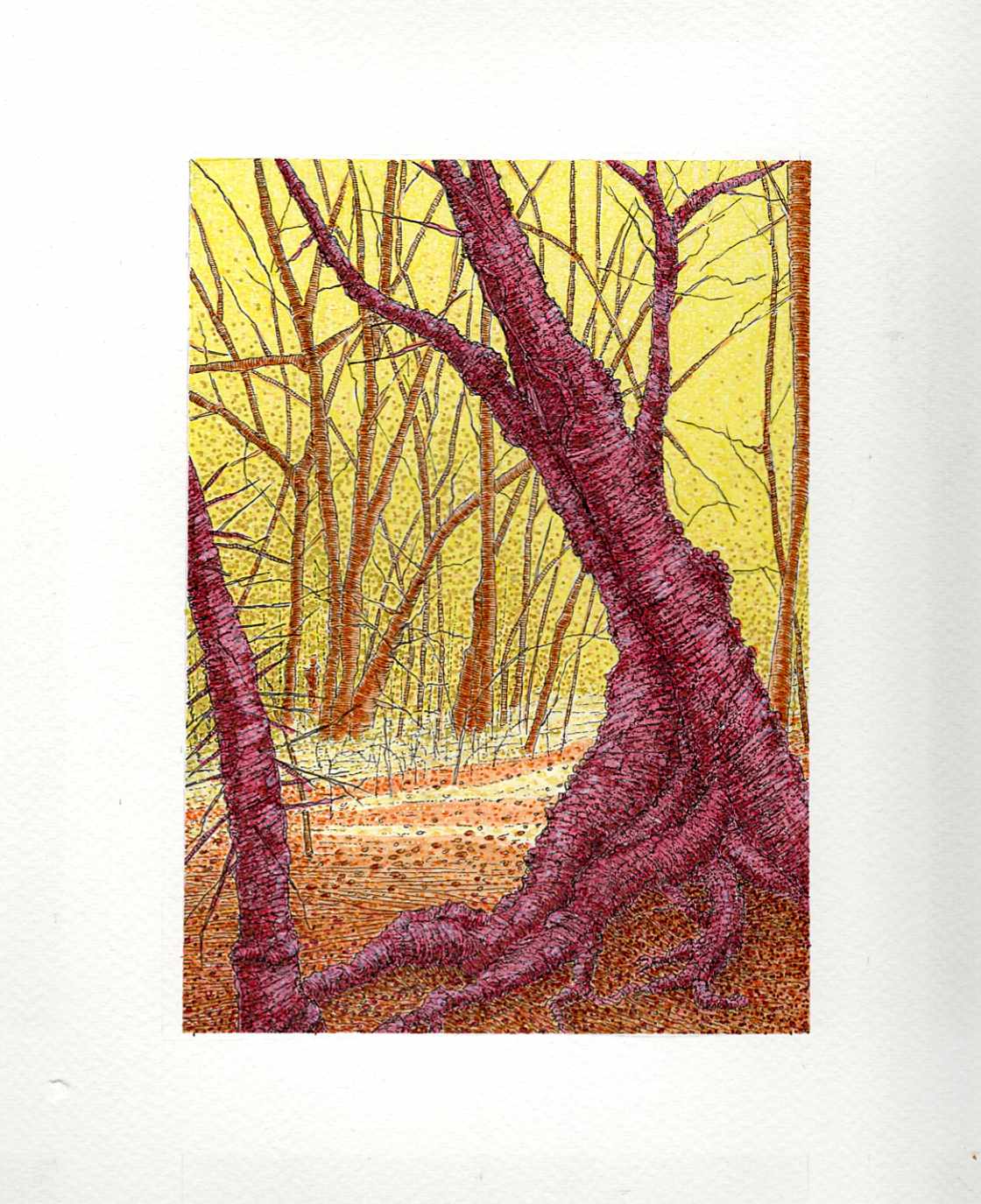
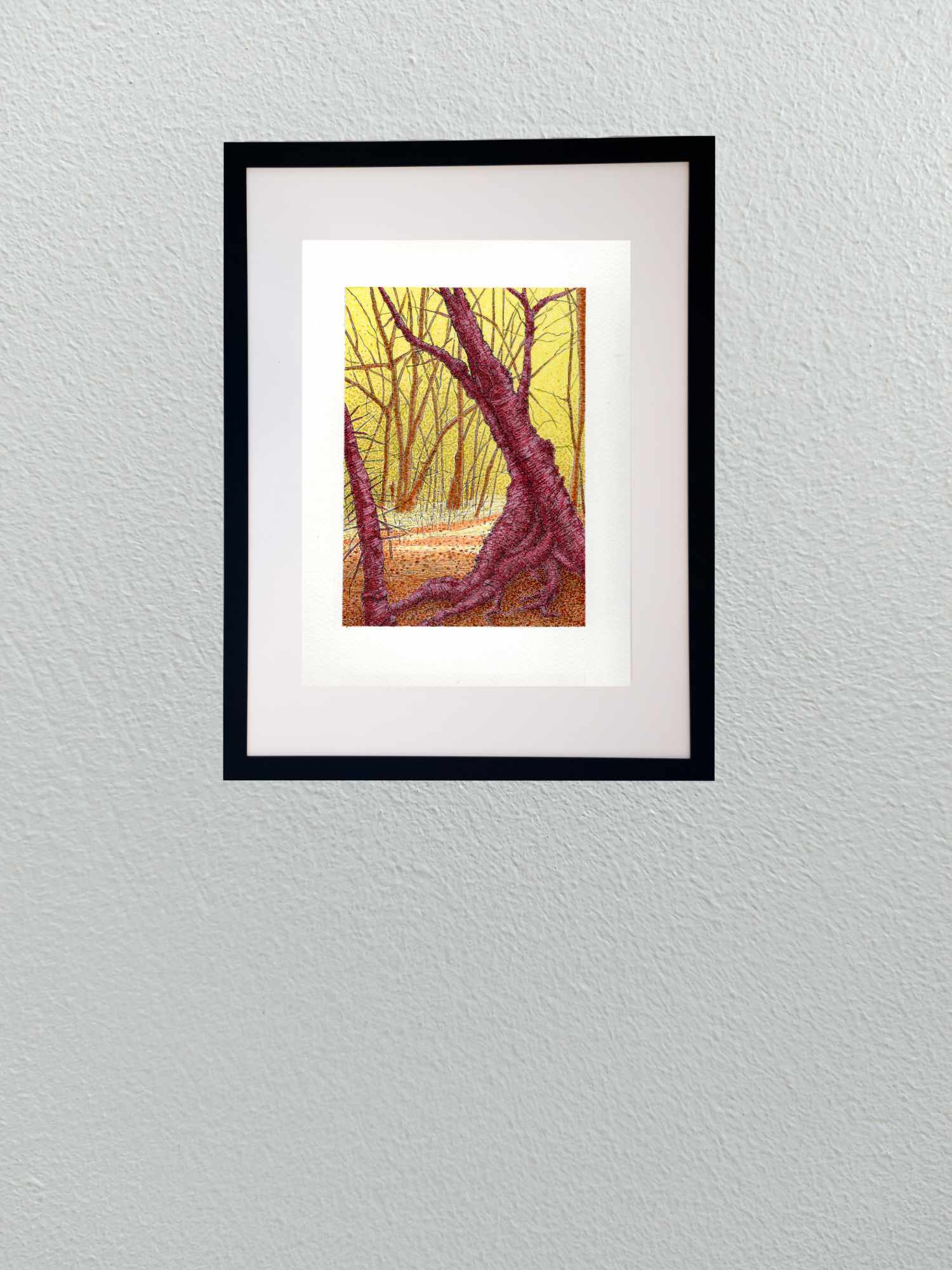
    In this latest piece, I wanted to step away from the cooler, muted tones of the deep woods and test what happens when you push a landscape into high-vibrancy territory. The goal was to capture an impression of folkloreโ€”that feeling of stepping into a stretch of woods where the light behaves strangely and the trees carry an ancient, deliberate presence. Across these recent folklore experiments, a common thread has begun to emerge: the quiet, mysterious presence of distant figures going about some unknown, ancient task just beyond the foreground.

    Technically, this was built on cold press paper using a multi-layered approach with Faber-Castell Pitt pens, Sakura fine liners, and bullet-tip acrylic pens.

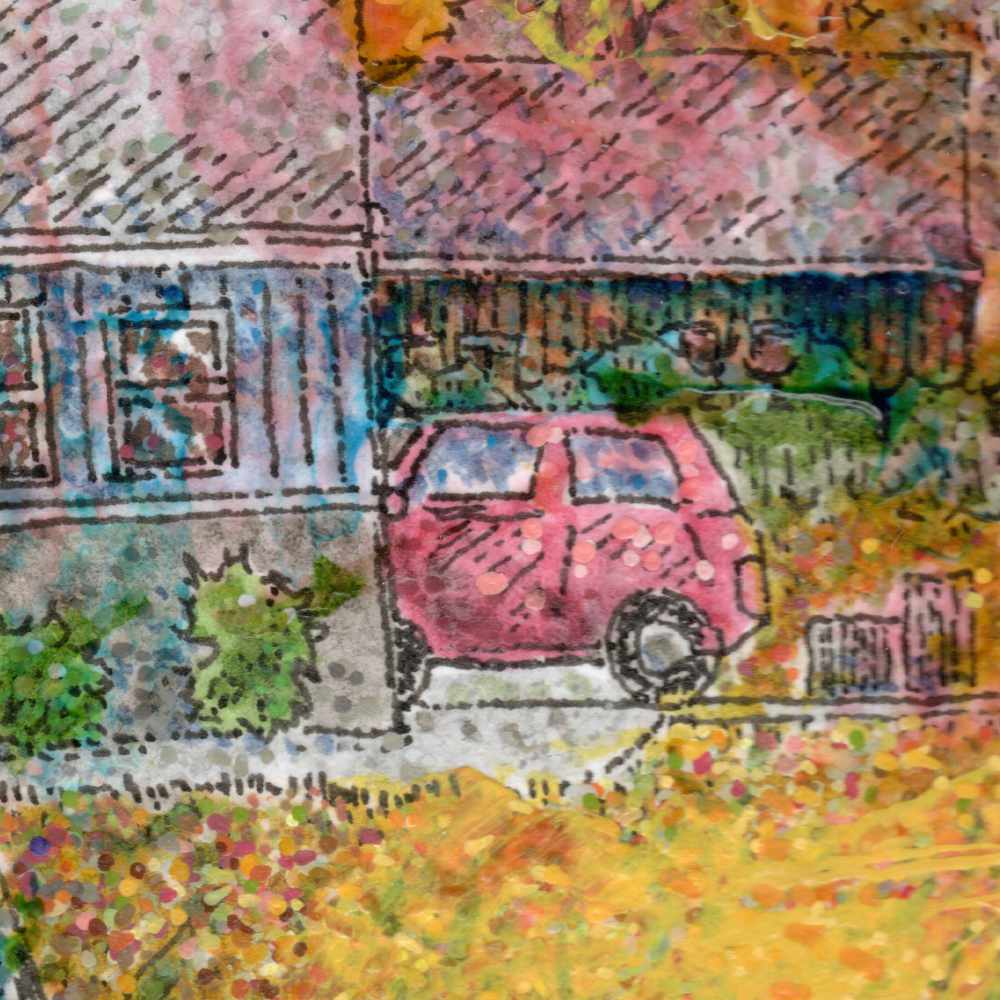
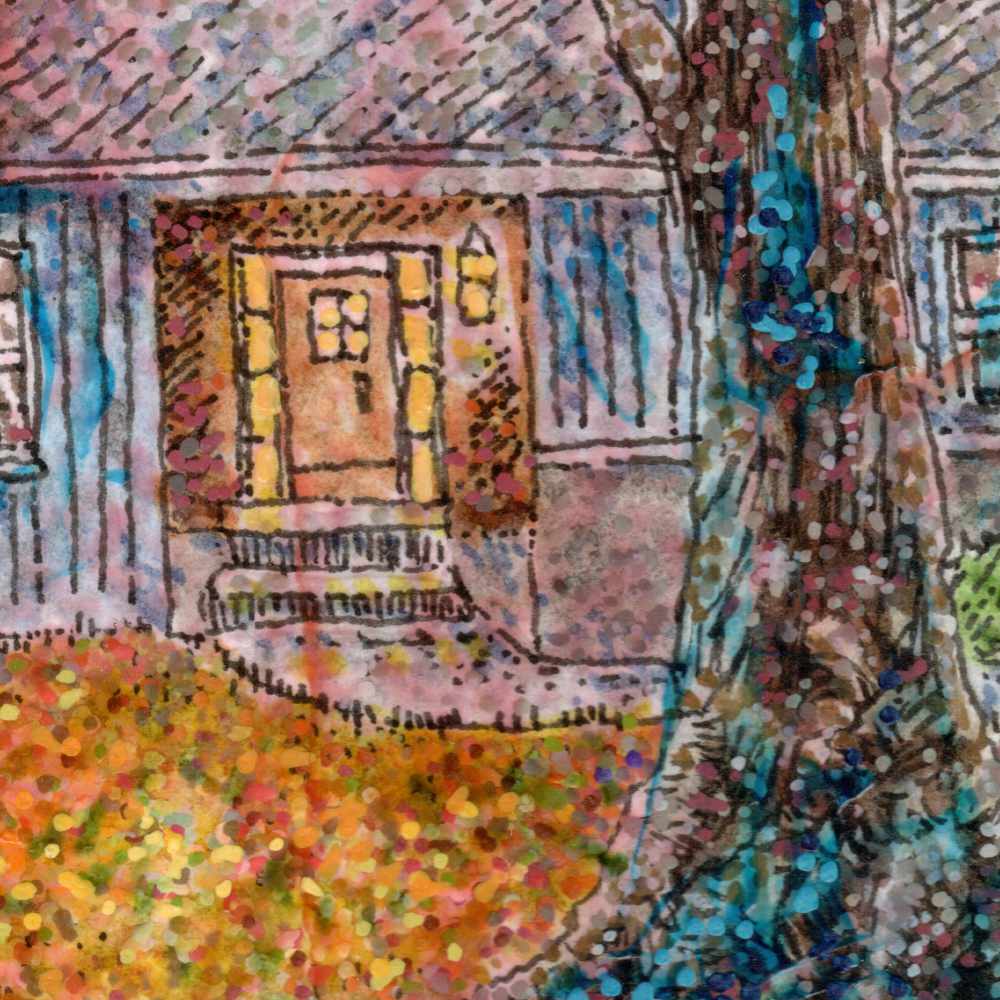
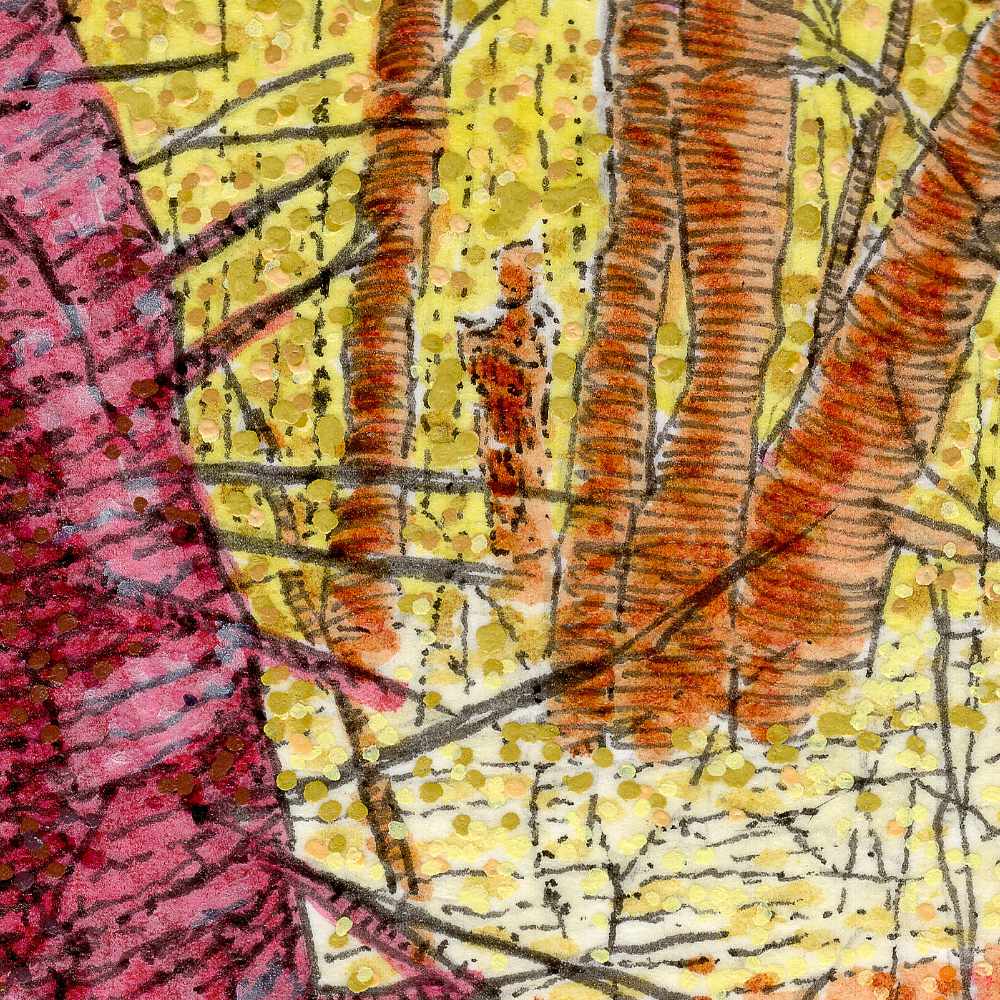
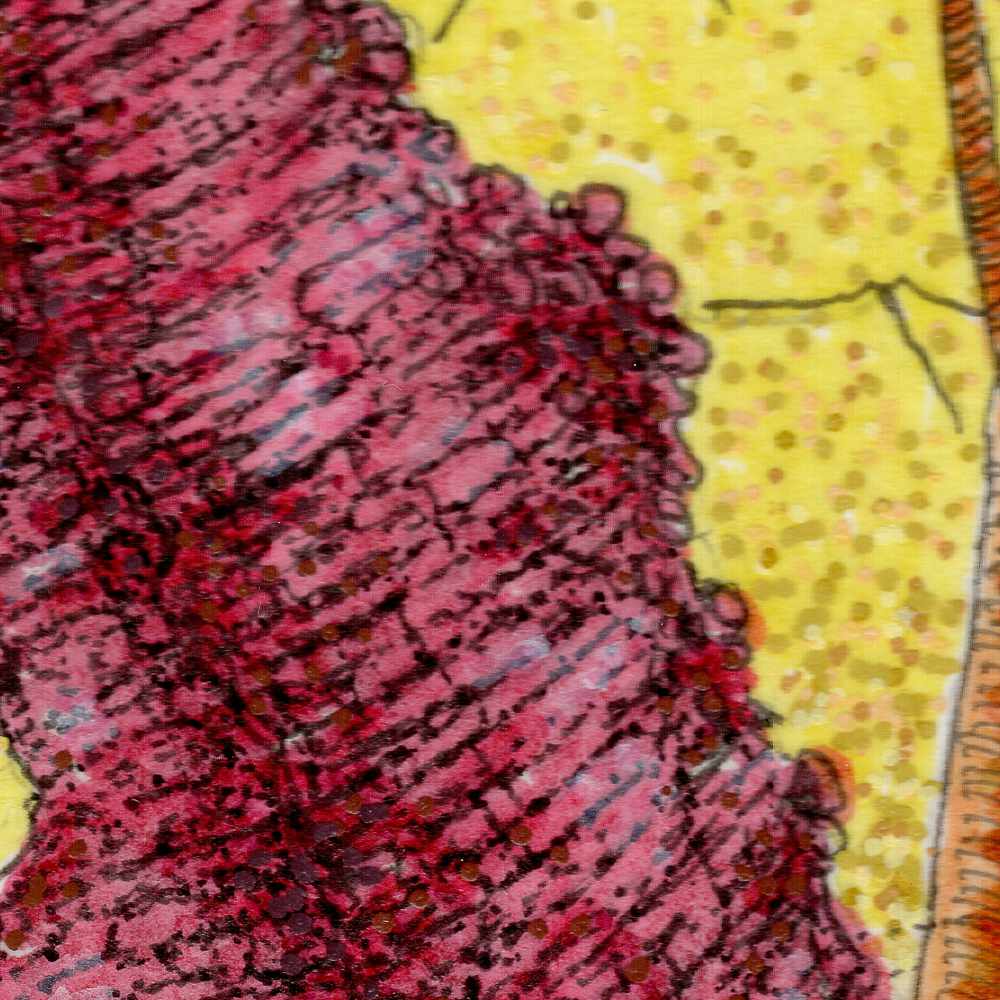
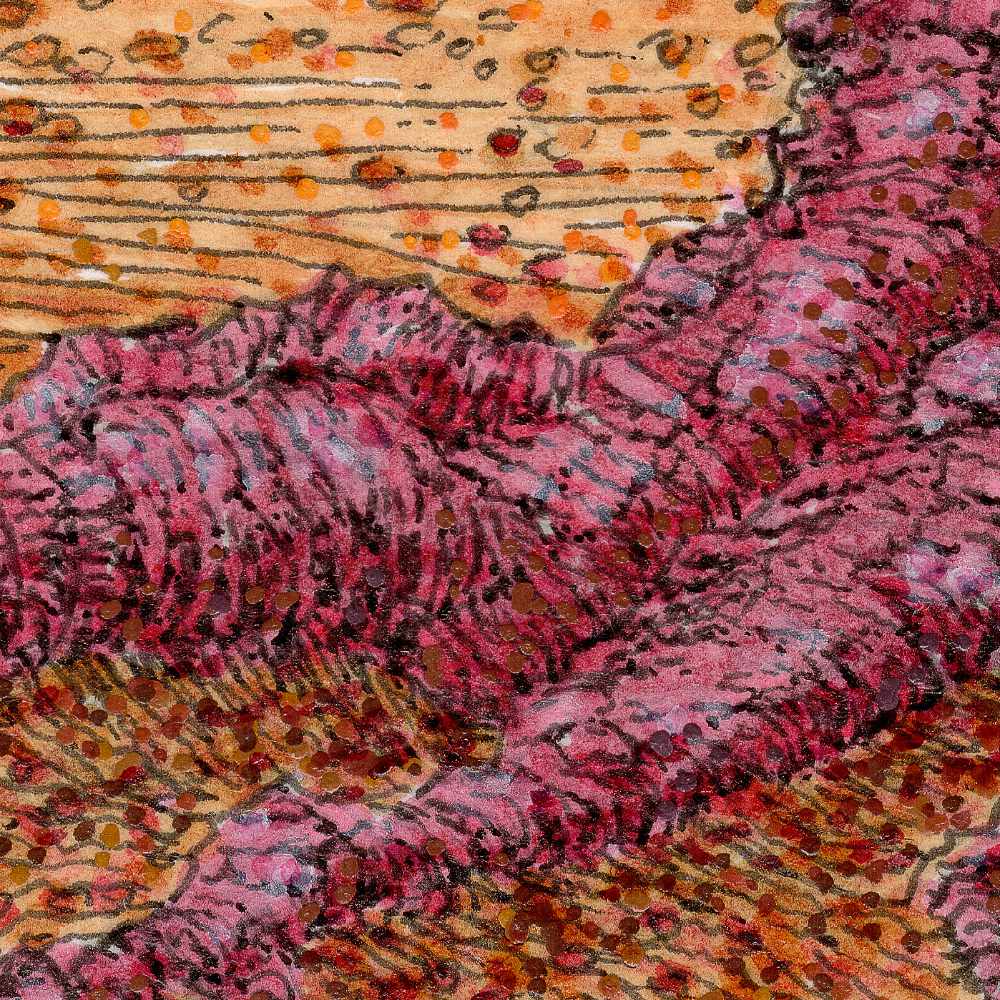
    The process relied on layering different styles of mark-making to establish depth and tactile friction. I used tight ink strokes and heavy cross-hatching with the fine liners to map out the complex, muscular bark and gnarled root structure of the central trunk. The rich, vibrant color fields throughout the piece were applied directly with Pitt pens. To create the vibrating, atmospheric background, I layered fine, precise dots of pointillist texture over those washes using bullet-tip acrylic pens. The tooth of the cold press paper catches those opaque micro-dots, allowing the canopy to hum with an electric, golden light.

    Itโ€™s an exercise in narrative and structural contrastโ€”letting the rigid precision of ink linework clash against the soft, vibrating texture of a pointillist sky while hinting at a world moving quietly in the shadows.


  • The Fire Behind

    The Fire Behind

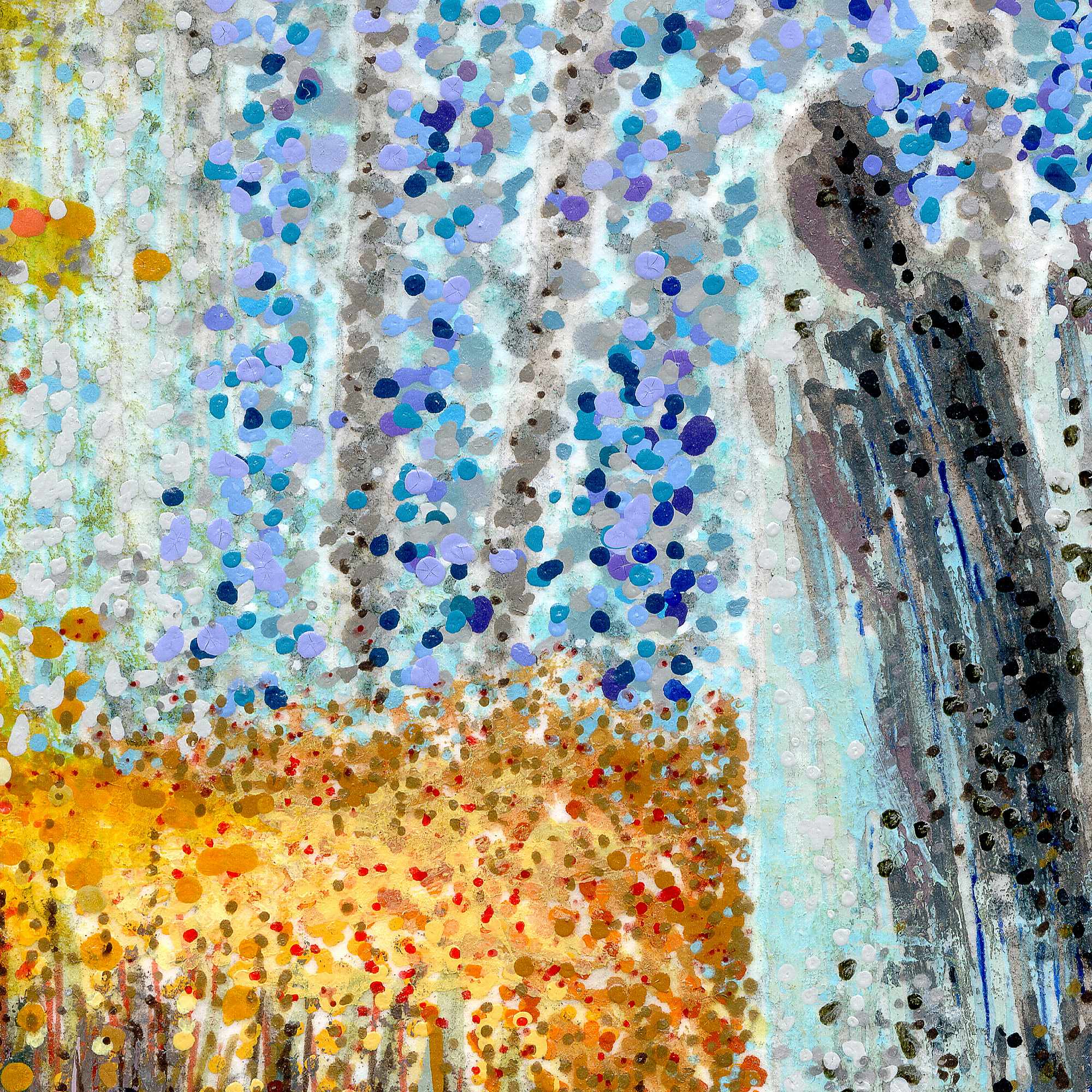
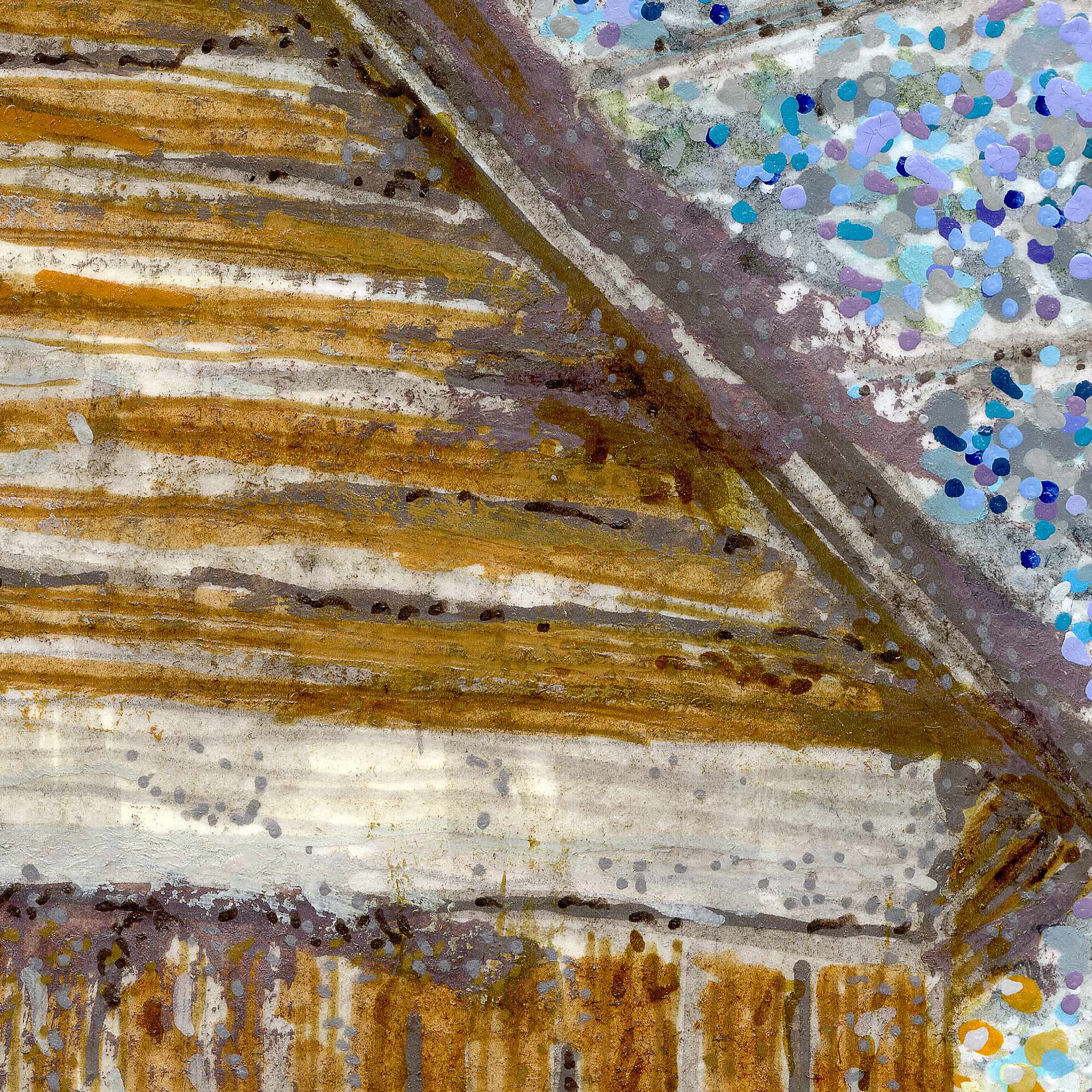
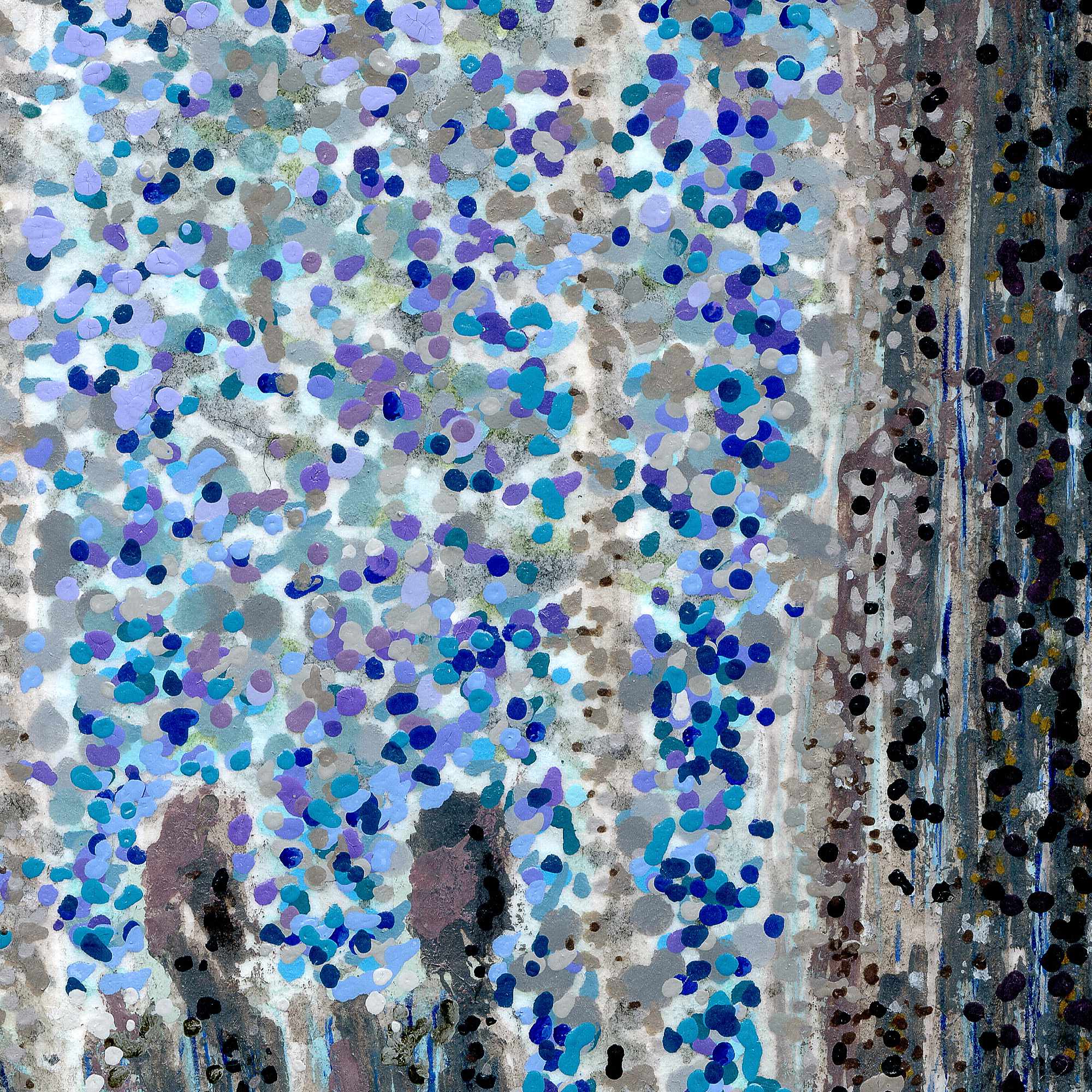
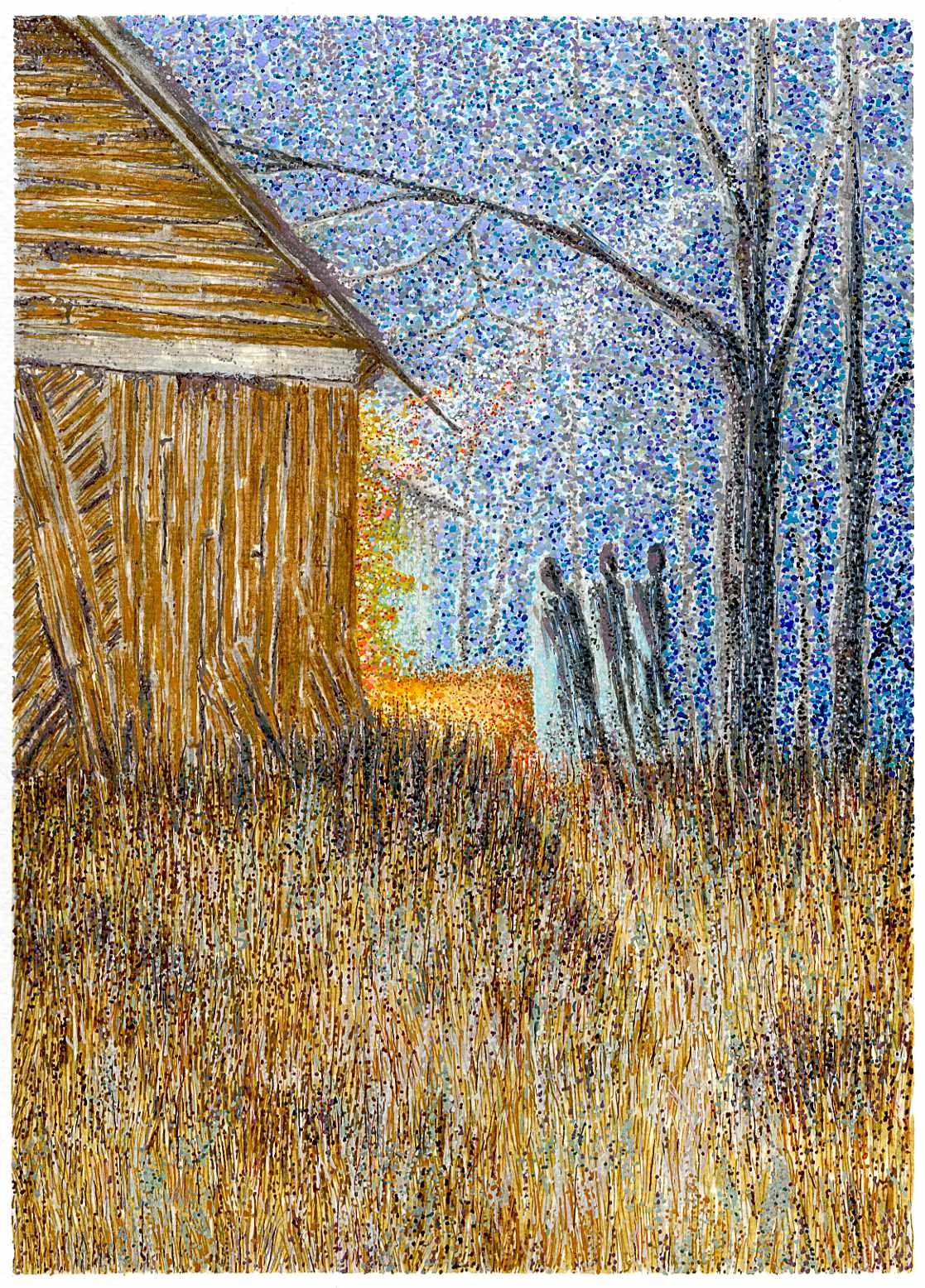
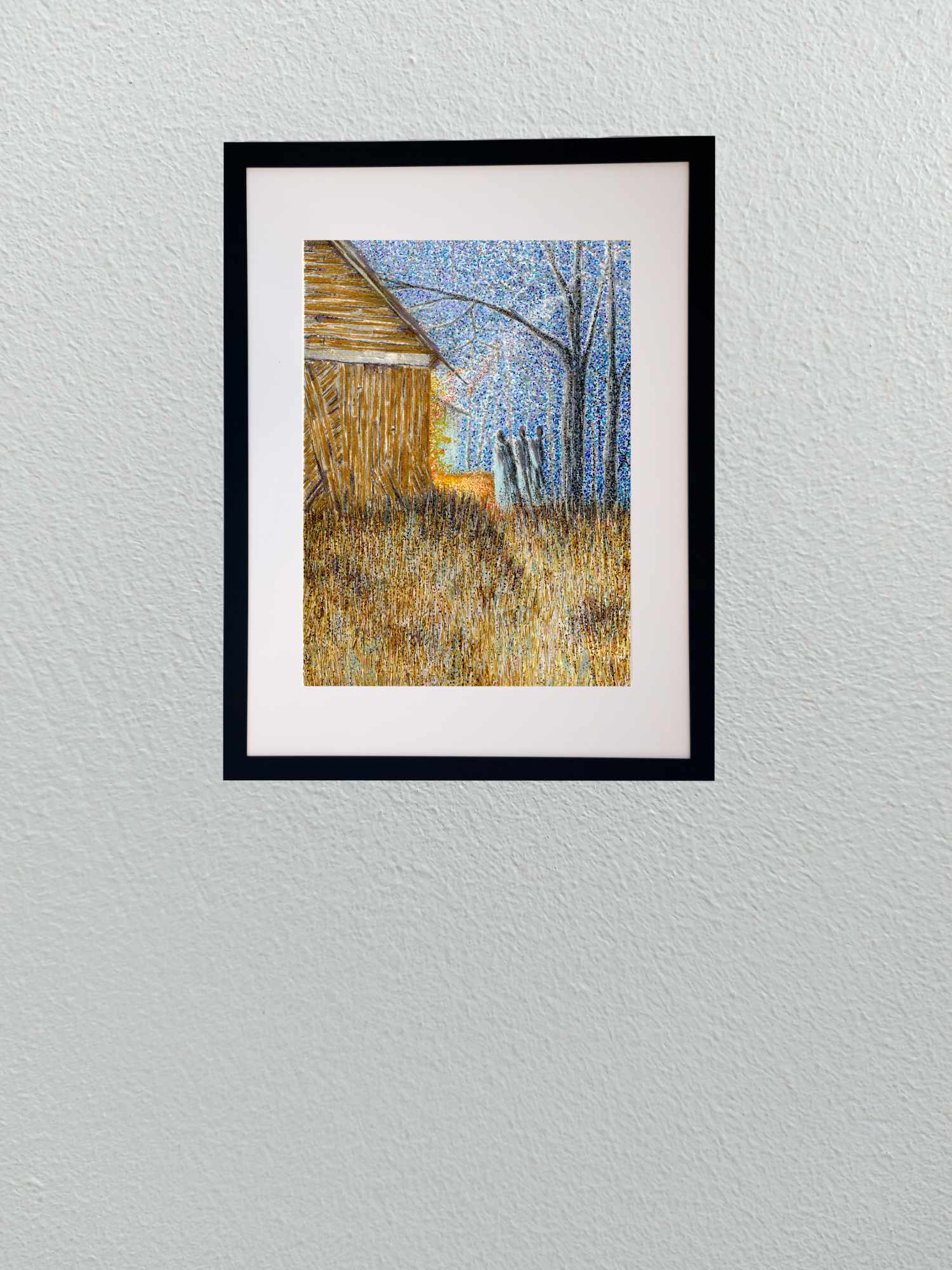
    This latest piece continues my dive into folklore-inspired landscapes, using a rural backdrop to hold a quiet, unsettling moment. On the surface, itโ€™s a familiar structureโ€”a weathered wooden barn or outbuilding sitting at the edge of a field. But the narrative turns on the corner of that wall, where three pale, hooded figures stand in the shadows, peering past the wood toward a sudden burst of flame.

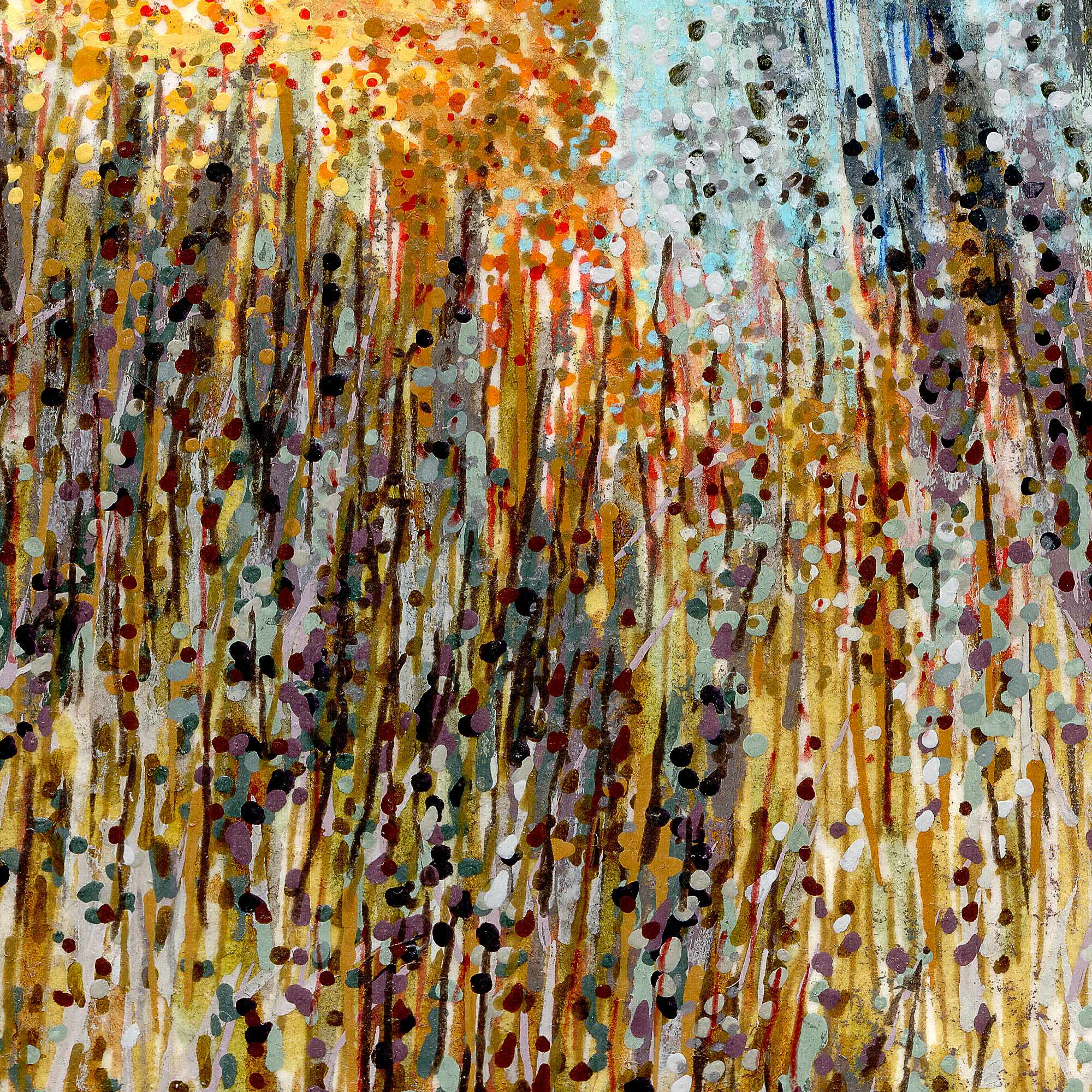
    Technically, this was built using a tight mix of acrylic pens, Sakura gel pens, and Faber-Castell Pitt pens on cold press paper. I wanted the architecture and the field to feel heavily textured, using dense, directional strokes to capture the rough grain of the wooden siding and the dry, standing grass.

    The atmospheric tension comes from the contrast in mark-making and color temperature. I used a stippling technique for the sky, layering blues, purples, and cool grays to give the canopy a vibrating, electric static. That cold background makes the hot oranges and yellows of the fire spill around the corner with real intensity, throwing the three specters into stark relief as they witness whatever is burning just out of sight.

    Leaving the source of the fire and the identity of the observers open-ended is the core of the piece. It frames a moment of quiet intrusionโ€”where the mundane rural landscape breaks open to reveal a ritual or a reckoning.


  • Frenetic Canopy

    Frenetic Canopy

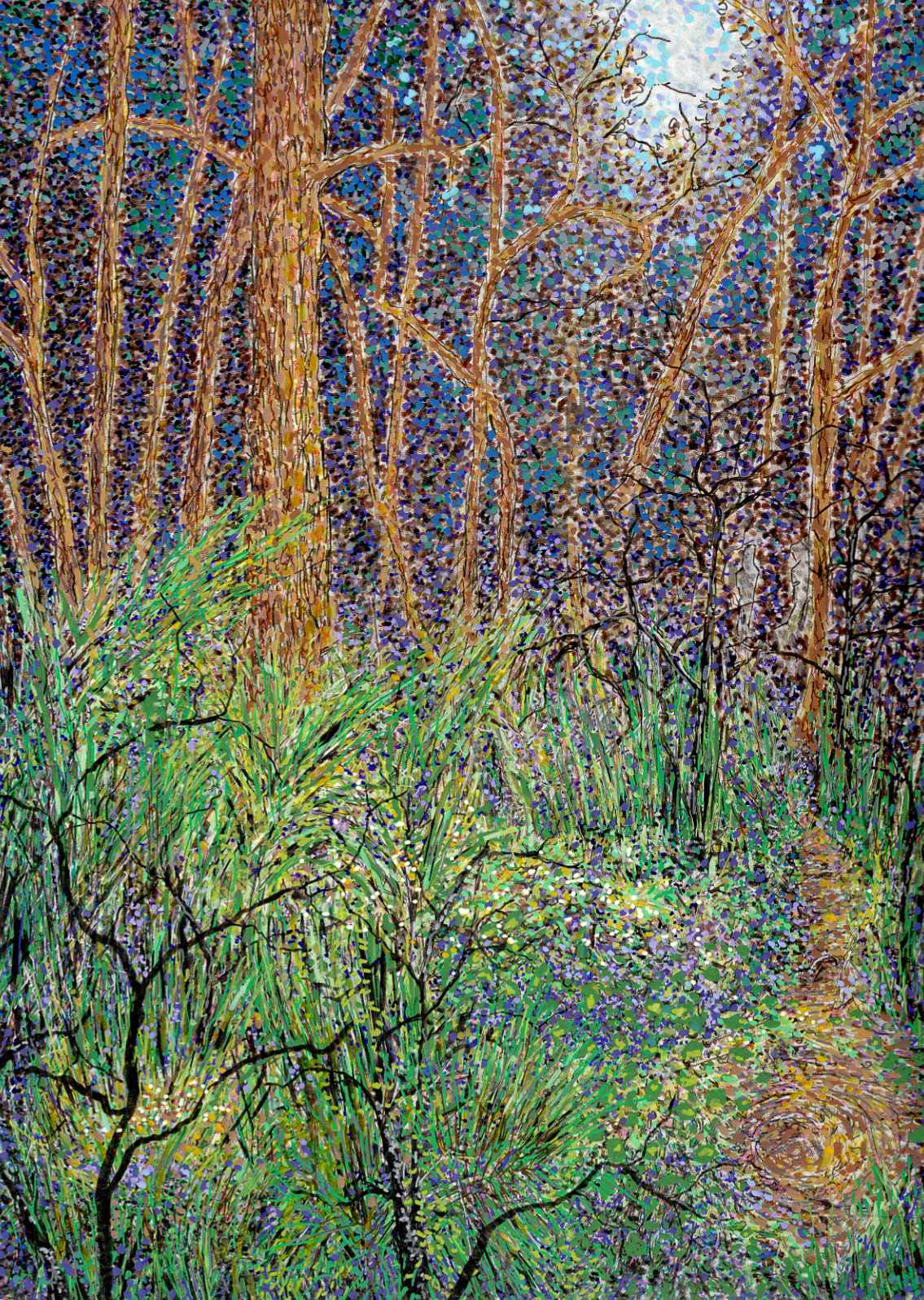
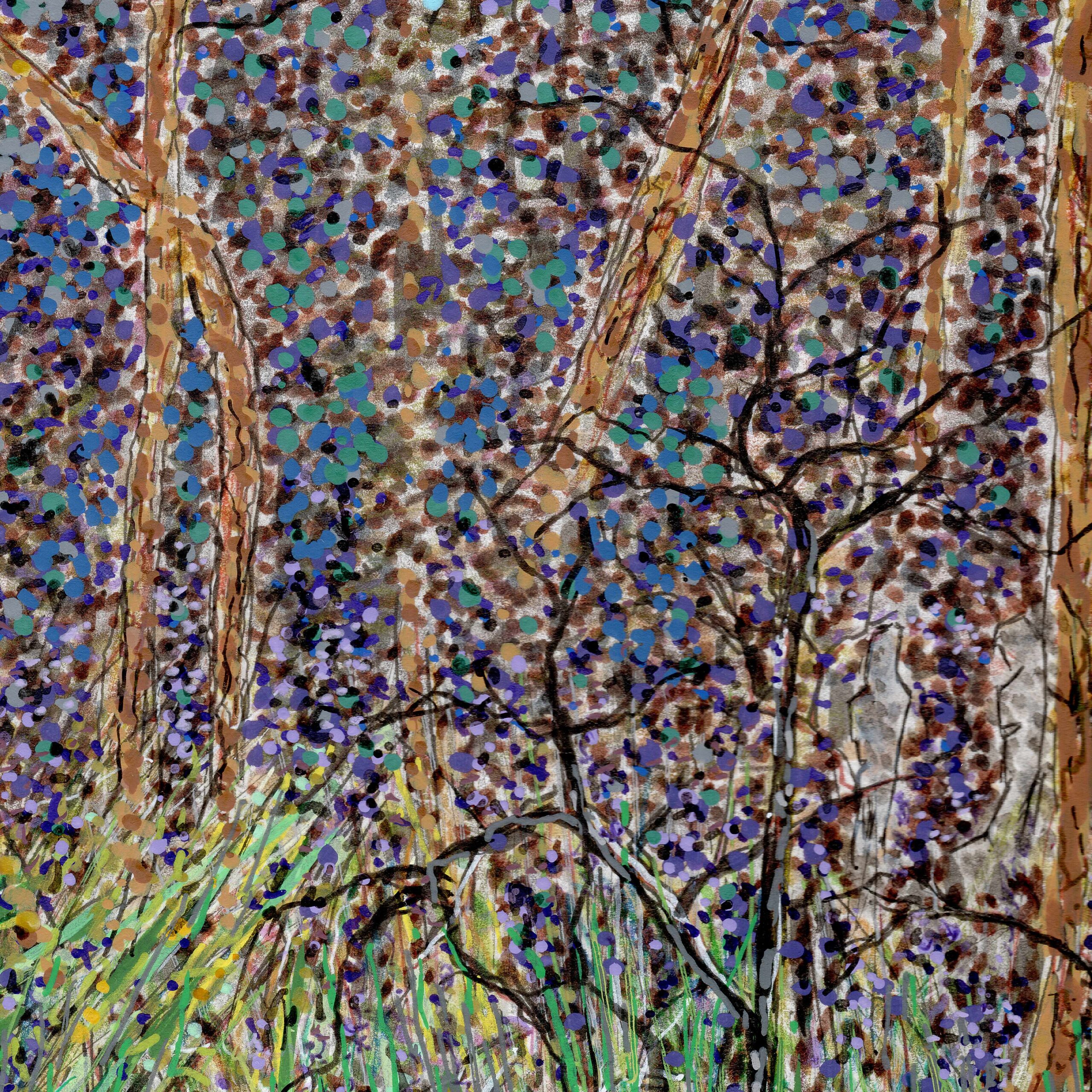
    I wanted to move away from the quiet, still qualities of a traditional landscape and focus entirely on energy. Nature is rarely static. It is constantly growing, decaying, and shifting. This piece was a deliberate experiment in capturing that hidden, frenetic activityโ€”making a forest look as though it is writhing and moving right in front of you.

    Technically, this required a dense orchestration of different tools and medium behaviors on smooth hot press paper. I built the surface using a heavy blend of Faber-Castell Pitt pens, Staedtler pigment pens, acrylic pens, and Sakura gel pens.

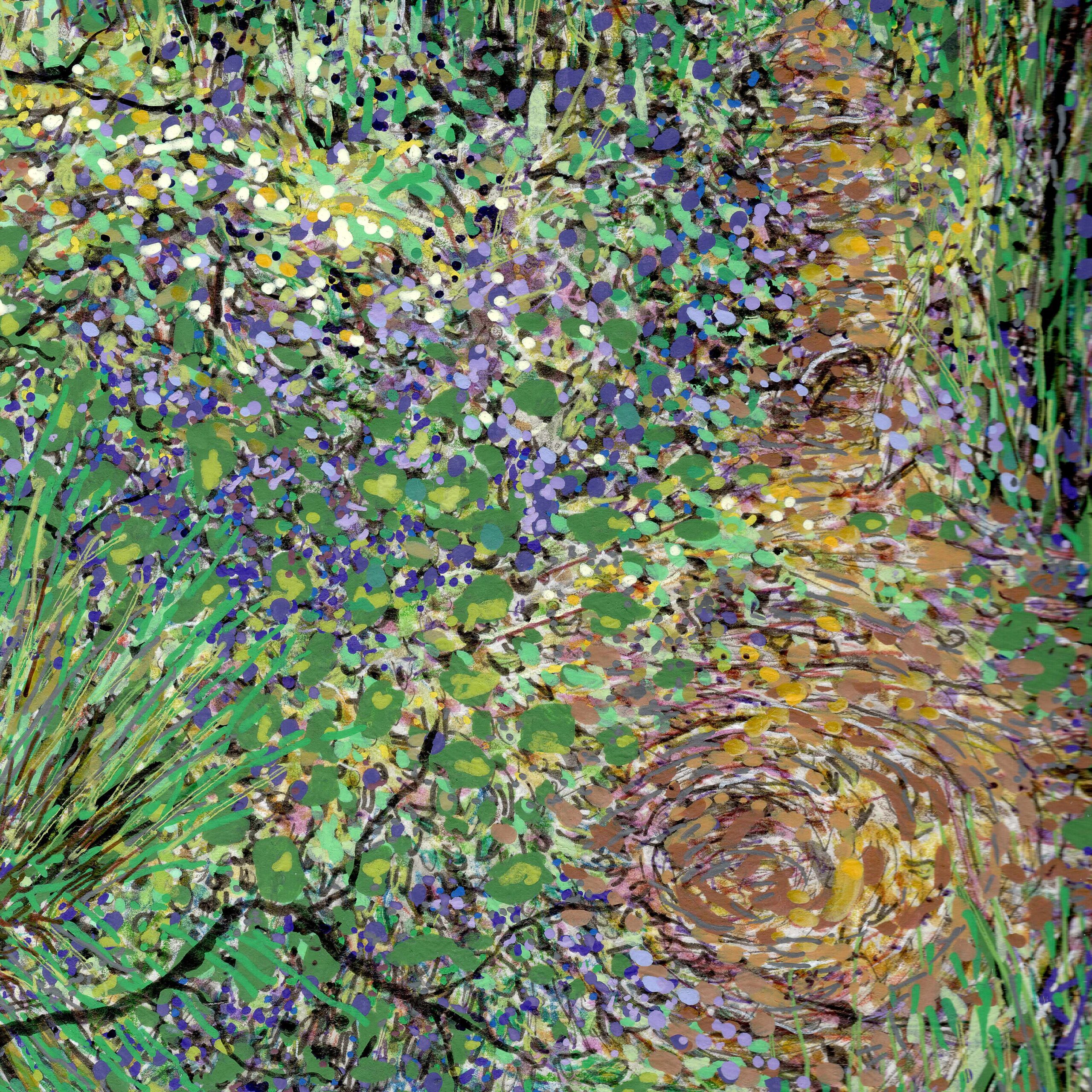
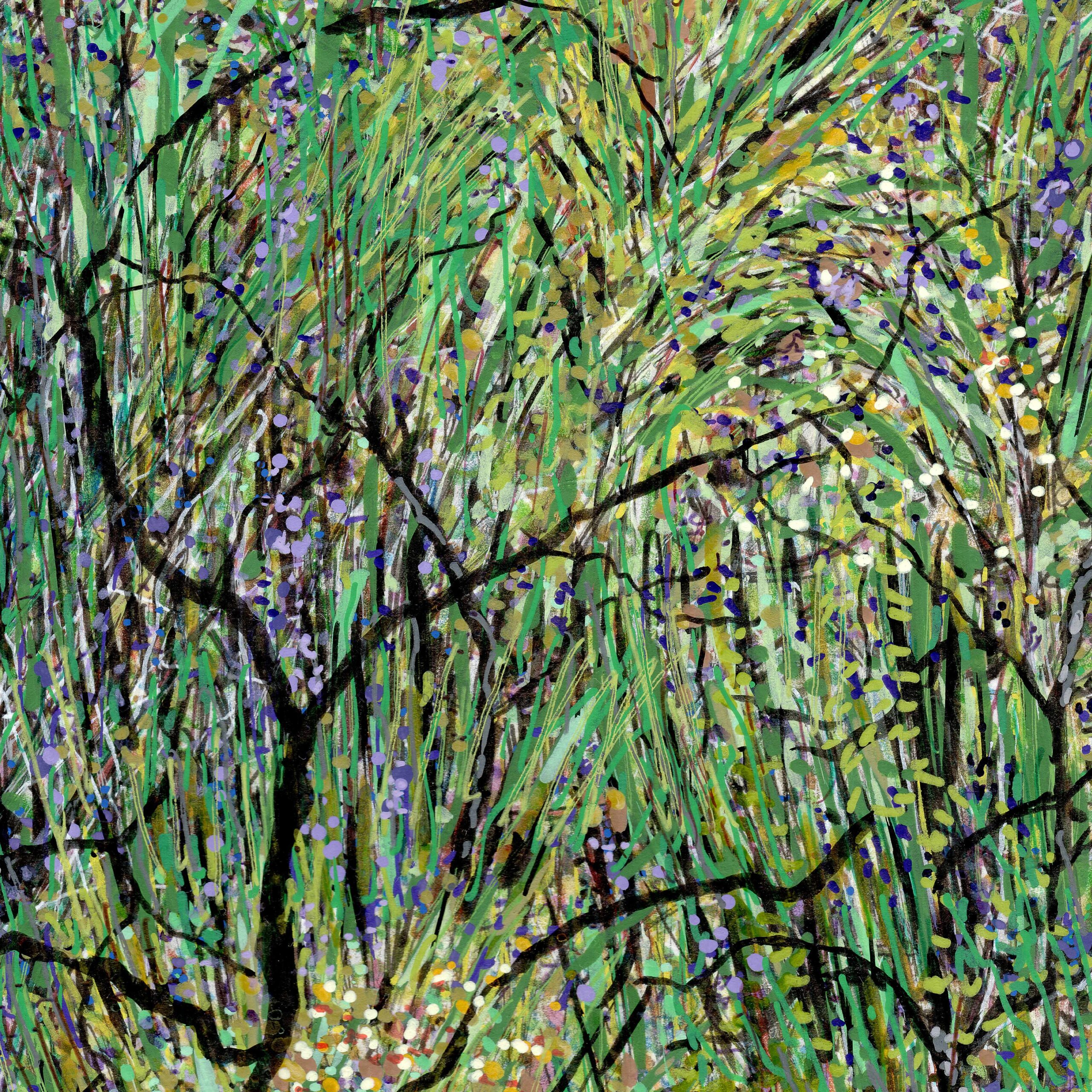
    The process was rhythmic and intense. I used the fine precision of the Staedtler pens to create an intricate web of overlapping, high-contrast lines for the undergrowth and the tree trunks. The fine, colorful lines slashing through the foliage were accomplished with Sakura gel pens, giving those bright accents a sharp, clean edge. Instead of blending colors smoothly, I relied on rapid dashes and tight clusters of stippling with the acrylic and Pitt pens. By placing contrasting tones directly side-by-sideโ€”the electric greens against the deep purples and warm ochresโ€”the canopy begins to optically vibrate.
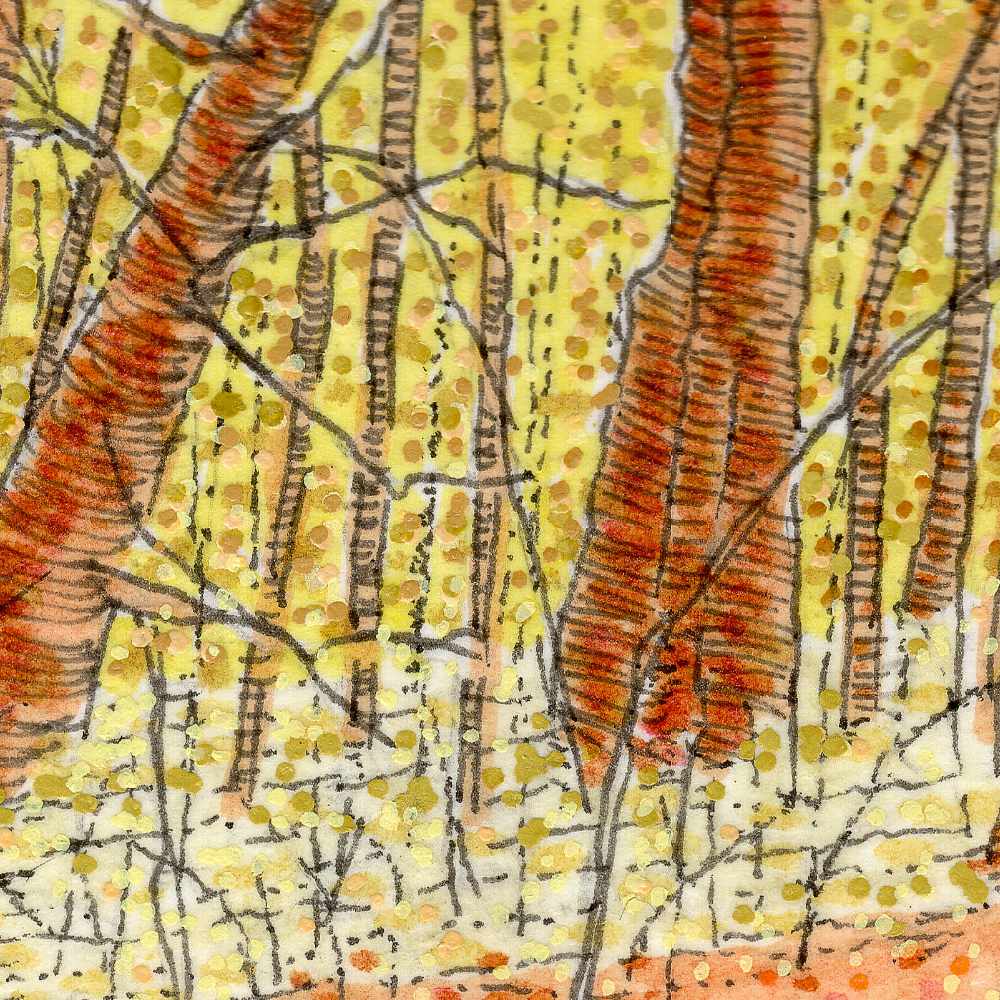
    It is a chaotic way to build a landscape, but letting the marks layer over one another without correcting the friction gives the piece its pulse. It records the grit and the constant motion of the woods rather than a sanitized portrait of them.

  • Sells Mill: Late Winter Light

    Sells Mill: Late Winter Light

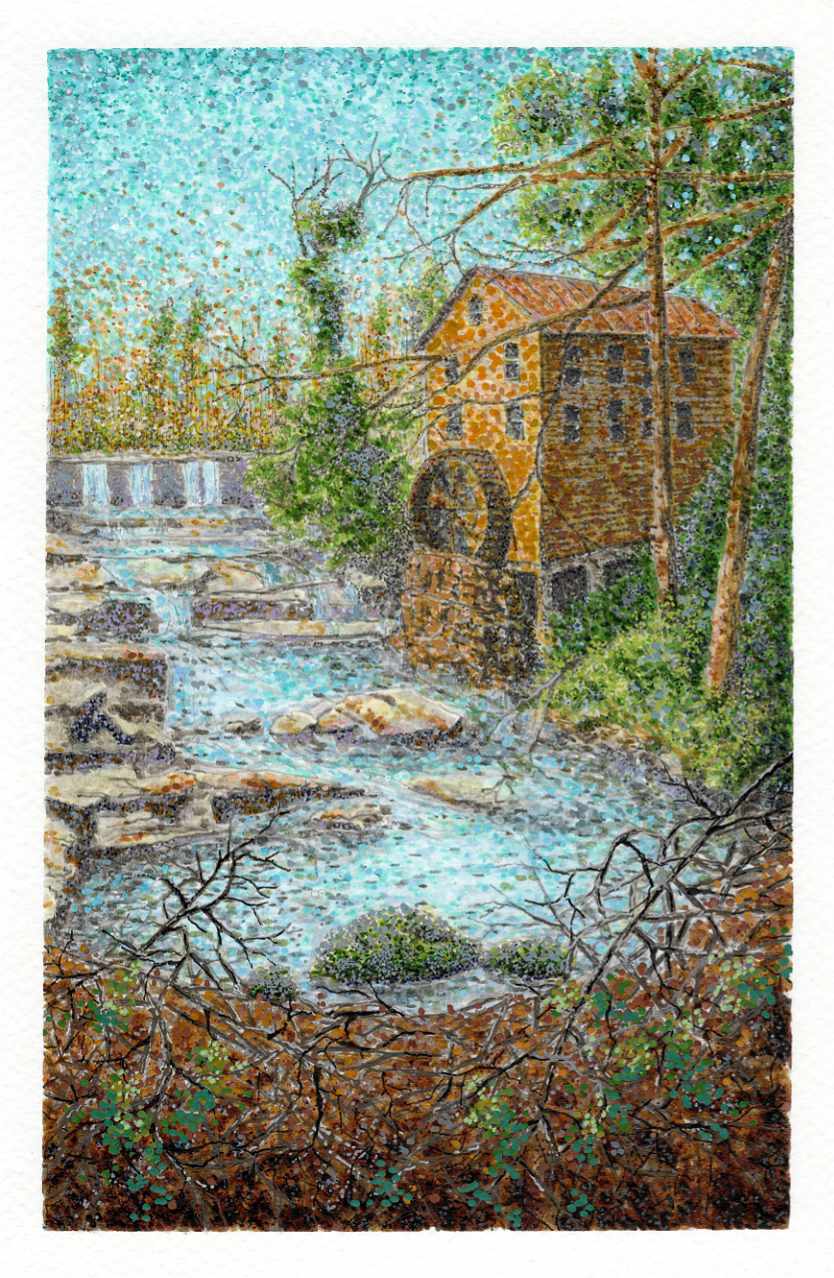
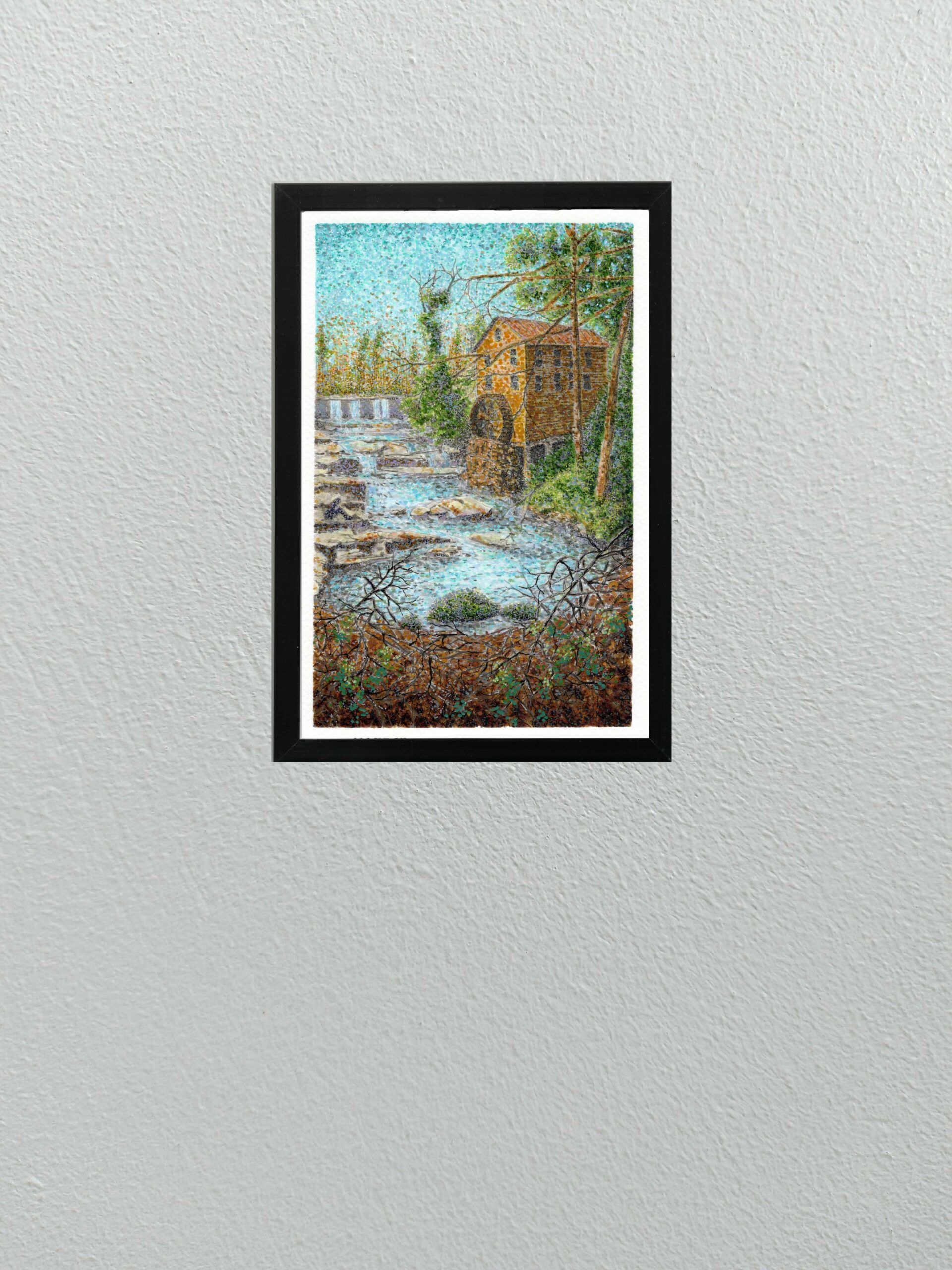
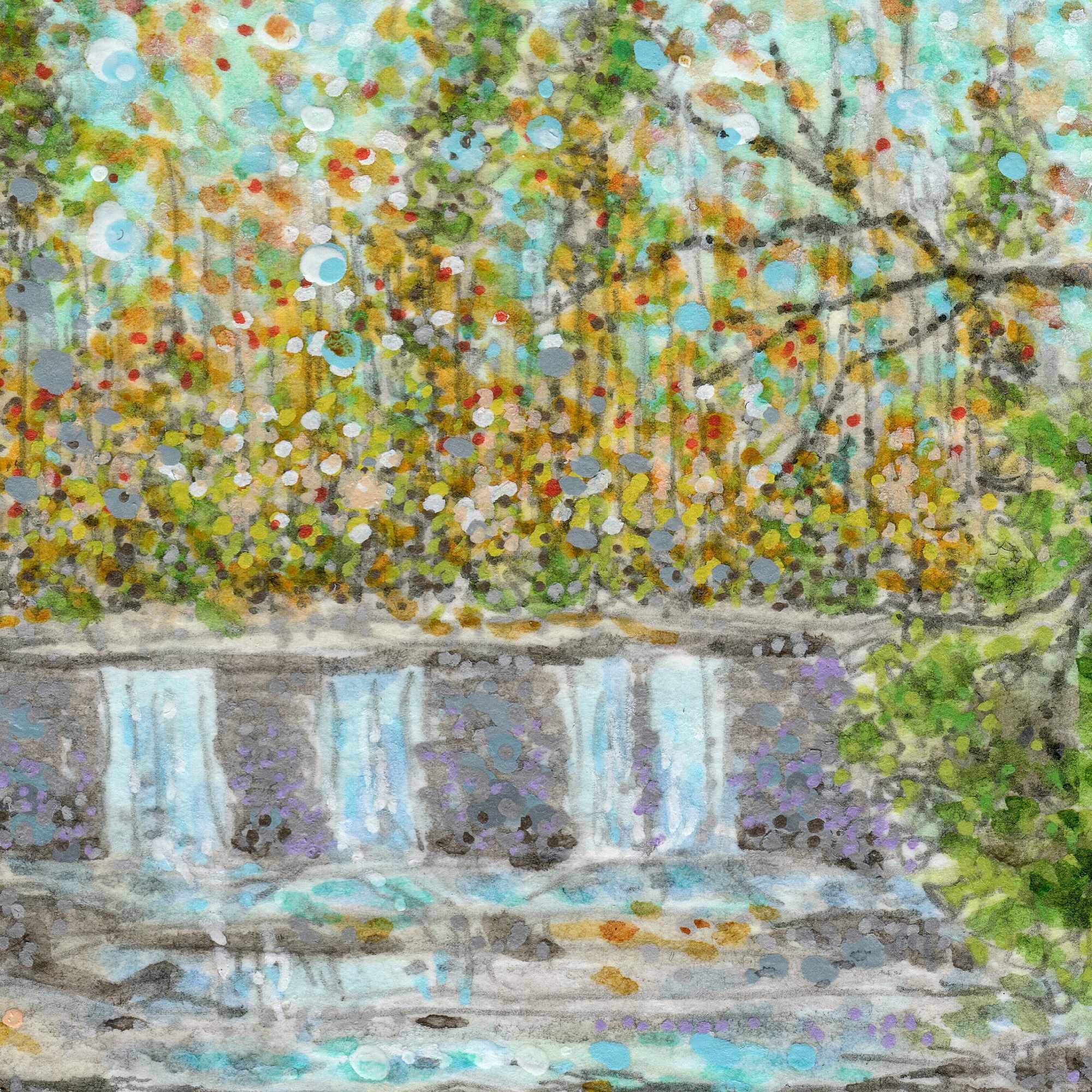
    here is a brief window at the end of winter where the landscape feels entirely transitional. The trees are still bare, but the light changes, catching the water and the earth differently. This study of Sells Mill was an attempt to record that specific, shifting energy.

    Technically, Iโ€™ve continued to explore the boundaries of my mixed-media approach on cold press paper. I used a combination of Faber-Castell Pitt pens, acrylic pens, and Sakura pens to build the scene layer by layer.

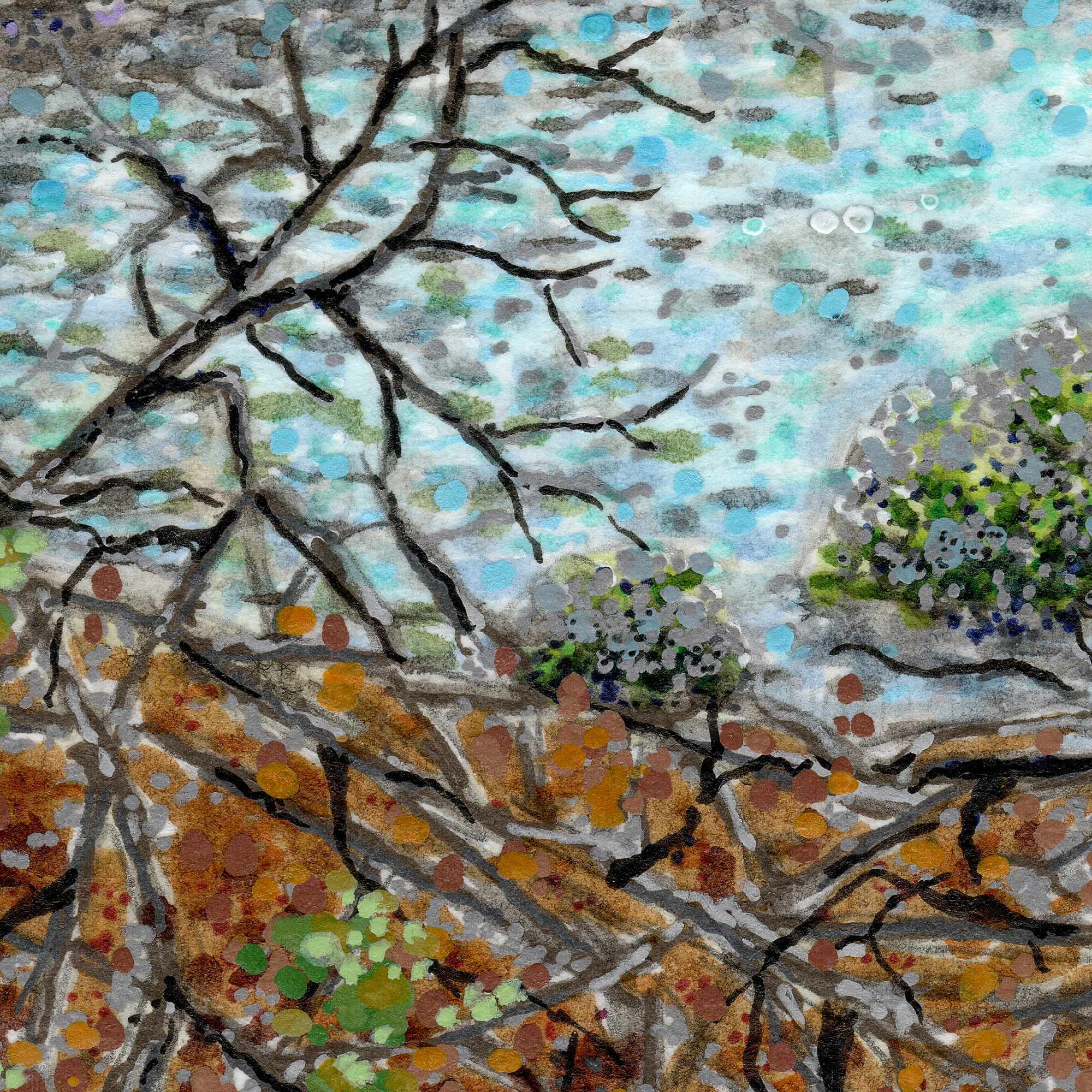
    The process is a deliberate balance between structured architecture and organic chaos. I used the fine precision of the Sakura and Pitt pens to draft the rigid lines of the historic mill and the dense, tangled thicket of branches in the foreground. For the sky, the water, and the stone faรงade, I leaned heavily into a pointillist technique. By applying thousands of individual dots of ink and acrylic, the surface begins to vibrateโ€”allowing the cool blues of the late winter sky and the rushing stream to catch a sense of movement.

    The paperโ€™s tooth works as a quiet partner here, holding the pigments exactly where they land but allowing the sheer volume of marks to optically blend. Itโ€™s a slow, rhythmic way to work that captures the texture of a place without forcing it into a sterile, perfect drawing.


  • The Fence Line

    The Fence Line

    This is a small 6×9 study on cold press paper, born from an interest in the quiet friction between the ordinary and the unknown. On the surface, itโ€™s a mundane rural sceneโ€”a sunlit field, a line of dense green trees, and a weathered wooden fence stretching across the frame.

    I built the composition using Faber-Castell Pitt pens and acrylic. The cold press texture acts as a partner in the process, catching the ink and stippled marks to build up the fields of color without losing the organic feel of the paper. I wanted the sky and the foreground greenery to feel alive, using rapid dots of pigment that make the light shimmer across the canvas.

    The real shift in the piece comes with the shaded figure standing in the foreground field. By placing this dark, silhouetted form right against the fence line, a simple landscape transforms into a moment of mystery. It introduces a narrative element without over-explaining itself, leaving the viewer to wonder who is standing by the field, and why.


  • The Yellow Hat

    The Yellow Hat

    Today I am sharing a new multi-media piece that continues to push the boundaries of my recent experiments with pointillism, but with a distinct narrative twist.

    This piece, based on an older photograph of a dense tree line and brush, relies on a highly textured mix of India ink, acrylic pens, and Pigma fine liners. To capture the thick, almost claustrophobic atmosphere of the undergrowth, I combined sharp, vertical scratches for the tall grass with heavy, vibrating dots of color. The optical mixing of the bright yellows and oranges in the foreground against the deep, heavy purples and blacks of the background gives the entire scene a buzzing, nocturnal energy.

    But this isn’t just a landscape study. If you look closely at the middle-right side of the composition, tucked away in the tall grass, there is a cloaked figure wearing a wide-brimmed yellow hat.

    I rendered this figure using the exact same pointillist and linework techniques as the surrounding environment, perfectly camouflaging them into the brush. Much of my work centers around the idea of being a “quiet observer” in rural, forgotten spaces. With this piece, I wanted to flip that dynamic. It introduces a subtle, eerie, Southern Gothic narrativeโ€”a reminder that when you are out observing the quiet edges of the world, sometimes you are also being observed.


  • Eveningโ€™s Quiet Unrest

    Eveningโ€™s Quiet Unrest

    Today I am sharing a new mixed media piece that explores a specific memoryโ€”twilight in a silent meadow. This composition, based on a low-light photograph taken a few years ago, was an exercise in capturing a delicate visual tension. The scene possesses a profound tranquility, yet beneath that stillness lies something subtly unsettlingโ€”a feeling I wanted to preserve and amplify.

    While the original photo provided the structure and the quiet posture of the figure, the translation to paper was driven entirely by a need to dictate emotional weight through medium. I build the density and movement in the foreground undergrowth through networks of energetic, scratching lines using Sakura fineliners and Faber-Castell Pitt pens, contrasting against the still, flat fields of color in the sky.

    By utilizing a Post-Impressionist or Synthetist paletteโ€”swapping natural colors for a heavy, low-light atmosphere of muted purple, cool blue, and an unnerving yellow-greenโ€”I aimed to create a psychological filter. This piece combines the raw texture of graphite and ink from my earlier studies with the bold, non-naturalistic color blocking I’ve been exploring recently. It is a portrait of solitude, suspended in a vibrating, eerie twilight.

    Technical Details:

    • 9×12 140lb cold press
    • Faber-Castell Pitt pens
    • Shuttle Art paint pens
    • Staedtler Pigment Liner
    • Sakura Pigma